
Automating loyalty campaigns can boost repeat purchases by up to 20% within six months. Yet many marketing managers at small to medium retail and hospitality businesses still struggle with manual loyalty management that drains time and resources. This guide reveals how automation transforms loyalty programs from complex burdens into powerful retention engines, delivering measurable results without requiring extensive IT expertise or disrupting daily operations.
Key Takeaways
| Point | Details |
|---|---|
| Automation drives revenue | Automated campaigns increase repeat purchases by 20% and improve ROI by 25% through data-driven personalization. |
| Quick deployment matters | Modern SaaS platforms enable SMBs to launch loyalty programs in 48 hours without complex IT integration. |
| Personalization scales easily | Behavior-triggered offers and real-time analytics create relevant customer experiences at scale. |
| Omnichannel boosts engagement | Mobile app integration and coordinated messaging across channels increase customer lifetime value by 30%. |
| Framework ensures success | Clear selection criteria and implementation steps help SMBs choose and deploy the right automation solution. |
Introduction: The Value of Loyalty Campaigns in SMBs
Customer acquisition costs continue rising, making retention a survival priority for small to medium businesses. SMBs face high customer acquisition costs making retention critical, yet many still rely on manual loyalty management that consumes valuable time and produces inconsistent results.
Manual loyalty programs create several operational challenges:
- Time-intensive campaign creation and customer tracking
- Human error in reward distribution and customer data management
- Inability to personalize offers at scale based on individual behavior
- Limited visibility into campaign performance and customer patterns
- Delayed responses to changing customer preferences
The shift toward digital solutions is accelerating. Digital loyalty programs are increasingly adopted by SMB retail and hospitality sectors as businesses recognize automation as essential for competing effectively. Modern platforms remove technical barriers, allowing you to focus on strategy rather than spreadsheets.
Retail stores and restaurants particularly benefit from automated loyalty systems. These businesses operate on thin margins where repeat customers directly impact profitability. When you automate reward triggers, personalized messaging, and customer segmentation, you transform loyalty from an administrative task into a revenue driver.
Why Automate Loyalty Campaigns? Key Benefits Explained
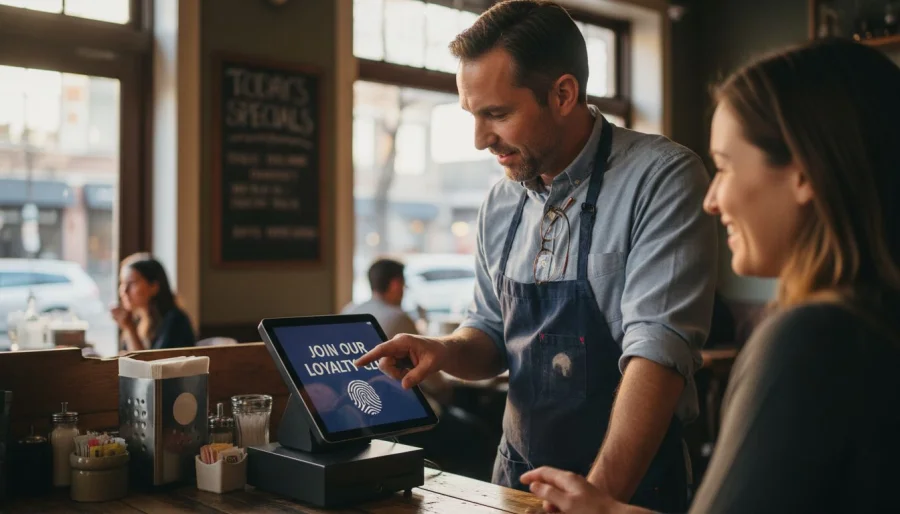
Automation fundamentally changes how loyalty programs operate and perform. Personalization via behavior-triggered offers improves relevance and engagement by sending the right message at the right moment. Your customers receive birthday rewards, post-visit incentives, or reactivation offers without you lifting a finger.
Time savings translate directly to cost savings. Automation reduces manual workload by up to 30%, freeing your team to focus on strategic initiatives rather than repetitive campaign tasks. You eliminate hours spent manually segmenting customers, crafting individual messages, and tracking reward redemptions.
The financial impact speaks clearly. Repeat purchase rates increase by up to 20% with automation, directly boosting revenue from your existing customer base. Data-driven insights reveal which offers drive action, which customer segments respond best, and which times generate peak engagement.
Key automation benefits include:
- Real-time customer behavior tracking enabling instant reward triggers
- Predictive analytics identifying at-risk customers before they churn
- A/B testing capabilities for continuous campaign optimization
- Scalable personalization reaching hundreds or thousands simultaneously
- Automated reporting showing ROI and performance metrics
Pro tip: Review and update your automation rules quarterly to ensure offers remain competitive and aligned with current customer preferences and seasonal trends.
Common Misconceptions About Loyalty Campaign Automation
Several myths prevent SMBs from adopting automation despite its proven benefits. Understanding the reality helps you make informed decisions.
-
Myth: Automation requires expensive IT infrastructure and lengthy setup. Reality: 70% of SMBs deploy automated loyalty programs within 48 hours without costly IT involvement. Modern SaaS platforms offer intuitive interfaces, pre-built templates, and guided setup that marketing managers handle independently.
-
Myth: Automated campaigns feel impersonal and damage customer relationships. Reality: Modern SaaS platforms improve personalization through data-driven targeting. Automation enables the individualized attention manual processes cannot scale, sending relevant offers based on actual purchase history and preferences.
-
Myth: Only large enterprises with big budgets benefit from loyalty automation. Reality: SMB-focused platforms offer flexible pricing tiers, including free starter options and affordable monthly subscriptions. Features scale with your business, so you pay for what you use and upgrade as you grow.
These misconceptions stem from outdated views of marketing automation. Technology has evolved dramatically, making sophisticated loyalty capabilities accessible to businesses of all sizes. The platforms designed specifically for SMBs understand your resource constraints and operational realities.
Pro tip: Start with a platform offering a free trial or tier. Test automation with a single campaign segment to build confidence before expanding to your full customer base.
Technology Integration and Customer Experience Enhancements
Automation succeeds by seamlessly connecting with the channels your customers already use. Mobile app integration boosts repeat visits by 15% by putting your loyalty program directly in customers’ pockets. Push notifications remind them of available rewards, special offers, and points balances at opportune moments.
Web platforms complement mobile apps, allowing customers to check rewards and offers from any device. This flexibility meets customers where they are, whether browsing on a laptop or checking their phone while near your store.
| Approach | Customer Reach | Message Timing | Personalization Level | Tracking Accuracy |
|---|---|---|---|---|
| Manual | Limited | Delayed | Basic | Low |
| Automated | Comprehensive | Real-time | Advanced | High |
Omnichannel engagement can increase customer lifetime value by 30% by creating consistent touchpoints across channels. Your automated system coordinates email, SMS, push notifications, and in-app messages to reinforce your loyalty message without overwhelming customers.
Key technologies enabling enhanced loyalty experiences:
- Cloud-based platforms providing instant updates and universal access
- API integrations connecting loyalty data with existing business systems
- Geolocation triggers sending offers when customers are nearby
- QR code scanning for quick reward redemption and points collection
- Real-time analytics dashboards showing campaign performance as it happens
These integrations work together, creating a cohesive experience that feels natural to customers while providing you comprehensive data on engagement patterns and preferences.
Data-Driven Optimization and Real-World Impact
Real-time analytics transform loyalty from guesswork into science. ROI improves by 25% through real-time campaign adjustments when you can see what works and quickly optimize underperforming elements. Your dashboard reveals which rewards drive redemptions, which customer segments respond best, and which messaging resonates.
| Metric | Manual Campaigns | Automated Campaigns | Improvement |
|---|---|---|---|
| Average ROI | 3.2x | 4.0x | 25% |
| Repeat Purchase Rate | 32% | 45% | 41% |
| Customer Engagement | 18% | 28% | 56% |
Monitor these critical performance indicators:
- Repeat purchase frequency measuring how often customers return
- Engagement rates tracking email opens, app usage, and offer redemptions
- Customer lifetime value showing total revenue per customer over time
- Campaign ROI calculating revenue generated versus campaign costs
- Churn rate identifying when customers stop engaging
Purchase frequency increases by up to 20% in successful automated implementations. SMBs using data-driven optimization see consistent improvements as they refine targeting, timing, and offer structures based on actual results rather than assumptions.
Avoid these common optimization pitfalls:
- Over-messaging customers with too many notifications causing opt-outs
- Ignoring seasonal patterns that influence purchase behavior
- Setting generic rewards that don’t motivate your specific customer base
- Failing to segment customers by behavior and preferences
- Neglecting to test different offer types and messaging approaches
Continuous iteration based on data insights creates compounding returns. Small improvements in conversion rates and repeat purchases accumulate significantly over months and years.
Framework for Selecting and Implementing Automated Loyalty Campaigns
Choosing the right platform and implementing effectively requires a structured approach. Follow this framework to maximize your automation success.
-
Define your loyalty objectives. Specify whether you prioritize increasing visit frequency, raising average transaction value, or reducing churn. Clear goals guide platform selection and campaign design.
-
Evaluate platform capabilities against your needs. Ease of use and flexibility are top selection criteria for SMB loyalty platforms. Compare features, pricing, and integration options across multiple providers.
-
Assess integration requirements. Determine how the platform connects with your existing systems, whether you need POS integration, and what data you can leverage immediately.
-
Plan your initial campaign. Start with one automated workflow, such as a welcome series or birthday rewards, to build operational confidence.
-
Deploy and monitor actively. Rapid deployment and iterative testing improve implementation success. Launch quickly, gather data, and refine based on performance.
| Selection Criteria | Importance | What to Look For |
|---|---|---|
| Ease of Use | Critical | Intuitive interface, minimal training required |
| Feature Flexibility | High | Customizable rewards, multiple campaign types |
| Analytics Depth | High | Real-time dashboards, actionable insights |
| Pricing Structure | Medium | Transparent tiers, scalable costs |
| Support Quality | Medium | Responsive help, implementation guidance |
Prerequisites for successful implementation include basic customer data collection, commitment to monitoring performance weekly, and willingness to adjust campaigns based on results. You don’t need advanced technical skills, but you do need consistent attention during the first months.
Pro tip: Schedule monthly campaign review sessions to analyze performance metrics, identify optimization opportunities, and prevent the drift that leads to stale, ineffective programs.
Conclusion: Embracing Automation to Strengthen Customer Loyalty
Automation transforms loyalty programs from resource drains into strategic assets. You gain improved customer engagement, higher retention rates, and measurable ROI increases while reducing manual workload. Modern SaaS platforms make sophisticated automation accessible to SMBs without requiring technical expertise or large budgets.
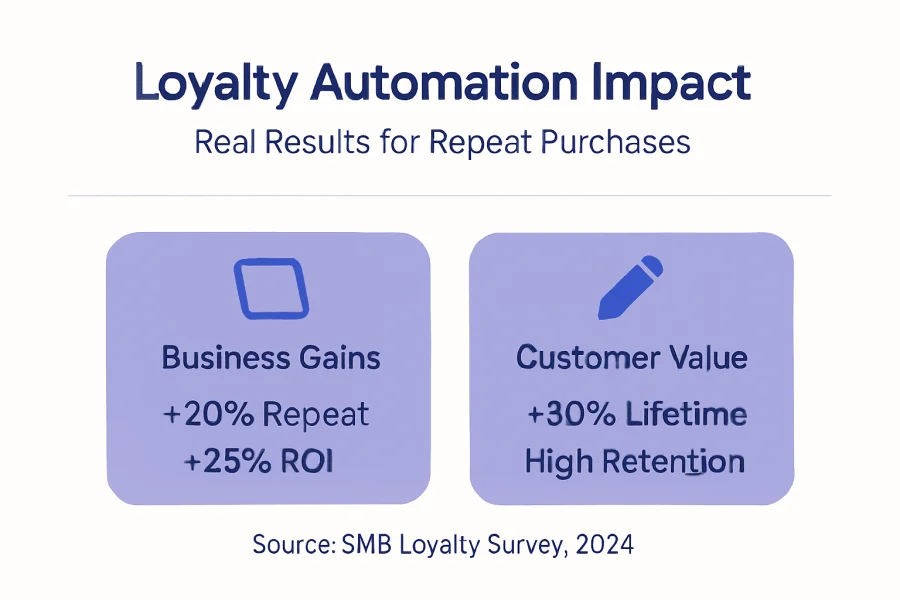
The data proves automation works. Repeat purchases increase by 20%, customer lifetime value grows by 30%, and ROI improves by 25% when you implement data-driven automated campaigns. Your competitors are already moving toward automation. The question isn’t whether to automate, but how quickly you can deploy and optimize your automated loyalty system.
Start small, measure consistently, and iterate based on results. The framework and insights in this guide provide the foundation you need to confidently select a platform and launch campaigns that deliver real business results.
Discover BonusQR Solutions for Automated Loyalty Success
BonusQR offers comprehensive SaaS loyalty solutions designed specifically for small to medium retail and hospitality businesses. Our platform enables you to launch automated campaigns in hours, not weeks, with intuitive tools that require no technical expertise. Mobile app integration, real-time analytics, and flexible reward structures help you create personalized customer experiences that drive repeat purchases.
Explore how BonusQR streamlines loyalty program benefits through automation. Review our complete loyalty system features to see how points, stamps, cashback, and personalized offers work together. Hospitality businesses can discover specialized loyalty applications for hotels designed for their unique needs. Start building stronger customer relationships today with automation that works.
FAQ
What is loyalty campaign automation?
Loyalty campaign automation uses software platforms to handle repetitive marketing tasks without manual intervention. The system automatically sends personalized offers, tracks customer actions, awards points or rewards, and segments customers based on behavior. Data-driven triggers ensure customers receive relevant messages at optimal times.
How quickly can SMBs deploy automated loyalty campaigns?
Most SMBs launch automated campaigns within one to two days using modern SaaS platforms. 70% of SMBs deploy automated loyalty programs within 48 hours without extensive IT involvement. Pre-built templates and guided setup processes eliminate the complexity that previously required weeks of development time.
What are key metrics to track for automated loyalty success?
Focus on repeat purchase frequency, customer engagement rates, campaign ROI, and customer lifetime value as your primary success indicators. Track how often customers return, what percentage open messages and redeem offers, revenue generated versus campaign costs, and total customer value over time. Regular monitoring of these metrics enables you to spot trends and optimize campaigns proactively.
Can automation replace personal customer interaction?
Automation enhances rather than replaces personal relationships. It uses customer data to deliver relevant, timely offers that feel personalized because they’re based on actual behavior and preferences. Automation handles scalable communication, freeing your team to focus on high-value personal interactions. The combination of automated touchpoints and human relationship building creates the strongest loyalty outcomes.


