
 Deutsch
 Español
 Français
 Italiano
 Magyar
 Polski
 Slovenčina
 Čeština

Many restaurant owners face the challenge of turning first time guests into loyal regulars. In a competitive North American dining market, keeping customers coming back takes more than just good food. Building repeat business relies on understanding customer segments and personalizing your loyalty approach. This guide outlines practical steps to create a digital loyalty program that attracts, engages, and retains your restaurant’s unique guests.
Table of Contents
- Step 1: Assess Business Needs And Customer Segments
- Step 2: Configure Loyalty Program Modules And Benefits
- Step 3: Integrate Digital Engagement Tools And Branding
- Step 4: Automate Reward Delivery And Marketing Campaigns
- Step 5: Monitor Performance And Optimize Retention Strategies
Quick Summary
| Key Point | Explanation |
|---|---|
| 1. Understand Your Customer Segments | Analyze customer data to segment effectively for targeted loyalty strategies. |
| 2. Configure Engaging Program Modules | Design loyalty modules that align with customer preferences, like points and tiers. |
| 3. Integrate Digital Engagement Tools | Develop a cohesive digital platform that reflects your brand identity and personalizes experiences. |
| 4. Automate Marketing and Reward Delivery | Use automation to streamline rewards and communications based on customer actions. |
| 5. Monitor and Optimize Program Performance | Continuously track performance metrics and gather customer feedback to refine strategies. |
Step 1: Assess business needs and customer segments
Understanding your customer segments is the foundation of designing an effective loyalty program strategy. By dissecting your customer base into meaningful groups, you can develop targeted approaches that resonate with specific audience needs and behaviors.
Start by analyzing your current customer data to identify distinct behavioral patterns. Exploring customer segmentation research reveals that successful loyalty programs move beyond generic approaches and focus on nuanced customer engagement strategies. Look for key differentiators such as purchasing frequency, average transaction value, product preferences, and interaction channels. Consider creating segments like high-value customers, occasional buyers, and new customers who require different incentive structures.
To conduct a comprehensive assessment, map out your customer journey and identify touchpoints where loyalty interventions can be most impactful. Utilize both quantitative metrics from your sales data and qualitative insights from customer feedback. Data-driven personalization strategies emphasize the importance of understanding not just what customers buy, but why they make purchasing decisions.
Pro tip: Leverage customer relationship management (CRM) tools to automatically track and update customer segments, ensuring your loyalty program remains dynamic and responsive to changing customer behaviors.
Here’s a concise summary of key customer segments and personalized approaches for loyalty programs:
| Customer Segment | Main Behavior | Recommended Approach |
|---|---|---|
| High-value shoppers | Frequent, big spend | Tiered rewards, VIP perks |
| Occasional buyers | Sporadic purchases | Time-limited offers |
| New customers | First-time buyers | Welcome incentives, education |
| At-risk customers | Decreasing activity | Re-engagement campaigns |
Step 2: Configure loyalty program modules and benefits
Configuring the right loyalty program modules and benefits is critical for creating a compelling customer retention strategy. Your goal is to design a system that not only attracts customers but keeps them genuinely excited about engaging with your business.

Comprehensive loyalty program design requires carefully selecting modules that align with your specific business model and customer preferences. Start by evaluating core program components like points systems, tiered rewards, and exclusive perks. Consider implementing a points structure where customers earn credits for each purchase, with higher transaction values generating more points. Create multiple reward tiers that provide escalating benefits to incentivize increased spending and frequent interactions. For example, your first tier might offer basic discounts, while top tier members could receive premium experiences like free shipping, early access to products, or personalized service.
When designing your benefits, focus on creating perceived value that goes beyond simple monetary rewards. Customer loyalty program architecture emphasizes the importance of understanding customer motivations and crafting rewards that genuinely excite your audience. This might include experiential rewards like exclusive events, personalized recommendations, or unique brand experiences that make customers feel special and appreciated.
Pro tip: Regularly survey your customers to understand which rewards they find most appealing, and be prepared to dynamically adjust your loyalty program modules based on their feedback and changing preferences.
This table outlines core loyalty program modules and the value they deliver to businesses:
| Module | Purpose | Business Impact |
|---|---|---|
| Points system | Reward spending | Boosts transaction volume |
| Tiered rewards | Incentivize loyalty | Increases customer lifetime |
| Exclusive perks | Offer unique experiences | Differentiates the brand |
| Personalized offers | Tailor promotions | Enhances customer engagement |
Step 3: Integrate digital engagement tools and branding
Integrating digital engagement tools with your loyalty program’s branding is essential for creating a seamless and memorable customer experience. Your goal is to develop a cohesive digital ecosystem that reflects your brand’s unique identity while providing valuable interactions for customers.
Digital engagement strategies demonstrate that modern loyalty programs must go beyond traditional point systems and embrace technology that personalizes customer interactions. Begin by developing a mobile app or digital platform that carries your brand’s visual identity including consistent color schemes, logos, and design elements. Ensure that every touchpoint feels like a natural extension of your brand experience. This means designing user interfaces that not only look attractive but also communicate your brand’s personality through intuitive navigation, engaging graphics, and language that matches your brand voice.
Implement advanced digital tools such as personalized push notifications, real time reward tracking, and AI-driven recommendations that make customers feel uniquely understood. These tools should provide genuine value by offering timely, relevant information that goes beyond generic marketing messages. For instance, a restaurant might send a personalized birthday offer, a clothing retailer could suggest items based on past purchases, or a coffee shop could provide location based rewards when a customer is nearby.
Pro tip: Conduct periodic user experience testing to ensure your digital engagement tools remain intuitive, responsive, and aligned with your evolving brand strategy and customer expectations.
Step 4: Automate reward delivery and marketing campaigns
Automating your reward delivery and marketing campaigns transforms customer engagement from manual interactions to intelligent, responsive experiences. Your objective is to create a system that delivers personalized rewards and communications with precision and minimal manual intervention.
Loyalty program automation strategies reveal that successful automation requires integrating customer data, behavioral triggers, and sophisticated marketing tools. Start by establishing automated workflows that respond to specific customer actions such as milestone achievements, birthdays, or purchase anniversaries. For example, when a customer reaches a certain spending threshold, your system should automatically trigger a reward notification, generate a personalized coupon, or update their loyalty tier status without requiring manual processing.
Deploy marketing automation tools that segment customers based on their interaction history and preferences. Digital reward delivery techniques demonstrate how intelligent systems can create targeted campaigns that feel personal and timely. Develop triggers that send specific communications like welcome messages for new members, re-engagement emails for inactive customers, or exclusive offers based on past purchasing behaviors. The key is creating a fluid, responsive system that feels intuitive and valuable to each individual customer.
Pro tip: Regularly audit your automation workflows to ensure they remain relevant, test different communication cadences, and always provide an easy opt out mechanism for customers who prefer less frequent interactions.
Step 5: Monitor performance and optimize retention strategies
Monitoring and optimizing your loyalty program’s performance is crucial for sustained customer engagement and business growth. Your goal is to develop a systematic approach that continuously evaluates and improves your retention strategies based on real data and customer insights.
Loyalty program performance metrics provide critical insights into your program’s effectiveness. Start by establishing key performance indicators such as customer retention rate, repeat purchase frequency, average customer lifetime value, and reward redemption rates. Track these metrics consistently to understand how your loyalty program impacts overall business performance. Create a dashboard that visualizes these metrics, allowing you to quickly identify trends, strengths, and areas requiring improvement.
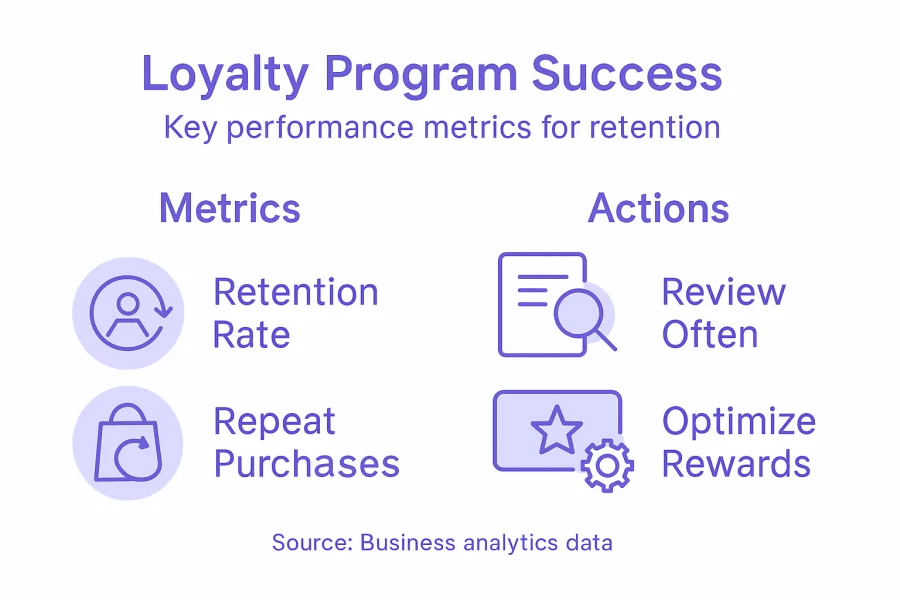
Understand that optimization is an ongoing process. Strategic loyalty program research emphasizes the importance of continuous refinement through customer feedback and behavioral analysis. Conduct regular surveys to gather qualitative insights about customer satisfaction, program perceived value, and potential enhancement areas. Implement A/B testing for different reward structures, communication strategies, and engagement approaches to scientifically determine what resonates most with your customer segments.
Pro tip: Develop a quarterly review process where you not only analyze metrics but also solicit direct customer feedback, ensuring your loyalty program remains dynamic and aligned with evolving customer expectations.
Elevate Your Customer Retention with Tailored Loyalty Solutions
The article “Customer Retention Workflow for Loyalty Program Success” highlights the critical need to design loyalty programs that align with specific customer segments and automate marketing campaigns for maximum engagement. If you are struggling with managing personalized rewards, timely communications, or monitoring program effectiveness, these pain points can hinder your growth and customer loyalty.
At bonusqr.com, we understand that every business requires a unique approach to loyalty. Our platform offers fully customizable modules such as points collection, cashback, and coupon distribution that perfectly match your customers’ behaviors and preferences. With powerful automation tools and real-time analytics, you can effortlessly track engagement, automate reward delivery, and optimize retention strategies without complex POS integration.
Start transforming your loyalty program today with a solution designed to grow with your business and delight your customers at every step.
Discover how easy it is to build and manage your program at bonusqr.com and learn more about the customizable features that make loyalty simple and effective on the bonusqr.com landing page.
Are you ready to turn customer retention insights into powerful results? Experience a flexible loyalty program platform that adapts to your customer segments and automates your campaigns to maximize growth.
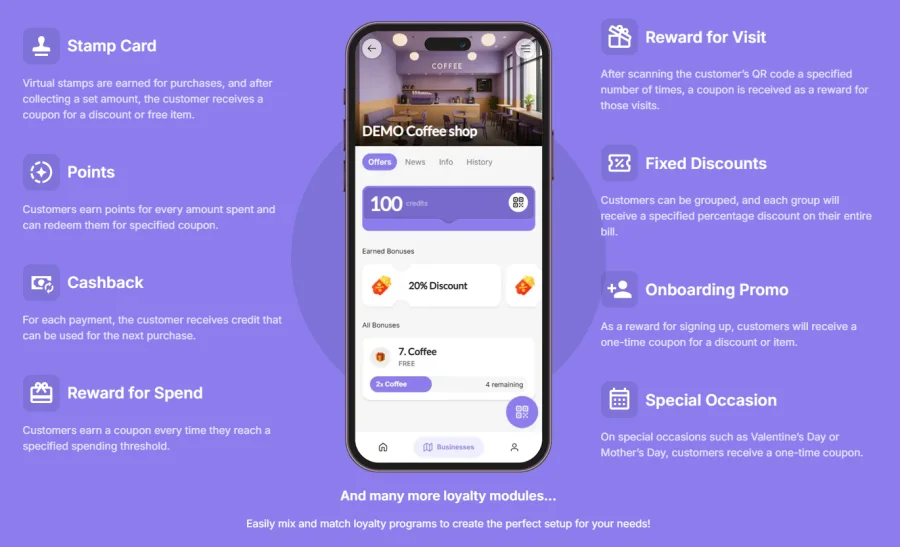
Take the first step now. Visit bonusqr.com to start your free trial and unlock the potential of loyalty done right.
Frequently Asked Questions
How can I assess my business needs for a loyalty program?
To assess your business needs for a loyalty program, start by analyzing your current customer data to identify distinct segments based on behaviors and preferences. Map the customer journey and identify touchpoints for loyalty interventions, using both sales data and customer feedback as key sources of insight.
What key customer segments should I focus on for my loyalty program?
Focus on segments such as high-value shoppers, occasional buyers, new customers, and at-risk customers. Tailor your incentives for each group, for instance, by offering tiered rewards for high-value shoppers or time-limited offers for occasional buyers.
What are the essential modules to include in my loyalty program?
Essential modules include a points system, tiered rewards, exclusive perks, and personalized offers. Each module serves a specific purpose, such as incentivizing loyalty or enhancing customer engagement, and should align with your customer needs to drive retention.
How can I effectively integrate digital tools into my loyalty program?
To effectively integrate digital tools, develop a mobile app or digital platform that reflects your brand’s identity. Incorporate features such as personalized notifications and real-time reward tracking to create a cohesive and memorable customer experience.
What metrics should I track to monitor my loyalty program’s success?
Track key performance indicators such as customer retention rate, repeat purchase frequency, average customer lifetime value, and reward redemption rates. Establish a system for consistently measuring these metrics to identify trends and optimize your retention strategies over time.
How often should I review and optimize my loyalty program?
Review your loyalty program quarterly to analyze performance metrics and gather customer feedback. This frequent review allows you to adjust your strategies based on evolving customer preferences and ensure the program remains relevant and effective.
Recommended
- Customer Retention Strategies: 8 Ways to Improve Retention | BonusQR
- Top Strategies for Customer Retention to Grow Your Business | BonusQR
- Top Customer Service Retention Strategies to Boost Loyalty | BonusQR
- How to Retain Customers and Build Real Loyalty | BonusQR
- How to Reduce Shopping Cart Abandonment - Affinsy Blog | Affinsy