
 Deutsch
 Español
 Français
 Italiano
 Magyar
 Polski
 Slovenčina
 Čeština
Choosing the wrong coupon method costs you more than just the discount itself. It costs you customer attention, repeat visits, and measurable revenue. Digital redemption rates run between 7% and 20% depending on your industry, compared to roughly 1% for paper coupons. That gap is enormous for a small or mid-sized retail or hospitality business working with tight margins. This article walks you through a practical framework for selecting, comparing, and executing digital coupon strategies that match your specific goals, resources, and customer base.
Key Takeaways
| Point | Details |
|---|---|
| Define clear outcomes | Set specific goals and metrics before launching any digital coupon campaign for your business. |
| Go omnichannel | Use a mix of SMS, QR, email, and app coupons to maximize reach and redemption rates. |
| Personalization wins | Targeted digital offers get up to 20% higher redemption and stronger customer retention. |
| Track and adapt | Measuring campaign results is essential for improving ROI and long-term loyalty. |
| Simple works best | Straightforward, easy-to-use digital coupons often outperform complex rewards programs for SMBs. |
Set your goals and select the right metrics
Now that you’ve seen why digital coupons beat paper, let’s begin by defining exactly what you want your campaigns to achieve and how to measure success.
Before you send a single coupon, you need to be clear about what you’re trying to accomplish. Many business owners jump straight into tactics without pausing to ask the most important question: what does success actually look like for this campaign? Without that clarity, even a well-executed campaign can leave you uncertain whether it moved the needle at all.
Your goals will typically fall into one of four categories:
- Customer acquisition: Bringing in first-time visitors who wouldn’t have otherwise tried your business
- Customer retention: Encouraging existing customers to return more frequently or spend more per visit
- Average spend lift: Using coupons tied to minimum purchase thresholds to increase basket size
- Inventory management: Clearing slow-moving products or filling off-peak time slots with targeted discounts
Each goal requires a different campaign structure and a different success metric. If your goal is acquisition, you’ll track cost per new customer and the redemption rate among first-time visitors. If retention is the priority, you’ll watch repeat purchase rate and customer lifetime value (LTV), which measures total revenue generated from a single customer over time.
The metrics that matter most are redemption rate (the percentage of issued coupons that get used), repeat purchase rate, revenue lift during the campaign period, and cost per acquisition. These numbers tell you whether your effort is generating real returns or simply giving away margin.
The uncomfortable reality is that only 23% of hotels actually measure the net impact of their coupon strategies. That means the vast majority of businesses are running campaigns without knowing whether they’re profitable. Don’t fall into that trap. Set up simple tracking before you launch, even if it’s just a spreadsheet logging redemptions, new vs. returning customer counts, and weekly revenue by day of week.
Pro Tip: Before launching any coupon campaign, write down one primary goal and two supporting metrics you’ll use to judge success. This single habit separates businesses that learn from campaigns from those that just run them.
Top 5 digital coupon strategies for SMBs
With your goals in mind, here are five actionable digital coupon strategies, featuring real-world results and ways to tailor them for your business.
-
Personalized mobile offers Personalization is arguably the single highest-leverage move in digital coupon marketing. Personalized coupons deliver redemption rates 20% higher than generic offers. That improvement comes from relevance. When a customer sees an offer tied to something they’ve already bought or a category they browse frequently, they’re far more likely to act. You can personalize based on purchase history, visit frequency, time since last visit, or even birthday month. Most digital platforms let you segment customers automatically, so personalization doesn’t have to mean extra manual work.
-
Omnichannel delivery Relying on a single channel means you’re missing customers who prefer a different touchpoint. Combining SMS text messages, email, and QR codes displayed in-store or on packaging creates multiple opportunities to reach the same customer. SMS delivers coupons with urgency since most texts are read within three minutes. Email works well for longer-form offers with expiration countdowns. QR codes bridge your physical location with digital redemption. Together, these channels increase the probability that your offer gets seen and acted upon. Check out this master coupon deals guide for additional delivery tactics worth adapting for your context.
-
Timing tactics Timing is often overlooked but consistently produces strong results. Sending a mobile coupon on a slow Tuesday afternoon, rather than a busy Saturday, can shift customer behavior when you need it most. Green Bean Cafe saw a 35% weekday sales lift simply by targeting digital coupons at their slowest weekday periods. Abandoned cart campaigns in e-commerce work on the same principle: catch the customer at the exact moment they’re considering leaving, and a well-timed offer pulls them back. You can also target seasonal slow periods, post-holiday lulls, or the quiet weeks between local events.
-
Partnership coupons Collaborating with a complementary local business creates a win-win promotion that stretches your marketing budget. A coffee shop might partner with a nearby bookstore so that a purchase at one unlocks a discount at the other. This approach gives both businesses access to each other’s customer base at almost zero additional cost. The key is finding partners whose customers genuinely overlap with yours. A spa and a local fitness studio, a restaurant and a movie theater, a boutique clothing shop and a nearby nail salon. These partnerships can be formalized through shared QR code campaigns or co-branded email offers.
-
Loyalty integration Coupons work even better when they’re connected to a broader loyalty program. When a customer knows that redeeming a coupon also earns them points toward a free item or a reward milestone, they’re more likely to redeem and return. Combining coupons with stamp cards or points collection turns a one-time discount into an ongoing engagement loop. Explore how successful loyalty programs use coupons as one component of a broader retention strategy, rather than a standalone tactic. BonusQR’s coupon management features are designed specifically to support this kind of connected campaign.
Pro Tip: Don’t run all five strategies at once when you’re starting out. Pick one that directly matches your current top priority, run it for 30 days, measure the results, and then add the next layer.
Head-to-head: Comparing digital coupon methods
To help you choose tools that fit your goals, let’s compare the main digital coupon platforms side by side.

Different delivery methods aren’t equally suited to every business type or situation. Here’s a clear breakdown of how the most common digital coupon channels compare across the factors that matter most to SMBs.
| Channel | Ease of setup | Typical redemption rate | Campaign cost | Best use case |
|---|---|---|---|---|
| Mobile (SMS) | Easy | 8–15% | Low | Urgent, time-sensitive offers |
| QR code | Very easy | 7–12% | Very low | In-store, packaging, print |
| Wallet (Apple/Google Pay) | Moderate | 6–10% | Low to medium | Repeat visit reminders |
| App-based | Moderate to complex | 10–20% | Medium to high | High-frequency loyalty users |
| Easy | 3–8% | Low | Existing customer reactivation |
“Businesses that adopt QR-based digital engagement report reduced print costs and improved offer tracking. One large hotel chain saved $150,000 in printing costs alone by switching to QR-based promotions.”
QR codes stand out as the most accessible option for SMBs because they require no additional hardware, no app download by the customer, and no technical integration with your point-of-sale system. A customer scans, the offer is delivered, and you can track how many people scanned and when. For practical inspiration, see these QR code marketing ideas specifically designed for small business owners.
Wallet coupons are worth considering if you want a more persistent presence. When a coupon lives in a customer’s Apple Wallet or Google Wallet, it can send location-based reminders when the customer is near your store. That passive nudge can be remarkably effective without requiring any action from your team.
App-based coupons deliver the highest engagement for businesses that already have an active app user base. However, they require customers to download and regularly open the app, which takes time to build. For a detailed look at the trade-offs between physical and digital approaches, the article on digital vs paper loyalty covers the key decision points thoroughly. You can also review mobile app deal examples to see how larger brands structure app-exclusive offers.
Email remains a reliable and low-cost channel for reaching your existing customer list, but it shows lower response rates from new or cold audiences. Use email for reactivation campaigns targeting customers who haven’t visited in 60 to 90 days, not for first-time acquisition.
Situational recommendations: Which strategy fits your business?
All coupon methods aren’t equal for every need. Here’s how to match your goals and constraints to the right tactics, with concrete examples.
The most effective approach depends heavily on your specific pain points. Rather than chasing the “best” strategy in the abstract, identify your most pressing challenge right now and apply the tool designed for that situation.
- If your problem is empty tables or slow days: Send SMS or push notification coupons the morning of your slowest day. Green Bean Cafe’s results demonstrate this clearly: simple, well-timed mobile offers can move the needle by 35% on days that would otherwise be your lowest revenue periods.
- If customers are abandoning online orders: A triggered digital rescue offer sent within one hour of cart abandonment consistently drives an 18 to 25% conversion lift. The offer doesn’t need to be a large discount. Sometimes a free delivery offer or a small bonus item is enough to close the sale.
- If you’re losing lapsed customers: Customers who haven’t returned in 60 to 90 days respond well to personalized reactivation coupons that acknowledge the gap. A message like “We’ve missed you. Here’s 15% off your next visit” performs significantly better than a generic promotional email.
- If you’re short on staff or technical resources: QR codes and SMS campaigns require minimal setup, no POS integration, and no IT support. They can be managed by a single team member with a basic digital platform.
Here’s a quick reference table to help you match pain points to strategies:
| Business pain point | Best-fit strategy | Expected impact |
|---|---|---|
| Slow weekdays or off-peak hours | Timed SMS or push notification coupons | 20–35% revenue lift on targeted days |
| High cart abandonment (online) | Triggered email or SMS rescue offers | 18–25% conversion improvement |
| Lapsed or inactive customers | Personalized reactivation coupons | Significant re-engagement within 30 days |
| Low average order value | Spend-threshold discount coupons | 10–20% basket size increase |
| Limited staff and budget | QR code campaigns, no hardware needed | Low cost, fast setup, trackable |
For businesses in grocery retail or supermarkets, pairing coupons with loyalty mechanics is particularly effective. The grocery store loyalty application model is a strong example of how coupon campaigns and points programs can work together. For detailed guidance on structuring discounts in this setting, the article on discount strategy ideas offers practical frameworks you can apply directly.
Why “simple” digital coupons often outperform complex programs
As you decide which coupon methods to try, consider this hard-won lesson from dozens of SMB case studies.
There’s a persistent assumption among small business owners that a more sophisticated program will always produce better results. More tiers, more rules, more app features. But the evidence points in a different direction. The most effective coupon campaigns we see from SMBs are almost always the simplest ones.
Simple QR codes and SMS offers get used because both your staff and your customers understand them immediately. There’s no training required, no app to download, no confusion at checkout. When a customer pulls out their phone and scans a code to get their discount, that’s a zero-friction experience. And low friction directly translates to higher redemption.
Complex programs, on the other hand, often suffer from what we call the “setup enthusiasm trap.” The business owner invests time and money into building an elaborate rewards structure with multiple redemption tiers, conditional bonuses, and expiry logic. But staff find it hard to explain at the counter, customers don’t understand the value they’re accumulating, and redemption rates stay low. The program feels busy but produces mediocre results.
Tracking is also dramatically easier with simple campaigns. If you send 200 SMS coupons and 40 get redeemed, you have a clear 20% redemption rate and a direct line of sight to the revenue impact. With a tiered multi-channel program, attributing outcomes to specific actions becomes genuinely difficult unless you have a dedicated analytics setup.
The practical lesson: start with one clean, simple coupon format. Measure it rigorously. Only add complexity after you’ve proven the baseline works. Comparing the relative merits of different incentive types is also useful here; the article on coupons vs cashback offers a focused breakdown that can help you decide where to start.
How BonusQR powers effective, trackable digital coupon campaigns
If you’re ready to put any of these strategies to work, the right platform makes the difference between a campaign you learn from and one you run and forget.
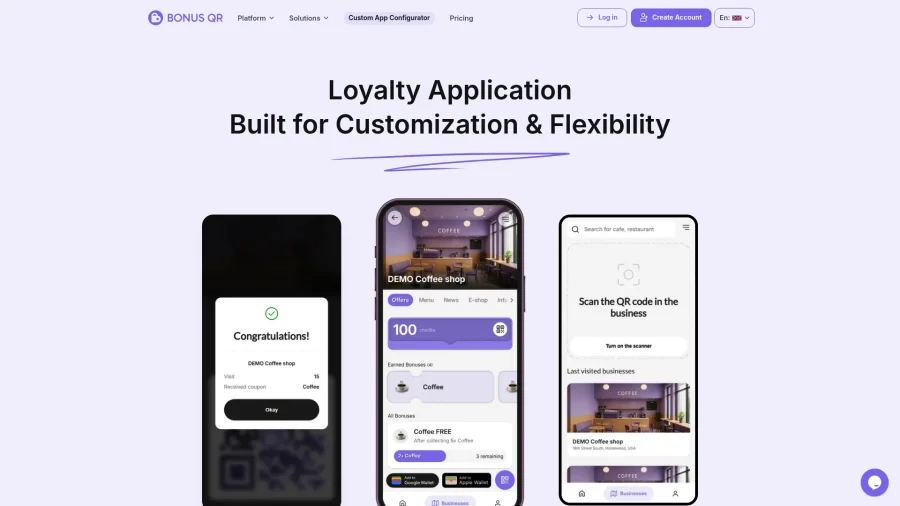
BonusQR is built specifically for SMBs in retail and hospitality that want to launch digital coupon campaigns without complex integrations or technical overhead. The platform supports mobile, QR code, and omnichannel coupon delivery right out of the box. You can track redemptions in real time, segment your customer list for personalized offers, and connect coupon campaigns directly to points or stamp card programs for seamless loyalty integration. Explore the full set of BonusQR features to see how quickly you can set up your first campaign, and check out the electronic reward options to layer in additional incentives that keep customers coming back.
Frequently asked questions
What is the average digital coupon redemption rate for retail and hospitality?
Digital coupons typically achieve redemption rates of 7% to 10% for general retail and mobile campaigns, with food and beverage businesses often seeing rates as high as 20%, compared to roughly 1% for paper coupons.
How do personalized digital coupons impact sales and retention?
Personalized offers deliver redemption rates up to 20% higher than generic coupons, and they build stronger customer loyalty by making each person feel recognized and valued.
Which digital coupon method is most cost-effective for small businesses?
QR codes and mobile coupons are the most cost-efficient options because they require no additional hardware, no POS integration, and can save businesses significantly on printing and distribution costs.
Why measure the impact of digital coupon campaigns?
Without measurement you can’t distinguish profitable campaigns from ones that simply give away margin. Remarkably, only 23% of hotels track the true net impact of their coupon strategies, leaving most businesses without the data they need to improve.
How fast can digital coupons lift sales for SMBs?
Results can appear quickly. Case studies show SMBs achieving meaningful revenue lifts within days of launching well-targeted digital coupon campaigns, with some seeing 35% increases in targeted daypart sales within the first week.