
 Deutsch
 Español
 Français
 Italiano
 Magyar
 Polski
 Slovenčina
 Čeština
Paper loyalty punch cards still sit on counters in coffee shops, nail salons, and sandwich spots across the country. They feel familiar, cheap, and easy to hand out. Yet a growing body of evidence shows that digital wallet loyalty passes can drive significant lifts in sign-ups, return visits, and measurable revenue, often without requiring customers to download anything new. If you’re running a small or medium-sized business and wondering whether the switch is worth it, this guide breaks down the real differences, the numbers that matter, and exactly how to put wallet-native loyalty to work for your operation.
Key Takeaways
| Point | Details |
|---|---|
| Digital loyalty drives engagement | Switching to wallet-native digital cards can double loyalty program sign-ups and in-store engagement compared to paper cards. |
| Paper cards lack data and control | Traditional punch cards are easy to lose and provide no customer tracking or fraud prevention for SMBs. |
| Easy adoption increases ROI | The lowest-friction solutions, like wallet passes requiring no app, yield higher adoption and better customer retention. |
| Design trumps technology | Even digital programs will fail if rewards are poorly structured—design matters as much as the platform. |
| Track what matters | Measure redemption rates, repeat visits, and financial impact to ensure loyalty delivers real value. |
How loyalty programs work: Paper cards vs. digital wallet passes
Having set the stage for why loyalty matters, let’s dig into how the two approaches actually function and differ at a practical level.
A paper punch card is simple. A customer makes a purchase, you stamp or hole-punch a physical card, and after enough stamps they earn a reward. There’s no software, no login, and almost no setup cost. That simplicity is genuinely appealing, especially for cash-only businesses or owners who don’t have a tech budget. The catch is that simplicity cuts both ways. There’s no digital record. If a customer loses the card, the stamps disappear with it. If someone brings in a fraudulent card, you may have no way to verify it. And you have no data on who is actually redeeming rewards or how often.
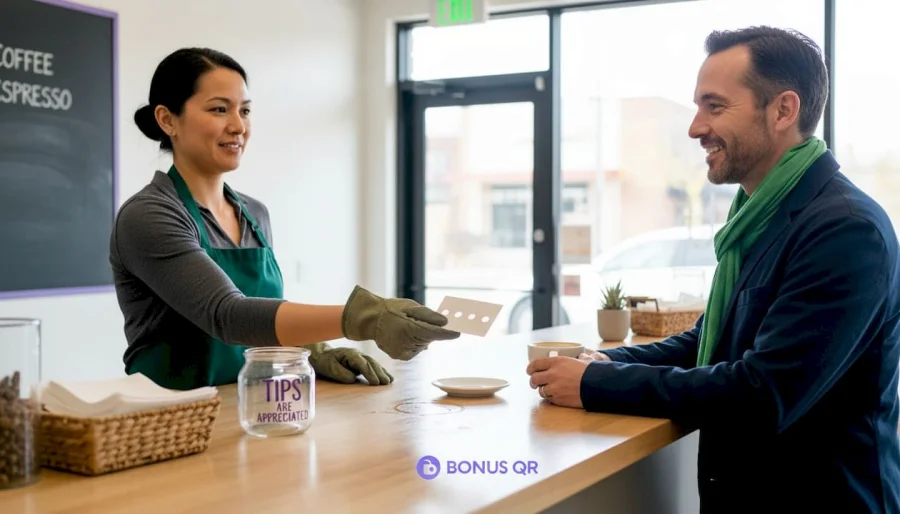
Digital wallet passes work differently. Customers store a loyalty pass directly in Apple Wallet or Google Wallet on their existing smartphone, the same place they keep boarding passes and payment cards. As noted in research on why digital beats paper, wallet-native loyalty is designed to eliminate physical card issues like loss and untraceable visits, and it enables automatic tracking plus merchant-controlled issuance and audit trails. There’s no third-party app for the customer to download.
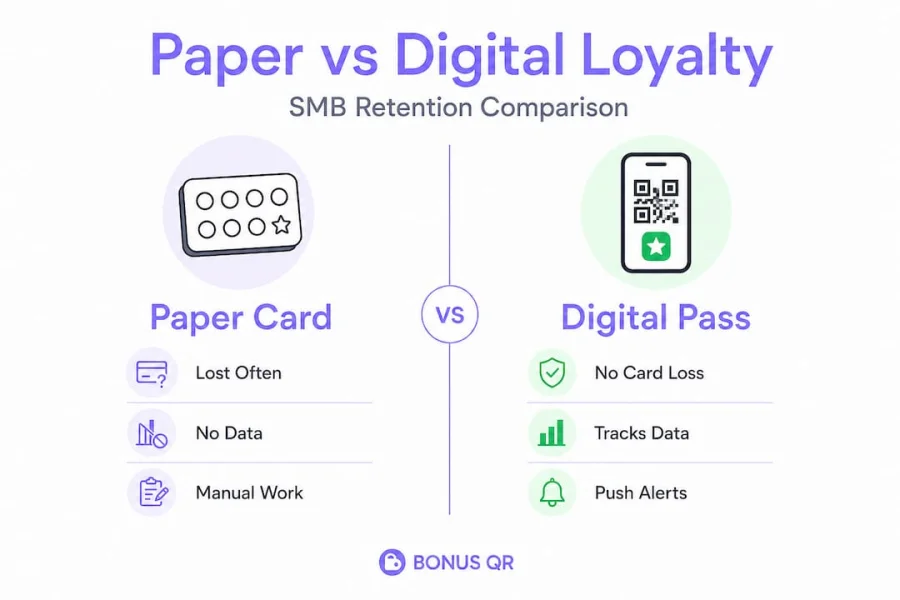
Here’s a side-by-side comparison so you can see the differences clearly:
| Feature | Paper punch card | Digital wallet pass |
|---|---|---|
| Card loss risk | High | None |
| Customer data captured | None | Visit history, contact info |
| Fraud prevention | Low | Merchant audit trail |
| Push notification capability | No | Yes |
| Setup cost | Very low | Low to moderate |
| Staff training required | Minimal | Moderate |
| Analytics available | None | Real-time dashboard |
For most retail shops, restaurants, and service businesses, the limitations of paper become hard to ignore once you look at them side by side. That said, paper still works in specific cases. If your customer base is predominantly older, if your shop is cash-only, or if your transaction volume is very low, a paper card may be a reasonable starting point. You can learn more about making the transition in this digital punch card guide, and explore the tactical side through electronic punch card strategies as well.
It’s also worth understanding that digital loyalty isn’t limited to wallet passes. Some programs rely on standalone apps, loyalty-specific platforms, or POS integrations. Each model has its own tradeoffs, as outlined in this overview of differences between paper and digital vouchers. Wallet-native is the format with the lowest friction for the customer, which is why it tends to outperform other digital formats on adoption rates.
“The best loyalty program is the one your customer actually uses. Friction is the enemy of participation.”
Engagement, adoption, and ROI: Real numbers behind paper and digital
With a sense of how each approach works, it’s critical to look at which one drives real results for your business and your customers.
Numbers matter when you’re making a business decision. Let’s look at what the data actually says.
First, adoption. One of the most common reasons digital loyalty programs underperform is the requirement to download a separate app. Customers hesitate, forget, or simply don’t bother. As research on best digital loyalty card apps shows, requiring an additional loyalty app download can reduce adoption versus wallet-native approaches where customers add the pass in seconds. Wallet-native passes sidestep this problem entirely because they live inside software the customer already has installed.
Second, engagement lift. Data from Yotpo’s mobile wallet partnership confirms that digital wallet passes can drive measurable lift in loyalty engagement metrics versus typical app-install friction, since customers can add and use the pass without downloading a separate app. Across programs tested, wallet passes showed 22% more sign-ups and over 100% higher in-store redemption rates compared to traditional loyalty approaches. That’s not a small gain. It’s a structural advantage built directly into how the pass works.
Third, spending behavior. Research from Square on scaling QSR loyalty shows that for restaurants and quick-service businesses, loyalty program members spend 40% more and return 64% more frequently than non-members. Combine that with wallet-native adoption rates, and the math starts to look compelling quickly.
Here’s a simplified data summary:
| Metric | Paper card baseline | Digital wallet pass |
|---|---|---|
| Program sign-up rate | Low to moderate | 22% higher than standard digital |
| In-store redemption rate | Untracked | Over 100% lift reported |
| Member spend increase | Minimal tracking | Up to 40% more per visit |
| Visit frequency increase | Minimal tracking | Up to 64% more frequent |
You can find practical SMB loyalty program ideas to pair with these approaches, along with retail loyalty application options that match different business models.
Pro Tip: Lower friction equals higher ROI. When evaluating any loyalty tool, ask specifically how the customer joins. If the answer requires more than 30 seconds or a separate download, your adoption rate will suffer.
Beyond enrollments: Preventing digital loyalty pitfalls
So digital wins on numbers, but there’s more to loyalty success than the technology platform. Let’s cover the program design and operational factors that turn digital into real engagement.
Switching to digital loyalty does not automatically produce results. Many small business owners make the switch, see a spike in sign-ups, and then watch engagement drop off over the following weeks. This usually comes down to program design, not technology.
Here are the most common reasons customers disengage after joining a digital loyalty program:
-
The first reward feels too far away. If a customer needs 20 visits before earning anything, they lose interest fast. Research from the restaurant loyalty statistics guide by LoyaltyPass recommends designing programs so the first reward is achievable within two to four weeks of normal customer visit behavior. That keeps momentum alive early in the relationship.
-
Checkout confusion slows the process. If scanning a pass takes too long at the counter, staff skip it. Customers feel awkward. The habit never forms. Keep the scanning process simple, fast, and clearly visible.
-
Redemption is confusing. If customers don’t know what they’ve earned or how to use it, they won’t bother. Clear reward descriptions and instant notifications remove this barrier.
-
Staff aren’t trained. The most polished digital loyalty system fails if your team doesn’t know how to scan passes, explain the program, or troubleshoot basic issues at the point of sale.
When it comes to measuring your program’s actual performance, don’t just count sign-ups. According to research on restaurant loyalty program ROI, a practical methodology tracks enrollment and activation rates, redemption rates, retention and churn, and the effective cost of rewards rather than focusing only on points growth or sign-ups. That last metric matters a lot. If you’re giving away too much margin per redemption, a “successful” program can actually hurt profitability.
You can explore reward strategies for retailers to build a structure that makes financial sense, and review best loyalty apps for SMBs to compare platform features before committing.
Pro Tip: Always brief your staff before launching. A two-hour training session and a simple reference card at the register will do more for your adoption rate than any marketing campaign.
“A digital loyalty card that nobody uses is no better than a paper one sitting in a drawer.”
Digital wallet loyalty: Implementation for small business success
Once you know what to avoid, you need a practical roadmap for rolling wallet-native loyalty out in your own business.
Getting wallet-native loyalty running doesn’t require a massive IT project. But it does require a clear process. Here’s what to plan for:
Integration basics. Most modern loyalty platforms connect to wallet pass issuance through an API or built-in integration. As documented in the PassKit Yotpo integration framework, digital wallet-native loyalty can be implemented via integrations that connect customer reward events from loyalty platforms and commerce layers directly into wallet pass issuance and redemption tracking. In plain terms: when a customer makes a qualifying purchase, the system automatically updates their pass. No manual stamping required.
What your operation needs:
- A QR code or NFC scanner at the point of sale or service counter
- Staff trained to ask customers to show their pass at each visit
- Automated triggers set up so rewards update in real time
- Push notification settings configured for milestone alerts (e.g., “You’re one visit away from your reward!”)
Questions to ask before choosing a vendor:
- Does the platform issue native Apple Wallet and Google Wallet passes?
- Can you set custom triggers for visits, spend amounts, or specific products?
- Does it connect to your existing CRM or POS system?
- Can you pull redemption data and cohort comparisons from the dashboard?
- What does the onboarding and staff training support look like?
You can compare program structures using this guide to loyalty program types, and review electronic reward platform details for technical considerations specific to your business type.
Pro Tip: Choose platforms that offer cohort analytics. This means you can compare the spending behavior of loyalty members versus non-members over time, which is the only reliable way to measure incremental lift rather than just total revenue.
A fresh perspective: Why digital loyalty alone isn’t a silver bullet
You’ve seen how to implement wallet-native loyalty, but don’t be fooled. Technology is powerful, but program design and execution make the real impact.
Here’s what many vendors won’t tell you directly: the technology is the easy part. Plenty of businesses have launched polished, well-branded digital loyalty programs and seen flat results. Why? Because the reward ladder was wrong, the staff wasn’t engaged, or the metrics being watched were the wrong ones.
App-based solutions and wallet passes amplify programs that are already well designed. They cannot fix a program where the first reward takes three months to earn, or where the discount structure quietly erodes your margin with every redemption. As highlighted in research on restaurant loyalty program ROI, you need to measure the effective discount rate and reward funding cost alongside incremental lift, using cohort comparisons. Without that discipline, you can confuse high redemption volume with healthy ROI when the opposite may be true.
The businesses that win with digital loyalty do three things simultaneously. They pick a low-friction technology format (wallet-native, not app-required). They design a reward structure that is reachable but not so generous it eats margin. And they treat staff as partners in the program, not just operators of a scanner.
This integrated view is what we’d call simple loyalty marketing done right. It’s not about adding complexity. It’s about aligning your tech, your incentives, and your team around the same goal: getting great customers to come back more often.
The businesses that fail tend to treat a digital loyalty launch like a one-time campaign. The businesses that succeed treat it like an ongoing system that gets measured, refined, and improved every quarter.
Enhance customer retention with BonusQR’s digital loyalty solutions
Ready to make loyalty measurable and engaging in your business? Here’s how BonusQR’s digital loyalty platform can help.
BonusQR was built specifically for small and medium-sized businesses that want real results without enterprise-level complexity. You can set up a digital stamp card in minutes, issue wallet-compatible passes to customers, and start tracking redemptions and visit patterns from day one.
The platform’s full feature set includes automated reward triggers, push notification tools, real-time analytics, and branding customization, so your loyalty program looks and feels like your business. No POS integration is required to get started, and pricing tiers include a free option for businesses testing the concept. Whether you run a coffee shop, a boutique retail store, or a service-based business, BonusQR gives you the tools to move from paper cards to measurable digital engagement without the headaches.
Frequently asked questions
What are the main drawbacks of paper loyalty cards?
The biggest downsides are cards being lost, a complete lack of customer data, and vulnerability to fraud, since paper offers no audit trail or merchant verification system.
Does wallet-native loyalty require a separate mobile app?
No. Customers use their phone’s built-in wallet, so there’s no extra download required. This directly reduces sign-up friction and improves participation rates from the start.
How soon should businesses set the first loyalty reward in a program?
Aim to make the first reward achievable within two to four weeks of normal visit behavior. Reachable early rewards keep customers engaged before the novelty of joining wears off.
Is customer data and ROI tracking easier with digital loyalty?
Yes. Digital wallet passes provide visit history, redemption records, and merchant audit trails that make it straightforward to track retention and calculate actual program ROI.
What does a best-in-class loyalty program measure?
Top programs track redemption rate, retention, and reward cost, not just total sign-ups, to ensure the program is driving profitable repeat business rather than just activity.