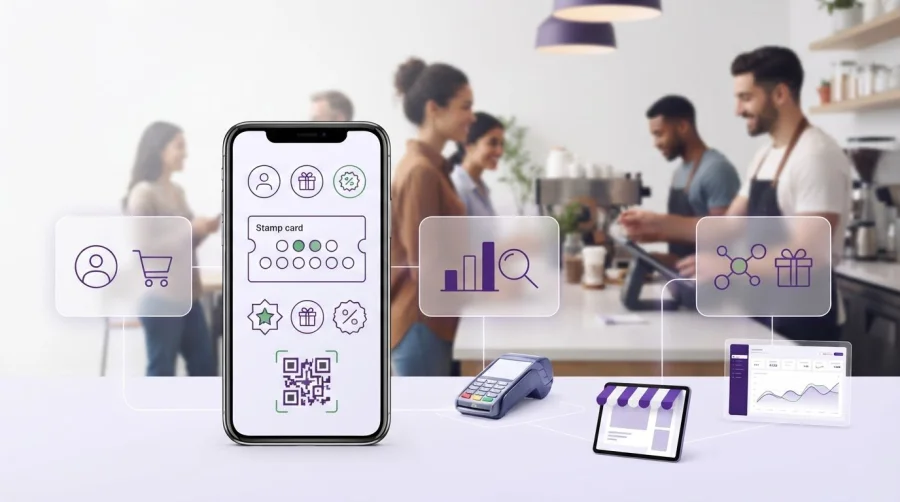
The best loyalty software provider is the one that fits your customer experience and the way your business operates, not the one with the longest feature list. To understand how to choose a loyalty software provider, compare the program types it supports, how it connects with your existing systems, and how easily customers can use it. A loyalty provider supplies the technology and tools businesses use to create, manage, and measure customer reward programs.
Choosing a provider takes more than comparing feature lists. Look for a practical fit for your team, a straightforward customer experience, and tools that support your goals without adding unnecessary complexity.
This guide explains how providers differ, which capabilities deserve a closer look, and how to match a platform to your business needs. You’ll also find a side-by-side comparison of common provider options and a decision guide to help narrow your shortlist with confidence.
Key Takeaways
- Map the systems your loyalty program needs to connect with, then prioritize providers that fit your current customer journey.
- Assess how software collects and uses customer data, supports analysis, and protects accounts from misuse.
- Compare provider models against your team’s capacity: choose tools you can manage internally or support designed for a more guided approach.
- Use customer behavior to shape relevant rewards, then track whether those choices support your program goals.
- Explore BonusQR’s loyalty platform and Digital Stamp Card when you want a practical digital rewards option for your business.
What is a loyalty service provider?
A loyalty software provider supplies the technology for building and running a customer rewards program. Its platform may manage enrollment, reward rules, customer activity, and redemption across online and in-person channels. For example, a café might reward repeat visits, while an online retailer could recognize orders placed through its website. The provider’s capabilities determine how those activities are recorded and how customers receive rewards.
Integrations connect loyalty data with the systems a business already uses. A CRM can link member activity to customer profiles. A customer data platform, or CDP, can combine information from different customer touchpoints. E-commerce integrations can record online orders, while POS integrations can capture in-store purchases. Marketing automation can then use program activity to tailor messages, such as reminders about an unused reward.
Map the customer journey before comparing features. Note where customers discover the program, identify themselves, earn rewards, and redeem them. Then connect each step to the system that supports it. A retailer might need its online store and POS to recognize the same member. A service business might prioritize CRM records and marketing tools. This inventory shows which integrations are essential at launch and which can wait.
Ask how information moves between systems. Look for clear details about what data is shared, when it updates, and how errors are handled. A connection that exports only member names may not support purchase-based rewards. A marketing integration also needs relevant activity, such as enrollment or redemption, to trigger useful campaigns. These details distinguish a practical workflow fit from a long, generic integration list.
Program design also involves customer data and consent. The California Legislature states that a business may enter a consumer into a financial incentive program only if the consumer gives prior opt-in consent that clearly describes the program’s material terms and may be revoked at any time. California Legislature states that consent must clearly describe material program terms and may be revoked at any time. Businesses serving California customers should account for this when designing enrollment. A customer loyalty program should make its terms clear at the point customers join.
| Provider option | Typical integration focus | Useful fit |
|---|---|---|
| All-in-one platform | CRM, commerce, POS, and marketing | Businesses coordinating several channels |
| Commerce-focused platform | E-commerce orders and customer accounts | Online-first retail programs |
| POS-connected platform | In-store transactions and redemption | Locations rewarding purchases at checkout |
| CRM or CDP-connected platform | Customer profiles and activity data | Businesses organizing customer records |
| Marketing-integrated platform | Campaigns and member actions | Teams using rewards in customer messaging |
| API-first platform | Custom links to existing systems | Businesses with technical implementation resources |
| Wallet-focused platform | Digital reward access | Programs centered on mobile convenience |
| Managed-service provider | Platform plus program operations | Teams seeking dedicated operating support |
Choose a provider whose core capabilities support your essential customer journey, then assess whether its data flow works for the program you plan to launch.
What exactly is Customer Loyalty Software?
Customer loyalty software helps a business create and manage a rewards program. It records member activity, applies earning rules, and tracks reward redemption. For example, a neighborhood shop could award points for purchases and let members exchange them for a discount. The software organizes program rules and customer records in one system, making activity easier to review.
Customer data helps teams understand whether the program encourages repeat business. Useful records can include enrollment, purchase activity, reward balances, and redemption history. Analytics turn those details into practical questions: Which rewards do customers use? Which members have stopped engaging? A 5% increase in customer retention can boost business profits by 25% to 95%. Loyalty members spend three times more than non-loyalty members.
Use analytics to compare member behavior before changing the program. A retailer, for instance, could compare redemption across product categories and adjust rewards that go unused. Review enrollment, repeat purchases, and reward use together: sign-ups alone do not show ongoing engagement. Looking at these measures side by side helps distinguish an appealing offer from one that brings customers back.
Security matters because a loyalty platform stores customer information and reward balances. Look for safeguards such as multifactor authentication, data encryption, and fraud detection. These controls address different risks: authentication protects account access, encryption helps protect stored or transmitted information, and fraud detection can flag unusual activity. Define which staff members can view customer records or change reward rules.
Scalability refers to whether a program can adapt as a business serves different customer groups or regions. A brand with several locations might offer a shared points balance while tailoring promotions by store or audience. Compare how the software handles separate program rules, currencies, languages, and reporting needs. These details determine whether one setup can support new markets or customer groups.
Customization lets a business align program rules and presentation with its brand. Check whether you can set earning conditions, reward options, and customer-facing language to suit the experience you want to create. A coffee shop might prefer a simple stamp-style reward, while a retailer may need points for different purchase categories. The right fit depends on how customers earn, understand, and redeem rewards.
Assess value from both sides. Customers need rewards that are clear and attainable; the business needs repeat visits that support retention. Include setup, maintenance, rewards, and marketing costs when reviewing program economics. Then compare those costs with changes in repeat purchases and customer activity. This helps distinguish a useful retention tool from a program that attracts sign-ups but sees little ongoing use.
Use these criteria to shape a program around the data you need, protections you expect, and customer experience you want. To put those priorities into practice, start shaping a digital rewards program around your business goals.
Evaluating loyalty provider capabilities
Compare each platform with your program rules, launch needs, and customer journey. A feature matters when your team can use it and customers can understand it.
Rewards, Points, Tiers, and Referrals
Evaluate each reward type by the behavior it supports. Points build toward a chosen reward, while discounts reduce the price of a purchase. Tiers recognize customer activity with different benefit levels, and referrals encourage existing members to introduce new customers. Subscription features can link recurring membership with ongoing benefits.
To compare reward features, map each one to a customer action, earning rule, and redemption step. For example, check whether a customer can understand how points lead to a reward before joining.
Implementation and Migration
Implementation covers setup, configuration, testing, and launch. Migration transfers relevant member records, balances, or program history from an existing system. Ask how the process handles duplicate profiles, expired rewards, and missing fields. A clear migration plan identifies which data moves, how it is mapped, and who approves the result.
Onboarding should help your team configure rules and practice everyday tasks. Test enrollment, earning, and redemption with a sample customer journey before launch. This can reveal gaps before customers encounter them.
Technical Teams and Customer Support
Technical teams vary in their ability to handle integrations, custom requirements, and troubleshooting. Match their role to your setup: a straightforward program may need configuration guidance, while a custom e-commerce connection may require technical implementation support.
Compare support channels, documentation, and escalation processes. For example, identify how your team reports a failed reward transaction and follows its status. For payment-card programs, clarify which services fall within PCI DSS scope. SOC 2 reports cover controls relevant to security, availability, processing integrity, confidentiality, or privacy.
Review the platform’s capabilities through real tasks, not feature labels. Test whether staff can edit a reward, correct an account issue, and explain a rule to a customer. A short, task-based review can reveal unnecessary complexity.
Assess integration and e-commerce readiness by tracing a test purchase from order capture to reward credit. Confirm how the system handles returns, canceled orders, and duplicate events. Then test a discount redemption through the intended channel. These scenarios show whether the platform’s rules fit your actual workflows.
A security review should cover access controls, customer data handling, and fraud detection. Check whether multifactor authentication or encryption protects relevant workflows, and whether unusual reward activity can be flagged. For each capability, record the business task it supports, the evidence your team reviewed, and any implementation work it requires. This creates a practical comparison, rather than a feature-count contest.
Matching providers to business use cases
For small businesses, the best fit is a platform the team can manage; businesses seeking dedicated help with ongoing operations may prefer a managed service provider. For e-commerce, retail, and restaurants, compare how each platform handles purchases, member identification, and rewards across the channels customers use.
Start with your operating model. An online retailer may need a system that connects orders with member accounts and applies rewards after eligible purchases. A physical retailer may prioritize member lookup and reward redemption at checkout. A restaurant may focus on repeat visits, simple earning rules, and rewards staff can explain quickly during service.
Business requirements should describe the customer experience, not just list desired features. Write down how members join, earn, and redeem, then identify who manages each task. A single-location shop with limited technical resources may favor straightforward program controls. A multi-location brand may need shared rules, location-level reporting, and a consistent experience across channels.
Technical requirements depend on your current systems and growth plans. List the e-commerce, CRM, POS, and marketing tools that need to exchange information, then separate essential connections from future improvements. A retailer selling online and in stores, for example, needs a clear plan for recognizing the same member in both channels. A business without an internal technical team should weigh implementation effort carefully.
Provider models differ in how much work stays with your team. A loyalty platform provider supplies software your staff can operate, making this model a fit for brands with the resources and expertise to manage the program in-house. A managed service provider offers dedicated support for teams seeking help with ongoing program operations. Match the model to your capacity, not business size alone.
Compare each option against a real customer journey. For a restaurant, test enrollment, earning after a visit, and redemption on a later order. For e-commerce, trace an order through to reward credit, then consider how returns affect the balance. For retail, check whether staff can identify a member and apply a reward without slowing checkout.
Use this decision guide to narrow the fit:
- Choose a platform provider if your team can set rules, review program activity, and manage daily updates.
- Consider managed support if program operations need dedicated assistance from outside your team.
- Prioritize integrations that connect the channels customers already use and staff already manage.
- Test one complete journey from enrollment to redemption before committing to a setup.
The right loyalty software provider fits your business requirements, technical capacity, and customer journey. A focused comparison can help you choose a practical retention tool without adding channels or features your team will not use.
Personalization and analytics
Personalization uses customer activity to shape relevant rewards, while analytics shows how those choices perform. Compare platforms by how clearly they connect member behavior, campaign decisions, and loyalty outcomes.
Personalization and Reporting
Personalized rewards use customer information to make offers more relevant. A bookstore, for example, could promote a genre based on a member’s past purchases. Check whether a platform can group members by meaningful actions, such as purchase category, redemption history, or visit frequency. Useful segments support specific decisions instead of simply sorting customers into broad groups.
Reporting should help your team see whether a campaign changed behavior. Review enrollment, repeat activity, reward redemption, and inactive members together. Many sign-ups but few redemptions point to a different issue than strong redemption with little repeat activity. Compare campaign results with a clear objective, such as encouraging another visit or promoting a product category.
Check whether reports let staff filter by campaign, customer group, and time period. For example, compare members who received a personalized offer with those who did not. Keep the analysis practical: identify the group, the reward, the response, and the next action your team could take. This makes analytics useful for improving the program, not just reviewing dashboards.
Real-Time Analytics
Real-time analytics updates activity as customer actions happen, rather than waiting for a scheduled report. A retailer could use current redemption data to spot a reward that customers are claiming quickly. Historical reporting, by contrast, is better for comparing longer-term patterns across campaigns or member groups.
Assess which events appear promptly, such as enrollment, purchase, reward issuance, and redemption. Then trace one customer action through to a dashboard update. If a member redeems an offer in a store, staff should be able to understand the resulting account activity without waiting for a separate report.
Live data is most useful when it supports an immediate decision. A marketing team might pause an offer with weak engagement, while a location manager could review a redemption issue during service. Separate urgent signals from routine trends. The platform should make the relevant action clear, rather than presenting activity without useful context.
Choose analytics that answer the questions your team will act on. To put personalized rewards and measurement into practice, start building your loyalty program.
BonusQR: Loyalty application
BonusQR offers a loyalty application and platform for businesses building a digital rewards program. Its loyalty software supports options such as a Digital Stamp Card, which can structure rewards around repeat visits. Choose a stamp-based format when customers need a simple path toward a reward. The right setup depends on your program rules and the experience you want to create for members.
If you’re comparing providers, consider whether a focused digital loyalty tool fits your business needs and the customer journey you’ve mapped. BonusQR can be a natural next step for exploring a loyalty platform and its application for your program. Visit BonusQR online to learn more.
Turn your loyalty strategy into a practical next step
Your next step is to turn your priorities into a simple program brief. Define the customer action you want to encourage, the reward that supports it, and the staff tasks involved in running the program. This gives your team a clear basis for deciding whether a platform fits today’s needs and can adapt as your business changes.
That’s the practical heart of how to choose a loyalty software provider: select a solution that supports the experience you want to create without adding complexity your team doesn’t need. BonusQR offers a loyalty application, loyalty platform, and loyalty software for businesses planning a digital rewards program.
Ready to explore a setup that fits your goals? Contact BonusQR about loyalty software and take the next step toward building customer loyalty. A focused plan can help you move forward with clarity and confidence.
Frequently Asked Questions
How do I evaluate loyalty software before buying?
Evaluate a platform with realistic customer and staff scenarios, not just a feature checklist. To choose a loyalty software provider, write down a task such as correcting a member’s reward balance, then assess how the software handles it. Test customer steps too, including joining, understanding reward terms, and redeeming an offer. Note confusing steps or manual work, then use those findings to compare options.
How do the eight considerations compare?
Compare the eight considerations by their effect on daily operations: program fit, reward flexibility, customer experience, integrations, data protection, implementation, support, and reporting. Set priorities according to your business needs. A store with several checkout systems, for example, may rank integration higher, while a small team may prioritize simple administration. Separate must-haves from useful extras so a lengthy feature list does not outweigh practical fit.
How do you run the evaluation?
For a practical approach to how to choose a loyalty software provider, start by naming the program goal and who will handle setup and daily management. Create a short test plan with a sample customer, an earning action, a reward, and a redemption. Have staff try the steps, noting required integrations, manual work, and unclear rules. Finish by comparing results with your must-haves and documenting trade-offs before deciding.
Should you choose a SaaS or self-hosted loyalty platform?
Choose SaaS when you want the provider to host and maintain the platform, which you access through its service. Self-hosted software gives your organization more control over its technical environment, but your team takes on more infrastructure and maintenance. Compare deployment requirements, internal technical capacity, data management, and update processes. SaaS may be more practical without staff to maintain hosting; self-hosting may suit a team with specific control requirements.
What should enterprise buyers ask about scalability and support?
Enterprise buyers should assess whether the platform can manage separate brands, locations, customer groups, and operating rules within one program. Ask how permissions work across central and local teams, and how data can be exported for internal analysis. Review support escalation, implementation roles, and technical documentation. Also assess recovery procedures and service commitments so operational teams understand how disruptions are handled.
What features should a loyalty software provider offer?
Look for features that match your earning and redemption model: stamps, points, cashback, visit-based rewards, spending rewards, discounts, or referrals. Analytics, customer segmentation, and wallet access can support program management and member convenience. BonusQR offers a Digital Stamp Card and Points, alongside Google Wallet and Apple Wallet integration. Choose features around the customer actions your program is designed to encourage, rather than adopting every available module.
How much does loyalty software cost in the United States?
Costs vary by platform and plan. Compare setup, customization, integrations, support, and program features, as well as ongoing maintenance, rewards, and marketing costs. Review the full scope your team will use, not just the initial software charge. BonusQR offers a free plan, with paid plans and a White-Label option for businesses that need additional features or a branded app.
What POS, ecommerce, CRM, and marketing integrations should loyalty software support?
Prioritize connections that carry the customer actions your program relies on. POS and e-commerce links can associate purchases with member activity; CRM or CDP connections can align loyalty records with customer profiles; marketing tools can use program activity in campaigns. Define the exact events and fields required, such as purchase, return, enrollment, and redemption. POS integration is not essential for every setup: BonusQR’s platform operates without it.


