Loyalty Program Names: Ideas, Formulas and How to Choose
The best loyalty program name is short, easy to say and spell, tells customers what they get, and sounds like your business. “Brew Crew Rewards” works for a coffee shop because it names the crowd and the payoff. “Premium Rewards Program” works for almost no one because it could belong to anyone. This guide gives you the formulas behind good names, more than 80 ideas sorted by business type, and a scoring method to pick a winner without guessing.
Key Takeaways
- A strong name is easy to remember, pronounce and spell, explains the benefit, and builds an emotional connection with members.
- Use a formula to generate options fast: brand plus benefit, club or society names, industry terms plus a reward word, action verbs, or tier words.
- Match the name to the mechanic. Stamps, points, cashback and tiers each suggest a different vocabulary.
- Score three to five finalists, then check for existing use, domain availability and conflicts with unrelated businesses before you commit.
- Clever never beats clear: if customers cannot tell what they earn, the name is not doing its job.
What a loyalty program name actually does
A name is the first thing a customer says out loud about your program. At the counter, in a text to a friend, in an app store search: the name has to carry the whole idea in two or three words. Repeat customers are the lifeblood of any small business, and a program with a forgettable name is a program people forget to use.
A good name does four jobs:
- It signals value. The customer understands there is something to earn.
- It fits the brand. A relaxed neighborhood bakery and a high-end spa should not sound alike.
- It is easy to share. Staff can say it without explaining it, and customers can recommend it in one breath.
- It makes membership feel like belonging. People join clubs and crews more readily than they join “programs.”
If you are still deciding what the program itself should look like, start with our overview of loyalty program examples that actually grow your business, then come back here to name it.
Three principles for a name that sticks
Forbes, writing about how Ulta, Victoria’s Secret and others renamed their programs, boils naming advice down to three principles: the name should be easy to remember, pronounce and spell; it should clearly explain what to expect; and it should evoke emotional engagement. The same piece warns that cutesy names are not clever when they fail to communicate the program’s value.
Here is how to apply each one in a small business.
Easy to remember, say and spell
Read your shortlist aloud. Then ask someone to type the name after hearing it once. If they hesitate over the spelling, customers will too, and they will not find your program when they search for it. Avoid creative misspellings (“Kreative Kuts Klub”) and long phrases. Two or three words is a sensible ceiling.
Clear about what members get
A name does not have to list the reward, but it should hint at it. “Stamp Squad” says collect. “Perks” says benefits. “Cash Back Crew” says money. “The Inner Circle” says status and access, which is fine if your program really delivers early access or exclusive offers.
Emotionally engaging
People respond to names they can identify with. Forbes cites Cookie Monster Rewards from PNW Cookies as an example of a name customers can see themselves in. The principle scales down to any shop: give your regulars an identity, such as a crew, a society, a club or a garage, and they will behave like members.
What well-known programs teach about naming
You are not Nordstrom or Ulta, but their naming decisions show how names evolve with a program.
Nordstrom: from points to a club. When Nordstrom introduced The Nordy Club in 2018, the company kept the traditional point system and favorite benefits of its previous program, and added personalized service and exclusive access to products and events. The lesson: “club” language works when the program promises more than a discount.
Ulta: a rename that follows the program. According to Forbes, Ulta Beauty changed “Ultamate Rewards” to “Ulta Beauty Rewards” in January 2024. An Ulta executive said the changes went beyond a new name and reflected what its most loyal guests want. The lesson: a name should be updated when the program changes, not just for style, and plain brand-plus-benefit names age well.
Murphy USA: a name that says where it works. Murphy USA’s app-based program is called Murphy Drive Rewards. Members earn points on most purchases at the pump and in store, and cash them in for rewards in the app. The name combines the brand, the core customer activity (driving) and the payoff (rewards). For a gas station or convenience store, that is a template worth borrowing.
The Home Depot: tier names built for the audience. For its Pro Xtra program, the agency Siegel+Gale describes a naming process designed around professionals, so the brand could speak their language. The tier names Member, Elite and VIP were chosen to be clear, straightforward and appreciative, reflecting that Pros work fast and hard. The lesson: know your customer’s tempo. Busy tradespeople want plain words; a spa clientele may want something softer.
Five naming formulas you can use today
When you are staring at a blank page, a formula gives you a structure to fill. These five patterns cover most of the strong names small businesses use.
1. Brand + benefit noun
The simplest and most professional pattern: your business name plus a word like Perks, Rewards, Credits or Benefits. Examples: “Maple Street Perks,” “Harbor Café Rewards,” “Peak Fitness Credits.” It is easy to spell and easy to find, and it builds your brand every time someone says it. Best for businesses with a short, distinctive name.
2. The + adjective + group noun
This creates a sense of membership: “The Inner Circle,” “The Regulars Table,” “The Golden Few.” It suits premium or exclusive brands, but make sure the benefits justify the exclusivity.
3. Industry term + reward word
Pull a word from your trade and attach it to a reward word: “Brew Crew Rewards” for coffee, “Barbell Bonus” for a gym, “Shear Savings” for a salon. This signals that the program was made for your customers, not copied from a template.
4. Action verb + reward noun
Good for gamified programs: “Collect & Cash In,” “Sip & Save,” “Stamp & Save,” “Visit & Win.” The verb tells customers what to do, which is useful when the program is a stamp card or a challenge.
5. Brand + tier word
For programs with levels: “Oak & Ember Insider,” “Peak Elite,” “Harbor Gold.” It signals status and progress, so it pairs naturally with tiers. If you are building levels, see how to design effective loyalty program tiers before naming each one.
Three other patterns come up repeatedly: a status word plus a reward word, a pun tied to what you sell, and a warm, relationship-driven phrase. Coined single words also work well when the program name doubles as an app name.
Loyalty program name ideas by business type
The lists below are starting points written to illustrate the formulas above. Swap in your own brand, neighborhood or signature product to make them yours.
Restaurants and cafes
Food and drink programs lean on social, appetite-driven language.
| Style | Name ideas |
|---|---|
| Club or society | The Sip Society, The Cravings Club, Tastemaker Club |
| Crew or squad | Brew Crew Rewards, Table Crew, Noodle Squad |
| Action verb | Sip & Save, Stamp & Savor, Eat More, Earn More |
| Brand + benefit | [Name] Bites, [Name] Table Perks, [Name] Beans Rewards |
| Coffee specific | Coffee Connoisseur Club, Daily Grind Rewards, Bean Counter Club |
For program mechanics that suit a dining room, see these restaurant rewards program ideas and customer loyalty program examples for restaurants.
Retail and boutiques
Retail names can lean on style, discovery and insider access.
- The Closet VIP
- Style Insider
- Style Squad
- The Thread Collective
- Shelf Life Rewards
- The Finders Club
- Front Row Perks
- Hidden Gems Club
For a side-by-side look at mechanics for stores, read our comparison of customer reward systems for small retail stores.
Beauty, salons and spas
Customers here buy a feeling, so soft, aspirational language fits.
- The Glow Club
- The Luxe Club
- Glow Getter Rewards
- Polished Perks
- Radiance Circle
- Chair Time Rewards
- The Retreat Club
Gyms, studios and wellness
Motivation and progress are the natural themes, so tier and level words work well.
- The Grind Society
- Level Up Rewards
- The Endurance Club
- Rep Rewards
- Stronger Together Club
- Mat Time Rewards
- Balance Circle
Pet businesses
Pet owners respond to playful wordplay.
- Paw Points
- The Treat Club
- Happy Tails Rewards
- Pawsome Perks
- Wag & Win
- Fetch Rewards
Auto, fuel and convenience
These customers are on the move, so speed and savings language lands well.
- Drive Rewards
- Road Royalty
- Pump & Perks
- Gearhead Garage
- Fill-Up Club
- Mile Markers Rewards
- Tune-Up Crew
Hotels and hospitality
Stay-based programs can borrow from travel and welcome language.
- Stay Circle
- Return Guest Club
- The Key Collective
- Home Away Rewards
- Check-In Perks
Grocery and everyday shops
Keep it simple: these customers shop weekly and want savings, not mystique.
- Fresh Rewards
- Basket Bonus
- Neighbor Savings
- Cart Credits
- Local Loyalty Club
Florists, art supply and specialty shops
Specialty stores can go very niche, which is what makes them memorable: Blooming Rewards for a florist, Brushstroke Benefits for an art supply store, Page Turner Club for a bookshop, Grow Together Rewards for a garden center.
Match the name to the type of program
Your name should fit how customers earn. Loyalty programs come in several common formats, and Stripe’s overview of loyalty programs lists points-based, tiered, cash back, paid membership, visit-based or punch card, coalition, value-based and hybrid models. Here is how naming usually lines up with each one on a small-business platform.
| Program type | What customers do | Naming vocabulary | Example |
|---|---|---|---|
| Digital stamp card | Collect a stamp per visit or purchase | Stamp, punch, collect, card, fill | “Stamp Squad” |
| Points | Earn points per dollar spent | Points, perks, credits, rewards | “Harbor Perks” |
| Tiered | Move up levels with spending or visits | Tier words: Silver, Elite, Insider, VIP | “Peak Elite” |
| Cashback | Get a percentage back as credit | Cash, back, bonus, savings | “Cash Back Crew” |
| Referral or challenge | Invite friends or complete tasks | Squad, friends, quest, level up | “Bring a Friend Club” |
A tiered program with a name like “Stamp Squad” will confuse people, and a simple coffee stamp card named “The Platinum Society” sets expectations the program cannot meet. When the format changes, revisit the name. If you are still weighing formats, our guide to loyalty program ideas for small businesses walks through them.
A simple method for choosing the final name
Brainstorming gives you a list. A scoring method gives you a decision. The Wise Marketer describes a five-step naming process built on five criteria: cultural relevancy, value, utility, brand compatibility and regional reach. The author suggests scoring each candidate from 1 to 5 against weighted criteria totaling 100 percent, then applying qualitative filters to the top three to five names.
A small-business version takes about an hour:
- Generate 15 to 20 names using the formulas above. Do not judge yet.
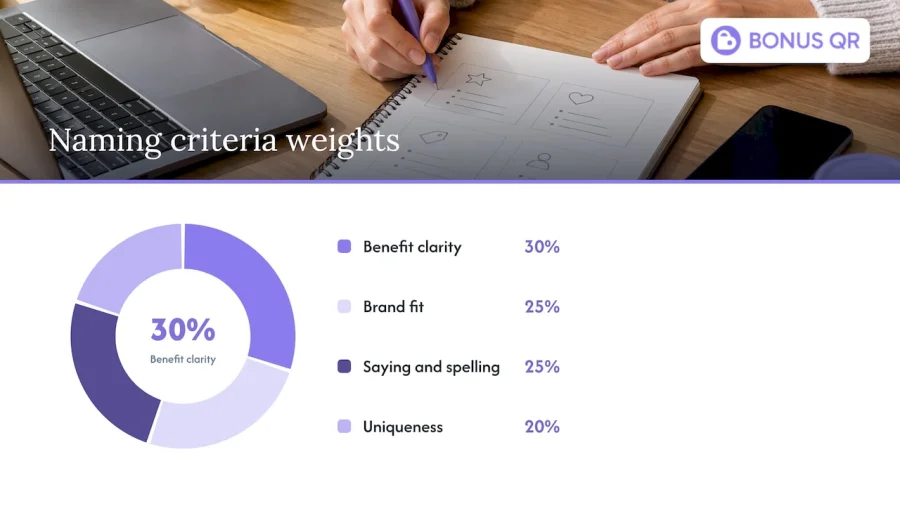
- Pick your criteria and weights. For example: clarity of benefit 30 percent, fit with brand 25 percent, ease of saying and spelling 25 percent, uniqueness 20 percent.
- Score each name from 1 to 5 on every criterion. Multiply by the weights and total them.
- Keep the top three to five.
- Test them on real customers. Ask five regulars: “What do you think you get if you join this?” If they answer correctly without help, the name is working.
This kind of step-by-step evaluation mirrors how you would foster customer loyalty step by step: start with what the customer values and build the experience around it. The name is only the front door.
Worked example
Imagine a neighborhood bakery choosing between “Rise & Reward,” “The Bread Winners Club” and “Oven Perks.”
| Criterion (weight) | Rise & Reward | The Bread Winners Club | Oven Perks |
|---|---|---|---|
| Clear benefit (30%) | 4 | 3 | 5 |
| Brand fit (25%) | 4 | 5 | 3 |
| Easy to say and spell (25%) | 5 | 4 | 5 |
| Uniqueness (20%) | 3 | 5 | 2 |
| Weighted score out of 5 | 4.05 | 4.05 | 3.90 |
Two names tie, which is useful information. The tiebreaker is the customer test: which one do regulars describe correctly, unprompted? That is how a scorecard narrows the field while people make the final call.
Check before you commit
The Wise Marketer also recommends filtering finalists by whether the name is already in use in the markets where you compete, whether the URL is available, whether it conflicts with an unrelated business, and what other limitations exist. For a small business, that translates into a short checklist:
- Search the name in quotes on Google and on social platforms. If another local business in your category uses it, move on.
- Check the domain and social handles. Even if you never build a separate site, you will want a clean link to share.
- Check trademark databases if you plan to expand or franchise. A trademark attorney can confirm whether a name is safe to use in your category.
- Say it in other languages you serve. If your customers speak more than one language, make sure the name does not mean something unintended.
- Look at how it appears in the app and on a stamp card. A long name gets truncated on a phone screen or wallet pass.
Branding is more than the name. Logo, colors and tone of voice all shape how members perceive the program, which we cover in loyalty program branding for small business growth.
Common naming mistakes
Being too generic. “Rewards Program” or “Loyalty Club” tells customers nothing about you. Add a brand or industry word.
Being too clever. A pun that needs explaining is a pun that costs you sign-ups. If staff have to translate the name, simplify it.
Mismatching tone. A luxury brand should avoid casual names like “The Fun Club,” and a playful brand should avoid stiff corporate names. The name has to feel like a natural extension of the brand.
Making it too long. Short names, ideally two to three words, are easier to remember and share.
Overpromising. “Elite” and “VIP” create expectations. If the top tier gives a five percent discount, choose a friendlier word.
Naming before designing. Decide how members earn and redeem first. Then name what you built, not what you imagine.
What we have learned about naming loyalty programs
We build BonusQR for small businesses, and we see the same pattern again and again: the programs that get used are the ones customers can explain in one sentence. A stamp card called “Brew Crew Rewards” is understood the moment someone walks past the counter. A program with a vague name and a complicated earning rule is not.
That is why we think the name and the mechanic should be decided together. Our platform is designed so you can launch stamps, points, cashback or tiers through a QR code, with no POS integration required, and change the rules later without reprinting anything. That flexibility matters for naming. You can launch with a simple name and a simple stamp card, watch how customers respond, and grow into tiers or cashback while the name still fits.
Our advice is practical. Pick a name that is short, warm and specific to your business. Put it on the wallet card, the counter sign and the notification customers receive, so it becomes part of the routine. A loyalty program is not a discount in disguise. It is a reason to come back, and the name is how people remember that reason.
Michal Palus
Put your new name to work
A name only matters once customers can use it. With BonusQR, you can set up digital stamp cards, points, tiered cashback, fixed discounts and special-occasion rewards, brand them with your own program name, and let customers join by scanning a QR code. Customers can add the card to Apple or Google Wallet, and you get automated notifications and analytics to see how the program performs.
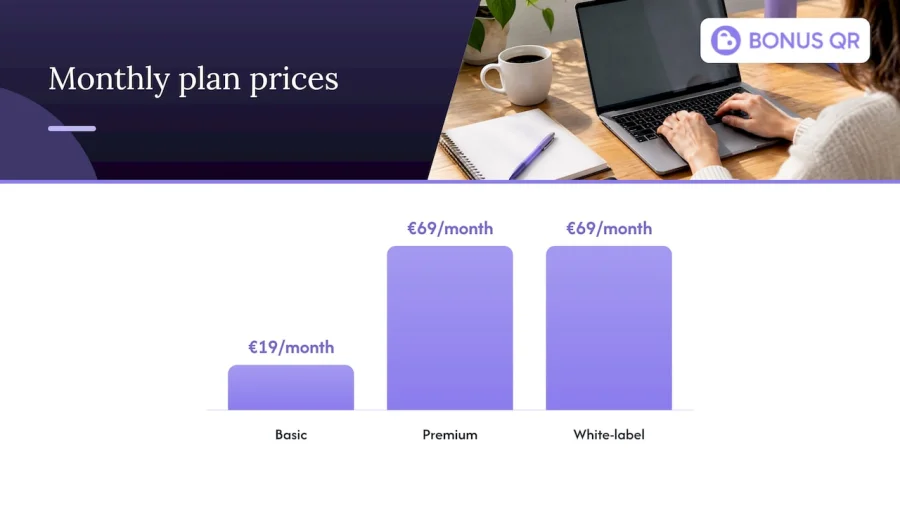
There is a Free plan to start, Basic at €19 per month and Premium at €69 per month; see the BonusQR plans and pricing for what each includes. If you want your program inside a fully branded app, the white-label option has a one-off setup fee of €690 plus a monthly subscription of €69, and custom app development starts from €1,500 one-off.
FAQ
How long should a loyalty program name be?
Two to three words is the practical target. Short names are easier to remember, say aloud and fit on a wallet pass or app icon. If your business name is already long, use a short benefit word like “Perks” instead of a full phrase.
Should my loyalty program name include my business name?
Often yes, especially for new or small programs. A brand-plus-benefit name such as “Maple Street Perks” is easy to find and builds recognition every time it is used. A standalone name such as “The Cravings Club” can work too, as long as it is clearly tied to your business on signs, cards and messages.
Should the name mention points, stamps or cash back?
Only if it helps customers understand the program quickly. A name like “Stamp & Save” works for a stamp card, but it will feel limiting if you later add tiers or cashback. A more general name such as a club, crew or perks name gives you room to grow.
Can I change my loyalty program name later?
Yes, and large brands do it when the program changes. Ulta, for example, renamed its program in January 2024 to Ulta Beauty Rewards alongside program enhancements, as reported by Forbes. If you rename, tell members in advance, keep their points and stamps intact, and explain what is better.
How do I know if the name is working?
Ask new members and regulars to describe the program in their own words. If they mention the benefit without prompting, the name is doing its job. Track sign-up rate at the counter and how often members mention the program by name, and compare against your goal.
Sources
- Tips For Renaming A Loyalty Program, From Ulta, Victoria’s Secret and More (Forbes)
- Welcome to The Nordy Club (Nordstrom)
- Murphy USA FAQs (Murphy Drive Rewards)
- The Home Depot: Naming the Pro Xtra loyalty program (Siegel+Gale)
- Five Steps to Creating the Best Name for Your Loyalty Program (The Wise Marketer)
- How loyalty programs work for businesses (Stripe)
- How to Foster Customer Loyalty: Step-by-Step for Lasting Results


