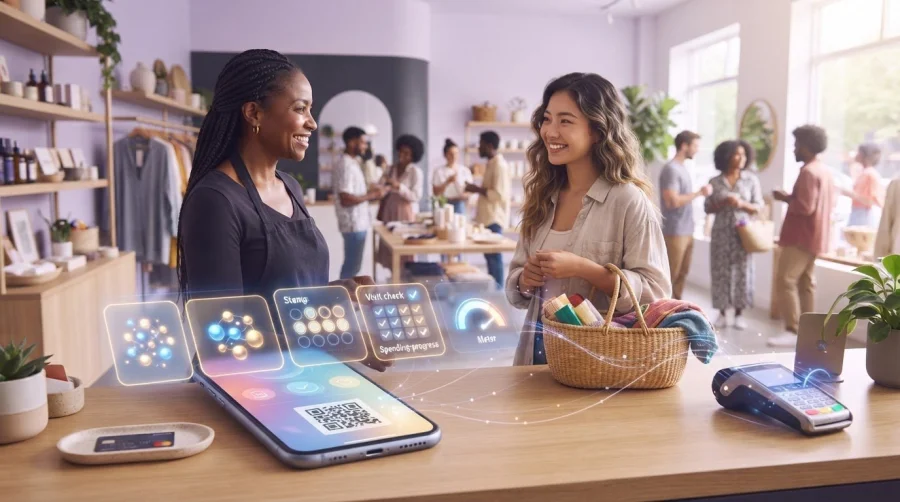
A customer reward system for a small retail store can use points, stamps, visit rewards, or incentives tied to how much customers spend. Visit-based rewards encourage customers to return, while spending-based offers reward larger purchases.
A basic punch card is not the only option. The reward should feel worthwhile to customers and be simple for your team to manage. Choose a format based on how often people shop with you, what they buy, and which behavior you want to encourage.
This guide compares loyalty program formats, including points, digital stamp cards, visit rewards, and spending incentives. You’ll learn how to track repeat visits, average transaction value, and participation, then use customer data to make rewards more relevant. The aim is to help you choose a program that fits your store and assess its results.
Key Takeaways
- Compare points, stamps, visit-based rewards, and spending-based offers to find a format that fits your customers’ shopping habits.
- Track repeat visits, average transaction value, and program participation to see whether your rewards are supporting retention and revenue.
- Use purchase patterns to shape relevant offers, and keep sign-up and reward redemption simple for customers.
- Set clear earning and redemption rules so customers understand the value and your team can manage the program easily.
- A digital loyalty platform or stamp card can help small retailers organize rewards and encourage customers to return.
1. What are examples of loyalty programs offered?
Small retailers can choose rewards based on visits, spending, or referrals. A punch card offers a free identical item after customers buy 12; a points plan can exchange accumulated points for discounts. Cash-back returns part of a purchase as credit, while tiered programs unlock better benefits as customers spend more. Each model gives shoppers a clear reason to return, but the best fit depends on buying frequency and reward costs.
Participation is common, but it doesn’t automatically mean customer loyalty. One survey found loyalty program membership among 85% of consumers aged 18 to 35, 78% aged 35 to 45, and 85% aged 55 and older. Gartner reported that 71% of retail brands use membership programs to drive business performance. A separate survey found only 34% of participants felt truly loyal to businesses they patronized. Membership shows sign-up; repeat purchases and customer preference reveal stronger connection.
Match the reward to the shopping pattern. A café can offer a free espresso after five stamps, while a retailer with larger baskets could give customers $1 off their next purchase for every 10 points. The Kebab Shop example awards one point for each dollar spent. These examples make earning understandable; complex rules or distant rewards can make customers lose interest before redeeming.
Explain the earning and redemption rules, eligible purchases, reward limits, and any expiry or exclusions in plain language. Tell customers how they collect rewards and what happens when they redeem them. Clear terms help customers understand the offer before joining and help staff apply it consistently at checkout.
Common risks include fake accounts, duplicate redemptions, and rewards that cost more than the extra business they generate. Set redemption controls, review unusual activity, and compare reward expenses with participating customers’ sales. A low-margin store, for example, should avoid discounting products customers already buy at full price.
Promote the offer at checkout, on receipts, and through your store’s customer channels. Train staff to explain the benefit in one sentence, such as “Collect points on purchases and redeem them for a discount.” Make enrollment quick, then remind shoppers how close they are to a reward.
Measure repeat visit rate, average transaction value, and program participation against a period before launch. Compare member behavior with nonmember behavior, then adjust the offer if sign-ups rise but repeat purchases do not. Satisfaction reflects a customer’s experience; loyalty shows up in continued choice and spending. A 2019 review of 53 featured customer rewards programs found that 15 used future credit-based rewards.
For a retailer testing points, a clearly explained points-based rewards system can make earning and redemption easier to follow. Start with one reward mechanic, monitor customer response, and refine the rules as purchase patterns emerge.
2. How Do You Measure the Effectiveness of a Loyalty Program?
Measure added value, not just enrollment. Compare members’ purchase frequency, average transaction value, and retention with their behavior before joining. Also compare members with similar nonmembers, since frequent shoppers may be the first to sign up. Track redemptions alongside sales and gross margin to see whether rewards prompt extra purchases or discount spending that would happen anyway.
Use a consistent measurement window and record a baseline before launch. Then review results by customer group and offer type. Supermarket loyalty members spend an average of 48% more than nonmembers, while clothing program members spend 18% more. These figures describe industry averages, not a forecast for an individual store. Your own member data shows whether the program is lifting store performance.
Retention matters because repeat customers can support durable revenue. A study by Frederick Reichheld of Bain & Company found that a 5% increase in customer retention resulted in profit growth of 25% to 95%. More than 80% of leaders in restaurants, retail, and beauty report increased order sizes, repeat visits, and return on investment from loyalty programs. Track these outcomes separately; one rising metric can hide weakness in another.
The program structure determines what to measure. A paid or VIP membership should generate enough additional purchases and renewal interest to justify its benefits. A value-based program can connect rewards with a cause or customer priority, so assess engagement as well as sales. Coalition programs let members earn or redeem across participating businesses; compare each partner’s redemptions and repeat activity to understand where value goes.
For consumer packaged goods coupon programs, focus on redemptions. Count coupon use, then compare purchases with a baseline to distinguish added sales from customers switching to a discounted product. Track whether shoppers buy again at full price. A coupon that attracts bargain-only visits may increase redemptions without building retention.
Include operating costs in the calculation. Loyalty program administration typically costs between 2% and 5% of revenues, so account for reward value, software, staff time, and promotion when evaluating return. Discount hunters can also redeem without becoming regular customers. Segment members by visit frequency and spending, then compare their incremental margin with the cost of rewards. If value is weak, adjust eligibility, reward thresholds, or benefits before expanding the program.
3. Customer data collection and personalization
Personalization works best when each data point has a clear purpose. A neighborhood bookstore might collect customers’ preferred genres and purchase history to recommend new releases. A clothing shop could use past purchases to highlight matching accessories. Collect only details that improve the shopping experience, and explain how the information supports relevant offers.
For U.S. retailers, privacy requirements can depend on where customers live and what data the business collects or uses. Make the program’s privacy notice easy to find, explain data use in plain language, and give customers a straightforward way to manage communication preferences. These practices help customers understand the exchange before joining.
Start with transaction details that reveal useful patterns, such as product categories, purchase frequency, and redemption history. A garden store, for example, could group customers by interest in houseplants or vegetable seeds, then tailor seasonal recommendations. Review segments regularly: past purchases can guide marketing, but should not lock customers into one category.
Make rewards feel meaningful by connecting them to what customers actually buy. A shopper who regularly purchases coffee may value a drink reward more than a discount on unrelated merchandise. A pet supply store could feature offers for the product categories a customer buys. Consumers worldwide identified exclusive discounts as valuable to loyalty programs, with 84% selecting them in 2025; 83% selected the ability to earn rewards.
Personalized communication should be relevant, timely, and easy to act on. Send a restock reminder when a regularly purchased product may be running low, or share a new-arrival note based on a customer’s past purchases. Let members control their message preferences, and avoid sending the same promotion to everyone. Engagement is more useful when it reflects genuine interest, not message volume.
Test discounts against a specific goal. For example, offer a category discount to customers who haven’t purchased from that section, then compare redemptions and repeat purchases with a similar group that didn’t receive it. If the offer only rewards existing behavior, it may reduce margin without bringing in additional visits. Track average transaction value and repeat purchases alongside redemptions.
Keep the process manageable: define the customer group, select one relevant offer, choose a communication channel, and review the results. A small retailer can begin with purchase history and product preferences, then collect more information only when it supports a clear customer benefit. This makes personalization more useful for shoppers and more focused for the business.
4. Points-based rewards
Points turn purchases into progress customers can see. A store can award points per dollar spent, then let members redeem them for discounts, products, or store credit. One example gives customers $10 in credit for every 1,000 points earned. State the earning rate and redemption value clearly, so shoppers can understand what each transaction adds to their balance.
Choose reward values by reviewing product margins and the extra behavior you want to encourage. Set a redemption threshold that feels attainable while keeping the reward sustainable for the store. A program should let customers earn some type of reward within 30 days or less. Then test whether members return or spend more before expanding the offer.
Points, cashback, and discounts create different customer experiences. Cashback returns a percentage of spending as credit for future purchases. One example gives a customer who spends $50 a 10% reward, worth $5 toward a later purchase. An immediate discount reduces today’s transaction total, while points encourage customers to collect value across multiple visits.
Delayed credit can support another visit, but explain when customers can redeem it. In one example, a program offers 10% delayed credit on purchases. A customer buying a $20 product pays $20 at checkout, then pays $18 for a second $20 product using earned credit. Make the timing and eligible purchases easy to understand before customers join.
Tiered rewards add goals for customers who spend more or engage regularly. A retailer might offer basic points to every member, then unlock exclusive benefits at higher tiers. A $5 store coupon can serve as an immediate joining reward. Keep each tier’s criteria visible, and make the difference between levels meaningful rather than adding confusing rules.
Reward choice can also shape the connection between a store and its community. Consumers worldwide identified exclusive discounts as valuable in loyalty programs, with 84% selecting them in 2025. The ability to earn rewards was selected by 83%. A bookstore could offer early access to new releases, while a garden shop could reward purchases in a seasonal product category.
Review the program in a practical cycle: define the desired behavior, set the points value, explain redemption, and track results. Compare repeat visits, average transaction value, and redemptions. If customers collect points but rarely redeem them, clarify the offer or adjust the threshold. If redemptions rise without repeat purchases, revise the reward to support retention rather than one-time discount use.
5. Visit-based and spending-based rewards
Visit-based rewards give customers a reason to return, even when each purchase is small. They suit businesses with frequent shopping, such as a corner shop or a café. This format works best when customers visit at least once per week. Set a clear visit rule, then make progress visible after each qualifying purchase.
The main strength is simplicity: customers understand that another visit brings them closer to a reward. The drawback is that a visit alone doesn’t reflect purchase value. A shopper buying one small item may earn the same progress as someone making a larger purchase. Use visit rewards when building a regular shopping habit matters more than increasing each transaction.
Spending-based rewards connect benefits to the amount customers purchase. For example, a suggested offer gives a 10% discount on the next purchase after a customer has spent $100.00. This can encourage shoppers to combine items or choose a higher-value option. Explain whether spending accumulates across purchases or applies to one transaction, so customers know how progress is counted.
An incremental structure can offer a 5% discount with each $50.00 purchase, then issue a 25% discount coupon after $500.00 in spending. Such stepped rewards give customers a reason to keep shopping toward a visible milestone. The larger reward should feel attainable for the store’s customer base and sustainable against product margins. Make each threshold and its reward easy to compare.
Choose a model by looking at customer behavior. A neighborhood bakery with frequent, smaller orders may prioritize return visits. A home-goods store with less frequent, larger purchases may reward spending instead. If both visit frequency and basket size matter, use one primary mechanic and a simple secondary incentive, rather than asking customers to track competing rules.
Before launch, define what counts as a visit or qualifying spend, how customers see their progress, and when they can redeem. Then monitor repeat visits, average transaction value, redemptions, and reward costs. If visits rise but spending stays flat, the offer may be changing timing rather than basket size. If spending rises without repeat shopping, review whether the reward supports an ongoing relationship.
Keep the experience positive at checkout: tell customers what they earned and what action unlocks the next benefit. A digital points system can show progress between visits and make the rules easier to follow. Set up a rewards program around the customer behavior you want to encourage, then track the results and refine the offer.
BonusQR: Loyalty application
BonusQR helps small retailers run digital loyalty programs through a loyalty application, platform, and software. If your store is choosing between a simple visit reward and a points-based setup, a Digital Stamp Card offers a clear way to structure stamps and rewards digitally. It can suit businesses that want to replace manual stamp tracking with a digital format while keeping the reward rules easy to explain.
Use the approach that matches your customers’ shopping habits, then measure participation, repeat visits, and redemptions. If you’re ready to explore a digital loyalty setup for your store, visit BonusQR.
Make your next reward decision with confidence
Choose one customer behavior you want to encourage, then shape a rewards pilot around it. A customer reward system for a small retail store should fit how people shop with you, not add complexity to every transaction. Give the offer a clear purpose, explain it simply, and decide how you’ll assess whether it’s worth continuing.
For a digital way to put that plan into practice, BonusQR offers a loyalty application, platform, and software for reward programs. Start with the format that suits your store, then refine it as you learn what customers respond to.
Explore setting up your rewards program and take a practical next step toward stronger customer relationships. A focused start gives you room to learn and build a program that feels right for your business.
Frequently Asked Questions
What are examples of loyalty programs offered?
Retailers can offer points, cashback, visit rewards, spending milestones, referral incentives, or paid memberships. A pet shop might reward referrals, while a gift store could offer members early access to seasonal products. Choose rewards based on what customers value and what the store can deliver consistently. Keep one main benefit easy to explain, and add other incentives only when they serve a clear purpose.
How Do You Measure the Effectiveness of a Loyalty Program?
Compare members’ sales and repeat purchases with a relevant baseline, then subtract reward and operating costs. For a more useful comparison, separate new members from existing frequent shoppers, since their starting behavior differs. Check whether customers return after redeeming, not only whether they claim rewards. If enrollment grows but purchasing patterns stay unchanged, revise the offer or its communication before expanding it.
How can customer purchases be tracked?
Connect each purchase to a customer’s chosen loyalty account, such as a digital card, account number, or member profile. Staff can scan a customer code or record an account at checkout, then review transaction history by product category or date. For stores without a digital workflow, a consistent receipt or account lookup process can help. Tell customers what information is collected and use it only for clear program purposes.
How else can you increase consumer loyalty?
Make the shopping experience dependable beyond rewards. Keep popular products available, resolve complaints promptly, and help customers find suitable options without pressure. A local bookstore could host a reading group, while a hardware shop could share practical project tips. Useful interactions build a connection that discounts alone may not create. Invite feedback after a purchase and make a visible improvement when customers raise a recurring issue.
What might you consider before changing or ending a loyalty program?
Before announcing a program change, review unredeemed rewards, customer expectations, and the reason for the change. If you’re replacing a program, explain the new earning rules and how existing balances will be handled. Give members a clear transition period and train staff to answer questions consistently. For example, if a reward is too costly, you might adjust future earning rules while honoring rewards customers have already earned.
Who should be invited to join the program and how should benefits and rewards be offered?
Invite customers who shop in person, online, or through both channels, and make joining optional. Explain the benefit before asking for details, then show how customers can earn and use rewards. New shoppers may appreciate a welcome offer, while regular customers may value recognition for their continued support. Present the same terms at checkout, on enrollment materials, and in follow-up messages to avoid confusion.
Why do rewards work so well in the first place?
Rewards make the benefit of returning tangible. Customers can see progress toward future savings, a product, or an experience, giving another visit a clear purpose. Recognition can also help people feel that their ongoing relationship with a store matters. A personal thank-you or relevant member-only offer, for example, can feel more thoughtful than a generic promotion. A reward works best when it feels attainable and worthwhile.
What types of customer reward programs work best for small retail stores?
A customer reward system for a small retail store works best when its rules match shopping frequency, typical basket size, and product margins. Points can suit varied purchases, visit rewards can fit frequent shopping, and spending rewards can encourage larger baskets. Start with the behavior that matters most, then check whether customers understand and use the offer. Keep administration simple enough for staff to explain during a busy checkout.


