TL;DR:
- Automated rewards systems improve consistency and increase transaction rates at gas stations. They leverage POS integration, real-time analytics, and personalized campaigns to boost customer engagement. Automation reduces errors, saves costs, and enhances retention more effectively than manual punch cards.
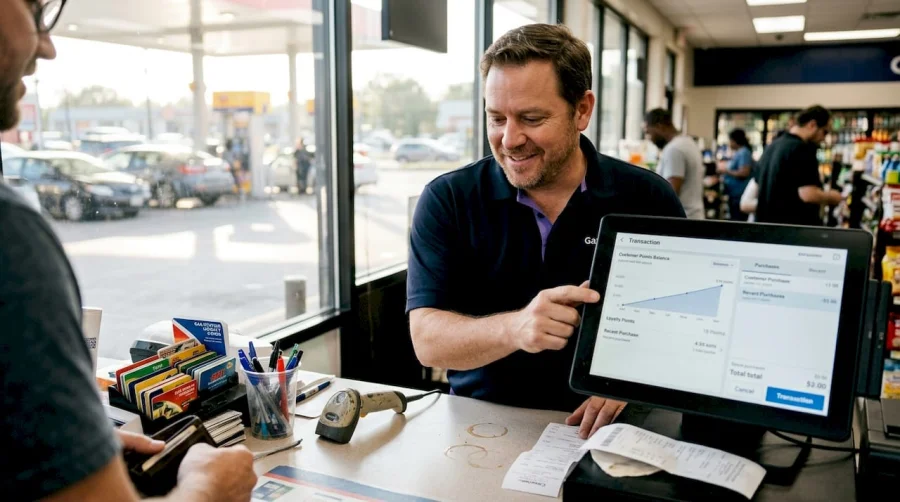
Manual rewards programs are quietly costing gas stations repeat business every single day. When customers forget punch cards or staff skip logging a visit, you lose a touchpoint that could have brought that driver back tomorrow. The good news is that automation changes this equation fast. Top-performing c-store loyalty programs achieve 30 to 37% of all transactions from loyalty members. This guide walks you through what automated rewards look like, what you need to get started, how to launch step by step, and how to measure results so your program keeps growing.
Key Takeaways
| Point | Details |
|---|---|
| Automated loyalty boosts revenue | Top-performing gas stations see up to 37% of transactions from reward members when using automated systems. |
| Preparation is essential | Success starts with having the right tools, tech, and staff readiness before launching your automated program. |
| Follow proven steps | A clear step-by-step roadmap ensures smooth migration from manual to automated rewards and avoids costly mistakes. |
| Continuous improvement pays | Track KPIs and tackle early issues to maximize program growth and customer loyalty over time. |
| Automation drives customer trust | Real-time rewards and smarter campaigns make your gas station a preferred destination. |
Understanding automated rewards for gas stations
An automated rewards system replaces manual tracking with software that records every qualifying purchase, assigns points or stamps, and triggers offers without any staff input. Compare that to a paper punch card sitting at the bottom of a customer’s glove compartment. The difference is not just convenience. It is consistency, speed, and the ability to act on real customer data.
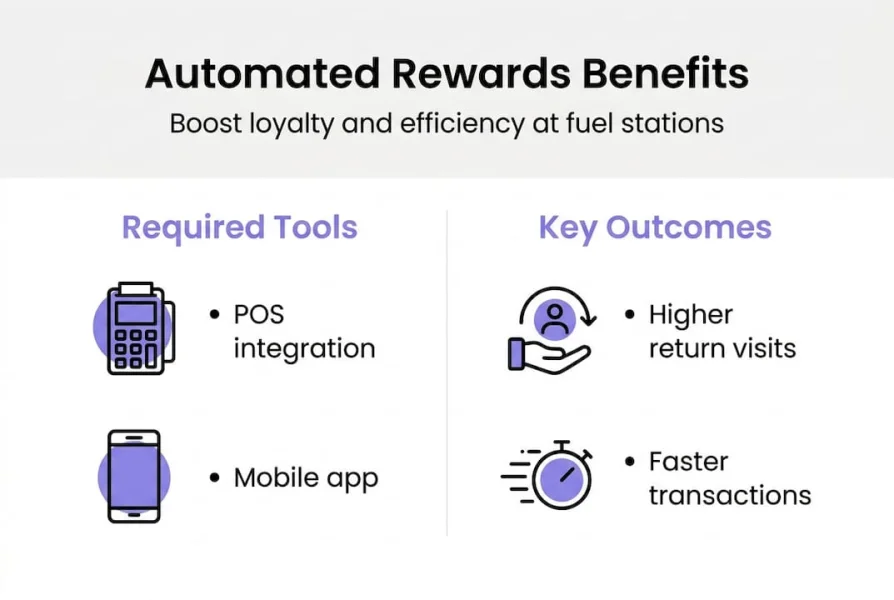
Modern gas station loyalty applications typically include several core features working together. Point-of-sale (POS) integration means every fuel or convenience store purchase is captured automatically. Real-time tracking lets you see which customers are active, which are drifting away, and which are close to a reward milestone. App-based rewards give customers a reason to open their phone before they even pull up to the pump. Personalized campaigns let you send a coffee discount to a customer who buys fuel every Monday morning.
The business impact of these features is measurable and significant. Weigel’s rewards app drove 42% of customer transactions, generating 20 million reward transactions and $17 million in customer savings. That is not a marginal improvement. That is a fundamental shift in how a gas station builds revenue.
Review this breakdown of core features found in leading automated rewards solutions:
| Feature | What it does | Why it matters |
|---|---|---|
| POS integration | Captures every transaction automatically | Eliminates missed rewards and manual errors |
| Mobile app | Lets customers track and redeem rewards | Increases engagement and visit frequency |
| Real-time analytics | Shows redemption rates, top customers, trends | Enables faster, smarter decisions |
| Personalized campaigns | Sends targeted offers based on behavior | Boosts relevance and conversion rates |
| Automated triggers | Fires promos on birthdays, milestones, or gaps | Keeps customers engaged without extra work |
Here is a quick summary of the benefits automation delivers:
- Fewer errors: No missed punches, no lost cards, no manual data entry mistakes
- Targeted marketing: Send the right offer to the right customer at the right time
- Cost savings: Reduce labor time spent managing rewards manually
- Better retention: Consistent engagement keeps customers coming back
- Scalability: Add locations or new campaigns without proportional staff increases
For a deeper look at building effective campaigns, the automated rewards guide covers campaign structures built specifically for gas stations.
Preparation: What you’ll need to automate rewards
Knowing the value of automation, let’s outline exactly what you need to get started. Jumping straight into software without the right foundation leads to integration headaches and low adoption rates. A little preparation saves a lot of frustration.
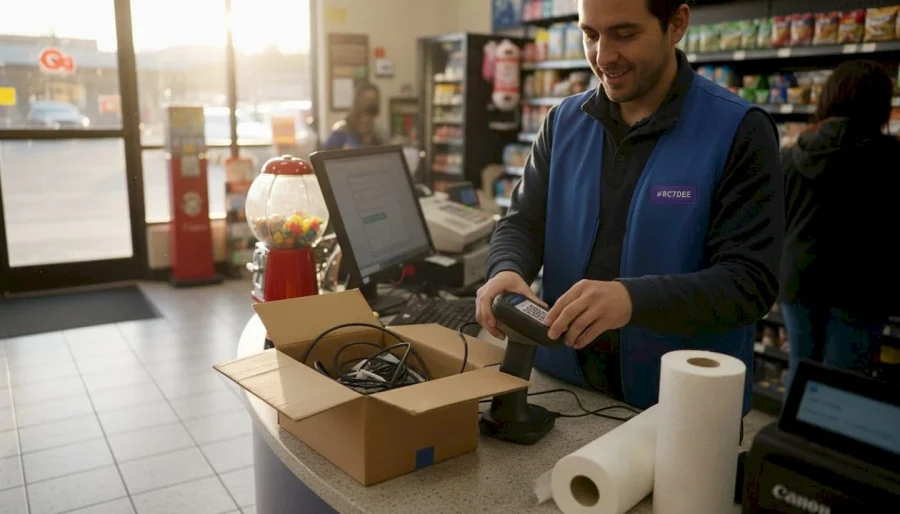
On the hardware side, you need a POS system that supports third-party integrations, barcode or QR code scanners at the register, and payment terminals that can communicate with your loyalty platform. Most modern POS setups already support these, but confirm compatibility before signing any software contracts.
For software, platforms like Gas Deck, Loymax, and ES Loyalty offer real-time POS integration and targeted campaign tools, and they can reduce manual errors and costs by 20 to 30%. BonusQR is another strong option, especially for operators who want flexible module selection and rapid setup without requiring deep technical resources. Evaluate each platform against your specific needs, including the number of locations, your budget, and whether you want a branded mobile app.
| Platform | Strengths | Considerations |
|---|---|---|
| Gas Deck | Fuel-specific features, POS-ready | Best for multi-site fuel retailers |
| Loymax | Advanced segmentation, omnichannel | May require more setup time |
| ES Loyalty | Flexible rewards structure | Smaller support ecosystem |
| BonusQR | Fast setup, no POS required, scalable | Ideal for single or multi-location operators |
Use this checklist to confirm you are ready before going live:
- Stable internet connectivity at all locations
- Compatible POS system confirmed with your chosen platform
- Staff trained on how the program works and how to answer customer questions
- Customer data privacy policy updated to reflect digital data collection
- A clear rewards structure decided before launch (points, stamps, cashback, or tiered)
- A plan for promoting the program at the pump and inside the store
Pro Tip: Choose a platform that supports real-time data sync and omnichannel promotions. If your system can only send email but your customers prefer SMS or push notifications, you will miss engagement opportunities. Mobile loyalty platform features like push notifications and in-app messaging make a measurable difference in participation rates.
Also keep an eye on chain-wide loyalty participation benchmarks from top c-store operators. These numbers give you realistic targets to aim for during your first year.
Step-by-step: How to automate your gas station rewards program
Once fully prepped, you are ready to roll out automation. Here is how to execute the transition step by step.
- Choose your platform. Match your platform to your goals. If you want a branded app and advanced analytics, choose accordingly. If speed and simplicity matter most, prioritize platforms with quick setup and minimal technical requirements.
- Integrate with your POS. Work with your platform’s support team to connect the loyalty software to your POS system. Test every transaction type, fuel purchases, car wash add-ons, and convenience store items, before going live.
- Import existing customer data. If you have any existing customer emails or phone numbers from past promotions, import them. Starting with a seed audience accelerates early engagement.
- Set up campaigns and reward rules. Define how customers earn points or stamps, what they can redeem, and when automated triggers fire. Common triggers include birthday offers, spending milestone rewards, and win-back messages for customers who have not visited in 30 days.
- Train your staff. Staff are your frontline promoters. Make sure every team member can explain the program in two sentences and knows how to help a customer sign up at the register.
- Launch and monitor. Go live and watch your dashboard daily for the first two weeks. Look at sign-up rates, redemption rates, and any error flags from your POS integration.
Pro Tip: Before a full launch, run a pilot with 50 to 100 of your most loyal customers. Their feedback will surface issues you did not anticipate, and their early enthusiasm helps build word-of-mouth momentum.
Automated triggers are where the real power lives. A customer who hits a $100 fuel spend milestone gets an instant reward notification. A driver who has not visited in three weeks gets a personalized offer. These moments feel personal even though they are fully automated. SaaS-driven automation steps like these are what push loyalty transaction benchmarks to the 30 to 37% range at top-performing stations. Review reward strategy options to find the mix that fits your customer base best.
Troubleshooting, measuring success, and next steps
After launching, it is crucial to track performance and resolve any early roadblocks. Here is how to keep results on track and improve over time.
Common pitfalls and how to fix them:
- Integration errors: If transactions are not posting to the loyalty system, check your POS firmware version and confirm API settings with your platform’s support team
- Low staff buy-in: Hold a short weekly huddle for the first month to share sign-up numbers and celebrate wins. Staff who see results get more engaged
- Customer confusion: Simplify your rewards structure. If customers cannot explain how to earn a reward in one sentence, simplify the rules
- Low app downloads: Promote the app at the pump with a QR code sticker and offer a sign-up bonus to drive initial installs
Track these KPIs (key performance indicators) to measure program health:
| KPI | What to measure | Healthy benchmark |
|---|---|---|
| Loyalty transaction rate | % of total transactions from members | 30% or higher |
| Redemption rate | % of earned rewards actually redeemed | 20 to 40% |
| Repeat visit frequency | Average days between visits per member | Decreasing over time |
| Program enrollment rate | New sign-ups per week | Steady or growing |
| Churn rate | Members who stop engaging | Below 15% monthly |
“Some stores reached up to 66% loyalty participation, showing what is possible when automation and engagement work together.” Minuteman Food Mart achieved 30 to 35% loyalty participation chain-wide, with top locations hitting that 66% mark.
Once your baseline is solid, start iterating. Adjust point values, test new offer types, and use your analytics dashboard to identify which customer segments respond best to which campaigns. The benefits of loyalty automation compound over time as your data set grows and your targeting improves. For what is coming next in the industry, 2026 loyalty trends are worth reviewing as you plan your next phase of growth.
Why automation is redefining gas station loyalty
Here is an opinion worth considering: punch cards were never really a loyalty program. They were a discount mechanism with no data attached. You had no idea who your best customers were, when they were likely to leave, or what would bring them back. You were flying blind.
Automation does not just make loyalty programs faster. It makes them intelligent. When you know that a specific customer buys fuel every Thursday and always adds a coffee, you can send a Thursday morning push notification with a coffee deal. That is not a promotion. That is a relationship. And relationships drive margins in ways that discounts alone never will.
The contrarian truth here is that small investments in automation often produce outsized jumps in loyalty numbers. You do not need a massive tech budget. You need the right platform and a clear rewards structure. Customer retention insights consistently show that retaining an existing customer costs far less than acquiring a new one. Automation is the most practical tool you have to make retention systematic rather than accidental.
Take your gas station loyalty program further with BonusQR
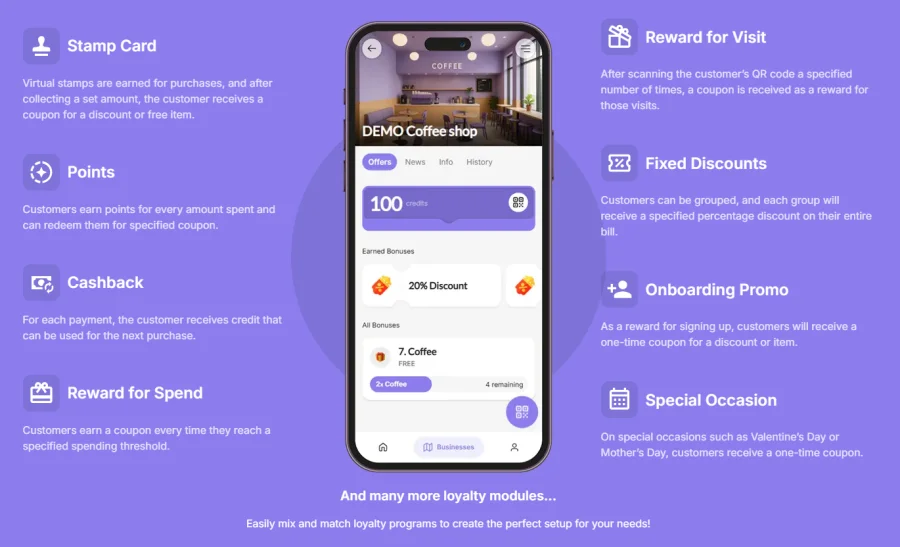
Ready to put your loyalty program on autopilot? BonusQR makes it straightforward for gas station operators to launch automated rewards without complex technical setups. The platform supports points collection, stamp cards, cashback, and coupon distribution, all manageable from one dashboard. You get built-in POS integration options, real-time reporting, and push notification tools to keep customers engaged between visits. Whether you are running a single location or a growing chain, BonusQR scales with you. Explore the full range of BonusQR platform features to see what fits your operation, or check out the service sector loyalty app for additional use cases.
Frequently asked questions
What is the average increase in sales from automating gas station rewards?
Stations that automate rewards see loyalty transactions reach 30 to 37% of all purchases, which translates directly into stronger repeat sales and higher average spend per visit.
Do automated loyalty programs really reduce workload for my staff?
Yes. Platforms built for gas stations can cut manual errors and costs by 20 to 30%, which means your team spends less time on paperwork and more time serving customers.
How quickly can I expect to see results after automating my loyalty program?
Many operators notice a measurable lift in member transactions within the first few months, and top locations like Minuteman have reached participation rates as high as 66% after consistent program management.
What are the top features to look for in automated reward solutions?
Prioritize real-time POS integration, a mobile app for customers, personalized offer capabilities, and flexible campaign management so you can adjust your program as your business grows.
Is it possible to integrate automated rewards with my existing POS system?
Most modern loyalty platforms are built to connect with common POS systems, but always verify hardware and software compatibility with your chosen vendor before committing to a contract.


