The fastest way to make a loyalty campaign work is simple capture, an immediate welcome value, and automated reminders that keep progress visible. That formula beats complex, feature-heavy programmes for one reason: it makes value obvious in the moment a customer is deciding whether to come back. Visibility, not complexity, drives repeat behaviour, and automation is what keeps that value in front of people instead of buried in an app they never open.
Do these three things in the next 72 hours:
- Set up one low-friction capture method — a phone number, email, or wallet pass at the till, on the receipt, or in the booking confirmation.
- Attach a welcome reward members receive the moment they join, not after their fifth visit.
- Schedule an automated “you’re nearly there” message that fires when a customer sits one visit or one purchase away from their reward.
This isn’t guesswork. The 2026 EY Loyalty Market Study found that consumers increasingly want automatic reminders rather than having to check their own balance, and Bond’s 2026 research shows access and immediacy now outperform generic points accumulation as loyalty drivers.
TL;DR:
- Capture members using phone, email, wallet pass, or NFC at purchase points to maximize enrolment without friction or app downloads.
- Implement an immediate welcome reward and an automated “you’re nearly there” message to significantly boost repeat visits and reward redemption.
- Use simple, visit-based reward mechanics like stamp cards for high-frequency customers and points for variable spend behaviors to increase clarity and response.
- Focus on tracking active-member rate, redemption rate, and incremental profit to accurately measure loyalty campaign success beyond mere sign-ups.
- Prioritize automation of near-reward flows and visibility of progress, as these are proven to outperform more complex program structures.
What makes a loyalty campaign actually work
A loyalty campaign lives or dies on four components: how you capture members, whether you use tiers, how your automated flows behave, and what data you collect to personalise the experience. Get these four right and the rest, including your choice of reward mechanic, becomes far less critical.
Onboarding and capture: remove every point of friction
The biggest killer of enrolment isn’t a weak offer. It’s asking for too much, too soon. A Penn State Extension review of small-business loyalty programmes found that value-added and local businesses see stronger uptake when signing up takes seconds, not minutes.
Three capture methods consistently outperform app downloads:
- Phone or email at the counter — staff ask once, at the point of sale, with no separate app required.
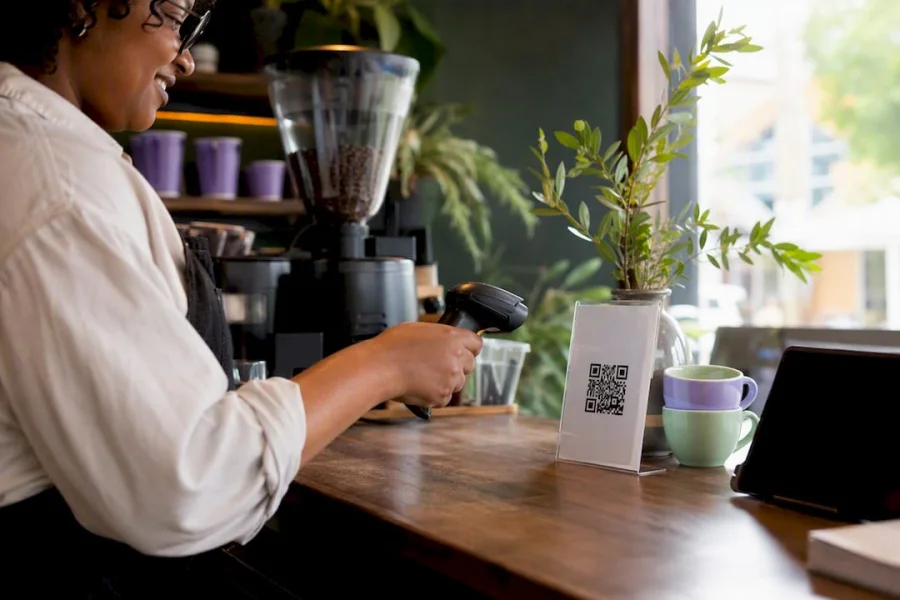
- Wallet pass via QR code — the customer scans, taps “add to wallet,” and their card lives on the phone’s lock screen forever.
- NFC tap at checkout or on a table stand — near-instant capture with zero typing.
Place the QR code somewhere the customer is already looking: the receipt footer, the counter mat, the booking confirmation email, or the table itself. A code buried on page three of your website will collect almost nobody.
Tier management: helpful structure, or unnecessary friction?
Tiers work when they reflect a genuine step up in value, such as priority booking, early access to new stock, or a bigger discount band. They backfire when they exist purely to look sophisticated, forcing a customer to memorise thresholds nobody explained to them.
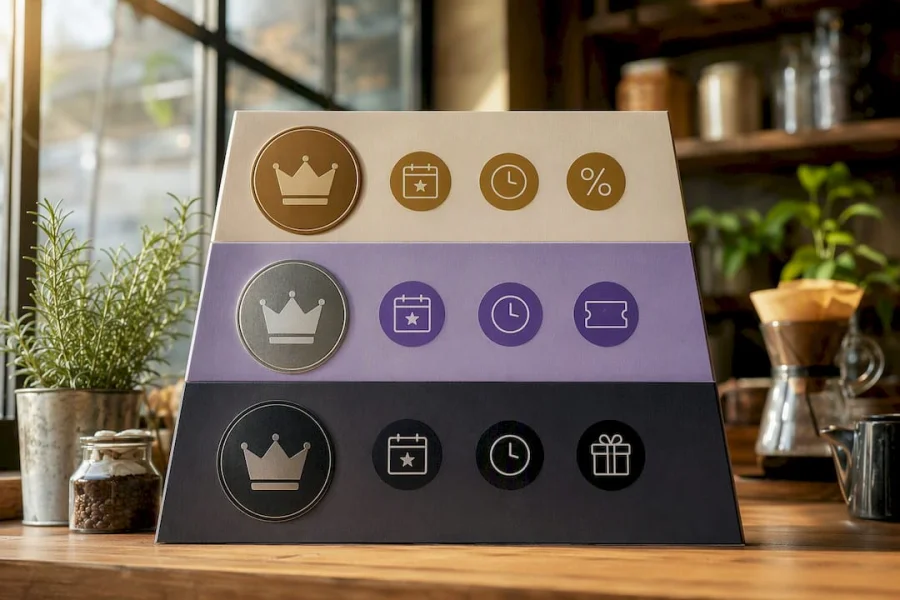
If your average customer visits fewer than four times a year, skip tiers altogether. A single, flat reward is easier to understand and cheaper to run. If visit frequency is high (weekly cafés, gyms, salons), a two-tier structure with a clear, low first threshold and a more generous second tier gives customers something to aim for without demanding too much patience.
Activation flows: welcome, near-reward, and lapsed
These three automated flows do most of the heavy lifting in any loyalty campaign:
- Welcome flow — fires within minutes of sign-up, confirms the reward earned so far, and states plainly what the next step is worth. This moves your enrolment-to-first-redemption rate.
- Near-reward flow — triggers automatically when a customer is one purchase or visit from their reward. This moves your repeat-visit rate more than any other single message.
- Lapsed flow — triggers after a defined gap in activity (30, 60, or 90 days depending on your typical purchase cadence) with a reminder of their current balance and, ideally, a small nudge offer. This moves your reactivation rate.
Pro Tip: Write your near-reward message before you write anything else. It’s the single highest-leverage sentence in the whole campaign, and most businesses never automate it, leaving customers to forget their own progress.
Data and segmentation: capture only what you’ll use
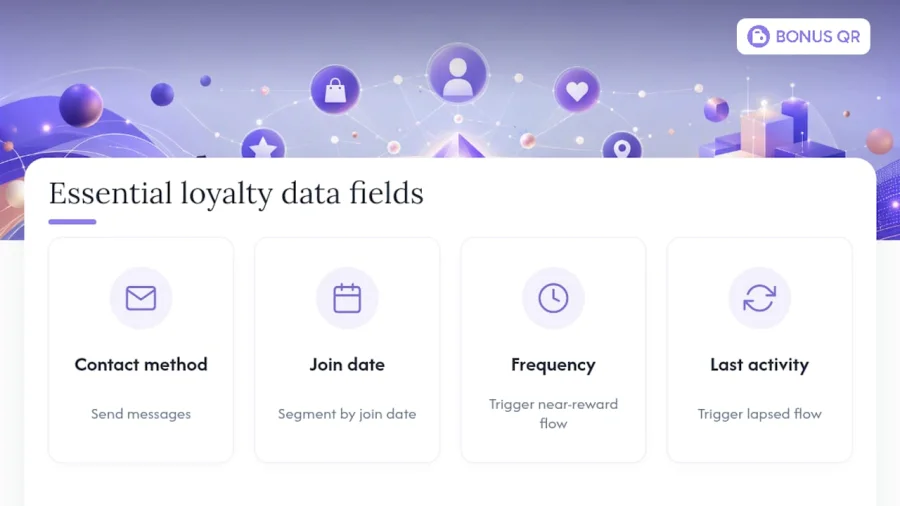
You need four fields to run a genuinely personalised campaign: contact method, join date, visit or purchase frequency, and last-activity date. That’s it. Anything beyond that (birthday, favourite product, preferred location) is a bonus, useful for segmented offers but not essential to launch. Use frequency and last-activity date to trigger the near-reward and lapsed flows automatically, rather than manually pulling reports each week.
Choosing a reward model: points, stamps, cashback, or paid tiers
The right mechanic depends on how often a customer visits you, not on which model looks the most modern. Match the mechanic to your visit cadence first, then worry about branding.
- Points systems suit businesses with varied basket sizes (retail, e-commerce) because points scale naturally with spend, but they can feel abstract, undermining the visibility that drives repeat behaviour.
- Stamp or punch cards suit high-frequency, low-variance purchases (coffee, sandwiches, car washes) because progress is instantly visible: “6 of 10 stamps” needs no explanation.
- Cashback or tiered cashback suits businesses with higher average order values, since a percentage return feels proportionate and requires no mental maths from the customer.
- Paid membership tiers suit businesses with strong repeat demand and a genuinely valuable perk to sell (free shipping, priority booking), but only work once you already have proof that customers return often enough to justify an upfront fee.
Match reward thresholds to how often people actually buy. Frequent buyers (weekly or more) respond best to a reachable first milestone, five to seven visits, so the reward feels close from day one. Occasional buyers (monthly) need a slightly longer arc, but the first reward should still land inside two months or you risk losing them before they experience any value. Infrequent buyers (a few times a year) rarely respond to visit-based mechanics at all and do better with a straightforward welcome and occasion-based offer.
Run the maths before you commit. A coffee shop offering “buy 9, get the 10th free” gives away about a tenth of revenue on redeeming customers, but the GetResponse State of Customer Loyalty report found that slow-to-earn rewards and confusing point structures are among the top frustrations driving disengagement. A reward that feels generous to the customer but costs you less than a typical marketing discount is the sweet spot, and stamp cards usually hit that balance more reliably than complex points formulas.
Three loyalty campaigns you can copy this month
The quick-service café. Capture happens via a QR code on the till receipt that adds a wallet pass instantly. New members get a free small drink on sign-up, and an automated SMS fires the moment they’re one stamp from their reward. Watch capture rate in week one and redemption rate on the welcome reward within the first fortnight. A weak capture rate almost always means the QR code is in the wrong place, not that the offer is unappealing.
The salon or barbershop. A visit-based tier rewards the fifth booking with a discount and the tenth with a free add-on service. An automated reminder goes out three days before a client’s estimated next appointment, referencing how close they are to their next reward. Watch rebooking rate against your historical average; a jump in the first month signals the reminder is doing its job.
The e-commerce retailer. Points accrue per pound spent, with a free-shipping milestone deliberately set low enough to hit on a customer’s second order. A post-purchase email nurture sequence explains the points balance and nudges towards that milestone. Watch second-purchase rate within 45 days, since Attentive’s 2026 loyalty retention research found that visible progress toward a reward is one of the strongest predictors of a second purchase.
Across all three, the pattern that made BonusQR’s roundup of loyalty campaign examples worth revisiting is the same: an early win, followed by an automatic nudge when the next one is close.
Which KPIs actually prove a loyalty campaign is working?
Enrolment numbers feel good in a board meeting and tell you almost nothing about whether the campaign is profitable. Talon is blunt about this: enrolment alone is a vanity metric, because a member who signs up once and never returns adds cost without adding value.
Five KPIs actually matter:
- Enrolment conversion rate — the share of eligible customers who join at the point of capture.
- Active-member rate — the share of enrolled members who transact within a defined window, typically 90 days.
- Redemption rate — the share of earned rewards actually claimed.
- Repeat-visit lift — the difference in visit frequency between members and a comparable non-member group.
- Incremental gross profit — the profit attributable to the campaign once redemption costs are subtracted.
Set your activity window to match how often people naturally buy from you. A 90-day window suits most retail and hospitality businesses, but a weekly café should tighten it to 30 days, while a high-ticket, infrequent-purchase business might need 180. Wherever possible, compare enrolled members against a small matched holdout group who weren’t offered the campaign; without that comparison, you’re measuring correlation, not the campaign’s real incremental effect.
| Cadence | Review frequency | What to check |
|---|---|---|
| Weekly | Monthly | Active-member rate, redemption rate, capture rate at point of sale |
| Monthly | Monthly | Repeat-visit lift, near-reward flow open rate |
| Quarterly | Quarterly | Incremental gross profit, lapsed-flow reactivation rate |
Treat a falling active-member rate as an immediate red flag rather than a quarterly agenda item. If active membership drops two months running, the near-reward flow usually needs attention before anything else does.
The four mistakes that quietly kill most campaigns
Set-and-forget. A campaign launched and never revisited decays fast. Assign an owner and put a 30-minute monthly review on the calendar, checking capture rate, active-member rate, and one flow’s message copy.
Friction at enrolment. If sign-up takes longer than 30 seconds, you’re losing people before they ever see the reward. Test a one-tap wallet pass against your current form and measure the difference.
Rewards that arrive too slowly. A programme with no reward until the eighth visit loses people at visit two. Add a welcome reward and an early milestone inside the first month of membership.
Measurement gaps. Reporting enrolment alone hides whether the campaign earns its keep. Add active-member rate and an incremental profit check, even a rough one, before your next review.
Pro Tip: If you can only fix one thing this quarter, fix the near-reward message. It costs nothing to automate and it’s the single biggest lever on repeat-visit rate.
Your two-to-four-week launch checklist
Getting a loyalty campaign live doesn’t require a big-bang launch. A staged rollout catches problems while the stakes are still low.
- Week 0–1: Choose your reward model, work out the reward maths (cost per redemption versus expected repeat-visit lift), and create your capture assets: wallet pass, QR code, or NFC tag. Decide exactly where capture happens, at the till, on the receipt, or in the booking confirmation.
- Week 1–2: Build the welcome automation, set up the near-reward trigger, and brief staff (or update your website and in-store signage) so every customer-facing touchpoint mentions the campaign.
- Week 2–3: Soft launch to a sample of customers or a single location. Track capture rate and early redemption daily, and adjust messaging wording if uptake looks weak.
- Week 4: Review your KPIs against the benchmarks above, run a small holdout comparison if you have the volume to support it, and adjust your reward thresholds based on what you’re seeing.
- Keep the first version deliberately simple; you can add tiers or segmentation once the core loop is proven.
- Don’t wait for a “perfect” launch. A soft launch to 50 customers teaches you more in a week than a spreadsheet ever will.
How BonusQR maps onto this exact playbook
Everything covered above, low-friction capture, automated flows, and KPI tracking, is what BonusQR’s platform was built to run without requiring a developer or a marketing team.
- Wallet pass and QR/NFC capture replace app downloads, matching the low-friction approach that performs best for small and mid-sized businesses.
- Stamp card, points, and cashback modules let you switch reward mechanics without rebuilding your campaign from scratch.
- Built-in automation handles welcome, near-reward, and lapsed automated messaging flows, the exact sequence BonusQR’s own guide to automating loyalty campaigns recommends prioritising first.
- A real-time analytics dashboard tracks active-member rate and redemption without exporting data to a spreadsheet.
Most businesses can have a working campaign live within days on the free tier, upgrading to premium features as volume grows. Independent cafés, salons, and single-location retailers typically start on the free or entry tier; multi-location and hospitality businesses tend to move to premium or white-label options once they need deeper branding and analytics. You can register directly and have your first wallet pass live the same day.
Editorial take: visibility beats sophistication
Most loyalty advice still obsesses over mechanics: points versus stamps, three tiers versus five. That’s the wrong argument. The EY Loyalty Market Study makes a sharper point: the gap isn’t in programme design, it’s in whether customers can see their own progress without hunting for it.
Conventional advice pushes complexity as sophistication, more tiers, more rules, more segmentation before you’ve even proven a single welcome reward converts. That’s backwards. A one-tier stamp card with a brilliantly automated near-reward reminder will outperform a five-tier points system nobody understands.
If you take one thing from this, prioritise the near-reward flow before anything else. It’s the cheapest lever to pull and the one most businesses skip entirely, choosing instead to obsess over the reward structure itself.
— Michal
Get your loyalty campaign live without hiring an agency
Building the campaign described above, wallet pass capture, automated near-reward flows, and a live analytics dashboard, from scratch would normally mean stitching together three or four separate tools, or paying an agency to do it for you. BonusQR does it as one platform, purpose-built for exactly this playbook, with a free tier that gets a working campaign live in a day rather than a quarter.
It suits owner-operated cafés and salons that need something running by the weekend, and it suits multi-location retailers and hospitality groups that eventually want white-label branding and deeper analytics. Either way, you start from the same place: pick your reward model, set your capture point, and let automation handle the reminders.
If you’ve read this far, you already know what your campaign needs. Register with BonusQR and set up your welcome reward and near-reward flow this week, before the next customer who almost came back walks past instead.
Key Takeaways
A loyalty campaign succeeds when low-friction capture, an immediate welcome reward, and automated near-reward reminders work together to keep progress visible.
| Point | Details |
|---|---|
| Capture with minimal friction | Use low-friction methods like phone, email, wallet pass, or NFC at the point of sale instead of app downloads. |
| Automate the near-reward message | This single flow moves repeat-visit rate more than any other campaign element. |
| Match the mechanic to visit cadence | Stamp cards suit frequent, low-variance purchases; points suit variable basket sizes. |
| Measure beyond enrolment | Track active-member rate, redemption rate, and incremental gross profit, not sign-ups alone. |
| BonusQR runs the full playbook | Its wallet pass capture, automation, and analytics dashboard map directly onto welcome, near-reward, and lapsed automated messaging flows. |


