
 Deutsch
 Español
 Français
 Italiano
 Magyar
 Polski
 Slovenčina
 Čeština
Customer loyalty is more than just repeat business; it's the foundation of a healthy small business. While traditional paper punch cards were a start, today's customers expect a more personal connection. They want to feel recognized and valued, giving them a clear reason to choose your coffee shop, salon, or restaurant over the competition every single time.
How do you keep customers coming back when they have so many options? It's a common problem for busy owners. Creating an effective customer rewards program can seem too expensive, complicated, or time-consuming. You might worry about costly software, unclear returns, and the technical headache of getting it all set up.
This article is designed to solve that. We will break down 10 of the best loyalty campaigns from well-known brands and show you exactly how to adapt their winning strategies for your own business, simply and affordably. You will get straightforward, step-by-step instructions to launch a program that customers actually use and that directly boosts your sales. We’ll show you how a simple tool like BonusQR can be the perfect, cost-effective way to get started and see real results without the complexity. Forget theory, this is your practical guide to building genuine customer loyalty.
1. Starbucks Rewards: Points-Based Digital Loyalty
Starbucks Rewards is a classic example of a points-based system that has become one of the best loyalty campaigns worldwide. Customers earn "Stars" for every dollar spent, which they can later redeem for free drinks, food, and merchandise. The program is fully integrated into a mobile app, which also handles payments, ordering ahead, and delivering personalized offers, creating a frictionless customer experience.
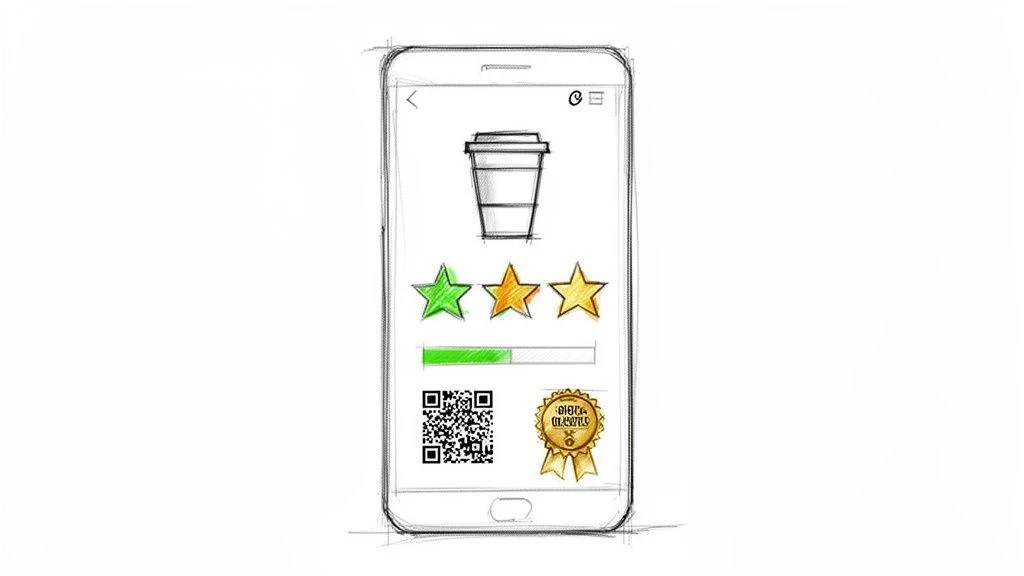
The power behind this model is its simplicity and direct value exchange. Customers easily understand that spending more equals more rewards. Starbucks amplifies this by adding gamified elements like "Double Star Days" and tiered statuses (Gold members), which encourages more frequent visits and higher spending.
How to Apply This to Your Small Business:
You don't need a massive app development budget to replicate this success. With a tool like BonusQR, you can quickly launch a similar points-based program in minutes, solving the "it's too complicated" problem.
- Start Simple: Begin with a straightforward "earn 1 point for every $1 spent" model.
- Use QR Codes: Let customers scan a QR code at checkout to collect points digitally. This eliminates the need for physical punch cards and makes tracking easy.
- Set Achievable Rewards: Make the first reward attainable within a few visits. For a coffee shop, a free coffee after 5-7 purchases is a great starting point.
- Add Personal Touches: Offer a special birthday reward to make customers feel valued and drive a guaranteed annual visit.
This approach works exceptionally well for businesses with frequent, low-to-medium value transactions like coffee shops, bakeries, and quick-service restaurants. To see how a simple digital punch card can build a loyal customer base, check out this guide on how a point-based loyalty program can transform your small business.
2. Sephora Beauty Insider: Tiered Engagement with Exclusive Benefits
Sephora's Beauty Insider program is a prime example of a tiered loyalty system done right. Instead of a single reward level, it creates a ladder for customers to climb based on their annual spending. The tiers-Insider, VIB (Very Important Beauty), and Rouge-create aspiration, encouraging members to spend more to unlock increasingly exclusive benefits like early access to products, VIP events, and more valuable birthday gifts.
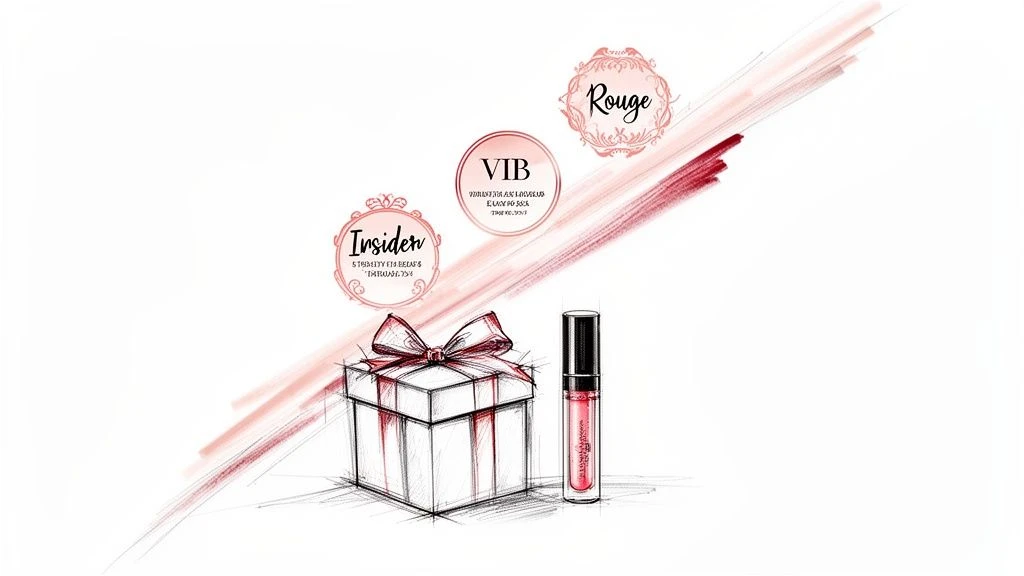
The brilliance of this model is how it combines tangible rewards with emotional ones. A free product is great, but the feeling of being a "Rouge" member with special status makes top customers feel truly valued and recognized. With over 30 million members driving the majority of its revenue, Sephora has proven that tiered programs are one of the best loyalty campaigns for fostering long-term devotion.
How to Apply This to Your Small Business:
A tiered system can feel complex, but a simplified version is highly effective for businesses like salons, boutiques, or specialty shops. You can set up digital tiers easily using a tool like BonusQR, turning a big-brand strategy into a simple, actionable plan for your small business.
- Define Clear Tiers: Create 2-3 levels based on spending or visit frequency. For a salon, this could be "Silver" (5 visits), "Gold" (15 visits), and "Platinum" (30 visits).
- Offer Aspirational Rewards: Reserve your best perks for the top tier. This might include a free premium service, first access to new inventory, or a special invitation-only event.
- Communicate the Value: Clearly display the benefits of each tier at checkout or on your digital loyalty card. Show customers what they can achieve by staying loyal.
- Create Scarcity: Consider offering double points during your slow season to help customers reach the next tier faster, driving traffic when you need it most.
This strategy works best for businesses where customers have a clear path to increasing their spending over time. To get started, check out this small business guide to building a tiered loyalty program that actually works.
3. Chipotle Rewards: QR Code Integration and Accessibility
Chipotle Rewards demonstrates how to make a loyalty program incredibly easy to join and use. The program is built around a mobile app where customers can scan a QR code at checkout to earn points for every dollar spent. These points are then redeemed for free menu items, with simple thresholds and frequency-based bonuses keeping engagement high. The accessibility of this model has been a huge driver of its success, with members accounting for a large portion of digital sales.
The success of Chipotle’s program comes from its focus on removing friction. The process is fast, visual, and fits perfectly into the quick-service restaurant environment. This approach is a core reason why it's considered one of the best loyalty campaigns for businesses prioritizing speed and simplicity. By making enrollment and point collection effortless, Chipotle grew its member base from zero to millions in just three years.
How to Apply This to Your Small Business:
A QR code-based system is perfect for fast-paced businesses. You can implement this strategy efficiently using a platform like BonusQR without needing a custom app, directly addressing the pain point of high costs and technical complexity.
- Make Enrollment Instant: Use a QR code as the primary sign-up method. Customers simply scan it at the counter or from a table tent to join your program in seconds.
- Set Attainable Rewards: Ensure customers can earn their first reward within a few weeks. This frequent positive reinforcement encourages repeat visits.
- Create Challenge Bonuses: Drive sales spikes with simple challenges, such as "Buy two specialty coffees this week and get double points."
- Train Staff to Promote: Instruct your team to ask every customer at checkout, "Are you a rewards member yet? You can scan here to join and start earning." This verbal prompt is highly effective.
This model is ideal for quick-service restaurants, food trucks, and cafes where transaction speed is critical. It turns a simple purchase into an engaging experience that builds lasting customer loyalty. To learn more about how QR codes can streamline your customer rewards, see this article on setting up your own loyalty card system.
4. Amazon Prime: Subscription-Based Loyalty with Ecosystem Lock-in
Amazon Prime is a dominant example of a paid subscription loyalty model. Instead of earning points, customers pay a recurring fee (annual or monthly) to access a bundle of premium benefits. For Prime, this includes fast, free shipping, a massive library of streaming media, and exclusive deals. This model is one of the best loyalty campaigns because it creates an "ecosystem" that makes leaving feel like a significant loss.
The success of this strategy lies in its ability to change customer behavior. Prime members, aiming to maximize their investment, naturally turn to Amazon first for their shopping needs. This leads to incredible retention and higher spending, with Prime members reportedly spending over twice as much as non-members. The convenience becomes so ingrained that the membership fee feels like a small price for a large value.
How to Apply This to Your Small Business:
A full-scale Prime model is complex, but a "subscription-lite" version is very achievable for a small business. A tool like BonusQR can help you manage exclusive access for your VIP members, making it easy to track who gets special treatment.
- Create a VIP Club: Offer a monthly or annual pass for a small fee. For a salon, this could be a "Blowout Pass" for a set number of services per month.
- Bundle Exclusive Perks: Combine a primary benefit with smaller, valuable extras. A coffee shop could offer one free coffee daily, plus 10% off all food purchases and early access to seasonal drinks.
- Emphasize Convenience: Frame the benefits around saving time or effort, not just money. "Skip the line" access or guaranteed reservations are powerful motivators.
- Offer a Free Trial: Let customers experience the benefits for a week or a month for free. This lowers the barrier to entry and lets the value of the program sell itself.
This approach is perfect for businesses where customers can benefit from recurring access or exclusive perks, like car washes, salons, and local entertainment venues.
5. Dunkin' Donuts: Simple Points with Digital Personalization
Dunkin' proves that one of the best loyalty campaigns can be built on a foundation of simplicity paired with smart personalization. Their DD Perks program awards customers a set number of points for every dollar spent, a clear and easy-to-understand system. The magic happens within their mobile app, which delivers personalized offers based on a customer's purchase history, boosting relevance and encouraging repeat business.
The success of this model is its accessibility. By not overwhelming customers with complex tiers or rules, Dunkin' makes participation effortless. The data shows its impact: loyalty members visit five times more often than non-members, and app users spend 60% more annually. This demonstrates that a direct value proposition combined with relevant, timely offers is a powerful driver of customer loyalty.
How to Apply This to Your Small Business:
You can mirror Dunkin's effective strategy by focusing on simple point accumulation and targeted promotions. A tool like BonusQR makes this straightforward to implement without a large budget, solving the pain point of needing an expensive, custom-built app.
- Keep Point Earning Simple: Set a clear rate, such as "earn 10 points for every $1 spent."
- Offer Attainable Rewards: A free item at 150-200 points creates a goal that feels achievable within a few weeks, keeping customers engaged.
- Boost Slow Periods: Introduce "Double Point Tuesdays" or similar mid-week promotions to drive traffic on your quietest days.
- Time Birthday Offers Strategically: Send a birthday reward a week in advance. This gives customers time to plan a visit, unlike a same-day offer that can be easily missed.
- Enable Instant Enrollment: Use a QR code at your checkout counter to let new customers sign up and earn points on their very first purchase.
This approach is perfect for quick-service businesses like sandwich shops, juice bars, and bakeries that want to increase visit frequency and average order value through straightforward, personalized incentives.
6. Ulta Beauty: Community-Driven Loyalty with Beauty Events
Ulta Beauty's Ultamate Rewards program shows that true loyalty is built on more than just points. It combines transactional benefits with genuine community engagement through in-store events, exclusive workshops, and product launch parties. This experience-driven model fosters an emotional connection, turning customers into devoted brand advocates. For Ultamate Rewards members, the perks go beyond discounts; they gain access to a community centered around a shared passion.
This strategy is incredibly effective. Loyalty members reportedly drive over half of all store traffic and spend three times more than non-members. Events like beauty workshops can boost store visits by as much as 40% among attendees. It's a powerful example of how creating shared experiences makes a loyalty program feel less like a marketing tactic and more like a club everyone wants to join, solidifying its place as one of the best loyalty campaigns for building community.
How to Apply This to Your Small Business:
You don't need a national brand's budget to create a sense of community. The key is to make your customers feel like insiders. BonusQR can help you manage your member list and communicate exclusive access to these events.
- Host Simple Events: Start with small, quarterly workshops or product demos related to your business. A salon could host a "braiding basics" class, while a cafe could offer a coffee tasting.
- Create Member-Only Perks: Offer "loyalty member appreciation" events like exclusive shopping hours or a first look at new products.
- Build Relationships: Offer small group consultations or "ask the expert" sessions. This direct interaction builds trust and personal connections.
- Partner Up: Collaborate with brand representatives or other local businesses for joint workshops. This adds value and introduces your business to a new audience.
This approach is perfect for businesses like salons, boutiques, and specialty retail stores where expertise and community can turn one-time buyers into lifelong fans.
7. The Cheesecake Factory: Surprise & Delight with Unexpected Rewards
The Cheesecake Factory Rewards program moves beyond predictable points to embrace the power of surprise. While it has a traditional earning structure, its standout feature is the use of variable, unexpected rewards. Members receive random bonus points and mystery offers, creating excitement and a reason to constantly check the app. This intermittent reinforcement model has proven to be one of the best loyalty campaigns for keeping customers engaged.
This approach makes interacting with the brand feel like a game. The Cheesecake Factory sees impressive results from this model, with loyalty members visiting 25% more often than other customers. The focus on surprise also leads to mobile app engagement rates that are three times higher than the industry average, demonstrating the psychological pull of an unexpected treat.
How to Apply This to Your Small Business:
You can generate similar excitement without a complex algorithm. The key is blending predictability with spontaneity to keep customers on their toes. A tool like BonusQR lets you easily send out unexpected offers to your member list.
- Balance the predictable with the unexpected: Offer a standard reward (e.g., a free item after 10 purchases) but also drop surprise rewards. Use push notifications for a "free side with any purchase today only!" offer.
- Make surprises meaningful: Ensure the surprise reward has genuine value. A mystery offer could be a significant discount, a free appetizer, or double points for a week.
- Reward app engagement: Give a small, instant reward just for opening your digital loyalty app once a week. This builds the habit of checking in with your brand.
- Announce surprises often: Keep the momentum going by announcing some kind of weekly bonus or mystery offer. This maintains anticipation and encourages frequent check-ins.
This strategy is effective for full-service restaurants, retail stores, and any business where creating an emotional connection can drive repeat visits. The element of surprise makes customers feel uniquely recognized and adds a layer of fun to their experience.
8. Target Circle: Omnichannel Integration with Behavioral Rewards
Target Circle showcases how to build a powerful loyalty program by unifying online and in-store experiences. Instead of just rewarding purchases, Target Circle also encourages specific behaviors like using the app, visiting the store, and opening emails. This omnichannel approach creates a complete view of the customer journey, allowing for highly personalized offers based on how they interact with the brand, not just what they buy.
The program's success is clear: with over 50 million members, it generates a significant portion of the company's total sales. This model proves that connecting digital and physical touchpoints is a key strategy for the best loyalty campaigns, creating a seamless experience that keeps customers engaged across all channels.
How to Apply This to Your Small Business:
You don’t need Target’s budget to adopt an omnichannel mindset. The goal is to bridge the gap between your in-store visitors and your digital presence, a problem BonusQR solves with its simple QR-code system.
- Bridge Physical and Digital: Use a QR code at your checkout counter for in-store enrollment. When customers scan it with a tool like BonusQR, they are instantly added to your digital loyalty program.
- Reward Desired Behaviors: Offer bonus points for actions beyond just spending money. Give points for following your social media accounts, signing up for your newsletter, or checking in on the app during a visit.
- Offer App-Exclusive Benefits: Drive digital adoption by creating special deals or higher point values that are only available through your digital loyalty program. This encourages customers to stay connected online.
- Personalize Beyond Purchases: Use behavioral data to send targeted offers. If a customer hasn't visited in a month, send a "We Miss You" offer with bonus points for their next purchase.
9. Chipotle's 'Rewards Challenges': Gamification-Driven Engagement
Chipotle elevates the standard points program by adding a layer of gamification with its 'Rewards Challenges'. Instead of just earning points per dollar, customers are given time-sensitive, specific tasks to complete for bonus rewards, such as "buy a vegetarian entrée twice this week to earn 200 extra points." This approach makes participation more active and engaging than a simple earn-and-burn model.
The success of this strategy lies in its ability to influence customer behavior directly. Chipotle can use challenges to encourage trial of new menu items, drive traffic during slower periods, or increase the frequency of visits. These mini-goals make the loyalty experience feel like a fun game, keeping customers hooked and motivated to interact with the brand more often.
How to Apply This to Your Small Business:
Gamification can be a powerful addition to your loyalty program without requiring a complex app. Using a tool like BonusQR, you can easily create and manage your own challenges to solve business problems like slow days or excess inventory.
- Create Achievable Missions: Set simple, attainable goals. For a juice bar, a challenge could be "Try any 3 different smoothies this month to get one free."
- Rotate Challenges Weekly: Keep things fresh and exciting by introducing new challenges regularly. This encourages customers to check back often to see what's new.
- Align with Business Goals: Use challenges to promote high-margin items or products you want to move. For instance, a bakery could offer bonus points for purchasing a specific pastry.
- Show Progress: A key part of gamification is visualizing progress. With digital cards, customers can see how close they are to completing a challenge, which motivates them to finish it. For those looking to deepen engagement through interactive elements, understanding core gamification strategies for engagement can offer valuable insights.
This method is one of the best loyalty campaigns for keeping your program dynamic and top-of-mind, turning passive members into active, enthusiastic participants.
10. Local Boutique Model: Community-Centric Loyalty with Personal Touch
The Local Boutique Model centers on building deep, personal relationships with customers, making it one of the best loyalty campaigns for community-focused businesses. Instead of relying solely on transactions, this approach combines authentic human connection with simple digital tools. It’s about knowing customers by name, remembering their preferences, and creating an experience that makes them feel like a valued part of a community, not just another sale.
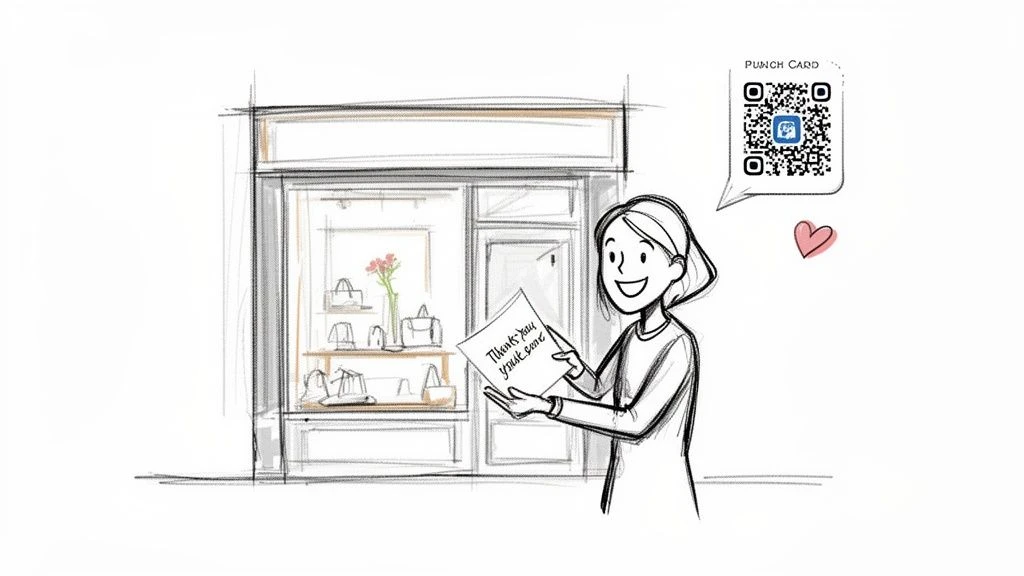
The strength of this strategy lies in emotional loyalty. When customers feel genuinely seen and appreciated, their loyalty transcends price or convenience. Neighborhood salons with over 80% repeat bookings and local cafes with regulars who visit daily are perfect examples. They prove that a personal touch creates a powerful competitive advantage that larger chains can rarely replicate.
How to Apply This to Your Small Business:
You can scale this high-touch model without losing its authenticity by pairing personal interactions with a simple digital system like BonusQR. This solves the pain point of tracking regulars manually, which becomes impossible as you grow.
- Digitize Relationships: Use a QR code system to track visits and rewards. This frees up your staff to focus on building relationships instead of managing paper cards.
- Train for Connection: Encourage your team to learn customer names and note their favorite orders or preferences. A simple "the usual?" goes a long way.
- Recognize Your Regulars: Set up a simple, achievable reward like a free item on the 10th visit. This shows appreciation and gives customers a clear goal to work toward.
- Send Personal Offers: Use the data from your loyalty program to send personalized birthday messages or special offers. This reinforces that you value them as an individual.
This approach is ideal for businesses where community and repeat visits are key, including independent coffee shops, local salons, neighborhood restaurants, and small retail boutiques. It builds a defensive moat around your business by fostering connections that no marketing budget can buy.
Top 10 Loyalty Campaigns Comparison
| Program | Implementation complexity | Resource requirements | Expected outcomes | Ideal use cases | Key advantages |
|---|---|---|---|---|---|
| Starbucks Rewards: Points-Based Digital Loyalty | High - full mobile app, payment + tier logic | High - app development, analytics, personalization infra | Strong engagement and frequency; higher spend from members | Coffee shops, QSR, cafes | Deep personalization; tier progression drives loyalty |
| Sephora Beauty Insider: Tiered Engagement with Exclusive Benefits | High - multi-tier management and exclusives | Medium-High - inventory for perks, events, CRM | Increased customer lifetime value and aspirational spend | Beauty retailers, salons, premium services | Encourages higher spend with prestige and exclusive perks |
| Chipotle Rewards: QR Code Integration and Accessibility | Medium - QR & in-app ordering integration | Medium - app, POS/QR linkage, basic analytics | Higher digital order share and visit frequency; low friction enrollment | Restaurants, quick-service, casual dining | Easy enrollment and operational efficiency via QR codes |
| Amazon Prime: Subscription-Based Loyalty with Ecosystem Lock-in | Very high - cross-service subscription ecosystem | Very high - logistics, content, service bundling | Predictable recurring revenue and strong retention; higher AOV | Businesses seeking predictable revenue and scale | Ecosystem lock-in; broad cross-sell and convenience benefits |
| Dunkin' Donuts: Simple Points with Digital Personalization | Low-Medium - straightforward points model | Low - basic CRM/app and payment integration | Clear behavior change; higher visit frequency and app spend | Coffee shops, bakeries, quick-service restaurants | Simple to understand; low tech barrier and effective targeting |
| Ulta Beauty: Community-Driven Loyalty with Beauty Events | Medium-High - events + rewards coordination | Medium - event staffing, space, CRM and promotions | Greater in-store traffic, advocacy, and emotional loyalty | Beauty retailers, salons, premium personal care | Builds community and brand advocacy via experiences |
| The Cheesecake Factory: Surprise & Delight with Unexpected Rewards | Medium - surprise mechanics + marketing automation | Medium - campaign management, app/CRM automation | Increased app engagement and impulse visits; variable ROI | Full-service & casual dining with higher AOV | High emotional engagement through unpredictability |
| Target Circle: Omnichannel Integration with Behavioral Rewards | Very high - unified systems across channels | Very high - omnichannel tech, data integration, security | Improved omnichannel behavior, higher visit frequency and sales | Multi-location retailers, online+brick-and-mortar chains | Cross-channel data and personalized behavioral incentives |
| Chipotle's "Rewards Challenges": Gamification-Driven Engagement | Medium - time-limited challenges and tracking | Medium - creative ops, app UX and push notifications | Higher AOV and session frequency; strong short-term lifts | Restaurants, coffee shops, app-enabled businesses | Drives targeted behaviors with scalable gamified incentives |
| Local Boutique Model: Community-Centric Loyalty with Personal Touch | Low - relationship-driven, simple systems | Low - staff training, simple digital punch/QR tools | Deep emotional loyalty and word-of-mouth; limited scale | Independent shops, salons, neighborhood restaurants | Authentic relationships that are hard for competitors to copy |
Your Blueprint for a Loyalty Program That Works
We've explored some of the best loyalty campaigns, from the digital dominance of Starbucks to the personal charm of a local boutique. The single most important lesson is that customer loyalty isn't bought with a massive budget; it's earned with a smart, customer-focused strategy. You don't need a complex system or a dedicated marketing department to create a program that keeps people coming back.
The most successful programs, whether for a global coffee chain or a neighborhood salon, are built on a few core principles. They are simple to understand, offer genuine value, and make customers feel appreciated. Notice how giants like Chipotle and Dunkin' rely on straightforward, easy-to-track rewards. This isn't an accident. Complexity is the enemy of participation.
Key Principles for Your Own Loyalty Program
As you prepare to launch your own program, remember these critical takeaways drawn from the most effective examples:
- Start with Simplicity: The classic "buy 10, get one free" model is popular for a reason-it works. A simple QR code-based digital punch card is often the perfect starting point, delivering immediate value without confusing your customers or your staff.
- Deliver Real Value: Your rewards must be compelling enough to change customer behavior. Whether it’s a free coffee, a discount on a future haircut, or early access to a new product, the prize must feel worth the effort.
- Make It Effortless: The easier it is for a customer to join and participate, the better. QR codes eliminate the need for physical cards that get lost or apps that take up phone space. A quick scan is all it takes to earn a stamp and move closer to a reward.
Your Actionable Next Steps: Launch Your Loyalty Program Today
Feeling inspired is one thing; taking action is what builds your business. Don't let the idea of creating a "perfect" program stop you from starting. The truth is, a simple, well-executed program today is far better than a complex, "perfect" one you never launch. The biggest takeaway from analyzing the best loyalty campaigns is that you can achieve 80% of the results with just 20% of the complexity.
This is where a tool like BonusQR becomes your secret weapon. It was designed specifically for small businesses like yours, giving you the power to create a modern, digital punch card in minutes. It solves the biggest loyalty challenges for SMBs:
- It’s not expensive: Launch for a fraction of the cost of custom software.
- It’s not complicated: Get set up in minutes with a simple QR code.
- It’s not a headache: No apps to download, no paper cards to lose.
As you build your own program, particularly if you're a small business, remember that a strong online presence is fundamental; explore these expert website design tips for small businesses to ensure your digital storefront supports your loyalty efforts.
The time to act is now. Stop leaving money on the table and letting repeat customers walk away unrewarded. Start building a loyal base that chooses you first, spends more, and becomes your most powerful marketing channel. Your journey to creating one of the best loyalty campaigns in your neighborhood doesn't have to be complicated. It can start right here, right now, with BonusQR.