
 Deutsch
 Español
 Français
 Italiano
 Magyar
 Polski
 Slovenčina
 Čeština
Ever feel like your online store and your physical shop are two completely different businesses? You're not alone. Many small business owners struggle with a disconnected customer experience, losing sales and loyalty in the process. Omni channel commerce is the solution. It’s not just a buzzword; it's a practical strategy for creating one smooth, connected journey for your customers, no matter where they find you-on your website, in your cafe, or through a loyalty app.
This guide will show you how to implement an omnichannel strategy simply and affordably, turning disconnected channels into a powerful engine for growth.
What is Omni Channel Commerce and Why Should You Care?
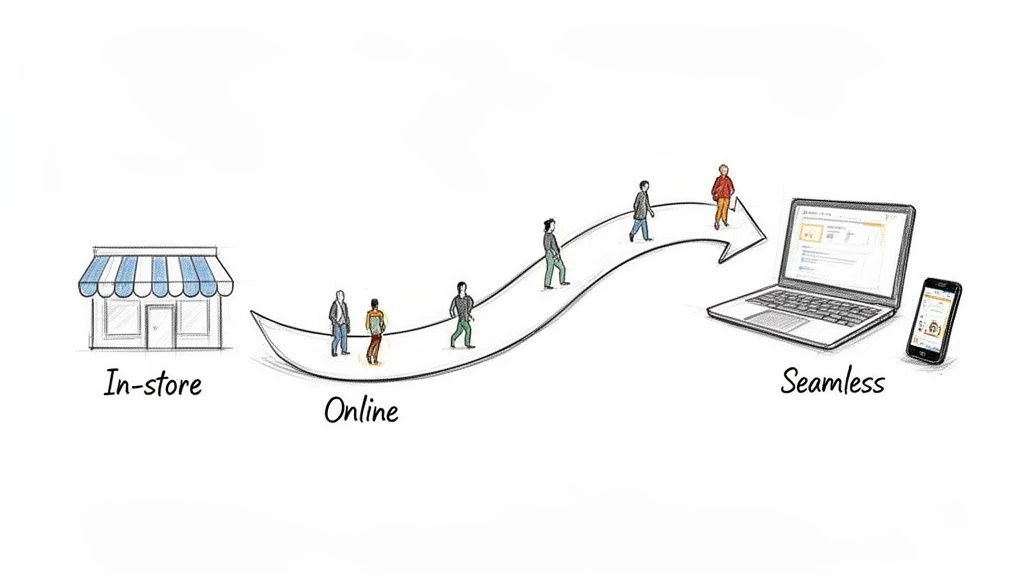
Omnichannel commerce is an approach that puts your customer at the very center of your business. It integrates your physical store, e-commerce site, social media, and mobile apps to create a single, continuous conversation. The goal? To make it incredibly easy and enjoyable for customers to shop with you, however they choose.
For small businesses like restaurants, cafes, or retail shops, this is a game-changer. It stops you from treating your online presence and your physical location as separate worlds. Instead, they start working together, creating a unified brand experience that customers remember and reward with their loyalty.
The Problem with "Multichannel"
Most businesses are already using multiple channels-a website, an Instagram page, and a physical location. This is called multichannel. The problem is, in a multichannel setup, these platforms don't talk to each other. A customer's experience feels choppy and disconnected.
Omnichannel commerce, on the other hand, weaves these channels together. The focus isn't just on being everywhere; it's about creating a consistent and interconnected journey for the customer.
This shift makes a huge difference. A customer might browse your menu online, order through a mobile app for pickup, and then scan a QR code at the counter to collect loyalty points. Every step feels like part of the same seamless process. The data is clear: companies with strong omnichannel strategies retain 89% of their customers, compared to just 33% for businesses with weak, disconnected approaches. You can dig deeper into these trends with Capital One Shopping's research.
A Quick Comparison: Why It Matters
Putting the old and new ways side-by-side reveals the true value. The traditional approach creates friction and keeps your operations in silos. The omnichannel way connects everything, leading to happier customers and smarter business insights.
| Feature | Multichannel (The Old Way) | Omnichannel (The Smart Way) |
|---|---|---|
| Customer Experience | Frustrating. Each channel is a separate journey. | Seamless. A single journey across all channels. |
| Business Focus | Being present on multiple platforms. | Creating a consistent, high-quality experience. |
| Customer Data | Siloed. You don't know if your online and in-store customers are the same people. | Centralized. A single view of each customer's behavior. |
| Loyalty & Retention | Low. Inconsistent experiences don't build loyalty. | High. Customers feel understood and valued, so they return. |
Ultimately, adopting an omnichannel mindset means solving your customers' problems before they happen. When you make their lives easier, they reward you with repeat business and a healthier bottom line.
How Omni Channel Commerce Drives Real Growth
Forget the jargon. An omni channel commerce strategy is your secret weapon for sustainable growth. It’s not just about being online and offline. It’s about making those two worlds talk to each other to get more people in the door, encourage them to spend more, and turn them into fans who keep coming back.
Let's look at a real-world example. Imagine a local coffee shop. For years, their online ordering system and their in-store punch card were two separate things. Customers couldn't earn rewards online, and online orders didn't count toward their free coffee. Once the owner connected them, she unlocked a powerful growth engine.
A customer orders his morning coffee on his phone. When he picks it up, he scans a QR code to redeem loyalty points he earned from an online review last week. He feels seen and valued, and because he’s already in the shop, he adds a pastry to his order. That small, seamless moment is the heart of omnichannel growth.
Turning Connections into Cash
This isn't just a nice story-it's a proven business model. The numbers show that omnichannel shoppers spend 4% more in-store and a whopping 10% more online than single-channel customers. For your business, this translates directly into dollars.
This connected experience creates a powerful, self-sustaining growth loop:
- Attract More Customers: Online deals and easy ordering pull customers into your physical space.
- Increase Order Value: Once they're in-store, personalized offers powered by their online history make upselling feel natural.
- Boost Customer Loyalty: A smooth, consistent experience makes customers feel understood, which is the secret to making them return again and again.
Data shows that customers engaging across multiple channels can drive up to 27% of total retail sales. You can dig into more of the data on how omnichannel strategies impact spending on Martal.ca.
The Business Case: Solve Problems, See Profits
Building this connected journey has a direct impact on your bottom line. It’s not about buying expensive new tech; it’s about making smarter use of what you have or can easily add. One of the biggest wins is creating a unified customer profile. When your systems are linked, you see the whole picture.
You’re no longer guessing what your customers want. You know that the person who ordered a latte online last Tuesday is the same person who just bought a bag of coffee beans in your store today.
This single view lets you create personalized offers that actually work. For instance, you can send a "we miss you" offer with bonus loyalty points to a customer who hasn't visited in a month, whether their last purchase was online or in-person. This is even more crucial if you're running multiple locations, a topic we cover in our guide on how multi-location loyalty programs maximize revenue.
At its core, omni channel commerce is about removing friction. It makes interacting with your brand easy and enjoyable, transforming one-time visitors into lifelong advocates.
Your Step-by-Step Omni Channel Implementation Plan
Going omni channel sounds like a big, expensive project, right? Something only large chains can afford. The truth is, for a small business, it’s about starting small with smart, manageable steps that deliver quick wins.
This plan breaks it down into simple stages that build momentum for long-term growth.
Step 1: Map Your Customer's Journey (and Find the Friction)
Before you touch any technology, understand how customers already interact with you. Where do they discover you? What happens between their first look and final purchase? Most importantly, where are they getting stuck?
Mapping this journey is like finding potholes in a road. A customer sees your special on Instagram, but your online menu is a mess. Frustrated, they give up. That’s a broken link in your customer experience, and it's costing you money.
Grab a whiteboard and trace the customer path:
- Discovery: How do they find you? (Google search, social media, word-of-mouth?)
- Consideration: What's their next move? (Read reviews, browse your website, check your hours?)
- Purchase: Where does the transaction happen? (In-store, on your website, via a delivery app?)
- Post-Purchase: What happens after they pay? (Do they leave a review, join a loyalty program, or vanish?)
Actionable Tip: Find the single biggest point of friction. Is your online ordering clunky? Is your phone number hard to find? Fix that one thing first. It’s a quick win that delivers immediate results.
Step 2: Choose and Connect Your Core Tools
Now that you know the problems, pick the right tools to fix them. The goal is integration, not just piling on more apps. You need platforms that talk to each other to create that seamless experience.
Start with the basics:
- Point-of-Sale (POS) System: This is the heart of your in-store operations. Modern, cloud-based POS systems are designed to connect with other software.
- E-commerce Platform: This is your digital storefront. Choose one that can sync inventory and customer info with your POS.
- Customer Loyalty Program: This is the glue. A good loyalty program ties everything together, encouraging repeat business across all your channels.
The magic happens when these systems are connected. For instance, when your POS and loyalty app work together, a customer can earn points from an online order and spend them in your store without anyone on your team lifting a finger.
Step 3: Unify Your Customer Data with a Simple Loyalty Program
This is where an omni channel strategy really pays off. With connected tools, you can pull all your customer information into one place. You finally get a single, unified view of every person.
This unified profile is a goldmine. It lets you see:
- Who your most valuable customers are (across both online and offline).
- How often they visit and what they usually buy.
- Whether they respond better to an email promo or an in-app notification.
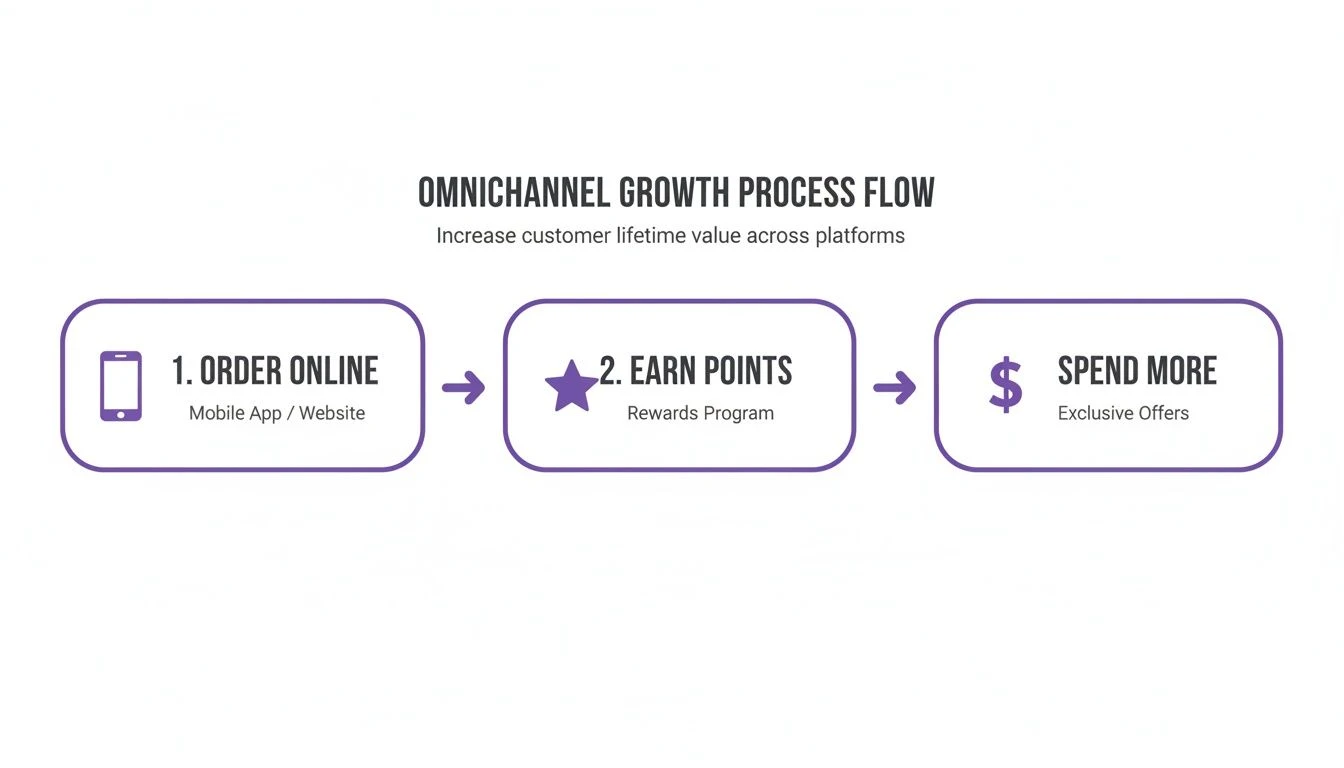
This simple flow-ordering online, earning points, and returning to spend more-creates a powerful growth loop fueled by connected data.
Actionable Tip: The easiest and most impactful first integration is connecting a loyalty program to your business. A solution like BonusQR uses a simple QR code to link an in-store purchase to a customer's digital loyalty account, instantly bridging your physical and digital worlds. For more practical ideas, check out our guide on integrating a mobile loyalty program for restaurant success.
By taking these small steps, you can build a powerful omni channel commerce engine that is manageable for your small business and feels personal to your customers.
Unify Customer Loyalty with BonusQR: The Simplest First Step
Building an omnichannel commerce strategy sounds complex, but the most important part-customer loyalty-can be surprisingly simple. Your loyalty program is the glue that holds your online and offline worlds together. But for a small business, this is where the headache usually begins. How do you solve common loyalty challenges like:
- Tracking points for both online and in-store purchases?
- Rewarding customers who order through third-party delivery apps?
- Avoiding expensive, complicated software that your staff hates using?
The good news is, you don't need a costly, complex system.
The Effortless Bridge Between Online and Offline
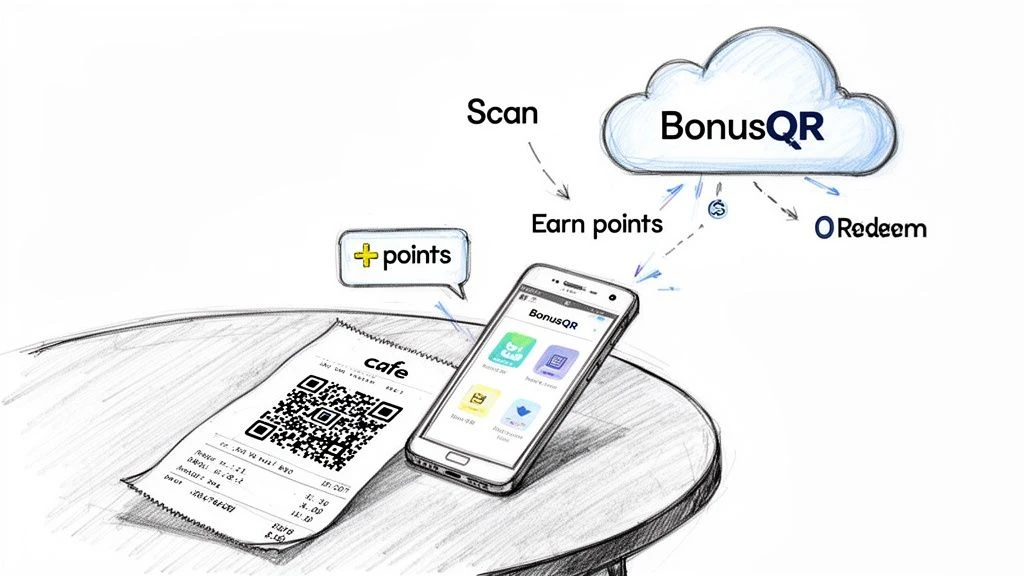
This is exactly the problem BonusQR was built to solve for small businesses. It uses a simple, powerful tool you're already familiar with: the QR code. It’s the most straightforward, cost-effective way to create a single, unified loyalty program that works everywhere.
Imagine: a customer orders delivery from your website. They get a receipt with a QR code. They scan it, and points are instantly added to their digital loyalty account. A week later, they visit your shop in person. The QR code on their physical receipt does the exact same thing. No extra work for your staff, no confusion for your customer.
How BonusQR Solves Your Biggest Loyalty Headaches
Traditional loyalty programs often fail in an omnichannel world because they create more problems than they solve. BonusQR is different by design. It positions you to succeed by being simple, flexible, and customer-friendly.
- No App Required: Customers hate downloading another app. BonusQR is web-based, so they access their loyalty card just by scanning a code. This removes a huge barrier to sign-ups.
- Works with Any POS, Any Channel: You don’t need to overhaul your current setup. Since it uses a QR code on a receipt or table tent, it functions independently of your point-of-sale system, online store, or even third-party delivery services.
- One Program for Everything: Whether a customer buys at your counter, from your website, or through a delivery partner, they earn and track points in one central place. This is true omnichannel commerce in action.
The real power is making your customers feel recognized everywhere. A seamless loyalty experience builds an emotional connection, and research shows that customers who feel that connection have a 306% higher lifetime value.
The Simplest Way to Start Your Omnichannel Journey
With BonusQR, you’re not just rewarding transactions; you’re building relationships. The platform gives you a single, clear view of your customers' activity, helping you:
- Understand Your Customers: Pinpoint your top patrons and see how they shop with you online and in-store.
- Personalize Your Marketing: Send targeted offers, like a bonus for someone who hasn't visited in a while.
- Increase Repeat Business: A frictionless rewards program gives customers a real reason to choose you over a competitor.
BonusQR is the simplest first step to make your omnichannel commerce strategy a reality. It's the cost-effective hub for your customer relationships, creating the seamless experience modern customers demand. Get started with a simple loyalty program on BonusQR.com and see the difference it makes.
Common Omni Channel Mistakes to Avoid
Jumping into omni channel commerce is exciting, but it's easy to stumble. Many small businesses make the same few mistakes, undermining their hard work and frustrating their customers.
By knowing these pitfalls ahead of time, you can sidestep them entirely. The goal isn't perfection overnight-it's avoiding the critical errors that create friction.
Mistake 1: Disconnected Tech and Data Silos
This is the most common failure. You invest in a great online ordering platform and a separate loyalty app, but they don't talk to each other. When your tools operate in silos, you haven't built an omnichannel system-you've just created more work for your team and a confusing experience for your customers.
How to avoid it: Think integration first. Before adding any new tool, ask: "How will this connect with what I already have?"
- Start with a simple hub: Choose tools that are designed to be open and flexible.
- Prioritize a single customer view: Your goal is to see all of a customer's activity in one place.
- Use a universal connector: A simple, cost-effective solution like BonusQR bypasses this exact problem. Since it uses a universal QR code, it works with any POS system without needing complex technical integrations, immediately unifying your loyalty program.
Mistake 2: Forgetting to Train Your Team
You can have the best technology in the world, but it’s worthless if your team doesn't know how to use it. A massive oversight is rolling out new systems without training the people on the front lines-your cashiers, servers, and managers.
When your staff is confused, that confusion gets passed directly to your customers. An employee who can't answer a simple question about the loyalty program makes your whole business look disorganized.
How to avoid it: Make your team your omnichannel champions.
- Train Before You Launch: Hold dedicated training sessions before any new system goes live. Explain not just how to use the tools, but why they help customers.
- Create Simple Guides: Give them a one-page cheat sheet for the register covering common questions.
- Ask for Feedback: Your team is on the ground floor. They’ll be the first to spot what’s working and what’s not.
Mistake 3: Inconsistent Brand Experience
The final pitfall is creating a brand experience that feels different depending on where a customer finds you. Your online store and your physical shop should feel like they're part of the same family.
If your website is sleek and modern but your cafe is cluttered and dated, it creates a jarring disconnect. A discount offered on Instagram must be redeemable in-store. The friendly voice on social media should match the welcome at the door.
An omni channel commerce strategy is about more than technology. It’s about creating a single, unified brand identity that customers can rely on, no matter how they choose to shop with you.
Your Omni Channel Commerce Questions Answered
Jumping into omnichannel commerce is a big step, and it’s normal to have questions about the cost, the right first step, and how to measure success. Here are direct, no-fluff answers to the most common questions from small business owners.
How Much Does an Omnichannel Setup Really Cost?
It costs a lot less than you think. You don't need a five-figure budget. Building a connected experience is about starting smart with affordable, high-impact tools.
Your initial investment breaks down into a few key areas:
- A Modern POS System: Many cloud-based POS systems offer reasonable monthly plans designed for small businesses.
- An E-commerce Presence: Platforms like Shopify or Squarespace offer budget-friendly starter plans that can sync inventory.
- A Loyalty Program: This is where you get the biggest bang for your buck. Instead of a custom app, a solution like BonusQR is incredibly cost-effective because it uses simple QR codes, eliminating the need for expensive development.
The real cost comes from not having an omnichannel approach. Disconnected systems lead to lost sales, frustrated customers, and wasted marketing. A small investment now pays for itself through better retention and higher spending.
What Is the Single Most Important First Step?
Feeling overwhelmed? Don't be. The single most important first step you can take is to unify your customer loyalty program across all your channels. This one move is the glue that holds everything else together.
Why start with loyalty?
- It Delivers Immediate Value: Customers get it instantly. Earning points online that they can spend in-store is a tangible reward that makes sense.
- It’s a Low-Tech, High-Impact Win: With a tool like BonusQR, you just need to put a QR code on a receipt or table tent. It’s simple to implement but fundamentally changes the customer experience.
- It Starts Building Unified Data: A single loyalty program gives you your first real look at a unified customer view, so you can finally see who your best customers are.
Forget trying to integrate everything at once. Focus on making your loyalty program work everywhere. It's the simplest, most effective way to start your omnichannel journey.
How Do I Know if My Omnichannel Strategy Is Working?
You don’t need a data science degree. Track a few simple metrics that show if your efforts are delivering real business results.
Focus on these Key Performance Indicators (KPIs):
- Repeat Purchase Rate: Is the number of repeat visits going up? Omnichannel shoppers are known to make 23% more repeat visits, so an increase here is a clear sign you're building loyalty.
- Customer Lifetime Value (CLV): Are your customers spending more with you over time? A rising CLV means you're successfully turning casual buyers into valuable regulars.
- Channel Adoption Rate: Are in-store customers signing up for your online loyalty program? Are online shoppers redeeming offers in-store? This shows how well you’re bridging your digital and physical worlds.
Instead of getting lost in complex analytics, just ask: "Are my customers visiting more often and spending more money?" If the answer is yes, you're on the right track.
Start tracking these numbers before you make changes, then watch them closely. The data will give you a clear picture of your success and show you where to improve next.