The best loyalty programme isn't the one with the most features. It's the one a customer understands before leaving the counter.
Small businesses don't need an enterprise app to encourage repeat visits. They need a clear answer to one behavioural question:
- Should customers visit more often?
- Should they spend more per transaction?
- Should they refer friends?
- Should they return during quiet periods?
- Should they feel more connected to the local business?
The right loyalty programme example depends on that answer. A coffee shop might use stamps, while a salon may prefer birthday offers and referrals. A gym could build around challenges, and a local retailer might use cashback or early access.
The examples below cover coffee shops, restaurants, salons, gyms, fitness studios and retail businesses. Each one includes:
- Customer-facing wording
- Setup steps
- Useful KPIs
- The main trade-off
- A lean BonusQR implementation without POS integration
Core principle: Choose one primary behaviour before adding extra mechanics. A simple programme that customers use beats a sophisticated programme they ignore.
1. Points-based and spend threshold rewards
Points work best when a business wants to combine repeat purchasing with higher transaction value. Customers collect points as they buy, then earn a reward after reaching a clear spending or visit milestone.
Starbucks Rewards demonstrates the familiar version of this model, with Stars leading towards free drinks or food. A local café could simplify the idea without copying the complexity of a national chain:
“Earn points every time you visit. Reach 100 points and get £5 off your next order.”
A combined model gives customers two forms of progress. Points create a visible sense of movement, while spend thresholds provide a concrete target. The danger is making the maths difficult to explain or setting the reward so far away that occasional customers give up.
Setup and measurement
Set the reward value carefully against gross margin. A café might award points for purchases and add a bonus for larger baskets, but the customer should always see the value in pounds rather than needing to calculate it.
Useful KPIs include:
- Average spend: Compare member transactions before and after launch.
- Repeat visits: Track whether members return more frequently.
- Reward redemption: Low redemption may indicate poor visibility or an unreachable threshold.
- Threshold completion: Measure how many customers reach each milestone.
BonusQR can run points, spend thresholds and fixed rewards through a personal customer profile. Staff scan the customer's QR code, apply the reward and continue serving without POS integration or extra hardware.
A digital progress view also makes it easier to run bonus-point campaigns during quiet periods. The programme should offer at least one accessible reward, not only a distant high-value milestone.
2. Tiered and VIP membership programmes
Tiered loyalty suits businesses with a clear difference between occasional and high-value customers. A salon, gym or independent retailer can create levels based on visits, spending or participation, then attach better benefits to each level.
Sephora Beauty Insider and Hilton Honors use status to make progress feel meaningful. A small gym could use a simpler structure:
- Starter: Join and receive a welcome reward.
- Regular: Attend consistently and receive a guest pass.
- VIP: Reach the highest activity level and receive priority booking or a complimentary session.
The benefit isn't necessarily a bigger discount. Status can provide convenience, recognition or access, which may protect margins better than constant price reductions.
Make each tier achievable
Customers need to understand what grants access to the next level and why it matters. “Gold members get priority booking and a complimentary consultation” is clearer than a list of vague privileges.
A beauty salon might display this customer-facing message:
“Book regularly, move up the tiers and unlock priority appointments, exclusive treatments and birthday benefits.”
Track tier movement, visit frequency, average spend and benefit usage. If most members remain at the entry level, the higher tiers may be unrealistic. If almost everyone reaches VIP quickly, the structure may not create meaningful distinction.
BonusQR can create tiered loyalty rules and show each customer's status in a mobile profile. Wallet passes can keep the membership visible between visits, while automated campaigns can celebrate an upgrade or remind a customer about the next benefit.
The main caution is operational consistency. Staff must know which benefits apply to each tier, and customers must receive what the programme promises every time.
3. Stamp and visit-based programmes
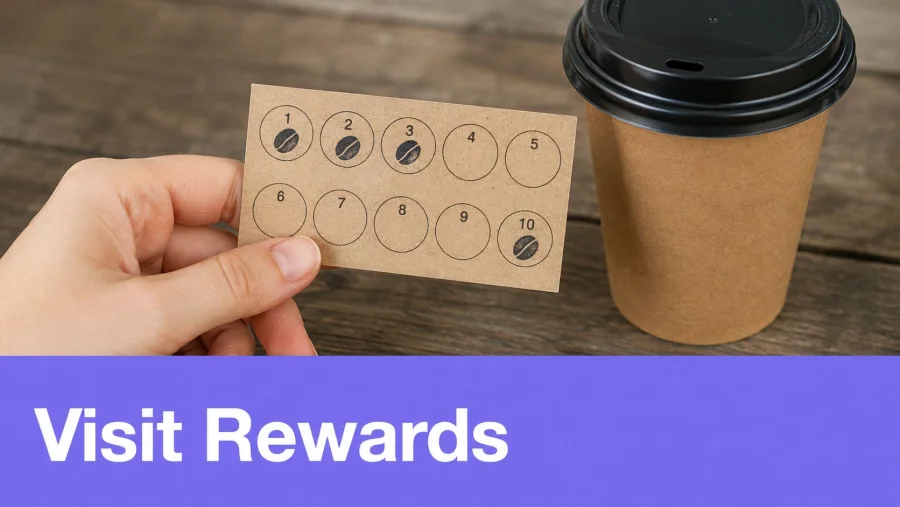
Stamp cards remain one of the strongest loyalty programme examples for frequent, predictable purchases. A customer receives one stamp per qualifying visit, then receives a reward after completing the card.
The model works naturally for cafés, quick-service restaurants, fitness studios and salons. A café might say:
“Collect 10 coffee stamps and enjoy your next regular coffee free.”
A fitness studio could reward class attendance, while a salon could offer a service upgrade after a set number of appointments. The mechanic is easy to explain because customers don't need to understand points conversion, tiers or changing promotional rules.
Keep the reward visible
A digital stamp card should show how many stamps the customer has and what remains. The target needs to feel reachable, but the business also needs to protect its margins. The plan notes support targets between 8 and 12 stamps, with double-stamp promotions on quieter days.
Useful measures include:
- Active card users: Identify customers who scan repeatedly.
- Completion rate: See how many customers finish a card.
- Days between visits: Check whether the programme shortens the gap.
- Redemption rate: Confirm that rewards are being claimed and understood.
BonusQR can replace a paper punch card with a QR scan. Customers open their profile, staff scan the code and the visit is recorded. No POS connection is needed, which makes the format suitable for independent operators that want a fast launch.
The weakness is that stamps can reward visits without encouraging larger baskets. A restaurant that wants customers to add desserts or upgrade meals may need a spend threshold instead. For a business focused primarily on frequency, though, the simplicity is the advantage.
4. Cashback and rebate programmes
Cashback is the clearest format for customers who want transparent monetary value. Instead of waiting for a free product, members receive credit or store value linked to their purchases.
A local grocery shop might use:
“Get store credit on every purchase and use your balance on a future shop.”
Restaurants and retailers can apply cashback to selected categories, while service businesses can offer credit after a completed appointment. The customer sees exactly what has been earned, which reduces the confusion sometimes associated with points.
Show the value in pounds
The business should explain both the earning rule and the redemption rule. “Earn cashback on qualifying purchases” is too vague. A customer needs to know where the credit appears, when it can be used and whether it expires.
Track:
- Credit earned and redeemed
- Repeat purchase rate
- Average transaction value
- Margin by participating category
- Inactive balances
Cashback can become expensive if it applies to every product regardless of margin. A retailer might reserve stronger rewards for selected categories or quiet trading days. A restaurant could provide credit for weekday visits rather than peak-time bookings.
BonusQR supports cashback rules and customer profiles without requiring POS integration. Staff can scan the customer's QR code, apply the credit and allow the customer to monitor the balance through the digital loyalty experience.
The main trade-off is emotional appeal. Cashback feels practical, but it may not create the same sense of belonging as exclusive events, personal recognition or community activity. It's strongest when the primary objective is clear value and repeat spending.
5. Referral and advocacy programmes
Referral programmes turn satisfied customers into a source of new business. The most effective versions reward both sides, giving the existing customer a reason to share and the new customer a reason to try the business.
A salon could use:
“Give a friend £10 off their first appointment. When they visit, receive £10 credit for your next treatment.”
A café might offer a free drink after a successful referral, while a gym could reward an introduction that becomes a paid membership. The action needs to be simple enough to complete from a phone, without requiring customers to explain a complicated code.
Reward activation, not just sharing
A referral should count when the new customer completes the required action, not merely when a link is sent. Otherwise, the business may issue rewards without acquiring a real customer.
Measure:
- Referral invitations sent
- New customer visits
- Referral conversion
- First-to-second visit rate
- Credit redemption
Staff should know how to identify a referral at the point of sale. The new customer's reward should be applied quickly, while the referrer should receive a clear confirmation after activation.
Small businesses looking for more referral programme inspiration for cafés can adapt the same structure to restaurants, salons and fitness studios.
BonusQR can support the referral journey through customer profiles, QR-based identification and campaign messaging. A business can promote the offer through its existing customer base, then review referral activity in its analytics.
The caution is compliance and trust. Review incentives must not encourage misleading feedback, and referral communications need appropriate consent. The reward should support a genuine recommendation rather than pressure customers into promoting a business they haven't used recently.
6. Birthday and seasonal offer programmes
A birthday reward works when it fits the customer's plans and gives the business a clear reason to communicate. Salons, restaurants, cafés, gyms and retailers can attach the offer to a birthday, membership anniversary or seasonal visit.
A restaurant might send:
“Happy birthday. Enjoy a complimentary dessert when dining with us during your birthday week.”
A salon could offer a treatment upgrade, while a gym might provide a complimentary class or recovery session. The reward should match the customer and leave enough time to book or visit with friends.
Build the timing carefully
Ask for a birthday during sign-up, explain its purpose, and make the date easy to correct. Businesses collecting this information for marketing should set clear consent and communication rules. They also need to consider UK GDPR, PECR and consumer protection requirements, as outlined in UK loyalty programme legal guidance.
Set the campaign around a usable window. A birthday-week offer may suit restaurants, while a longer validity period can work better for salons or gyms with appointment constraints. Record:
- Offer delivery rate
- Redemption rate
- Incremental visits during the offer period
- Spend attached to the reward
- Repeat visits after redemption
BonusQR can store customer profiles, issue birthday and seasonal coupons, and send campaigns through push or email channels. Wallet passes can keep the reward visible until the customer is ready to use it.
The main risk is poor relevance. Sending the same discount to every customer makes the message feel routine. Use the customer's usual category where available, keep the reward affordable, and review repeat visits after redemption. A reward that creates one discounted transaction but no later visit may be costing margin without building loyalty.
7. Exclusive perks and early access programmes
Some customers value access more than discounts. Early product releases, priority booking, invitation-only events and limited-edition treatments can create emotional loyalty without reducing the price of every transaction.
A restaurant could invite members to a preview tasting menu. A luxury salon might offer early booking for a new treatment, while an independent retailer could give members first access to a limited collection.
“Members get first access to new treatments and priority booking before public release.”
Make exclusivity real
An exclusive benefit must be available only to members and must have practical value. If every customer can receive it, the programme loses its purpose. The business should also avoid promising scarce access that it can't deliver consistently.
Measure member bookings, early-access conversions, event attendance, repeat visits and benefit engagement. A business may find that priority booking creates more value than a discount because it solves a real customer problem.
BonusQR can deliver exclusive campaigns and member-only offers through QR-based profiles. Businesses can also add Apple Wallet rewards, making a membership pass easier to find before a visit.
The trade-off is that access-based programmes need planning. A salon must manage appointment capacity, and a retailer must allocate stock fairly. The offer should include clear eligibility, availability and booking terms.
This format works particularly well when the brand has a strong local identity. Customers aren't only buying a product or service. They're being recognised as regular supporters of the business.
8. Gamification and challenge-based programmes
Gamification adds progress, challenges, badges, streaks or leaderboards to a loyalty programme. It's particularly relevant to gyms, fitness studios, cafés with regular customers and businesses whose customers enjoy visible achievement.
A fitness studio could publish:
“Attend four classes this month, complete the challenge and unlock a guest pass.”
A café might run a seasonal tasting challenge, while a retailer could reward customers who try products from a new range. The activity should support a real commercial or behavioural goal, rather than becoming a decorative game.
Start with one challenge
The plan notes recommend beginning with 2 or 3 badges and one monthly challenge, then expanding only if customers use them. A challenge that's too difficult discourages participation. One that everyone completes immediately may fail to create interest.
Track:
- Challenge enrolment
- Completion rate
- Visits generated during the challenge
- Reward redemption
- Participation by customer segment
BonusQR can support QR-based rewards for retail stores by connecting scans and reward rules to campaigns. A shop could place a QR code at the counter, then promote a limited challenge through its customer profile and messaging tools.
The caution is competitive pressure. Leaderboards can motivate some customers and alienate others, especially in fitness. A progress-based challenge gives everyone a chance to complete the activity without publicly ranking customers.
Gamification works when the reward is meaningful. A badge alone may be satisfying for a highly engaged community, but a practical reward such as a free class, product sample or guest pass gives the challenge a stronger reason to participate.
9. Personalised and AI-driven offers
Personalisation uses customer behaviour to make offers more relevant. A small business doesn't need advanced artificial intelligence to begin. Basic segments, such as frequent versus occasional visitors or high-spend versus low-spend customers, can already improve campaign relevance.
A café could send a regular breakfast customer a morning offer, while a salon might remind a customer about a service they previously booked. A retailer could recommend an accessory related to a past purchase instead of sending the same discount to the entire database.
Begin with useful segments
A practical customer-facing message might read:
“A thank-you offer for customers who've visited recently. Enjoy a complimentary add-on with your next appointment this month.”
The business should avoid implying that it knows more than the customer has consciously shared. Clear consent, transparent messaging and sensible data controls matter under UK data protection rules.
Useful KPIs include:
- Offer redemption by segment
- Repeat visits after a campaign
- Average spend from targeted customers
- Inactive customer reactivation
- Unsubscribe and opt-out activity
BonusQR can collect customer profiles, record visit history and run targeted campaigns from one loyalty environment. A business can test a focused offer against a broader campaign, then refine the next message based on actual behaviour.
The main limitation is data quality. If customers rarely scan, the profile lacks enough information for meaningful targeting. The solution is not to add complex automation immediately. It's to create a simple programme that encourages consistent scans and builds reliable first-party data over time.
10. Community and social loyalty programmes
Community loyalty builds attachment through shared interests, local identity and participation. It can be more powerful than discounts for gyms, independent cafés, wellness centres, outdoor retailers and purpose-led businesses.
A gym might organise member walks and recovery sessions. A café could host local creator evenings, book clubs or neighbourhood events. A retailer might build a community around repair, sustainability or a shared hobby.
Customer-facing wording could be:
“Join the member community for local events, early invitations and recognition for helping the neighbourhood grow.”
Reward contribution, not only spending
Community programmes should recognise useful participation. Customers might receive a badge for attending an event, a reward for bringing a guest or a spotlight in the business newsletter. The objective is to create relationships that make the business feel part of a customer's routine.
Measure:
- Event attendance
- Member participation
- Guest visits
- Repeat visits after events
- Community-driven referrals
BonusQR can give the community a simple digital home through customer profiles, campaigns, news, reviews and reservations. QR scans can record attendance or trigger a small reward without requiring a separate event platform.
The trade-off is that community takes consistency. A single event won't create belonging if the business doesn't continue the conversation. Staff should recognise regular contributors and keep events aligned with a clear shared value, whether that's fitness, local food, creativity or wellbeing.
Top 10 Loyalty Program Types Comparison
| Program | Implementation Complexity (🔄) | Resource Requirements (⚡) | Expected Outcomes (📊 ⭐) | Ideal Use Cases | Key Advantages (💡) |
|---|---|---|---|---|---|
| Points-Based & Spend Threshold Rewards | Medium 🔄🔄, points + milestone logic | Medium ⚡⚡, CRM/UX + moderate ops | Predictable repeat visits & higher AOV 📊 ⭐⭐⭐⭐ | Coffee shops, restaurants, retail, gyms | Gamified progression + clear milestones; scalable; measurable ROI 💡 |
| Tiered / VIP Membership Programs | High 🔄🔄🔄, multi-tier rules & resets | High ⚡⚡⚡, CRM, analytics, ops | Significant CLV uplift & retention 📊 ⭐⭐⭐⭐⭐ | Salons, upscale restaurants, retail chains, fitness studios | Aspirational motivation; differential offers; drives premium spend 💡 |
| Stamp / Visit-Based Programs | Low 🔄, simple visit tracking | Low ⚡, QR scan or punch-card ops | Increased visit frequency; modest revenue lift 📊 ⭐⭐⭐ | Cafés, salons, gyms, QSRs, frequent-purchase retail | Extremely simple; inclusive for low spenders; easy to implement 💡 |
| Cashback and Rebate Programs | Medium 🔄🔄, accounting + redemption flows | Medium ⚡⚡, financial tracking + comms | Strong perceived value; drives spend but margin-sensitive 📊 ⭐⭐⭐⭐ | Retail, grocery, restaurants, coffee shops | Clear monetary value; competitive differentiator; flexible redemption 💡 |
| Referral and Advocacy Programs | Medium 🔄🔄, referral tracking & fraud controls | Low-Medium ⚡⚡, sharing integrations, tracking | Low-cost customer acquisition; viral growth potential 📊 ⭐⭐⭐⭐ | All business types (esp. gyms, salons, restaurants) | High ROI per acquisition; builds community and trust 💡 |
| Birthday & Seasonal Offer Programs | Low-Medium 🔄🔄, time-trigger automation | Low ⚡⚡, data capture + automation | High redemption at specific moments; emotional connection 📊 ⭐⭐⭐⭐ | Restaurants, salons, retail, specialty stores | Exceptional ROI; personalized brand moments; easy to scale 💡 |
| Exclusive Perks & Early Access Programs | High 🔄🔄🔄, event/product coordination | High ⚡⚡⚡, ops, inventory, premium experiences | Strong emotional loyalty; higher willingness to pay 📊 ⭐⭐⭐⭐ | Premium restaurants, specialty retail, beauty, fitness | Differentiates on experience; reduces price competition; social buzz 💡 |
| Gamification & Challenge-Based Programs | Medium 🔄🔄, content cadence + mechanics | Medium ⚡⚡, design, content, notifications | Boosted engagement, habit formation, social sharing 📊 ⭐⭐⭐⭐ | Gyms, coffee shops, youth-focused retail, apps | Increases stickiness; encourages repeat behavior; viral potential 💡 |
| Personalized & AI-Driven Offers | High 🔄🔄🔄, data pipelines & models | High ⚡⚡⚡, analytics, data, engineering | Higher redemption rates; lower marketing waste 📊 ⭐⭐⭐⭐⭐ | Retail, grocery, restaurants, any with rich data | Precision targeting; churn prevention; maximizes ROI on promotions 💡 |
| Community & Social Loyalty Programs | Medium-High 🔄🔄🔄, moderation + programming | Medium ⚡⚡, community mgmt & events | Deep emotional loyalty; slower, durable retention 📊 ⭐⭐⭐⭐ | Gyms, beauty, local restaurants, values-driven retail | Builds advocacy and UGC; direct feedback loop; high retention 💡 |
Turn One Loyalty Idea Into Repeat Visits
The strongest loyalty programme examples don't all use the same mechanic. They match the reward to the behaviour the business needs.
- Frequent visits: Start with a stamp card.
- Larger baskets: Use spend thresholds.
- Transparent value: Offer cashback or store credit.
- New customer acquisition: Build a two-sided referral programme.
- Emotional loyalty: Add exclusive perks or community activity.
- Habit formation: Use a simple challenge or milestone.
- Personal relevance: Segment offers around recent behaviour.
UK customers already belong to many schemes. Government analysis found that 97% of shoppers are members of at least one supermarket loyalty scheme, while shoppers belong to an average of 3 supermarket schemes. Loyalty-priced grocery products generated more than £5 billion in revenue between November 2023 and January 2024, representing about 22% of total grocery revenue for supermarkets offering those promotions, according to the UK government review of loyalty pricing.
That reach creates a problem for small businesses. A generic programme may be easy to launch but difficult to remember. UK research found that 55% of consumers belong to at least four schemes, while only 58% actively used three or fewer schemes in the previous six months, according to Mintel's UK customer loyalty research. Simplicity and distinctiveness matter more than adding another complicated points catalogue.
A practical launch checklist
Before launch, the business should confirm:
- Target behaviour: Choose one action, such as another visit, a larger basket or a referral.
- Reward cost: Check the reward against margin and capacity.
- Customer wording: Explain the earning rule and reward in one short sentence.
- Staff process: Decide exactly how staff scan, approve and redeem.
- Launch promotion: Use a welcome bonus or a limited campaign to create first use.
- KPI baseline: Record current visits, average spend, redemptions and customer activity before judging results.
BonusQR can provide the operating layer for that test. Businesses can launch stamps, points, cashback, visit and spend thresholds, fixed discounts, welcome bonuses, birthday offers and seasonal coupons. Customers sign up through mobile or web, receive a personal QR code and track rewards and visit history in one profile.
Staff scan and redeem within the app, with no POS integration or extra hardware required. Wallet passes keep offers accessible, while built-in analytics can show enrolment, active members, repeat-visit rate, average spend, reward redemption, coupon performance and referral activity. Automated push and email campaigns can support reminders, feedback requests and timely offers.
Businesses can start free with BonusQR, choose one loyalty mechanic and test it with real customers at the counter, reception desk or checkout. Start a BonusQR programme today, measure the behaviour it changes and improve the reward from evidence rather than guesswork.


