Over 93% of companies globally have launched a rewards program as of 2026, yet many businesses still struggle to keep shoppers coming back. You've likely felt the sting of rising customer acquisition costs or the frustration of managing ineffective paper punch cards that your customers constantly lose. It's exhausting to handle complex data when you just want to focus on growth. We understand that your time is valuable and your marketing should work as hard as you do.
This article will help you master loyalty marketing strategies that turn one-time shoppers into lifelong brand advocates. You'll learn how to use modern digital frameworks to drive sustainable revenue growth and automate your customer engagement. We'll show you how to swap outdated systems for sleek mobile wallet integrations that increase your customer lifetime value. From digital stamp cards to white-label apps, you'll discover the exact tools needed to build a professional, high-energy loyalty program that scales with your business.
Key Takeaways
- Master the shift toward first-party data to make your loyalty marketing more effective and privacy-compliant in 2026.
- Learn how to balance accessibility and relevance to ensure your rewards program is both easy to use and highly valued.
- Determine if a digital stamp card or a points-based system is the most profitable choice for your specific business model.
- Discover how to launch a professional loyalty framework using QR technology that works without any specialized POS hardware.
- Use Google and Apple Wallet integrations to keep your brand top-of-mind with automated, location-based customer notifications.
What is Loyalty Marketing and Why Does It Matter in 2026?
Success in today's market requires more than just a great product. You need a strategy that keeps people coming back. What is Loyalty Marketing at its core? It's a strategic approach to incentivizing repeat business by rewarding customers for their ongoing engagement. In 2026, this isn't just a perk; it's a necessity for sustainable growth. The digital landscape has changed, and the "Frictionless Reward" journey is now the standard for brands that want to thrive.
Acquiring new customers is becoming incredibly costly. Research from Extu indicates that retaining an existing customer is 5 to 25 times cheaper than finding a new one. By focusing on loyalty marketing, you tap into a high-ROI engine. A small 5% increase in customer retention can skyrocket your profits by 25% to 95%. It's about working smarter, not harder, by maximizing the value of every person who walks through your door or visits your site.
The Shift from Transactional to Emotional Loyalty
Points are no longer enough to win the long game. While 83% of consumers actively participate in loyalty programs in 2026, they crave deeper connections. Transactional rewards are easy to copy, but emotional loyalty is a competitive moat. You build this affinity through consistent digital touchpoints that make your brand feel like a partner. Use "surprise and delight" tactics, such as unexpected rewards or early access to new products, to turn shoppers into advocates. When customers feel seen and valued, they stop looking at your competitors.
First-Party Data: The Hidden Goldmine
Privacy regulations have shifted the way we handle information. With GDPR fines exceeding 7 billion euros, businesses need a legal and ethical way to understand their audience. A loyalty platform provides this by serving as a transparent data collection tool. You can track purchase history and preferences directly from the source. This allows you to predict future behavior and deliver hyper-personalized offers that actually convert. First-party data is the essential foundation of 2026 marketing because it builds trust while fueling your growth strategies.
The 4 Pillars of a Successful Loyalty Strategy
Building a program that lasts requires more than just a "buy ten, get one" offer. You need a foundation that supports long-term engagement. Effective loyalty marketing relies on four critical pillars that ensure your customers feel valued and motivated. When you align these pillars, you move from simple transactions to a thriving community of advocates. Drive more sales by making your rewards impossible to ignore through these core principles:
- Accessibility: Your rewards must be easy to earn and track. If a customer has to carry a physical card or remember a complex login, they'll stop participating. Use digital passes that live in their mobile wallet for instant access.
- Relevance: Personalized rewards based on actual preferences perform best. Citing proven loyalty marketing strategies, you'll see that generic offers often get ignored while tailored ones drive action.
- Speed: Modern shoppers expect instant gratification. Update point balances in real-time and send immediate notifications when a reward is unlocked.
- Identity: Your program should feel like a natural extension of your brand. Use white-label solutions to maintain your unique look and feel without the high cost of custom development.
You can begin crafting your custom loyalty experience today to see these pillars in action.
Personalization at Scale
Move beyond basic "Dear Name" emails to create true impact. Use purchase data to offer rewards that match your customer's history. For example, if a shopper frequently buys espresso beans, send them a "Double Points" offer for a new roast. Segment your audience into "VIPs" who need exclusive access, "At-Risk" customers who need a reason to return, and "Newbies" who need a warm welcome. Implementing digital reward points systems allows you to automate these segments. This keeps your messaging sharp and your marketing budget efficient.
Measuring Success Beyond Total Points
Don't get distracted by high point balances. In fact, a massive unredeemed point balance is often a liability because it represents future costs without immediate engagement. Focus on your redemption rate to see if people actually value your offers. Track your churn rate to identify where you're losing interest. Most importantly, calculate your customer retention rate formula to understand the long-term health of your business. High customer lifetime value (CLV) is the ultimate goal of loyalty marketing, ensuring every customer remains profitable for years to come.
Digital Stamp Cards vs. Points Systems: Which is Right?
Choosing the right rewards structure is the most important decision in your loyalty marketing journey. It defines your customer's daily experience and how they perceive the value you offer. The "Buy 9, Get 1 Free" stamp card model provides immediate clarity for small, frequent purchases. In contrast, the "1 Dollar = 1 Point" system offers long-term flexibility for businesses with diverse price points. Both models have unique strengths, and the right choice depends entirely on your business type and sales cycle.
Retail and hospitality often thrive on different emotional triggers. A car wash or coffee shop benefits from the simplicity of a stamp. This leverages the "endowed progress effect," a psychological phenomenon where people work harder to achieve a goal as they get closer to it. A famous 2006 study showed that customers with a 12-stamp card and two pre-stamped spots were significantly more likely to complete the card than those with a clean 10-stamp card. You can launch this quickly using digital stamp card software that requires zero technical expertise.
When to Choose Digital Stamp Cards
High-frequency businesses need to reduce friction to keep customers coming back. If your shoppers visit weekly for a service like a haircut or a latte, a digital stamp card is perfect. It offers a low barrier to entry because it's easy to understand at a glance. Customers don't want to calculate point values for a five-dollar purchase. They want to see their progress visually. You can replace paper punch cards with a mobile wallet pass to ensure they never lose their progress again. This keeps the experience tangible and rewarding without the clutter of physical cards or the frustration of a lost punch card.
When to Choose a Points-Based System
Points systems work best when your product catalog has diverse price points and high-variance spending. If one customer spends $20 and another spends $200, a flat stamp system feels unfair to your high-value shoppers. Points allow you to reward every dollar spent accurately. Customers enjoy "saving up" for premium rewards, which creates a sense of accomplishment and long-term commitment. You can also integrate points with tiered membership levels to offer VIP exclusivity, such as free shipping or private sales. It's a powerful way to scale your loyalty marketing as your business grows and your customer data becomes more complex.
Building Your Loyalty Framework Without Hardware
You don't need a massive IT budget or a technician to modernize your customer retention. Traditional programs often fail because they rely on clunky equipment that breaks or becomes outdated. By contrast, you can build a robust loyalty marketing framework using only the smartphones and tablets your team already uses. This hardware-agnostic approach saves you money and allows you to launch your program in days rather than months.
- Step 1: Choose a platform that supports "Scan to Earn" QR technology to keep transactions fast and reliable.
- Step 2: Design your reward tiers based on margin rather than just revenue. Offering a high-margin service as a reward protects your bottom line while still feeling valuable to the customer.
- Step 3: Launch your digital pass to your existing database via email or SMS. This gives your most loyal shoppers immediate access to your new system.
- Step 4: Train your staff to mention the digital card during every transaction. Personal recommendations from your team are the fastest way to grow your member base.
- Step 5: Set up automated push notifications. These gentle reminders re-engage dormant users without you having to lift a finger.
The QR Code Advantage
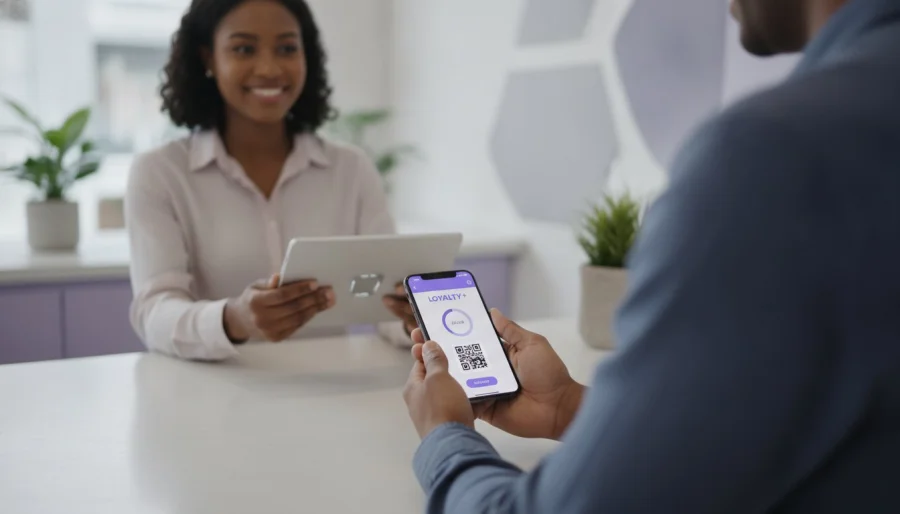
QR technology is the bridge between your physical store and the digital world. It removes the need for expensive POS scanners or specialized card readers that clutter your counter. Customers can join your program in under 30 seconds by scanning a unique code displayed at the point of sale. This process creates a contactless loyalty program that meets the modern hygienic standards shoppers expect today. It's fast, it's safe, and it ensures that your data collection starts the moment a customer shows interest.
Cloud-Based Management
Managing multiple locations or a growing team is simple when your data lives in the cloud. You can update your rewards, change point values, or add new tiers in real-time across every storefront from a single dashboard. This visibility allows you to track which staff members are best at signing up new members and which rewards are driving the most redemptions. You stay in total control of your brand identity and your loyalty marketing data. Check BonusQR pricing to find scalable cloud options that grow alongside your business.
Don't wait for your competitors to act first. Register your business today to start building your professional, hardware-free loyalty program.
Future-Proofing with Mobile Wallets and White-Labeling
Friction is the primary enemy of successful loyalty marketing. Most shoppers today suffer from app fatigue and will refuse to download a standalone 100MB application for a single store. Google and Apple Wallet passes are the "hidden secret" of high retention because they live in an app that's already on the user's phone. This eliminates the download barrier entirely while keeping your brand just one swipe away. These passes also support geofencing, which triggers location-based notifications on the customer's lock screen when they're near your business. It's an automated way to remind people you're open for business, driving foot traffic without any manual effort from your team.
The Friction-Free Wallet Experience
A digital wallet pass for loyalty programs provides a truly friction-free experience that traditional apps can't match. These passes are dynamic, meaning they update automatically as customers earn points or unlock rewards. Your card can change colors or text to signal a tier upgrade, providing that instant gratification that modern consumers crave. Since they appear on the lock screen based on proximity, they act as a persistent, gentle nudge to visit your location. This ensures your rewards program remains a daily part of your customer's digital life without being intrusive or taking up precious storage space.
Owning Your Brand with White-Labeling
You should never have to sacrifice your brand identity for the sake of functionality. While some generic platforms force you into a cookie-cutter look, white label loyalty app development allows you to own the entire aesthetic. This approach gives you an enterprise-level feel without the $50,000 price tag of custom coding. The psychological impact of a branded experience is significant; it builds deeper trust and makes your program feel like an exclusive club rather than a third-party service. You can learn more about custom white-label development to see how easy it is to customize every pixel to match your brand. Owning your digital identity is the final step in your loyalty marketing strategy, ensuring that your growth remains sustainable, professional, and uniquely yours.
Scale Your Growth with Modern Loyalty
You now have the blueprint to transform your customer retention from a manual chore into an automated growth engine. By focusing on accessibility and relevance, you ensure your rewards actually get used rather than forgotten. Whether you choose a digital stamp card for quick wins or a complex points system for high-value engagement, the goal remains the same: building lasting brand affinity. Modern loyalty marketing is about meeting your customers where they are, right in their mobile wallets, while capturing the first-party data you need to thrive.
Ready to modernize your business? You can launch a professional program with no POS hardware required and enjoy Apple & Google Wallet native integration from day one. If you want to own your digital identity, our white-label options allow you to maintain a premium brand feel on a mid-market budget. Start building your digital loyalty program with BonusQR today! We're excited to help you turn every first-time shopper into a lifelong advocate.
Frequently Asked Questions
What is the most effective type of loyalty marketing for small businesses?
Digital stamp cards are often the most effective choice for local businesses. They provide immediate clarity for high-frequency purchases like coffee, salon services, or car washes. Customers understand the "Buy 9, Get 1 Free" model instantly, which reduces friction. This approach builds a habit without requiring a complex setup. It's a straightforward way to launch your loyalty marketing strategy and see immediate results in customer return rates.
How much does it cost to implement a digital loyalty program in 2026?
Costs vary based on the complexity of your needs and the scale of your operation. Off-the-shelf software subscriptions typically range from $50 to $500 per month for small to mid-sized businesses. If you require a custom white-label solution, the investment will be higher to reflect the specialized development involved. It's best to check specific platform pricing to find a plan that aligns with your current growth stage and budget.
Do customers actually use digital loyalty cards in their mobile wallets?
Yes, adoption is higher than ever with 100% of surveyed consumers participating in loyalty programs in 2026. Most people prefer the convenience of Apple and Google Wallets because they don't have to download a separate, bulky app. These passes appear on the lock screen when a customer is near your store. This proximity-based reminder makes it incredibly easy for them to engage with your brand during their daily routine.
Can I run a loyalty program without an expensive POS system?
You absolutely can run a successful program without any specialized POS hardware. Modern platforms use QR code technology that works on any smartphone or tablet. Your staff simply scans the customer's digital pass to award stamps or points. This eliminates the need for expensive integrations or technical installations. It's a flexible solution that allows you to start rewarding your customers immediately using the devices you already own.
What is the difference between a stamp card and a points system?
A stamp card is a simple count-based system where a specific number of purchases leads to a reward. It's ideal for businesses with consistent pricing. A points system is value-based, awarding points for every dollar spent. This is better for retail stores with diverse price points. While stamp cards drive frequency for specific items, points systems allow customers to save up for higher-value rewards across your entire catalog.
How do I prevent loyalty program fraud with QR codes?
Security is built into modern digital loyalty software through dynamic QR codes and secure scanning protocols. Each transaction is tracked in a centralized dashboard, allowing you to monitor for suspicious activity or unusual point spikes. Unlike paper cards that anyone can stamp, digital systems require a secure staff-side scan to validate a reward. This transparency gives you total control over your inventory and ensures that rewards are only given for legitimate purchases.
How long does it take to set up a digital stamp card for my business?
You can set up a basic digital stamp card in less than a day. The process involves choosing your reward, uploading your brand logo, and generating your unique QR code. Once these steps are complete, you can start signing up members immediately. Because there is no hardware to install or physical cards to print, you bypass the traditional delays associated with launching a new loyalty marketing campaign.
Why are digital loyalty cards better than paper punch cards?
Digital cards solve the "lost card" problem that plagues traditional paper systems. Since the pass lives in the customer's mobile wallet, it's always available when they visit your store. You also gain access to valuable customer data and purchase history that paper cards can't provide. Automated notifications and real-time updates keep your brand top-of-mind, turning a passive reward into an active tool for consistent business growth.


