
 Deutsch
 Español
 Français
 Italiano
 Magyar
 Polski
 Slovenčina
 Čeština

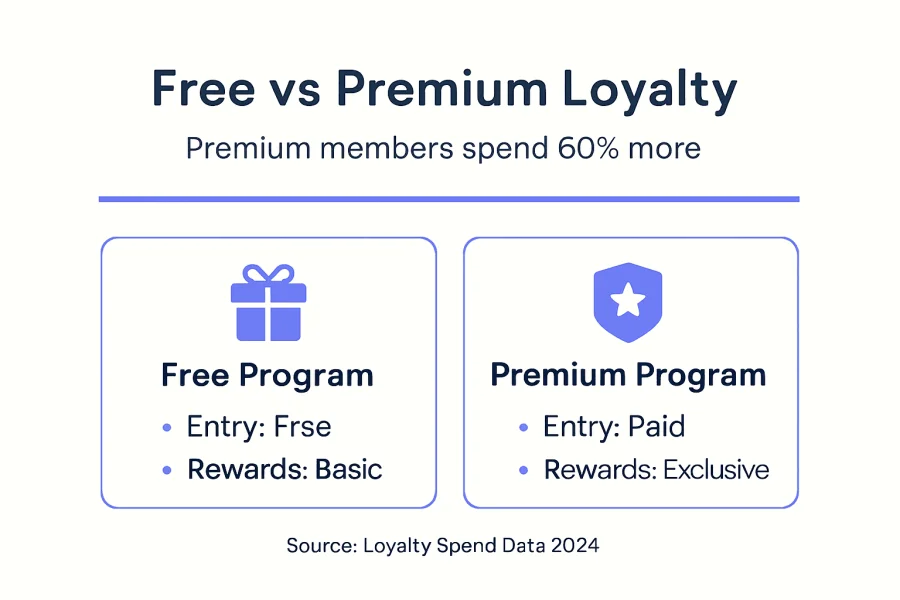
Premium loyalty members spend 60% more after joining compared to free program participants. That gap matters. For small businesses balancing customer retention and profitability, choosing between free and premium loyalty programs defines your revenue trajectory. This guide breaks down the cost structures, engagement patterns, and financial returns of each approach so you can match your loyalty strategy to your business stage and customer base.
Key Takeaways
| Point | Details |
|---|---|
| Premium programs drive higher spend | Members spend 60% more than free program participants after joining. |
| Free programs maximize reach | Low barrier entry builds large customer databases quickly with high participation rates. |
| Retention boosts profits significantly | A 5% retention increase can lift profits by 25% to 95% for small businesses. |
| Program choice depends on business stage | Select based on company size, customer segments, and budget constraints. |
| Hybrid models offer flexibility | Combine free participation with premium tiers to balance reach and revenue. |
Understanding Free and Premium Loyalty Programs
Free loyalty programs remove barriers to entry. Customers join at no cost and earn points, rewards, or tier status through purchases. These programs grow your database fast because free loyalty programs allow businesses to quickly expand their customer base with high participation rates. You accumulate valuable customer data while offering tangible incentives for repeat visits.
Premium programs flip the model. Customers pay an upfront membership fee in exchange for exclusive perks, faster rewards accumulation, or access to special products and services. Digital paid loyalty programs deliver measurable ROI by tracking revenue impact and enabling personalized rewards tailored to customer segments. The payment creates psychological commitment, filtering for your most engaged buyers.
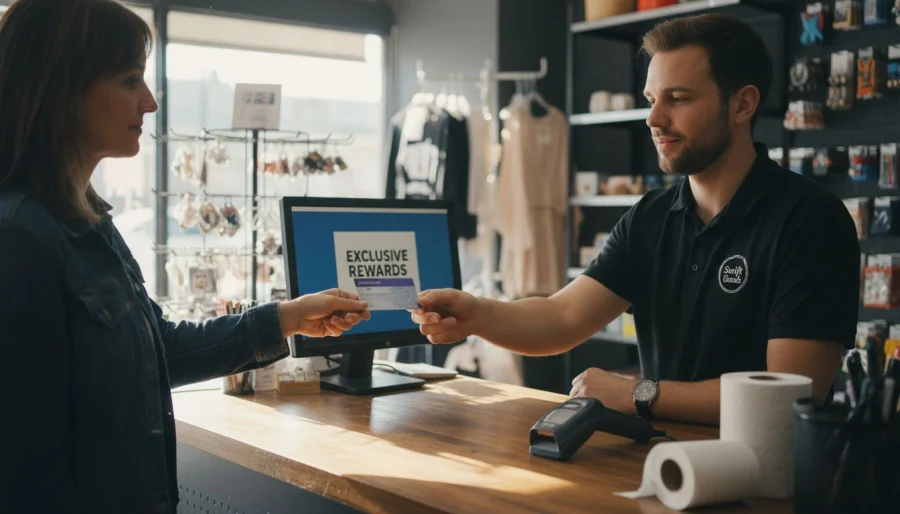
Participation patterns differ sharply. Free programs attract broad audiences but face inactive signups and low engagement without ongoing tactics. Premium programs capture smaller, committed segments willing to invest upfront. Operational complexity varies too. Free programs need constant engagement hooks like gamification and personalized offers. Premium programs require sophisticated segmentation and exclusive benefit delivery but serve fewer members.
Common free program elements include:
- Points accumulation per dollar spent
- Tiered status levels unlocking incremental rewards
- No cost signup or participation fees
- Broad reward catalog accessible to all members
- Automated email or push notification campaigns
Common premium program features include:
- Paid annual or monthly membership fee
- Exclusive early product access or members-only inventory
- Accelerated points earning rates
- Personalized concierge services or priority support
- Special event invitations or VIP experiences
For small businesses, the choice hinges on your customer profile and growth stage. Explore types of loyalty programs for SMBs to see which models align with your operations. Platforms like loyalty apps for small businesses simplify setup and management. Learn more through this free vs paid loyalty programs overview and digital loyalty programs explained.
Key Benefits and Drawbacks for Small Businesses
Free programs excel at customer acquisition. You remove friction, welcome everyone, and build a large database quickly. No membership fees mean broader appeal and faster list growth. For startups or businesses in competitive markets, free programs provide immediate market penetration without upfront customer investment.
Yet free programs carry hidden costs. Frequent discounting and rewards create margin pressure that reduces profit unless carefully managed. You also risk inactive signups. Without engagement tactics, customers join but never redeem rewards or return. Free loyalty programs require ongoing engagement tactics such as personalized offers or gamification to avoid customer inactivity and signup drop-off.
Premium programs generate recurring revenue streams. Membership fees create predictable income independent of transaction volume. You attract committed customers who spend more because they’ve invested upfront. Digital paid loyalty programs provide measurable ROI by tracking revenue impact and allowing personalized rewards tailored to customer segments. This model works when you have identifiable top customers willing to pay for exclusivity.
Drawbacks exist. Smaller membership pools limit total reach. You exclude price-sensitive customers who might still drive volume. Premium programs require higher onboarding effort to communicate value and justify the fee. Maintenance complexity grows as you deliver exclusive perks and personalized experiences to paying members.
Operational tradeoffs shape daily management:
- Free programs demand volume and constant engagement campaigns to activate signups
- Premium programs need premium service delivery and exclusive benefit creation
- Free models work best with automated, scalable reward systems
- Premium models justify higher touch interactions and customized experiences
- Budget allocation shifts from broad marketing to segmented, high-value customer nurturing in premium models
Pro Tip: Invest in engagement tools like gamification and personalized offers to sustain free program effectiveness. Automated campaigns based on purchase behavior keep inactive members from dragging down your program ROI.
Discover retention strategies for SMBs and benefits of loyalty programs for SMBs to maximize either model. Apply customer retention tips for practical implementation. Review free vs paid programs benefits and challenges and ROI of paid loyalty programs for deeper financial analysis.
Quantifying the Impact: Customer Retention, Spend, and Profitability
Retention drives profitability more than acquisition. A 5% increase in customer retention can increase profits by 25% to 95%, emphasizing the financial impact of effective loyalty programs on small businesses. That leverage makes loyalty programs essential, not optional.
Premium members deliver outsized value. Members of premium loyalty programs are 60% more likely to spend more after joining compared to free loyalty program participants. This spending gap compounds over time as premium members make repeat purchases at higher average order values.
Returning customers outspend new ones consistently. Loyal buyers know your products, trust your brand, and require less convincing. They purchase faster, buy more per transaction, and cost less to serve. This dynamic elevates ROI on every dollar invested in loyalty program sophistication.
| Metric | Free Program | Premium Program |
|---|---|---|
| Average Retention Rate | 15% to 25% | 40% to 60% |
| Average Spend Increase | 10% to 20% | 60% to 80% |
| Profit Uplift Potential | 25% to 50% | 50% to 95% |
| Customer Engagement Frequency | Monthly | Weekly |
| Program ROI Timeline | 12 to 18 months | 6 to 12 months |
These numbers demonstrate how program structure shapes business outcomes. Premium programs accelerate returns through higher commitment and spending, while free programs build volume over longer timelines. Your business stage determines which timeline matches your growth goals.
Explore benefits of loyalty programs for SMBs for implementation strategies. Understand customer retention impact on your bottom line. Review free loyalty retention data for benchmarking. See small business loyalty retention impact for industry context.
Myths and Misconceptions About Loyalty Programs
Misconceptions cloud loyalty program decisions. Some common misconceptions include that free loyalty programs are ineffective or that premium programs only benefit large companies. In reality, both have distinct value propositions suitable for different business stages and customer segments.
Free programs are not inherently weak. With smart engagement tactics, they drive meaningful retention and revenue growth. The key lies in activation, not just signup volume. Gamification, personalized offers, and timely communications turn passive members into active repeat buyers.
Premium programs are not exclusive to enterprises. Small businesses with loyal customer bases successfully run paid memberships by offering genuine exclusivity and value. The membership fee itself signals quality and commitment, attracting customers who appreciate premium experiences.
No one-size-fits-all solution exists. Your ideal program depends on business maturity, customer demographics, competitive landscape, and operational capacity. Early-stage businesses benefit from free programs to build databases. Established businesses with strong brands can monetize loyalty through premium tiers.
Top myths debunked:
- Free programs cannot drive profitability: False. Properly managed free programs boost retention and lifetime value significantly.
- Premium programs require huge customer bases: False. Even small, passionate customer segments support profitable premium programs.
- Loyalty programs only work for retail: False. Service businesses, restaurants, and B2B companies all benefit from structured loyalty.
- Discounts are the only effective reward: False. Experiential rewards, early access, and exclusive content often outperform discounts.
- Loyalty programs are too complex for small businesses: False. Modern platforms automate most program management, making loyalty accessible to SMBs.
Learn more about loyalty program misconceptions and strategies for correcting loyalty myths. Explore loyalty program misconceptions to avoid common pitfalls.
Framework for Choosing Between Free and Premium Loyalty Programs
Select your loyalty model by assessing business fundamentals. Consider company size, growth stage, customer segments, and available budget. Match program complexity to your operational capacity and customer expectations.
| Business Scenario | Recommended Program Type | Key Considerations |
|---|---|---|
| Startup (0 to 2 years) | Free with basic rewards | Build database, test engagement, minimal investment |
| Scaling SMB (2 to 5 years) | Free with tiered benefits | Segment customers, increase engagement, prepare for premium |
| Mature Business (5+ years) | Hybrid (free + premium tiers) | Monetize top customers, maintain broad reach, maximize lifetime value |
| High-margin niche | Premium from launch | Attract committed buyers, justify exclusivity, build brand cachet |
| High-volume competitive market | Free with aggressive rewards | Compete on value, build loyalty barriers, focus on activation |
Follow these steps to evaluate and implement:
- Analyze current retention rates and identify your top 20% of customers by revenue contribution.
- Survey customers to gauge interest in paid membership benefits versus free rewards.
- Test a free program first to collect behavioral data and refine reward structures.
- Monitor engagement metrics like redemption rates, repeat purchase frequency, and member lifetime value.
- Introduce premium tiers once you have proven free program engagement and identified customers willing to pay for exclusivity.
- Iterate based on data, adjusting reward costs, membership fees, and benefit mixes to optimize profitability.
Pro Tip: Consider hybrid tiered models to combine free participation with premium exclusives. This approach maximizes reach while monetizing your most valuable customer segments without excluding budget-conscious buyers.
Effective loyalty programs align with specific business models and customer behaviors. One size does not fit all. Use this choosing loyalty program framework and retention decision framework to guide your selection. Review this loyalty program decision guide for additional context.
Implementing and Scaling Your Loyalty Program with Bonusqr.com
Bonusqr.com simplifies loyalty program creation and management for small businesses. The platform offers both free and premium subscription tiers, letting you start small and scale as you grow. You choose from multiple loyalty modules including points collection, stamp cards, cashback, coupon distribution, discounts, and rewards for visits or spend thresholds.
Customization options let you tailor programs to your brand and customer preferences. Design your reward structure around what motivates your buyers. Points-based systems work for transaction frequency. Stamp cards suit coffee shops and service businesses. Cashback appeals to price-sensitive customers. Visit-based rewards drive foot traffic.
Engagement tools keep members active. Push notifications alert customers to new rewards, expiring points, or exclusive offers. Personalized campaigns target specific customer segments based on purchase history and engagement patterns. Real-time analytics dashboards show redemption rates, member activity, and program ROI so you make data-driven adjustments.
Scalability comes through automation. Set rules for automatic reward issuance, birthday bonuses, and anniversary perks. Marketing campaigns trigger based on customer behavior without manual intervention. This automation frees you to focus on strategy rather than daily program administration.
Integration possibilities extend functionality. No POS integration is required, but the platform supports connections to payment systems, CRM tools, and marketing automation platforms. Support resources include setup guides, best practice templates, and customer success teams to help you launch and optimize.
Key platform benefits for SMB loyalty success:
- Rapid setup with no technical expertise required
- Flexible reward structures adaptable to any business model
- Mobile and web app access for customer convenience
- Branded customization to maintain consistent brand identity
- Automated marketing campaigns to sustain engagement
- Real-time analytics for continuous optimization
- Tiered pricing from free to premium to match budget and needs
Explore the Bonusqr.com loyalty platform to see features in action. Discover how to automate customer rewards to boost retention by 30%. Understand Bonusqr.com loyalty benefits for your business. Check out personalization integration options for advanced customization.
Summary and Next Steps for SMB Business Owners
Free loyalty programs maximize reach and database growth with low barriers to entry. They work best when paired with strong engagement tactics to combat inactivity. Premium programs generate recurring revenue and attract committed, high-spending customers but require exclusive benefit delivery and smaller membership pools.
Your choice depends on business stage, customer profile, and budget. Startups benefit from free programs to build initial loyalty and collect behavioral data. Mature businesses with identifiable top customers can monetize loyalty through premium tiers or hybrid models combining both approaches.
Leverage Bonusqr.com to build tailored loyalty programs efficiently. The platform’s flexibility supports free, premium, and hybrid structures with automation and analytics to optimize performance. You gain rapid deployment, customization, and scalability without heavy IT investment.
Next steps include assessing your current retention rates, identifying top customer segments, and testing a loyalty program aligned with your business goals. Start with a free program if you’re new to loyalty or launch premium tiers if you have proven customer commitment. Iterate based on data and customer feedback to refine your approach.
Continue learning and evolving your loyalty strategy. Customer preferences shift, competitive dynamics change, and new engagement tactics emerge. Treat loyalty as an ongoing investment in customer relationships, not a one-time project. Learn more about loyalty program benefits with Bonusqr.com to accelerate growth.
Drive Customer Loyalty with Bonusqr.com Solutions
Bonusqr.com provides the tools you need to launch and scale effective loyalty programs. Choose from flexible free and premium subscriptions that match your budget and ambitions. Customize points, stamps, cashback, or visit-based rewards to fit your business model. Automation handles campaign execution and reward distribution while analytics track ROI and guide optimization. SMBs across industries have boosted retention and profits using the platform’s proven features. Visit Bonusqr.com today to build a loyalty program tailored to your customers and growth goals. Boost retention and growth with Bonusqr.com through innovative loyalty schemes designed for small business success.
Frequently Asked Questions
What is the difference between free and premium loyalty programs?
Free programs have no cost to join and focus on broad participation through points, tiers, and general rewards. Premium programs require paid membership, offering exclusive perks, faster earning rates, and personalized experiences that justify the upfront fee.
Can small businesses successfully run premium loyalty programs?
Premium programs are effective for SMBs with identifiable top customers willing to pay for exclusivity. Success requires careful customer segmentation and compelling exclusive benefits that demonstrate clear value beyond what free members receive.
How do loyalty programs improve customer retention?
Loyalty programs reward repeat purchases, encouraging ongoing customer engagement and emotional connection to your brand. Increased retention leads to higher profits due to repeat sales, bigger average spend per transaction, and lower cost to serve loyal customers compared to acquiring new ones.
Should I start with a free or premium loyalty program?
Start with a free program if you’re building your customer database or testing loyalty concepts. Launch premium programs when you have proven customer commitment, identifiable top spenders, and exclusive benefits that justify a membership fee. Hybrid models combining both approaches offer maximum flexibility.