Most small business owners reach for a discount the moment sales slow down. It feels logical. Lower the price, attract more buyers, move inventory. But this reflex comes with hidden costs that quietly chip away at your profit margins, train customers to wait for sales, and make it harder to build real loyalty over time. Cashback works differently, and for many SMBs, it works better. This article breaks down exactly how these two strategies compare, backs up the differences with data, and gives you a clear framework for deciding which approach fits your business goals right now.
Key Takeaways
| Point | Details |
|---|---|
| Cashback fuels loyalty | Cashback programs drive higher repeat purchases and customer lifetime value than traditional discounts. |
| Discounts have hidden costs | While discounts boost short-term sales, they erode margins and can harm your brand in the long run. |
| Hybrid solutions work best | Combining discounts for new customers and cashback for retention yields the strongest loyalty outcomes. |
| Tailor to your market | The best incentive strategy depends on your margins, product types, and customer behavior. |
Understanding cashback and discount: The fundamentals
Now that we’ve set the stage, let’s break down exactly how each approach works.
A discount reduces the price a customer pays at checkout. If a product costs $50 and you offer a 20% discount, the customer pays $40 immediately. Simple, visible, and instant. Discounts are easy to communicate, easy for customers to understand, and they create a sense of urgency. The trade-off is that discounts reduce profit margins at the point of sale, attract price-sensitive shoppers who may not return, and can train your regular customers to hold off purchasing until the next sale comes around.
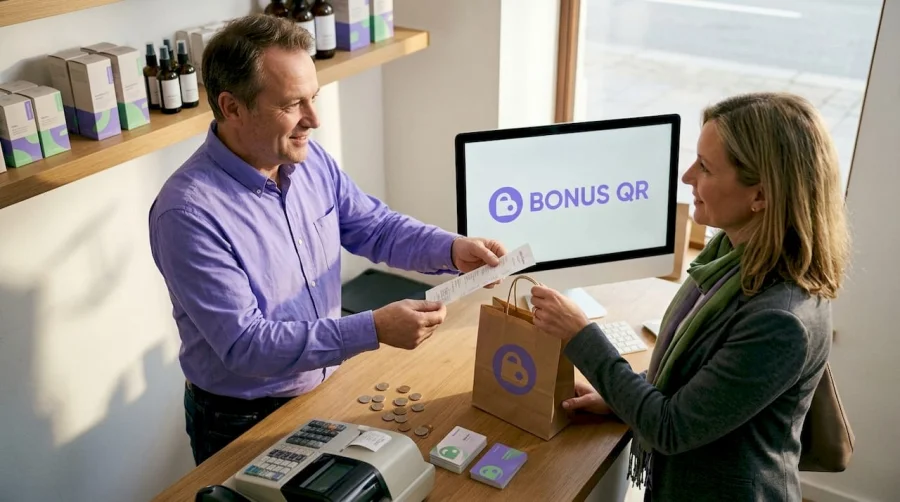
Cashback works differently. The customer pays the full price at checkout, and then receives a portion of that payment back afterward. That return could come as actual cash, store credit, or points. For example, a customer spends $50 and receives $5 back as a reward they can use on a future purchase. Importantly, cashback preserves full price perception and encourages the customer to come back to redeem their reward, building a natural return loop.
The key difference comes down to timing and psychology. Discounts signal that your product is worth less right now. Cashback signals that your customer is valued and rewarded for choosing you. That subtle distinction shapes how people feel about your brand long after the transaction ends.
Here is the step-by-step customer experience for each method:
Discount experience:
- Customer sees a promotional price or coupon before or at checkout
- Price is reduced immediately at the point of sale
- Customer feels a short-term win but forms no additional reason to return
- Transaction ends with no future engagement trigger
Cashback experience:
- Customer pays full price at checkout
- A portion of the purchase is returned as credit, cash, or points
- Customer receives a notification or statement showing their reward
- Customer is motivated to return to redeem, completing the loyalty loop
You can learn more about cashback basics in retail to understand how this model applies across different store types. According to consumer research, 68% of consumers see more value in cashback than in an equivalent discount. The reason is straightforward: they feel like they are getting a bonus rather than buying something cheap.
Pro Tip: Most SMBs confuse cashback with a simple price cut because both reduce what a customer ultimately pays. The real difference is when and why the customer feels rewarded. Cashback ties the reward to behavior and future engagement, while a discount ties it only to the current sale.
Comparing cashback and discount: Impact on sales and loyalty
Now that you know how each works, let’s examine which wins in loyalty and revenue metrics.
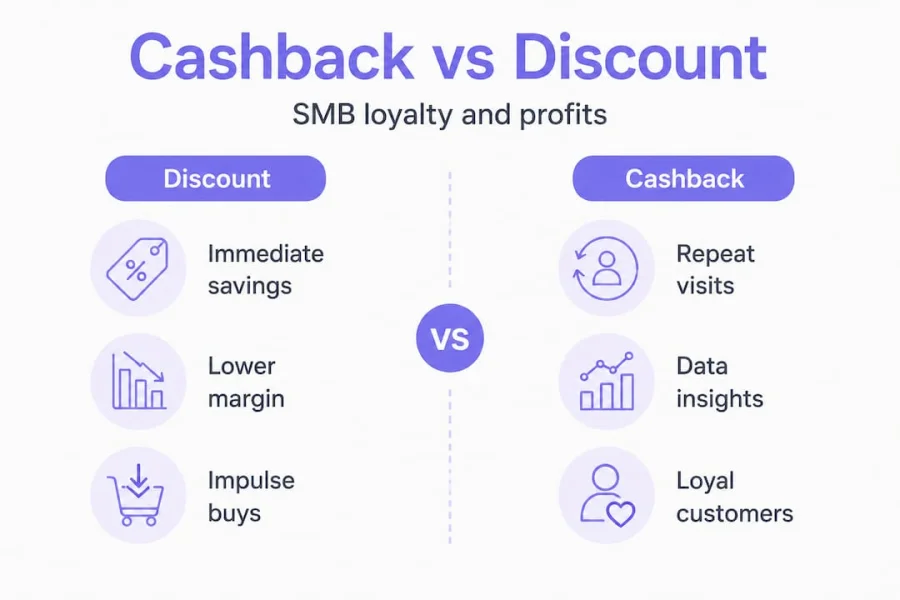
The data consistently shows that cashback programs outperform straight discounts when measured over time. Cashback increases repeat purchase rates by 20% on e-commerce platforms. That is a significant lift that compounds with each returning customer. More importantly, customers who are first acquired through a cashback offer show 23% higher lifetime value compared to those acquired through a discount.
Here is a side-by-side comparison of both methods across key business metrics:
| Metric | Discount | Cashback |
|---|---|---|
| Repeat purchase rate | Low to moderate | High (20% improvement) |
| Customer lifetime value | Lower | 23% higher |
| Profit margin impact | Immediate reduction | Preserved at checkout |
| Perceived product value | Can decrease | Maintained or increased |
| Data capture opportunity | Minimal | High (via claims) |
| Brand loyalty outcome | Weak, transactional | Strong, relationship-based |
The numbers tell a clear story, but the why behind them is equally important. When customers use a discount, the transaction is complete. There is nothing pulling them back. When customers earn cashback, they have a reason to return and use it. That reason creates a habit, and habits are the foundation of loyalty.
“Cashback rewards create a behavioral loop that discounts simply cannot replicate. The customer who comes back to redeem is already pre-sold on your brand.”
This pattern shows up clearly in customer behavior research. The decision between these two tools is not just financial. It is strategic. Here is a numbered summary of the core loyalty and branding outcomes:
- Discounts build short-term traffic. They are effective during clearance events, seasonal pushes, or competitive pricing situations where immediate volume matters most.
- Cashback builds return visits. Because the reward sits waiting for the customer, it creates a concrete reason to come back and spend again.
- Cashback customers spend more per visit. Customers redeeming rewards tend to make additional purchases during the redemption visit, increasing average transaction value.
- Discount-trained customers expect lower prices. Over time, regular discounting signals to your best customers that they should always wait for a deal before buying.
- Cashback supports premium positioning. Maintaining full price while offering a back-end reward signals that your product or service is worth the sticker price.
You can explore the connection between cashback and sales growth in more depth, or compare your options when choosing the best loyalty strategy for your specific business model. For SMBs actively running promotions, it is worth monitoring discount strategies to ensure profitability is not being quietly eroded.
When to use cashback and when to use discount
After seeing the big-picture comparison, here’s how to decide what’s right for your business.
Not every situation calls for the same tool. The most successful SMBs use both methods, but they use them intentionally. Knowing when to reach for each one is what separates a reactive promotion from a real strategy.
Discounts make sense when:
- You need to move excess or seasonal inventory quickly
- You are entering a new market and need to attract first-time buyers with low barriers
- Your product category is highly price-sensitive and competitors are actively discounting
- You are running a one-time clearance event with no intention of creating a long-term expectation
- Your margins allow for reduction without threatening business viability
Cashback works best when:
- You are targeting customers with higher purchase frequency or cart values
- You want to build a loyalty loop that brings customers back without requiring constant new promotions
- Your business model benefits from repeat visits, such as restaurants, salons, or retail stores
- You want to collect customer data through the claims process for future personalization
- Your product or service carries a strong price point that you want to protect
Research confirms this distinction between discount and cashback: discounts perform better for low-margin or impulse purchase situations, while cashback delivers superior results for considered, high-value purchases and ongoing loyalty building.
Here is a practical look at the pitfalls and best practices for each method:
| Factor | Discount | Cashback |
|---|---|---|
| Best for | Clearance, impulse, new customer acquisition | Loyalty, retention, high-value segments |
| Main risk | Margin erosion, price anchoring | Fraud, low redemption, cash flow timing |
| Best practice | Set time limits, avoid frequency | Automate tracking, cap reward values |
| SMB cash flow impact | Immediate, predictable cost | Delayed liability, manage reserve |
| Fraud exposure | Coupon abuse | Claim fraud, policy violations |
It is also worth knowing the edge cases with cashback programs, including the risk of low redemption rates (which can actually benefit your cash flow), fraud exposure, and the fact that instant cashback may conflict with manufacturer advertised pricing policies in some product categories.
Pro Tip: If you run a cashback program, always set a minimum redemption threshold and a reward expiration window. This protects your cash flow, reduces fraud risk, and creates urgency for customers to return and redeem. Your coupon management features should support both reward distribution and claim tracking automatically.
A hybrid approach works well for many SMBs. Use a discount to get someone through the door for the first time, then switch to a cashback model to keep them coming back. For offering cashback rewards as part of a structured program, the setup does not need to be complicated. You can also experiment with seasonal discount strategies layered on top of a year-round cashback program to get the best of both worlds.
Maximizing SMB loyalty: Hybrid strategies and expert insights
Now, let’s bring it all together with actionable strategies you can implement immediately.
Building a hybrid loyalty program does not require a large budget or a complex tech stack. What it requires is a clear plan and consistent execution. Here are the steps to get started:
- Define your acquisition channel. Decide which promotions are designed to bring in new customers. This is where discounts belong. Keep them time-limited and tied to specific campaigns, not to your ongoing pricing.
- Set up a cashback structure for returning customers. Once someone makes a first purchase, enroll them in a cashback or points program automatically. This shifts the relationship from transactional to ongoing.
- Capture data at the cashback claim stage. Every time a customer submits a claim or redeems a reward, you learn something valuable about their behavior. Use this data to personalize future offers and improve targeting.
- Segment your customers by value. Not all customers deserve the same reward. High-frequency buyers or high-value customers should receive better cashback rates, encouraging them to keep spending at the top tier.
- Test, measure, and adjust. Run A/B tests where one group receives a discount offer and another receives an equivalent cashback offer. Compare repeat purchase rates, average order value, and redemption rates over 60 to 90 days.
Empirical research supports prioritizing cashback for long-term retention. Studies consistently show that cashback outperforms discounts for customer lifetime value and repeat purchase rates, with hybrid use representing the optimal approach for most SMBs.
“The businesses that build the most durable customer relationships are not the ones giving the deepest discounts. They are the ones making every customer feel like a stakeholder in the brand’s success.”
Academic research reinforces this direction. An e-wallet study on cashback vs discount found cashback to be superior across multiple loyalty metrics, and highlighted the data capture opportunity during the claims process as a significant advantage for SMB personalization and campaign automation.
You can build on this foundation by balancing discounts and rewards thoughtfully over time, and by exploring tiered cashback programs that reward your best customers with progressively better returns. If you want to reduce the manual effort involved, consider automated discount tracking tools that integrate with your existing workflow.
Our take: Why cashbacks quietly build sustainable SMB growth
Having shared practical frameworks, here’s an honest perspective you won’t find in most how-to articles.
Discounts feel like the easier choice because the result is immediate and visible. You run a sale, you see traffic spike, the numbers look good for that week. But that short-term comfort masks a pattern that hurts your business over months and years. Every time you discount, you are communicating something about your brand’s value that is very hard to walk back.
Cashback, on the other hand, does its best work quietly. It builds habits. It creates reasons to return. It generates data. And it keeps your pricing integrity intact. The businesses that hold their prices and reward loyalty through cashback are also the ones with the strongest customer retention rates and the most predictable revenue over time.
We have seen this pattern play out across many different business types. The SMBs that resist the discount reflex and invest in structured cashback or rewards programs consistently report better customer relationships and healthier margins. You can see why this approach has such staying power by exploring cashback program popularity across industries.
Pro Tip: Use your cashback program as a customer intelligence tool, not just a reward mechanism. Every claim and redemption tells you who your best customers are, what they buy, and when they return. That data is worth more than the discount you would have given away.
Supercharge your loyalty strategy with BonusQR
Ready to put these strategies to work? Here’s how BonusQR can help.
Building a loyalty program that combines cashback and discounts does not have to be complicated or expensive. BonusQR gives you the tools to design, launch, and manage both approaches from a single platform, with no POS integration required.
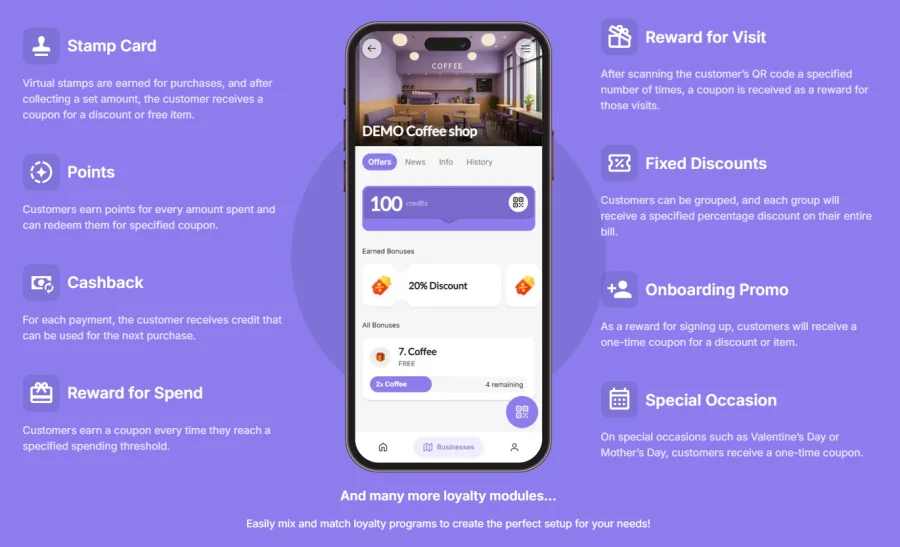
You can set up tiered cashback programs, manage coupons, automate reward distribution, and track customer behavior in real time. Whether you want to run a targeted discount campaign for new customer acquisition or build a long-term cashback structure for your regulars, BonusQR supports both. Explore BonusQR features to see how flexible the platform can be, or browse services loyalty solutions to find the right fit for your specific business type. Setup is fast, the interface is straightforward, and your first steps toward better customer retention are closer than you think.
Frequently asked questions
Which is more effective for long-term customer loyalty: cashback or discount?
Cashback consistently outperforms discounts for long-term loyalty and repeat purchases, with research showing cashback improves repeat purchase rates by 20% on e-commerce platforms. Discounts are more effective for short-term traffic or one-time acquisition campaigns.
How do cashback and discount promotions impact profit margins?
Discounts reduce profit margins immediately at the point of sale, while cashback retains full price perception at checkout. According to research, discounts erode margins and brand perception over time, whereas cashback creates future spend rather than reducing immediate revenue.
What are common pitfalls for SMBs using cashback programs?
The main risks include low redemption rates, fraud exposure, cash flow strain from delayed liabilities, and potential conflicts with manufacturer pricing policies. Specifically, cashback programs carry risks around claim fraud and instant cashback potentially violating MAP pricing agreements in certain industries.
Can businesses combine cashback and discounts?
Yes, and a hybrid approach is often the most effective strategy. Using discounts for new customer acquisition and cashback for ongoing retention is considered optimal for hybrid use, giving you both short-term traffic and long-term loyalty in the same program.
Why do consumers often value cashback more highly than discounts?
Consumers tend to perceive cashback as a bonus reward rather than a price reduction, which preserves their confidence in the product’s quality. Research shows 68% of consumers prefer cashback over equivalent discounts because cashback does not signal that the product is less valuable.


