
Small to medium-sized business owners often struggle to set the right cashback rates that delight customers without hurting margins. Many SMBs worry they lack the resources or technical expertise to compete with big box stores offering cashback. This guide provides actionable steps to design, launch, and optimize cashback rewards tailored for your business, covering prerequisites, setting rates, promotion strategies, common pitfalls, and success metrics you can track within months.
Key takeaways
| Point | Details |
|---|---|
| Cashback rewards offer immediate monetary incentives | Direct financial returns boost customer loyalty and drive repeat purchases faster than traditional points systems. |
| Modern SaaS platforms enable rapid launch | SMBs can implement cashback programs quickly without expensive POS integration or technical overhead. |
| Clear rates and simple redemption rules drive success | Transparent policies and competitive cashback percentages (0.5% to 5%) improve participation and profitability. |
| Personalized communication maximizes engagement | Targeted push notifications, emails, and segmented messaging can increase redemption frequency by up to 35%. |
| Track metrics to prove ROI within 3 to 6 months | Monitor repeat purchase frequency, revenue growth, and redemption rates to optimize and demonstrate program value. |
Understanding cashback rewards and their benefits
Cashback rewards are monetary refunds given to customers based on their purchases, typically calculated as a percentage of transaction value. Unlike points or punch card systems that delay gratification, cashback provides immediate, tangible value that resonates with budget-conscious shoppers. A well-designed cashback rewards program can build customer loyalty by giving customers a direct return on their spending, driving repeat business.
Typical cashback rates range from 0.5% to 5%, with many SMBs setting caps or limits to control costs while still offering competitive incentives. Higher rates work well for high-margin products, while lower percentages suit thin-margin industries like grocery or fuel. The flexibility to adjust rates by product category or customer segment makes cashback an adaptable tool for various business models.
Cashback differs fundamentally from traditional loyalty programs. Points systems require customers to accumulate value over time and navigate complex redemption catalogs. Cashback eliminates that friction, offering straightforward monetary benefits that customers immediately understand. This simplicity drives higher engagement and satisfaction.
The benefits for SMBs are compelling and backed by research. Nearly 90% of businesses using cashback reward program benefits report improved customer retention. Cashback incentivizes repeat visits, increases average transaction values, and creates a competitive advantage against businesses without loyalty programs. Customers who receive cashback rewards become brand advocates, sharing positive experiences that attract new customers organically.
For SMBs competing against larger retailers, cashback levels the playing field. You can match or exceed big-box store offers by targeting specific customer segments or product lines. This focused approach maximizes return on investment while building a loyal customer base that values your personalized service alongside financial incentives. Understanding what cashback rewards mean for your specific industry helps you design a program that aligns with customer expectations and business goals.
Prerequisites and technology needs before launching
Before launching your cashback program, you need the right technology foundation. Prioritize SaaS loyalty platforms that offer cashback functionality with seamless integration across your sales channels. The good news: majority of SMBs can integrate dynamic loyalty rewards via modern systems with no POS integration required. This removes a major barrier that historically kept smaller businesses from competing with enterprise-level loyalty programs.
Look for platforms supporting mobile apps, web portals, and automated tracking of customer purchases and cashback accrual. Real-time analytics dashboards help you monitor program performance and adjust strategies quickly. Cloud-based solutions offer scalability, letting you start small and expand as your program grows without costly infrastructure upgrades.
Customer data readiness is equally crucial. You need systems to capture purchase history, preferences, and contact information for personalized rewards and communications. Segmentation capabilities allow you to tailor cashback rates and offers to different customer groups based on spending patterns, frequency, or lifetime value. This data-driven approach significantly improves program effectiveness compared to one-size-fits-all models.
Budgeting requires planning for both cashback payouts and platform subscription costs. Calculate expected cashback liabilities based on projected sales volume and chosen rates. Factor in redemption timing, as customers may accumulate rewards before cashing out. Set aside reserves to cover these obligations while maintaining healthy cash flow. Platform costs vary widely, from free tiers for basic features to premium subscriptions offering advanced automation and customization.
Data privacy compliance cannot be overlooked. Transparent customer data handling builds trust and meets regulatory requirements like GDPR or CCPA. Clearly communicate how you collect, store, and use customer information. Obtain proper consent and provide easy opt-out mechanisms. Security measures protecting customer data from breaches are essential for maintaining program credibility.
Pro Tip: Choose scalable platforms supporting both mobile and web apps to enable rapid, flexible rollout. This multi-channel approach meets customers where they prefer to engage, increasing program adoption and usage rates. Review customer loyalty program prerequisites to ensure you’ve covered all technical and operational bases before launch.
Setting cashback rates, caps, and redemption rules
Determining optimal cashback percentages requires balancing customer motivation with business profitability. Most SMBs find success within the 0.5% to 5% range, adjusting based on industry margins and competitive landscape. Low-margin businesses like convenience stores typically offer 0.5% to 2%, while high-margin services like salons or consulting can afford 3% to 5% without sacrificing profitability.
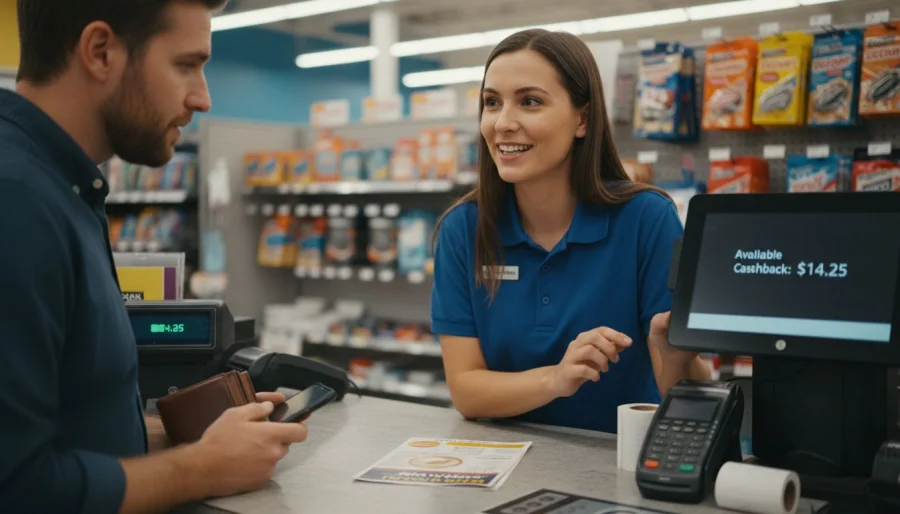
Caps control costs while still providing meaningful incentives. You might set a maximum monthly cashback per customer (for example, $50) or cap cashback on individual transactions (such as $10 per purchase). These limits prevent abuse while keeping your program financially sustainable. Some businesses use tiered caps, offering higher limits to VIP customers who spend more frequently.
Compare different cashback structures to find what fits your business model:
| Structure Type | Description | Best For | Pros | Cons |
|---|---|---|---|---|
| Flat Rate | Same percentage on all purchases | Simple operations, uniform pricing | Easy to communicate, straightforward tracking | Less flexibility to incentivize specific behaviors |
| Tiered Cashback | Higher percentages at spending thresholds | Businesses wanting to increase average order value | Motivates larger purchases, rewards loyal customers | More complex to explain and track |
| Category-Based | Different rates by product/service type | Diverse inventories with varying margins | Protects margins while promoting high-value items | Requires detailed tracking and clear customer communication |
| Spend Threshold | Cashback activates after minimum purchase | Encouraging larger basket sizes | Increases transaction values, controls costs | May frustrate small-purchase customers |
Align rates with your business cost structure and what genuinely motivates your customers. Research competitor offerings and survey your customer base to identify the sweet spot between attractive rewards and sustainable costs. Remember that transparency and simplicity in rules increase active user participation rates by over 30%.
Redemption policies should be crystal clear and customer-friendly. Specify minimum redemption thresholds (for example, customers can cash out once they reach $5 in rewards), redemption methods (store credit, bank transfer, or statement credit), and any expiration dates. Avoid overcomplicating rules with excessive restrictions or confusing terms that erode trust.
Simple approaches work best. Let customers redeem cashback at checkout by applying accumulated rewards to their current purchase, or enable periodic automatic payouts via digital payment methods. The easier you make redemption, the more customers will engage with your program and feel satisfied with their rewards.
Pro Tip: Avoid overcomplicating rules to reduce confusion and increase trust and participation. Clear, simple policies create positive customer experiences that drive word-of-mouth promotion. Explore tiered cashback strategies to see how graduated reward levels can boost customer lifetime value without overwhelming participants with complexity.
Launching and promoting your cashback program
Successful launches begin with comprehensive customer onboarding. Develop campaigns that educate customers about program benefits, how to earn cashback, and redemption processes. Use multiple touchpoints including in-store signage, email announcements, website banners, and social media posts to maximize awareness. Create simple explainer videos or infographics that visualize the value proposition and mechanics.
Follow these steps for maximum impact:
- Develop educational onboarding campaigns explaining program benefits, earning mechanics, and redemption processes across all customer touchpoints.
- Deploy personalized communication channels using push notifications, email sequences, and in-app messages tailored to customer segments and behaviors.
- Leverage purchase data for segmentation to deliver relevant rewards and messaging based on customer spending patterns, preferences, and lifetime value.
- Implement automated triggers that send timely reminders about reward balances, expiring cashback, or special earning opportunities aligned with customer interests.
- Track key performance indicators including enrollment rates, active participation, redemption frequency, and incremental revenue to optimize campaigns continuously.
Communication channels each offer unique engagement opportunities. Push notifications deliver immediate, attention-grabbing messages about limited-time cashback boosts or reward balance updates. Email provides space for detailed explanations, personalized offers, and monthly program summaries. In-app messages catch customers during active browsing or purchasing moments, prompting immediate action.
Segmentation transforms generic broadcasts into relevant conversations. Group customers by purchase frequency (new, occasional, frequent), spending level (budget, mid-tier, premium), or product preferences (category-specific interests). Tailor cashback offers and messaging to each segment’s motivations and behaviors. High-value customers might receive exclusive bonus cashback events, while lapsed customers get win-back offers with elevated earning rates.
Research shows integrated communication can increase cashback redemption frequency and engagement by up to 35%. Coordinate messaging across channels for consistent, reinforcing touchpoints that keep your program top of mind. A/B test subject lines, offer presentations, and call-to-action phrasing to continuously improve response rates.
Monitor metrics like email open rates, notification click-through rates, and conversion from message to purchase. Adjust campaign timing, frequency, and content based on performance data. Consider cashback rewards promotion tips and strategies for customer retention with cashback to refine your approach continuously.
Common failure points and how to fix them
Many SMB cashback programs stumble on predictable challenges. Recognizing these pitfalls early lets you avoid costly mistakes and optimize program performance from launch.
Low cashback rates below 0.5% fail to motivate behavior change. Customers perceive minimal rewards as not worth the effort to engage. Research indicates overly complex redemption rules cause customer disengagement in roughly 35% of cases; low cashback rates reduce motivation for over 40% of SMBs. Benchmark competitor offerings and conduct customer surveys to identify rates that genuinely incentivize repeat purchases without eroding margins.
Complex, unclear redemption policies create friction and frustration. Multi-step processes, confusing terms, or hidden restrictions damage trust and participation. Simplify redemption to one or two steps maximum. Communicate policies in plain language, avoiding jargon or fine print that obscures the value proposition. Transparency builds confidence that customers will actually receive promised rewards.
Generic rewards without segmentation waste marketing dollars on customers who don’t respond to broad offers. One-size-fits-all cashback rates ignore the reality that different customer segments have different motivations and profitability. Use purchase data to identify high-value customers and create personalized reward tiers or bonus opportunities that recognize their loyalty and encourage continued engagement.
Neglecting communication channels leads to low program awareness and participation. Customers can’t engage with rewards they don’t know about or understand. Maintain frequent, multi-channel contact through email, push notifications, SMS, and in-store reminders. Balance promotional messages with educational content that reinforces program value and mechanics.
Here are specific fixes for each failure point:
- Low rates: Increase cashback to competitive levels (1% to 3% minimum for most SMBs) and test customer response through pilot programs before full rollout.
- Complex policies: Streamline redemption to automatic application at checkout or simple one-click redemption through customer accounts.
- Generic rewards: Implement customer segmentation and create at least three tiers of personalized offers based on spending patterns and preferences.
- Poor communication: Establish monthly touchpoint minimums across email, notifications, and in-app messaging with clear value propositions in every message.
- No monitoring: Set up weekly analytics reviews tracking enrollment, active participation, redemption rates, and incremental revenue to catch issues early.
Continuous monitoring and customer feedback incorporation ensure your program evolves with changing customer expectations and market conditions. Review common loyalty program mistakes to learn from other SMBs’ experiences and avoid repeating well-documented errors.
Expected results and success metrics
Well-executed cashback programs typically show positive ROI within 3 to 6 months of launch. This timeline allows for customer onboarding, behavior pattern establishment, and program optimization based on early performance data. Patience during the initial phase is crucial, as some benefits like increased customer lifetime value take time to materialize fully.
Expect measurable improvements across several key areas. Businesses using cashback rewards grow revenue 2.5 times faster and see a 15% to 25% increase in repeat purchases within 3 to 6 months. These benchmarks provide realistic targets for evaluating your program’s effectiveness against industry standards.
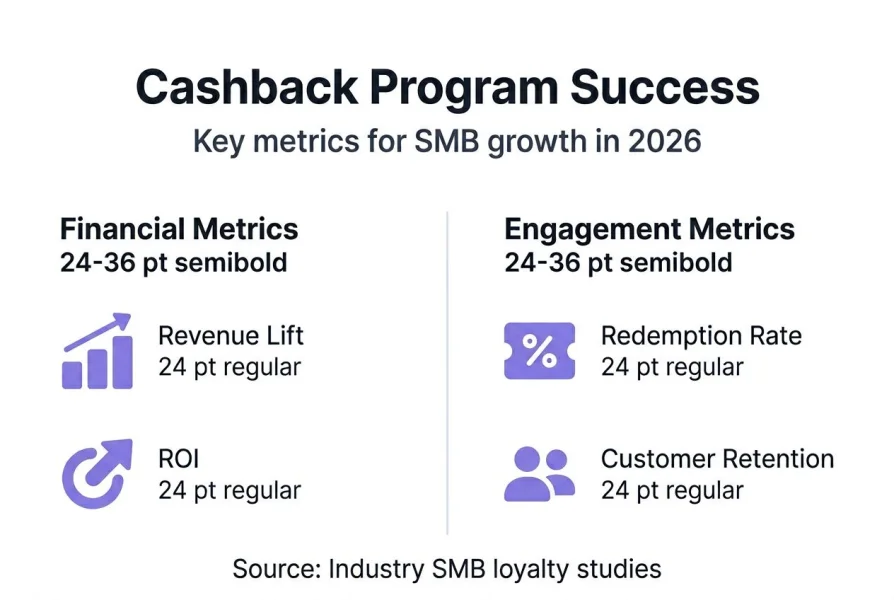
Track these essential metrics to monitor program health and optimize performance:
| Metric | Target Value | Measurement Method | Frequency |
|---|---|---|---|
| Enrollment Rate | 40% to 60% of customers | New enrollments divided by total customer base | Monthly |
| Active Participation | 30% to 50% earning rewards monthly | Customers making qualifying purchases divided by total enrolled | Monthly |
| Redemption Rate | 60% to 80% of earned cashback | Total cashback redeemed divided by total earned | Quarterly |
| Repeat Purchase Frequency | 15% to 25% increase | Average purchases per customer compared to pre-program baseline | Quarterly |
| Revenue Growth | 2x to 2.5x faster than non-participants | Revenue from program members versus non-members | Quarterly |
| Customer Satisfaction | 4.0+ out of 5.0 rating | Post-purchase surveys and program-specific feedback | Quarterly |
| Program Cost Ratio | 2% to 8% of revenue | Total program costs (cashback plus platform fees) divided by incremental revenue | Monthly |
Customer redemption rates indicate how valuable participants find your rewards. High redemption (above 70%) suggests customers appreciate the benefit and trust your program. Low redemption may signal confusing policies, insufficient reward amounts, or technical barriers that need addressing.
Satisfaction surveys provide qualitative insights beyond numerical metrics. Ask customers about program clarity, reward value perception, and redemption ease. Use this feedback to refine policies, adjust rates, or improve communication strategies. Net Promoter Score (NPS) specifically for your loyalty program reveals whether members would recommend it to others.
Analytics tools built into modern loyalty platforms automate much of this tracking, generating dashboards and reports that visualize trends and highlight areas needing attention. Regular review sessions with your team ensure accountability and facilitate rapid response to emerging issues or opportunities. Learn more about cashback loyalty success metrics to benchmark your program against industry leaders.
Discover BonusQR’s cashback loyalty solutions
Ready to launch your own cashback rewards program without the technical headaches or expensive integrations? BonusQR’s electronic reward platform offers SMBs an easy-to-use solution for setting up cashback programs with no POS integration required. The platform seamlessly integrates with your existing digital channels, providing personalized reward features that adapt to your customers’ behaviors and preferences.
BonusQR’s curated loyalty solutions are specifically designed for SMB growth, offering the flexibility to adjust cashback rates, set caps, and create tiered rewards that align with your business goals. Real-time analytics and automated communication tools help you launch, monitor, and optimize your program with minimal time investment, freeing you to focus on running your business.
Pro Tip: Explore BonusQR’s stamp card program to combine cashback with other loyalty tools for greater impact. Hybrid programs that offer both cashback and progress-based rewards (like punch cards) can increase engagement by appealing to different customer motivations and creating multiple pathways to value.
FAQ
How do I choose the right cashback rate for my business?
Consider typical ranges of 0.5% to 5%, aligning rates with your profit margins and what genuinely motivates your customers to return. Test different percentages with small customer segments before rolling out broadly. Monitor redemption rates and customer feedback to find the sweet spot where rewards feel generous without eroding profitability.
What technology do I need to start a cashback rewards program?
A SaaS loyalty platform supporting cashback with integration to your sales channels is essential for tracking purchases and managing rewards. Look for features like customer data segmentation, mobile app support, automated communications, and real-time analytics dashboards. Most modern platforms require no POS integration, making setup quick and affordable for SMBs.
How can I keep customers engaged in my cashback program?
Use push notifications, emails, and in-app messages tailored by customer segments to maintain regular touchpoints about rewards and special offers. Regularly update your rewards structure with limited-time cashback boosts or bonus earning opportunities that create urgency. Communicate clearly and frequently about reward balances, redemption options, and program benefits to sustain engagement over time.
When can I expect to see results from my cashback rewards program?
Typically within 3 to 6 months, you’ll notice increased repeat purchases, higher customer retention rates, and measurable revenue growth from program participants. Early indicators like enrollment rates and active participation appear within the first month, while deeper metrics like customer lifetime value improvements emerge over the full quarter. Use redemption rates and customer feedback surveys to monitor progress and optimize your program continuously.


