
 Deutsch
 Español
 Français
 Italiano
 Magyar
 Polski
 Slovenčina
 Čeština
Mobile loyalty programs are no longer a luxury for enterprise retailers alone. Small to medium-sized businesses now leverage these platforms to drive repeat purchases and strengthen customer relationships. Customers enrolled in mobile loyalty programs exhibit retention rates up to 40% higher than those who aren’t. This guide explores why mobile loyalty matters, how it drives sales growth, the technology benefits that eliminate complexity, common myths, reward strategy comparisons, analytics advantages, and practical implementation steps.
Key Takeaways
| Point | Details |
|---|---|
| Retention Impact | Mobile loyalty programs increase customer retention by 30 to 40 percent. |
| Sales Growth | Personalized rewards and push notifications boost repeat purchases and average transaction size. |
| Technology Advantage | Most SMBs prefer no POS integration platforms for simplicity and speed. |
| Reward Flexibility | Points, cashback, and visit rewards suit different business goals and customer behaviors. |
| Analytics Power | Automation and data insights optimize loyalty program ROI and engagement. |
Understanding Why Mobile Loyalty Matters
Your customers carry smartphones everywhere. They check messages while waiting in line, browse deals during lunch breaks, and respond to notifications instantly. This behavioral shift creates a golden opportunity for SMBs to engage customers where they already spend hours each day.
Customers enrolled in mobile loyalty programs show a 30 to 40 percent higher retention rate on average. The difference comes down to psychology and convenience. When your loyalty program lives on a customer’s phone, you eliminate friction. No physical cards to lose, no stamps to remember, no receipts to file away. Just instant access to rewards, personalized offers, and seamless redemption.
Emotional connection matters as much as convenience. Mobile platforms let you personalize engagement based on purchase history and preferences. A coffee shop can send a birthday reward automatically. A boutique can notify customers when their favorite brand restocks. These touches transform transactional relationships into emotional bonds that competitors struggle to break.
The best loyalty apps for small business make this personalization accessible without requiring technical expertise. Key psychological factors driving mobile loyalty effectiveness include:
- Convenience of carrying rewards digitally eliminates physical card hassles
- Emotional ties strengthen through personalized messaging and special occasion recognition
- Instant reward access creates immediate gratification and positive reinforcement
- Personalization makes customers feel valued and understood as individuals
Understanding these benefits of loyalty programs for SMBs helps you design programs that resonate with your specific customer base. The shift toward mobile marketing for small businesses reflects broader consumer expectations for digital convenience across all touchpoints.
How Mobile Loyalty Programs Drive Sales Growth
Retention matters, but revenue growth drives business decisions. Mobile loyalty programs increase both purchase frequency and transaction size through strategic reward structures and timely engagement.
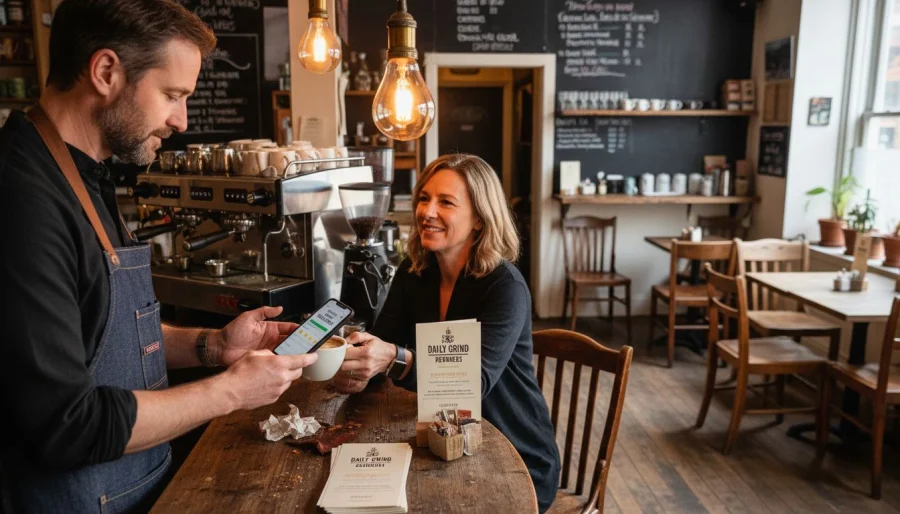
Personalized loyalty rewards and push notifications can increase average customer spend by up to 15 percent. The mechanism is straightforward. When customers know they earn rewards toward something they value, they consolidate spending with your business rather than splitting it among competitors. A customer close to earning a free item often adds extra products to reach that threshold faster.
Cashback offers create immediate financial benefits that resonate strongly with budget conscious shoppers. Unlike points that require accumulation, cashback provides instant gratification. This immediacy encourages larger basket sizes as customers mentally offset their spending with rewards they can use on their next visit.
Push notifications amplify these effects by reaching customers at optimal moments. A lunch special notification at 11 AM catches people planning their meal. A weekend bonus points offer on Thursday evening influences weekend shopping decisions. Timing transforms generic promotions into personalized invitations that feel relevant rather than intrusive.
Pro Tip: Use data driven personalization to tailor rewards based on individual purchase patterns. Customers who buy coffee daily respond better to frequency rewards, while occasional shoppers prefer percentage discounts on larger purchases.
Effective strategies for loyalty programs increase sales by aligning reward structures with customer motivations. When you automate loyalty campaigns, you maintain consistent engagement without manual effort. The comprehensive loyalty app benefits extend beyond retention to encompass revenue optimization and customer lifetime value growth.
Technology and Usability Benefits of Mobile Loyalty Platforms
Technology intimidates many SMB owners. Concerns about integration complexity, technical support requirements, and upfront costs often delay loyalty program adoption. Modern mobile platforms eliminate these barriers entirely.
Over 70 percent of SMBs prefer loyalty platforms without POS integration due to lower complexity and cost. These systems operate independently, requiring only a smartphone or tablet to register purchases and issue rewards. Customers scan QR codes or enter simple codes. No hardware upgrades, no software compatibility issues, no IT consultant fees.
Automation handles repetitive tasks that would otherwise consume hours weekly. Birthdays trigger automatic reward notifications. Visit milestones send congratulatory messages with bonus points. Inactive customers receive re engagement offers after preset periods. These workflows run continuously without manual intervention, freeing you to focus on core business operations.
Accessible analytics dashboards provide insights that guide program optimization. You see which rewards customers redeem most, which promotions drive the highest engagement, and which customer segments generate the most revenue. These insights inform inventory decisions, pricing strategies, and marketing campaign design.
Key technology benefits for SMBs include:
- Rapid setup within days or weeks versus months for POS integrated systems
- Zero hardware costs eliminate capital expenditure barriers
- Automation reduces ongoing management time to minutes per week
- Real time analytics enable data driven decision making without technical expertise
- Cloud based platforms provide automatic updates and security patches
Pro Tip: Select platforms offering modular pricing and user friendly dashboards to maximize ROI and usability. Start with core features, then add advanced capabilities as your program matures and you identify specific needs.
The digital customer loyalty cards guide explains setup processes in detail. Digital loyalty cards for SMBs offer flexibility that traditional systems cannot match. Integrating these tools with broader customer engagement tools creates comprehensive retention strategies.
Common Misconceptions About Mobile Loyalty Programs
Myths about mobile loyalty programs prevent many SMBs from implementing solutions that could transform their customer retention. Let’s address the most persistent misconceptions directly.
Myth one claims mobile loyalty equals discounts only. Reality shows that personalization and convenience drive loyalty more powerfully than price reductions. Customers value recognition, exclusive access, and seamless experiences as much as financial savings. A personalized birthday reward creates stronger emotional connection than a generic 10 percent discount.
Myth two insists expensive POS integration is mandatory. Reality demonstrates that many effective platforms require no POS hardware whatsoever. Simple QR code scanning or manual code entry works perfectly for most SMBs. The absence of integration actually speeds deployment and reduces failure points.
Myth three suggests costs exceed SMB budgets with uncertain ROI. Reality proves that flexible pricing models make mobile loyalty affordable for 60 percent of SMBs with demonstrated positive ROI. Free tiers support basic programs, while premium features scale with business growth. The investment typically pays for itself within months through increased retention alone.
Common misconceptions include:
- Loyalty programs only work for large retailers with huge budgets
- Complex technology requires dedicated IT staff to manage
- Customers won’t adopt another app or digital platform
- Discount heavy programs erode profit margins unsustainably
- Loyalty data provides no actionable business insights
Each belief crumbles under scrutiny. Modern platforms democratize loyalty program access for businesses of all sizes.
Personalization drives loyalty more effectively than discounts. Customers who receive tailored rewards based on preferences show 85 percent higher engagement than those receiving generic offers.
Addressing small business loyalty misconceptions opens opportunities for competitive advantage. Understanding realistic loyalty program ROI for SMBs helps you set appropriate expectations and measure success accurately.
Comparing Mobile Loyalty Strategies: Points, Cashback, and Visit Rewards
Choosing the right reward structure determines program success. Points based systems, cashback programs, and visit rewards each serve different business goals and customer preferences.
Points programs foster long term engagement; cashback boosts transaction size; visit rewards encourage frequent store visits. Understanding these distinctions helps you match strategy to business model.
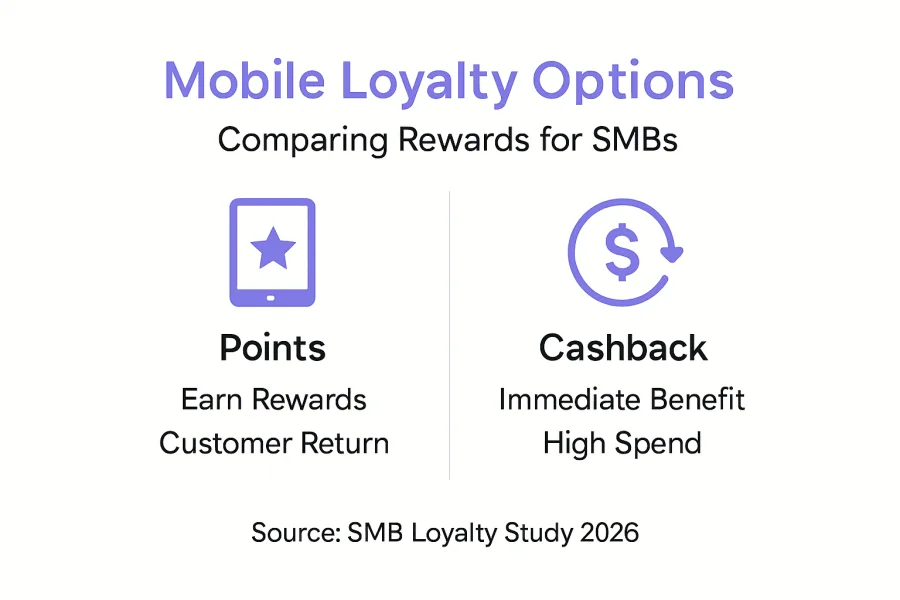
Points systems create ongoing engagement through accumulation and delayed gratification. Customers return repeatedly to build balances toward meaningful rewards. This approach works best for businesses selling diverse products where customers enjoy choosing their eventual reward. The psychological investment of accumulated points creates switching costs that reduce churn.
Cashback rewards provide immediate financial incentives that increase average transaction values. Customers see direct monetary benefit, making the value proposition crystal clear. This simplicity appeals to price sensitive shoppers and works particularly well for businesses with higher ticket purchases where percentage based cashback delivers meaningful amounts.
Visit rewards motivate frequent foot traffic by recognizing each customer appearance regardless of spending. A stamp for every visit encourages daily coffee shop stops or weekly salon appointments. This model suits businesses prioritizing visit frequency over transaction size, where relationship building and habit formation matter most.
| Reward Type | Primary Goal | Key Advantage | Ideal Business |
|---|---|---|---|
| Points | Long term engagement | Flexibility in redemption options | Retail shops with varied inventory |
| Cashback | Transaction size increase | Clear, immediate financial value | Businesses with higher average tickets |
| Visit Rewards | Frequency boost | Simple, habit forming recognition | Coffee shops, salons, quick service |
| Hybrid | Multiple objectives | Addresses diverse customer motivations | Multi category businesses |
Tips for combining reward types effectively:
- Offer base visit rewards plus bonus points for spending thresholds
- Provide cashback on large purchases while maintaining point accumulation for smaller transactions
- Create tiered programs where frequent visitors unlock cashback privileges
- Segment customers by behavior and offer personalized reward structures
The comprehensive points reward system guide explores implementation details. Visit rewards program strategies work well for high frequency businesses. The cashback vs stamp card loyalty comparison helps cafes and similar businesses choose optimal approaches.
Role of Analytics and Automation in Maximizing Loyalty Program Success
Data and automation transform loyalty programs from static reward systems into dynamic growth engines. Without insights, you guess at effectiveness. Without automation, manual tasks consume hours better spent elsewhere.
Automation of loyalty campaigns can boost repeat purchases by over 20 percent. The improvement stems from consistency and timing. Automated systems never forget to send milestone congratulations or re engagement offers. They trigger communications at optimal moments based on customer behavior patterns.
Targeted campaigns improve conversion rates by reaching customers with relevant offers when they’re most receptive. Analytics reveal which customer segments respond best to different promotion types. You can test variations, measure results, and refine approaches continuously. This iterative optimization compounds over time, steadily improving program performance.
Tracking purchasing behaviors and engagement patterns uncovers opportunities invisible to casual observation. You might discover that customers who redeem their first reward within seven days show twice the lifetime value of those who wait longer. This insight prompts you to emphasize quick wins in your reward structure.
Key analytics and automation benefits include:
- Increased ROI through continuously optimized campaigns and reward structures
- Data driven decisions replace intuition with evidence based strategy
- Personalized messaging reaches customers with relevant offers automatically
- Resource efficiency frees staff time for high value customer interactions
- Predictive insights identify at risk customers before they churn
Accessible dashboards make these capabilities usable without data science expertise. Visual reports highlight trends, while alerts notify you of significant changes requiring attention. You gain enterprise level insights with small business simplicity.
Learning to automate loyalty for repeat purchases delivers immediate operational benefits. Proper customer engagement measurement guides program improvements. The detailed measuring customer engagement guide provides frameworks for tracking meaningful metrics.
Implementing a Mobile Loyalty Program: Practical Steps and Tips
Deciding to launch a mobile loyalty program is just the beginning. Successful implementation follows a structured process that minimizes risk while maximizing adoption.
-
Assess your current customer retention challenges and goals. Identify whether you need to increase visit frequency, grow transaction size, or reduce customer churn. Clear objectives guide every subsequent decision from reward structure to communication strategy.
-
Select a mobile loyalty platform that requires no POS integration for easy setup. Prioritize user friendly interfaces, transparent pricing, and responsive support. Request demos from multiple providers to compare capabilities and identify the best fit for your specific needs.
-
Choose reward types that align with customer motivations and business goals. Consider your average transaction value, purchase frequency, and customer preferences. A coffee shop benefits from visit rewards, while a boutique might prefer points on spending thresholds.
-
Use onboarding promotions and special occasion rewards to increase early adoption. Welcome bonuses encourage immediate enrollment, while birthday rewards demonstrate ongoing value. These touches build momentum during the critical early weeks when participation patterns form.
-
Leverage push notifications and analytics dashboards for ongoing engagement and optimization. Schedule regular reviews of program performance, testing different offers and refining based on results. Consistent iteration compounds small improvements into significant competitive advantages.
Pro Tip: Launch with focused reward options to avoid complexity and add more later as your program matures. Starting simple reduces confusion and makes initial success more likely. You can always expand features once customers understand and value the core program.
The guide to loyalty app implementation walks through each phase in detail. Practical digital customer loyalty card setup instructions remove technical barriers. Additional customer loyalty program tips help you avoid common pitfalls that delay results.
Explore BonusQR Mobile Loyalty Solutions
BonusQR offers easy to launch mobile loyalty programs with no POS integration required. Our platform helps SMBs like yours implement proven retention strategies without technical complexity or excessive costs. Whether you prefer points, cashback, or visit rewards, our flexible modules adapt to your specific business model.
Our digital customer loyalty cards guide demonstrates how simple digital loyalty can be. Explore digital loyalty cards for business to see implementation examples across industries. Our electronic reward loyalty platform provides automation, analytics, and engagement tools that drive measurable sales growth. Visit BonusQR to discover how our solutions can transform your customer retention and boost revenue in 2026.
Frequently Asked Questions
What is a mobile loyalty program?
A mobile loyalty program rewards customers through their smartphones for purchases or visits. Customers earn points, cashback, or stamps digitally, eliminating physical cards while enabling personalized engagement through push notifications and automated rewards.
How quickly can I launch a mobile loyalty program without POS integration?
Most no POS integration platforms allow launch within one to two weeks. Setup involves configuring reward rules, customizing branding, and training staff on customer enrollment. The absence of hardware integration eliminates the longest delays typical of traditional systems.
Which reward type is best for a new loyalty program?
Visit rewards work well for businesses prioritizing frequency, like cafes. Points suit retail shops with varied inventory. Cashback appeals to price sensitive customers and higher ticket businesses. Choose based on your primary retention goal and average transaction characteristics.
How do push notifications enhance loyalty program engagement?
Push notifications reach customers at optimal moments with personalized offers, milestone celebrations, and timely reminders. They maintain top of mind awareness between visits, prompt action when customers might otherwise forget, and deliver up to 30 percent higher open rates than email.
Can small businesses afford mobile loyalty programs with measurable ROI?
Yes, flexible pricing models and free tiers make mobile loyalty accessible to most SMBs. Programs typically pay for themselves within months through increased retention and purchase frequency. Many platforms charge based on active users, aligning costs with value received as your customer base grows.