
 Deutsch
 Español
 Français
 Italiano
 Magyar
 Polski
 Slovenčina
 Čeština

Many retailers hope a loyalty program will spark lasting devotion from their customers, yet the reality is often less straightforward. Decades of research reveal that these programs typically inspire more repeat transactions than true emotional connections. For owners and marketing managers aiming to cultivate real relationships and steady revenue, understanding the difference between behavioral and genuine loyalty is crucial. Discover which approaches can move your business beyond temporary incentives to long-term customer commitment.
Loyalty Programs Defined and Debunked
Loyalty programs represent strategic marketing tools designed to incentivize repeat customer purchases and cultivate long-term relationships between businesses and their clientele. While many entrepreneurs assume these programs automatically generate customer devotion, research suggests a more nuanced reality. Multiple decades of marketing research reveal that loyalty programs primarily drive behavioral changes rather than creating genuine emotional connections.
At their core, loyalty programs function through structured reward mechanisms that encourage customers to continue engaging with a specific brand. These systems typically involve:
- Accumulation of points for purchases
- Tiered reward structures
- Personalized discount opportunities
- Exclusive member benefits
- Digital tracking of customer interactions
However, not all loyalty programs deliver equal value. Critical analysis of customer loyalty strategies demonstrates that many schemes produce only temporary spending increases without fundamentally transforming customer sentiment or long-term brand perception.
Successful loyalty programs require thoughtful design that goes beyond simple transactional rewards. They must create genuine value, demonstrate understanding of customer needs, and offer meaningful incentives that feel personalized and authentic.
Pro tip: Design your loyalty program around customer experience, not just monetary transactions.
Types of Loyalty Programs for Retailers
Retail businesses have multiple strategies for designing loyalty programs, each tailored to specific customer engagement objectives. Research categorizes loyalty programs into several key types that help retailers create compelling customer retention mechanisms.
The primary loyalty program types for retailers include:
- Points-Based Programs: Customers earn points for each purchase, which can be redeemed for discounts or free products
- Tier Programs: Reward levels based on customer spending, offering increasing benefits as customers move up
- Paid Membership Programs: Customers pay an upfront fee for exclusive benefits and discounts
- Coalition Programs: Multi-vendor programs allowing point redemption across different businesses
- Value-Based Programs: Offering non-monetary rewards like charitable donations or brand experiences
Each program type serves different strategic goals. Comprehensive loyalty research demonstrates that hybrid models combining multiple approaches can maximize customer retention and spending.
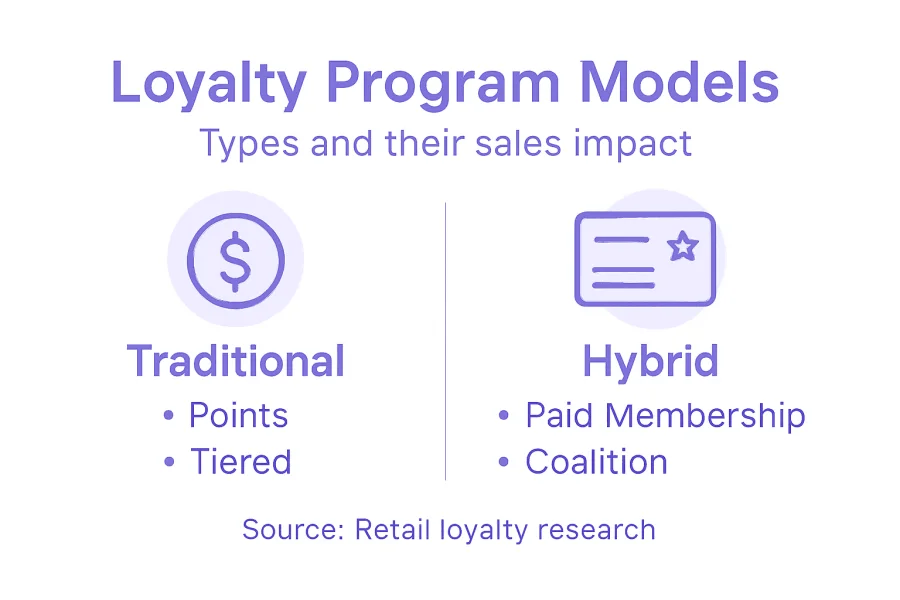
Successful retailers carefully design their loyalty programs to align with their specific business model, target audience preferences, and overall marketing strategy. The most effective programs go beyond simple transactional rewards and create meaningful connections with customers.
Pro tip: Analyze your customer data to design a loyalty program that genuinely resonates with your specific audience.
Key Features That Boost Sales
Comprehensive loyalty program research reveals several critical features that transform loyalty programs from basic reward systems into powerful sales acceleration tools. Modern retailers recognize that successful loyalty initiatives go far beyond simple point collection, requiring strategic design and sophisticated engagement mechanisms.
Key features that drive sales growth include:
- Personalization: Tailoring rewards and offers to individual customer preferences
- Omnichannel Integration: Seamless experiences across digital and physical platforms
- Real-Time Analytics: Tracking customer behavior and program performance
- Gamification Elements: Creating engaging challenges and interactive reward structures
- Flexible Redemption Options: Multiple ways to use accumulated points or rewards
Research on loyalty program effectiveness emphasizes the importance of clear program goals and strategic implementation. Successful programs align rewards with customer needs, creating meaningful connections that extend beyond transactional interactions.
The most impactful loyalty features transform customer relationships by demonstrating genuine understanding and value. By leveraging data-driven insights and creating personalized experiences, retailers can convert occasional shoppers into committed brand advocates who consistently choose their business over competitors.
Pro tip: Continuously test and refine your loyalty program features based on actual customer feedback and engagement metrics.
Real-World Applications and Success Stories
Loyalty program research demonstrates how innovative loyalty strategies transform customer relationships across multiple industries.
Standing out loyalty program success stories include:
- Airline Industry: American Airlines’ AAdvantage program revolutionized customer retention
- Hospitality: Hilton Honors provides tiered rewards with personalized experiences
- Retail: Starbucks Rewards integrates mobile payments with point collection
- E-commerce: Amazon Prime creates membership value beyond traditional rewards
- Financial Services: Credit card companies offering travel points and cashback incentives
These programs share common characteristics that drive their success:
- Provide clear, achievable reward pathways
- Offer personalized experiences
- Make redemption processes seamless
- Create emotional connections beyond transactions
- Continuously adapt to changing customer preferences
Successful loyalty programs are not just about giving points, but about creating meaningful relationships that make customers feel valued and understood. By designing programs that genuinely enhance customer experience, businesses can transform occasional buyers into passionate brand advocates.

Pro tip: Focus on creating emotional value, not just transactional rewards.
Risks, Costs, and Common Pitfalls
Loyalty program research reveals multiple critical risks that can undermine the effectiveness of customer loyalty initiatives, emphasizing the importance of strategic planning and careful implementation.
Common risks and pitfalls include:
- Financial Drain: Programs that cost more to run than they generate in revenue
- Reward Complexity: Overly complicated point systems that frustrate customers
- Misaligned Incentives: Rewards that do not genuinely motivate target customers
- Data Management Challenges: Inadequate systems for tracking and analyzing customer interactions
- Unrealistic Expectations: Assuming loyalty programs automatically create customer devotion
Academic analysis of loyalty strategies highlights several critical warning signs businesses must watch for:
- Diminishing customer engagement over time
- Excessive discounting that erodes profit margins
- High administrative costs
- Lack of clear program objectives
- Insufficient employee training and buy-in
Successful loyalty programs require ongoing evaluation and strategic adjustments. Businesses must continuously assess the actual return on investment, understanding that not all customer loyalty initiatives deliver immediate or predictable financial benefits.
The following table summarizes key risks and how to mitigate them for loyalty program success:
| Risk Area | Example Risk | Mitigation Tactic |
|---|---|---|
| Financial | Excessive program cost | Regular ROI evaluation |
| Customer Impact | Complex rewards | Streamlined, clear redemption |
| Business Goals | Misaligned incentives | Align rewards with customer needs |
| Operations | Data management gaps | Invest in robust tracking tools |
Pro tip: Conduct quarterly reviews of your loyalty program’s performance, measuring both customer engagement and direct financial impact.
Alternatives to Traditional Loyalty Programs
Contemporary brand research suggests businesses must move beyond transactional rewards to create genuine customer connections. Traditional point-based systems are increasingly seen as limited, prompting innovative approaches to building lasting customer relationships.
Alternative loyalty strategies include:
- Community Building: Creating platforms for customer interaction and shared experiences
- Values-Based Engagement: Connecting through shared social or environmental missions
- Exclusive Access Programs: Offering unique experiences instead of monetary rewards
- Personalized Content Ecosystems: Delivering tailored educational or entertainment resources
- Status and Recognition Models: Emphasizing psychological rewards over financial incentives
Academic research on loyalty dynamics reveals that emotional connections often matter more than transactional benefits. Successful alternatives focus on:
- Creating meaningful brand relationships
- Developing psychological attachment
- Providing genuine value beyond discounts
- Establishing trust through consistent interactions
- Demonstrating authentic brand commitment
These alternative approaches recognize that true loyalty transcends simple point accumulation. By focusing on creating holistic customer experiences, businesses can develop deeper, more sustainable relationships that drive long-term profitability.
Here is a comparison of traditional loyalty programs versus alternative loyalty strategies:
| Aspect | Traditional Programs | Alternative Approaches |
|---|---|---|
| Main Focus | Transactional rewards | Emotional relationships |
| Customer Value | Discounts, points | Experiences, social impact |
| Differentiation | Often similar among firms | Highly tailored by brand |
| Longevity of Loyalty | Usually short-term gains | Fosters long-term commitment |
| Example Tactics | Point collection, tiers | Community, personalized content |
Pro tip: Design loyalty strategies that prioritize emotional connection over pure financial transactions.
Elevate Your Loyalty Program for Sustainable Sales Growth
The article highlights common challenges businesses face when designing loyalty programs that truly resonate. Many programs rely too heavily on transactional rewards like points or discounts without creating meaningful emotional connections. If you are struggling with complex reward systems, low engagement, or uncertain returns on investment, it is critical to adopt a flexible and customer-focused solution. Key concepts such as personalization, omnichannel integration, and real-time analytics are essential to transforming loyalty programs into effective sales growth engines.
With bonusqr.com, you can build a fully customizable digital loyalty program tailored to your unique business needs. Our platform offers diverse modules including points collection, stamp cards, cashback, and special occasion offers, all designed to engage customers through personalized rewards and seamless mobile experiences. Whether you want to launch rapid onboarding promotions or automate complex marketing campaigns, we help you avoid common pitfalls by simplifying program management and providing actionable insights.
Ready to increase customer retention and profit the smart way Are you prepared to turn occasional shoppers into loyal advocates Explore how our scalable platform empowers your business to implement proven loyalty features from the ground up Visit bonusqr.com now to start designing your personalized loyalty program that drives real sales growth and lasting customer relationships.
Frequently Asked Questions
What are loyalty programs?
Loyalty programs are strategic marketing tools designed to encourage repeat purchases and foster long-term relationships between businesses and customers through structured rewards.
How do loyalty programs impact customer behavior?
Loyalty programs primarily drive behavioral changes by incentivizing repeat engagement with a brand rather than creating a deep emotional connection.
What are the different types of loyalty programs for retailers?
Common types of loyalty programs include points-based programs, tier programs, paid membership programs, coalition programs, and value-based programs, each serving distinct customer retention goals.
What key features boost the effectiveness of loyalty programs?
Key features that enhance loyalty program effectiveness include personalization, omnichannel integration, real-time analytics, gamification elements, and flexible redemption options.
Recommended
- 10 Potent Small Business Growth Strategies for 2025 | BonusQR
- Benefits of customer loyalty programs: Boost growth in 2025 | BonusQR
- loyalty program benefits: Boost retention & growth | BonusQR
- Transform Customer Behavior and Drive Growth with Loyalty | BonusQR
- Partner Up & Get Paid | MyHair
- 2026 Is the Year of Fast Merch Small Runs Big Margins – DIYPRINTZ