
 Deutsch
 Español
 Français
 Italiano
 Magyar
 Polski
 Slovenčina
 Čeština
A café owner looks at a familiar pattern: the same customers visit, but the business only knows them as transactions. Paper cards sit in wallets, get lost, or reward everyone in exactly the same way. A weekend family, a daily commuter, and an occasional birthday visitor receive identical treatment, even though their reasons for returning are completely different.
A personalized loyalty program changes that relationship without requiring a large marketing department, expensive hardware, or a complicated point-of-sale project. A customer can scan a QR code with a phone, enrol in seconds, receive a digital card, and earn rewards that match their behaviour and preferences. Staff can manage the process from a phone or tablet.
The practical advantage is simple. A small business can learn who visits frequently, who responds to particular products, and who hasn't returned recently. That information can turn anonymous purchases into timely reasons to come back.
Beyond the Punch Card Why Personalization Matters
The paper punch card still works for one narrow purpose. It gives customers a visible reason to return until they complete the card. Its weaknesses appear afterwards. The card doesn't identify the customer, record what they bought, distinguish a frequent visitor from an occasional one, or create a useful follow-up opportunity when someone stops visiting.
A digital loyalty programme can do more than count visits. It can connect a customer profile with visit history, preferred categories, reward activity, and permission-based communication. A café might recognise a regular who visits before work, while a salon could treat a customer who books colour services differently from someone who usually chooses cuts.
That distinction matters because personalisation has become a customer expectation, not merely a branding extra. UK research found that 74% of customers expect offers to be personalised, including offers connected with previous purchases, earlier interactions, birthdays, or post-purchase moments. The same percentage said they'd choose a retailer offering a card-linked personalised offer over a competing retailer that didn't, according to UK research on personalised retail offers.
Relevance beats complexity
Personalisation doesn't mean creating a different campaign for every individual. For a small business, it usually means making sensible distinctions between groups with different needs. A business might create offers for:
- Frequent visitors, who may respond better to recognition or early access than another basic discount.
- Occasional customers, who may need a timely reminder or a simple return incentive.
- Product-focused customers, who can receive offers related to a category they already enjoy.
- New members, who need a clear first reward and an easy next action.
- Lapsed members, who may respond to a friendly win-back message rather than a permanent price reduction.
A platform such as different customer segments makes those groups easier to organise and target. The important point isn't the software label. It's the decision to stop treating every customer as if they have the same motivation.
Practical rule: A relevant modest reward usually feels more valuable than a larger offer that arrives at the wrong time.
The small-business advantage
Large brands can buy advanced systems, but scale also brings complexity. A local business often has a closer relationship with its customers and can act on a small set of useful observations quickly. The owner may already know that weekday mornings are quiet, a particular treatment has strong repeat demand, or a new menu item needs trial.
A QR-based programme turns that knowledge into repeatable action. There's no need to begin with advanced predictive modelling. A few clear segments, a manageable reward structure, and timely messages can create a more personal experience than a generic card ever could.
Start with Your Goals Not Just Rewards
A loyalty programme works better when the business decides which behaviour it wants to change before choosing a reward. A coffee shop seeking more mid-week visits needs a different design from a salon aiming to increase add-on product sales. A gym may want more consistent attendance, while a small retailer may want existing customers to try a new category.
The reward should support that objective, not define it.
Choose one primary objective
Set one main commercial goal and one supporting goal. More objectives usually create confusing rules, scattered messages, and a programme that staff struggle to explain.
For a coffee shop, the plan might look like this:
- Primary goal, increase quieter weekday visits. Apply a reward after a weekday purchase or encourage a second visit within the same week.
- Supporting goal, raise spend per visit. Add a bonus when a customer buys a pastry or upgrades a drink.
- Alternative goal, promote a new product. Invite members who regularly buy coffee to try a new blend.
- Retention goal, protect regular behaviour. Give frequent visitors recognition instead of relying on constant discounts.
Write the objective in observable terms. “Build loyalty” gives nobody a clear design brief. “Encourage existing customers to visit on quieter days” tells the owner what to promote and what to measure.
The UK market already contains many loyalty schemes. 88% of UK adults belong to at least one loyalty scheme, and consumers belong to an average of 4.7 programmes, according to UK loyalty programme benchmarks. Registration alone will not create repeat use. A new member needs a clear reason to scan the QR code, earn progress, and return.
Segment by behaviour the business can recognise
Small businesses can start with three or four practical groups. A phone and QR-based system can record the activity needed for these decisions without POS integration or extra hardware.
For the coffee shop, “lunchtime regulars” and “weekend visitors” may need different messages. The first group could receive a weekday add-on offer. The second might respond to a family-friendly reward or a seasonal product suggestion. Someone who visits often but buys one item could receive a relevant upgrade, while someone who has not visited recently could receive a return prompt.
Collect only information that supports those choices. A first name, contact permission, visit activity, purchase category, and reward history may be enough. Staff should not request extensive personal details only because a digital form allows it.
Set the financial boundary before launch
A reward has to appeal to customers while remaining affordable for the business. Calculate the cost of the free item, discount, or experience, then ask whether it creates an additional visit or a larger basket. If customers would have made the purchase anyway, the reward may reduce margin without changing behaviour.
Set expiry rules, redemption conditions, and staff responsibilities before the first enrolment. Clear terms protect margins and give staff a consistent answer when customers redeem through the QR flow. A simple programme that the team can explain and operate will usually outperform a more ambitious design that nobody uses.
Your Menu of Personalized Reward Options
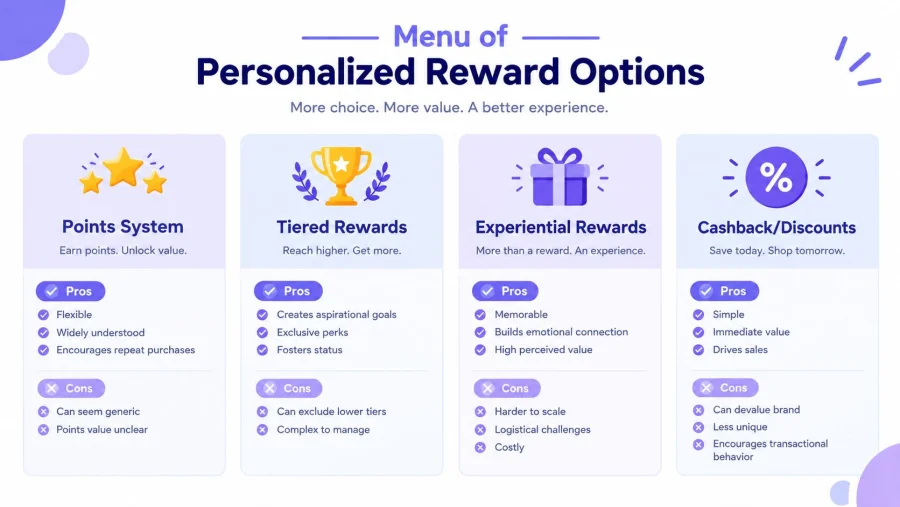
A strong small-business programme keeps the earning rule simple and varies the benefit around customer behaviour. Customers should understand how to earn immediately. The business can then use a phone and QR-based system to present more relevant rewards without POS integration, extra hardware, or a large marketing team.
Stamps and points
Digital stamps suit frequent, repeat purchases. A café might award one stamp for a qualifying visit and provide a drink reward after the customer reaches the programme's chosen milestone. A salon could award points for services, then let customers use them towards a product or future appointment.
Advantages: the mechanic is familiar, quick to explain, and gives customers a clear reason to return.
Trade-off: a standard stamp card can still feel generic. Personalisation comes from the surrounding experience, such as a birthday reward, a product-specific bonus, or a message based on visit frequency.
Points provide more flexibility than stamps. The business can set different earning values for services, products, referrals, or selected campaigns. That flexibility also creates a risk. If customers cannot see what points are worth or how close they are to a reward, participation slows.
Cashback and discounts
Cashback and fixed discounts communicate value quickly. A retailer might issue credit after qualifying purchases, while a restaurant could offer a targeted discount during a quieter service period.
This approach suits a business seeking an immediate sales response, but repeated price reductions can train customers to wait for offers. Discounts may also blur the difference between loyal customers and people who respond only to low prices.
Link each offer to a specific action. A business might provide a personalized discount on a category the customer has not tried, rather than reducing every purchase. That protects more margin while giving the customer a reason to explore something relevant.
Tiered rewards
Tiers recognise customers who visit often or spend more over time. A gym might give highly active members a guest pass or priority booking. A beauty business could offer advanced members early access to appointment slots or a complimentary add-on.
The appeal is recognition and progress. Customers see their activity leading to better treatment, not only a larger points balance.
Keep the structure attainable and easy to explain. Too many levels increase administration and can leave newer members feeling excluded. A small business should begin with a basic member experience and one meaningful upgrade, then add another tier only when the team can manage it consistently.
Personalised bonuses that make the programme feel personal
The earning mechanic provides the structure. Timely bonuses create the personal value.
- Welcome bonus: Give a new member an immediate reason to return, such as a small reward after enrolment or on the next visit.
- Birthday coupon: Offer a suitable treat or service-related benefit during the customer's birthday period, if the customer has chosen to share that information.
- Visit milestone: Recognise a customer after a meaningful number of visits with something connected to their usual purchase.
- We miss you message: Contact a customer after an agreed period without a visit, using a relevant offer instead of a generic broadcast.
- Category bonus: Reward a customer for trying a product or service related to their existing interests.
- Referral reward: Give an existing member a benefit when a friend joins and completes a qualifying action.
Do not send every bonus to every member. Irrelevant offers frustrate loyalty programme users, so relevance should shape the design from launch rather than being added later. Use the available activity data to choose one suitable message, then review redemption and repeat visits before adding more campaigns.
A practical launch structure is one core earning rule, one welcome benefit, one milestone reward, and one carefully chosen automated message. More mechanics can follow after customers and staff understand the basics. QR enrolment makes this manageable for a café, salon, retailer, or other brick-and-mortar business using the equipment already in a customer's and staff member's hands.
The 5-Minute QR Code Enrolment and Redemption Flow
Technology should remove work from the counter, not add to it. A QR-based programme gives the customer a self-service path and gives staff a simple scanning task.
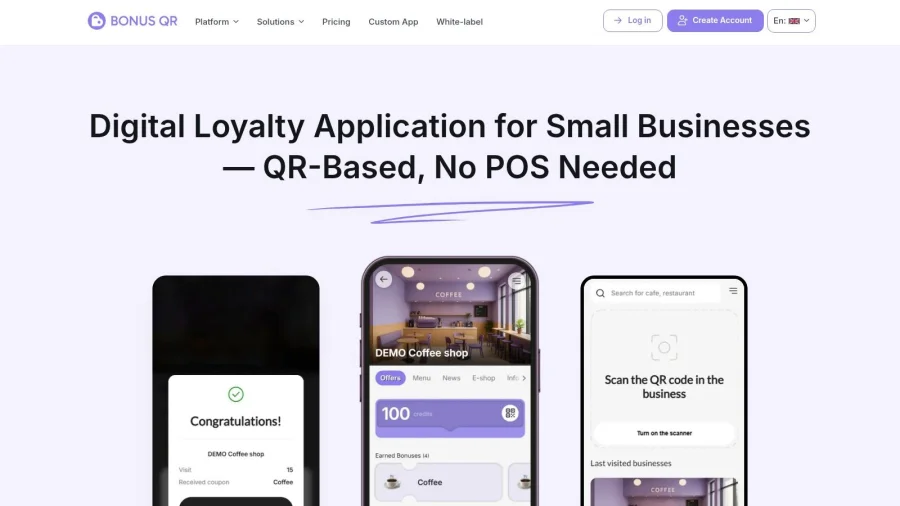
The customer sees a QR code on the counter, receipt, table sign, window poster, or appointment desk. They scan it with a phone, open the enrolment page, enter the requested details, and receive a digital loyalty profile. A wallet pass can keep the membership available for later visits.
The customer journey
The best flow has few fields and one obvious action. The customer shouldn't need to download a separate application before understanding the benefit. The page should explain what the programme offers, what happens after enrolment, and how the customer will earn or redeem rewards.
A typical journey looks like this:
- Scan the code. The customer uses the phone camera and opens the loyalty page.
- Join the programme. The customer enters basic details and gives the relevant communication permissions.
- Receive the digital card. The personal QR code and current reward status appear on the phone, with an option to save the pass to a mobile wallet.
- Use the card on the next visit. The customer presents the code to staff instead of carrying paper.
- Track progress. The customer can see visits, points, available rewards, and relevant messages in one place.
A YouGov survey found that 23% of UK consumers are put off by a complicated sign-up process, reinforcing the value of frictionless QR enrolment guidance. The business should test the process on an ordinary phone before launch, including mobile signal, page speed, consent wording, and wallet saving.
The staff journey
Staff use a merchant view on a phone or tablet. They scan the customer's personal QR code, apply the qualifying visit or purchase, and confirm the updated balance. When the customer has earned a reward, staff scan again or select the appropriate redemption action.
This avoids a major barrier for small businesses. The programme doesn't need an expensive till upgrade or dedicated scanning hardware. It can operate beside the existing payment process, with staff recording the loyalty action separately.
Training should cover only the actions staff perform regularly:
- Recognise the scan: ask at checkout or before completing a service.
- Apply the correct rule: select the relevant visit, points, cashback, or offer.
- Confirm the result: show the customer that the balance or reward changed.
- Handle exceptions: follow the written rule for expired offers, refunds, or unclear eligibility.
- Invite the next action: tell the customer when to return or what reward is now available.
A platform such as BonusQR platform features can support mobile enrolment, digital loyalty profiles, QR-based earning, and redemption without requiring extra counter equipment. The key test is operational, not technical. If a new team member can learn the basic flow quickly, customers are far more likely to use it consistently.
Automating Engagement and Tracking What Works
A loyalty programme becomes useful after enrolment, when the business turns activity into timely communication. Manual messaging tends to favour the owner's memory and available time. Automated triggers apply the same agreed rule whenever a customer reaches a relevant moment.
A café might send a welcome message after sign-up, a reminder after a period without a visit, or a product offer to customers who have shown interest in a particular category. A salon could prompt a customer to rebook after a typical service cycle. A gym might recognise an attendance pattern and offer a suitable referral incentive.
The message should have a reason. “We miss you” works better when it reflects an actual lapse and includes a clear next step. A customer shouldn't receive a birthday message without having supplied birthday information or consented to that use.
Measure behaviour, not attention
Open rates and message views can help diagnose delivery, but they don't prove that the programme is helping the business. Owners should focus on actions connected to the original goal.
Useful measures include:
- Visit frequency: compare how often enrolled customers return with the pattern among customers who aren't enrolled, where the business can measure that distinction responsibly.
- Average spend: compare typical purchases across relevant member segments, rather than celebrating a high spend from a single customer.
- Redemption rate: check whether rewards are attractive and attainable. Very low redemption may indicate weak value or poor communication.
- Repeat category purchases: see whether a targeted campaign leads customers to try or return to a selected product.
- Lapsed-member returns: count whether win-back messages lead to a completed visit.
- Reward cost: record the value given away against the behaviour the reward was designed to generate.
UK brands report that consumers spend 43% more when engagement is personalised, and 70% of consumers say personalised interactions increase the chance they'll return, according to UK personalised experience findings. Those figures shouldn't become a promise for every business. They should encourage owners to test personalised engagement against a clear baseline.
Run small experiments
A small operator can test one variable at a time. Send a category offer to one relevant segment, then compare redemption and repeat behaviour with a similar group that receives the standard message. Change the timing only after the reward and audience are clear.
The dashboard should answer practical questions. Which customers return most often? Which rewards remain unused? Which message creates a visit? Which offer costs more than the behaviour it generates?
Analytics for QR-based loyalty can help a business review customer activity, reward performance, and visit trends in one place. The owner doesn't need to become a data scientist. A short monthly review can identify one reward to keep, one message to improve, and one rule to remove.
Common Loyalty Programme Mistakes to Avoid
A programme can fail even when the technology works. The most common problems come from unclear value, difficult operations, or a gap between the data collected and the decisions made.
Mintel reports that 58% of UK consumers with multiple loyalty memberships have actively used only three or fewer in the past six months, showing how easily memberships become dormant when programmes don't give customers a compelling reason to return, according to Mintel's UK customer loyalty research.
The reward takes too long to reach
A customer joins a café programme, checks the balance, and sees a distant reward. The business has created an incentive that feels theoretical rather than useful.
Fix: choose a first milestone that ordinary customers can understand and reach. Add an early welcome benefit, then review whether members progress. If customers regularly lose interest before the reward, simplify the earning rule or make the first benefit more immediate.
Staff apply the rules differently
One employee awards a bonus for a purchase, while another says the customer needs a different condition. Customers notice inconsistent treatment quickly, especially in a small shop where they expect personal service.
Fix: write the earning and redemption rules in plain language. Train staff with a few realistic examples, including refunds, expired rewards, and customers who can't find their QR code. The screen should confirm the action clearly so staff don't have to interpret a complicated points calculation.
The programme is invisible in the shop
A loyalty card hidden behind the counter won't attract consistent use. Customers may join once and forget the programme exists.
Fix: place a QR code where the purchase decision happens, then mention the benefit naturally during checkout or booking. Use a short explanation, such as “Scan to collect your next reward and receive relevant member offers.” Add the code to receipts, menus, appointment reminders, and social profiles where appropriate.
Every member receives the same offer
A blanket discount may feel easy to manage, but it ignores the information the programme collects. A regular customer may need recognition, while an occasional visitor needs a reason to return.
Fix: begin with a few behaviour-based groups. Separate new members, frequent visitors, lapsed customers, and customers linked to a particular category. Keep the rules simple enough that staff and customers can explain them without assistance.
Data is collected without a plan
Some businesses ask for information during enrolment, then never use it. That creates unnecessary privacy responsibility and can make the sign-up experience feel intrusive.
UK GDPR treats identifying customer information as personal data. Practical UK-focused guidance recommends minimising the data collected, using suitable UK or EU hosting arrangements, signing a data-processing agreement with the platform, providing a clear privacy notice, and supporting customer rights within the app, as outlined in UK loyalty programme compliance guidance.
Fix: collect each field for a stated purpose, explain how it will be used, and provide straightforward consent and unsubscribe controls. A smaller, well-managed profile is more useful than a large, neglected database.
A small brick-and-mortar business doesn't need a costly loyalty rebuild to become more relevant. It needs one clear goal, a manageable reward, a short QR enrolment flow, and messages based on real customer behaviour. Start with one location or one customer segment, review the results regularly, and adjust the rules before adding complexity. Businesses ready to launch can set up a QR-based personalized loyalty program with BonusQR, test the customer journey from a phone, and begin building repeat visits without POS integration or extra hardware.