
 Deutsch
 Español
 Français
 Italiano
 Magyar
 Polski
 Slovenčina
 Čeština
Choose a mobile wallet pass or a lightweight web sign-up backed by timely push reminders, not a full custom app. Pilot it for one week with a small group of regulars, watch redemption rates, then roll out. Programmes built this way tend to lift repeat visits fast, and platforms like Bonusqr are built specifically for that quick-start path.
TL;DR:
- Launch a digital loyalty program with a simple wallet pass and a QR code at checkout within one week, avoiding the need for a custom app.
- Focus on visibility and reminders, such as automated push notifications, to close the perception gap and increase redemption rates.
- Prioritize features like wallet support, QR code enrollment, automation, and straightforward reporting to keep setup quick and effective.
- Track key KPIs monthly, including enrolment, active participation, redemption rate, visits per member, and incremental revenue, to gauge success.
- Select providers that support no app download enrollment, transparent redemption reporting, flat pricing, and no long-term contracts to ensure flexible growth.
What are digital loyalty programmes and which type fits your business?
Digital loyalty programmes replace the paper punch card with a phone-based system: a mobile wallet pass, an app, or a simple web link that tracks visits, points, or spend. The mobile experience is the whole point. If a customer has to remember a physical card, you have already lost half the value.
Most small businesses choose from four core models:
- Stamp or punch cards — buy nine coffees, get the tenth free. Best for high-frequency, low-margin businesses like cafés and quick-service food.
- Points-for-spend — customers earn points proportional to what they spend, redeemable for discounts. Suits retailers and salons with varied basket sizes.
- Tiered programmes — unlock better perks as customers spend more over time. Works well for gyms, hotels, and businesses with a longer customer lifecycle.
- Subscription or paid clubs — customers pay a recurring fee for guaranteed perks. Fits businesses with predictable repeat demand, such as wellness studios.
Shopify’s small-business guide confirms these four remain the dominant structures, and recommends testing app integrations before committing to one.
Do digital loyalty programmes actually pay off for small businesses?
Yes, but the payoff depends on whether customers actually see the value you are giving them. Deloitte’s research finds that most consumers say a loyalty programme makes them more likely to spend with and recommend a business, provided redemption feels effortless.
The catch is what EY calls a performance–perception gap: programmes can run perfectly on the back end while customers never notice, because nobody reminded them a reward was close. EY’s data shows brands are responding by pouring resources into fixing exactly this. A significant portion of planned industry investment is focused on improving digital experience and streamlining redemption, showing industry prioritisation of visibility and speed to value.
For a small shop, the ROI logic is simple:
- Platform cost is usually low relative to one extra visit per member per month.
- Bond’s loyalty data links membership to higher spend and stronger advocacy, but warns against “artificial” loyalty built purely on transactional points with no human warmth.
How do you launch a digital loyalty programme in a week?
You do not need months of planning or a developer on staff. Here is a realistic seven-day path:
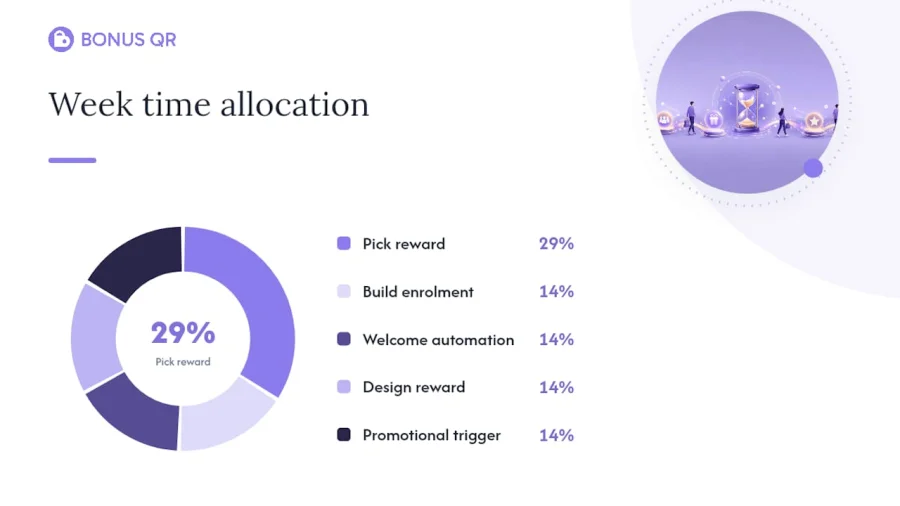
- Day 1 to 2: Pick your reward structure. Decide between a stamp card, points system, or tier, and set a threshold customers can reach within a few visits, not a few months.
- Day 2 to 3: Build the enrolment flow. Put a QR code on receipts, counters, or table tents that links straight to a wallet pass or a simple sign-up form. No app download should be required at this stage.
- Day 3 to 4: Set up one welcome automation. A short message confirming enrolment and explaining the reward threshold builds trust immediately.
- Day 4 to 5: Design a visible reward. The wallet pass should show progress toward the next reward directly on the lock screen, so customers see it without opening anything.
- Day 5 to 6: Add one promotional trigger. A double-points weekend or a bonus stamp day gives you a clear excuse to send a push notification and test engagement.
- Day 6 to 7: Pilot with a small group. Enrol 20 to 50 regulars, track sign-ups and redemptions, then adjust before opening it to everyone.
Pushwoosh’s guide to loyalty cards confirms wallet passes let small teams update balances in real time and send location-based reminders without building a native app, which is exactly what keeps this timeline realistic.
Pro Tip: Send your first push reminder about a reward the moment a customer is one visit away, not after they have already earned it. That single message does more for redemption than any discount you could offer.
What features actually matter when picking loyalty program software?
Ignore feature lists that read like a spec sheet. Focus on what actually gets your programme live and keeps customers redeeming.
Non-negotiables for most small businesses:
- Apple and Google Wallet support, so customers can add their card in two taps, no app store required.
- QR-code distribution, so enrolment happens at the point of sale or on a printed flyer.
- Push, SMS, and email automation, because reminders are what close the visibility gap EY identified.
- Clear, plain-language reporting you can actually read without a data analyst.
- No-code setup, so you are not waiting on a developer to change a reward threshold.
Genuinely useful but not essential at launch: POS or website integration, referral tracking, tier management, and white-label branding for businesses planning to scale into a full app later. Bonusqr’s retail loyalty app page covers how these features work together for physical locations.
Watch for red flags before signing anything: per-card fees that scale with your customer base, long contract lock-ins, and dashboards that show activity but not redemption or revenue impact.
Pro Tip: Ask any provider to show you their reporting screen before you commit. If they can’t answer “how many members redeemed something last month” in under ten seconds, walk away.
Which KPIs prove your loyalty program is working?
Five numbers tell you almost everything you need to know. Track them monthly, not daily. Loyalty data moves slowly, and overreacting to a quiet week wastes energy.
| KPI | What it tells you | When to expect movement |
|---|---|---|
| Enrolment rate | Share of customers who join at point of sale | Visible within week 1 |
| Active participation | How many enrolled customers still engage | Weeks 2 to 6 |
| Redemption rate | Percentage of earned rewards actually claimed | Ongoing, tied to reminder quality |
| Visits per member | Frequency lift compared to non-members | Month 2 onward |
| Incremental revenue per member | Extra spend directly attributable to the programme | Month 3 onward |
Run simple A/B tests on reminder timing, such as sending the “one visit away” push in the morning versus the evening, and compare redemption rates between the two groups. Small adjustments here tend to move the needle more than changing the reward itself.
How does Bonusqr help small businesses launch fast?
Bonusqr was built around the exact seven-day path outlined above: rapid setup with no POS integration required, native Apple and Google Wallet passes, automated push notifications, and real-time analytics that show redemption, not just sign-ups.
A typical rapid launch on the platform looks like this:
- Day 1: Reward structure and branding configured through a no-code dashboard.
- Day 2 to 3: QR codes generated and placed at checkout or on receipts.
- Day 4: Welcome automation and first push reminder scheduled.
- Day 5 to 7: Pilot group enrolled, redemption tracked live in the analytics panel.
The gap between a loyalty programme that performs well internally and one customers actually feel is almost always closed by one thing: a reminder that arrives at the right moment, not a bigger discount.
What does a digital loyalty programme actually cost?
Most platforms price on a tiered subscription model rather than charging per card issued, which matters because a paper punch-card system scales cost with volume while a digital one usually does not. Once passes exist digitally, issuing more of them adds negligible marginal cost, so your bill is mostly the platform fee plus any optional setup work.
Expect to see three common pricing structures:
Freemium tiers let you run a basic stamp card or points programme at no cost, with premium features such as advanced automation, tiered rewards, or deeper analytics unlocked at a paid tier. This suits a business testing whether loyalty works for its customers before committing budget.
Flat monthly subscriptions scale by feature set rather than customer count, which is friendlier for a growing business than a per-member fee that punishes success.
One-time setup fees apply mainly to white-label or fully custom branded apps, on top of an ongoing platform fee. This route makes sense once you have proven the programme works and want your own branded app rather than a wallet pass.
Whichever structure you choose, separate the platform cost from the reward cost. A free coffee costs you the cup, not the software. Budget for the rewards themselves as a percentage of sales, and treat the software fee as a fixed operating cost you can forecast reliably.
How do you choose the right loyalty programme provider?
Selection criteria should track back to the checklist you have already built, not a features brochure. Before signing with any provider, ask these questions directly.
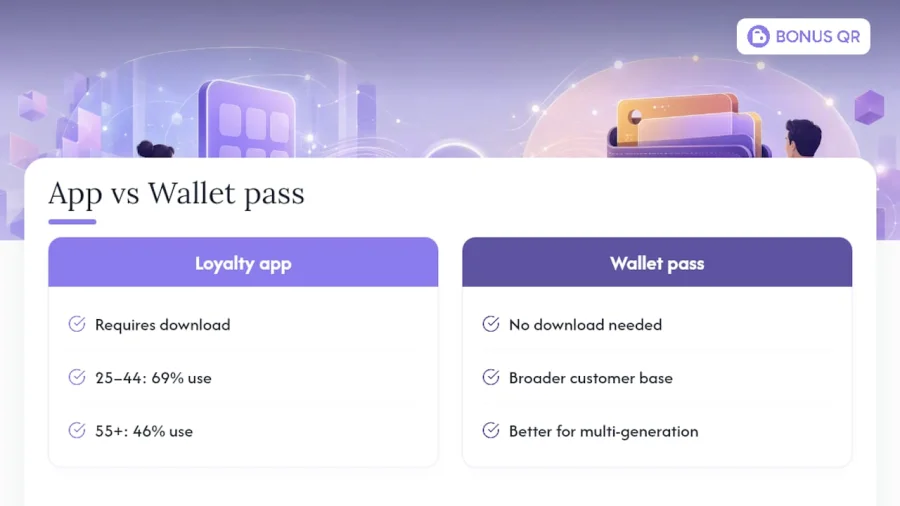
Can customers enrol without downloading an app? If the answer is no, you have already narrowed your potential audience, since wallet pass adoption reaches a much broader customer base than app downloads. EY’s data shows app usage skews heavily toward younger customers, with 69% of 25 to 44 year olds using loyalty apps compared with 46% of those over 55, so a wallet-pass option matters if your customer base spans generations.
What does the reporting dashboard actually show? Ask for a screenshot or live demo of redemption tracking specifically, not just enrolment numbers.
Is there a contract minimum? Providers confident in their product rarely need a long lock-in to keep you.
How is pricing structured as I grow? Confirm whether costs rise with customer count, feature usage, or stay flat.
Red flags worth walking away from: vague answers about redemption reporting, pressure to sign an annual contract before a trial period, and per-card fees hidden in the fine print. A provider unwilling to show you the customer-facing wallet pass before you commit is asking you to buy blind.
Author’s view: three rules for small teams running loyalty programmes
Start simple. A single stamp card that works beats an elaborate tiered system nobody understands. Automate the reminder that tells a customer they are one visit from a reward. That single message closes most of the visibility gap EY identified. Then measure only enrolment, redemption, and visits per member. Everything else is noise until those three are healthy.
— Michal
Ready to launch your own digital loyalty programme?
Everything in this checklist, wallet passes, QR enrolment, automated reminders, and redemption analytics, is what Bonusqr’s platform features are built to deliver without a developer or a POS overhaul. Service businesses such as gyms and salons can see how the same setup applies on the loyalty application for services page, while hotels have their own dedicated industry page covering tiered stays and repeat-booking rewards. If you would rather have a fully branded app once your programme proves itself, that option sits alongside the wallet-pass route rather than replacing it, similar to how partners like Exclusively’s branded apps approach retention for local service businesses. Start with the free tier, run your seven-day pilot, and register for a Bonusqr account to see how quickly you can get a working programme in front of your regulars.