
 Deutsch
 Español
 Français
 Italiano
 Magyar
 Polski
 Slovenčina
 Čeština
The right loyalty solutions pair wallet-native rewards with POS or payment integration and clear, simple reporting. That combination consistently drives measurable retention because it removes the two biggest points of friction: getting the reward onto a customer’s phone, and awarding it automatically at the point of purchase.
Why this architecture wins:
- Capture is automatic — no separate app download, no forgotten card, because wallet passes live where the phone already is.
- Activation compounds — POS or payment-linked rules mean points accrue without staff intervention, so participation rates stay high.
- ROI is visible — clean reporting on enrolment, redemption and spend lift gives you a business case stakeholders can actually approve.
If you want to see this working before committing, BonusQR’s loyalty platform offers a free tier you can test this week.
Key Takeaways
A loyalty solution succeeds when wallet-native delivery, POS or payment integration, and transparent reporting work together to convert enrolment into measurable spend lift.
| Point | Details |
|---|---|
| Prioritise wallet delivery | Apple and Google Wallet passes remove the app-download barrier that kills enrolment. |
| Integrate at the POS | Automatic award and redemption at checkout drives higher active member rates than manual tracking. |
| Track activation, not just enrolment | Only about a third of enrolled members report stronger emotional connection, so measure redemption and frequency lift directly. |
| Budget for a realistic payback window | Small business programmes typically reach positive ROI within nine to twelve months. |
| Start on BonusQR’s free tier | Test points, stamp cards and wallet passes without POS integration before committing to a paid or white-label build. |
What core capabilities should a loyalty solution include?
A loyalty solution worth paying for is modular, not monolithic. You should be able to switch on the mechanics your business needs today and add complexity later without rebuilding the whole system.
Expect these building blocks as standard:
- Points engine — the core currency, flexible enough to weight by spend, product category or visit frequency.
- Tiers and status rules — for businesses wanting to reward your best customers differently from occasional ones.
- Stamp cards — simple, visual, and ideal for high-frequency, low-ticket businesses like cafés.
- Coupons and vouchers — targeted, time-limited offers that drive a specific action.
- Cashback — straightforward value that needs no explanation to the customer.
- Referral and review modules — turning existing customers into an acquisition channel.
- Wallet pass support — Apple Wallet and Google Wallet delivery, removing the app-download barrier.
- Campaign engine, analytics/BI and APIs — for automation, measurement and integration with your existing stack.
Match the module to the outcome you need. Tiers lift average spend among loyal customers; referral modules lift acquisition; stamp cards lift visit frequency. Start with two or three modules, prove the lift, then scale toward a white-label or fully custom app once volume justifies it.
Which reward types actually get redeemed?
Reward variety matters less than reward clarity. Customers who understand exactly what they are earning redeem more often than those chasing an abstract points total.
The main reward categories worth offering:
- Instant checkout credit — applied automatically, no redemption step required.
- Gift cards and merchandise — higher perceived value, useful for milestone rewards.
- Cashback — universally understood, minimal explanation needed.
- Fixed discounts — predictable and easy to budget against.
- Travel and experiential rewards — strong for premium or hospitality brands, but slower to fulfil.
Fulfilment channels matter just as much as the reward itself. Card-linked offers that trigger in-checkout, wallet passes pushed to Apple or Google Wallet, and SMS or email nudges each suit different customer habits. Whichever you choose, the member experience checklist stays the same: low-friction enrolment, a visible balance at all times, points maths a customer can do in their head, and redemption that takes seconds, not minutes.
Pro Tip: If your customers are price-sensitive or visit frequently, favour instant rewards over deferred ones. Inflation-conscious shoppers respond far better to £2 off today than to a promise of £20 off in three months.

How do integrations affect a loyalty programme launch?
Integration scope determines whether your programme launches in weeks or months, so map it early rather than discovering it during procurement.
Four integration priorities dominate most projects:
- POS systems — for automatic point award and redemption without manual staff entry.
- Payment and card networks — enabling card-linked offers that trigger without a separate loyalty card.
- CRM and marketing stack — so loyalty data feeds your existing segmentation and email tools.
- Ecommerce and identity resolution — matching online and in-store behaviour to a single customer profile.
Real-time or near-real-time decisioning matters most at checkout: a delayed points update erodes trust faster than almost any other flaw in the experience.
Before signing anything, run through this security checklist:
- Confirm how customer data is stored, encrypted and retained.
- Clarify PCI scope wherever card data touches the platform.
- Check the privacy notice covers your jurisdiction’s disclosure requirements.
- Ask whether APIs and webhooks support a phased rollout, so you are not forced into a single big-bang launch.
What KPIs prove a loyalty programme is working?
Five metrics matter more than any others: enrolment rate, active member rate, redemption rate, frequency lift, and spend-per-visit lift. Together they tell you whether a programme is merely signed up or actually changing behaviour.
That distinction is significant. Programme membership across 24 European markets sits at 63.3% in 2026, yet only around a third of members report a stronger emotional connection to the brand as a result. Enrolment is cheap; activation is where the value lives.
| KPI | What it tells you |
|---|---|
| Enrolment rate | Percentage of eligible customers who sign up |
| Active member rate | Share of enrolled members who engage monthly |
| Redemption rate | Percentage of earned rewards actually claimed |
| Frequency lift | Increase in visit or purchase frequency post-enrolment |
| Payback window | Time until programme cost is recovered through incremental spend |
For smaller operators, the ROI research from HiKit Studio suggests loyalty programmes typically return multiple times their running cost and often reach positive ROI within under a year. A modest frequency lift, say an extra visit every two months from your top quartile of customers, can move the payback window from twelve months to under nine once you factor in margin.
How long does a loyalty platform take to launch?
Timelines vary by how much integration and customisation you need, not by how many features you switch on.
- Self-serve setup — days to a few weeks, no POS integration required, suited to businesses wanting stamp cards or points live fast.
- Mid-market managed rollout — four to twelve weeks, typically involving POS or payment integration and campaign configuration.
- Enterprise or white-label build — two to six months, covering custom UX, bespoke app development and full PCI-scoped integration.
Pricing follows a similar logic. Expect a combination of per-location or per-user fees, per-transaction charges, messaging costs for SMS campaigns, and one-off fees for custom development or white-label branding. A minimal viable launch, wallet pass plus basic points, can be live inside a fortnight. A full integration launch with POS awarding and tiered rewards routinely takes a full quarter. The variables that push timelines out are POS integration complexity, PCI scope, and how much custom UX you demand from the vendor.
How do you choose the right loyalty vendor?
Selection comes down to matching vendor capability against your actual requirements, not the longest feature list.
- Core functionality — confirm the platform covers points, tiers, coupons and wallet passes natively, not through third-party bolt-ons.
- Integrations — ask for sample API calls and the data schema before you sign anything.
- SLA and uptime — get uptime commitments in writing, especially if rewards trigger at checkout.
- Security and compliance — request their data handling and PCI documentation directly.
- Reporting — ask for a sample analytics export, not just a dashboard screenshot.
- Support and onboarding — clarify who configures the first campaign, you or them.
Gartner’s vendor review framework treats loyalty platforms as tools that run cards, rewards, promotions and offers across channels, and it’s a useful lens for structuring your own RFP.
Watch for red flags in the contract: opaque breakage assumptions (how unredeemed points are valued), unclear data ownership clauses, and lock-in periods longer than twelve months. Once you sign, run a pilot with a defined measurement plan and a 90-day cadence for optimising campaigns before rolling out further.
What loyalty trends should shape your 2026 strategy?
Two shifts define the current market: loyalty is moving into payments infrastructure rather than sitting beside it, and wallet passes are replacing plastic cards as the default delivery method.
The scale of this shift is notable. The European loyalty market is forecast to grow at 14.1% annually, reaching roughly US$18.8 billion by 2026, driven partly by coalition and ecosystem models that extend rewards beyond a single retailer.
Artificial intelligence has a role here, but a narrow one. According to EY’s loyalty study, AI personalisation works best when it simplifies the member experience, surfacing balances, sending timely alerts, and nudging customers who are close to a reward.
- Use AI to flag “you’re 40 points from your next reward”, not to obscure how points are calculated.
- Keep redemption rules visible; opaque maths is the fastest way to lose trust.
- Pilot personalisation on one segment first and measure engagement lift before rolling it out wider.
Read more on emerging loyalty technology trends if you’re planning further ahead than this year’s rollout.
A publisher’s note on choosing this architecture
I’ve watched enough loyalty launches to trust the pattern: wallet-first, POS-integrated programmes activate faster than app-only ones, and the reporting has to be legible to a non-technical stakeholder or the budget dies at renewal. If you want to see proof points before deciding, BonusQR’s team can walk you through live examples on request.
How does BonusQR deliver this architecture?
BonusQR maps directly onto the selection criteria covered above: a points engine, stamp cards, tiers and cashback sit alongside native Apple and Google Wallet pass support, so customers get their reward without downloading anything. Referral and review modules extend the programme into acquisition, and open APIs handle the POS, payment and CRM integrations procurement teams ask about in demos.
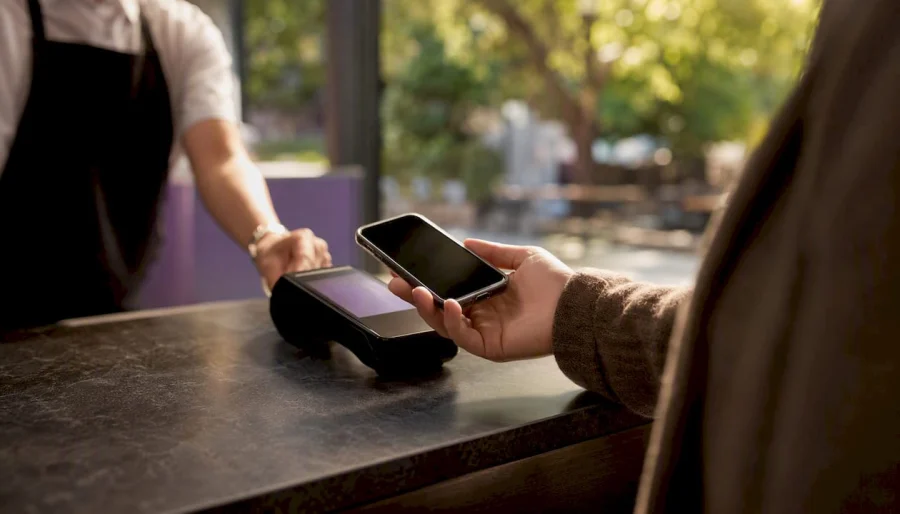
You can start on the free tier this week with no POS integration required, then move to premium subscription tiers as volume grows, or commission a white-label or fully custom app once you need bespoke UX. Most self-serve programmes are live within days; white-label builds typically run several weeks depending on branding and feature scope. Visit the BonusQR loyalty platform page to compare tiers, or explore the digital stamp card and wallet pass features if capture friction is your immediate problem. Start a free trial today and have your first campaign configured before the week is out.