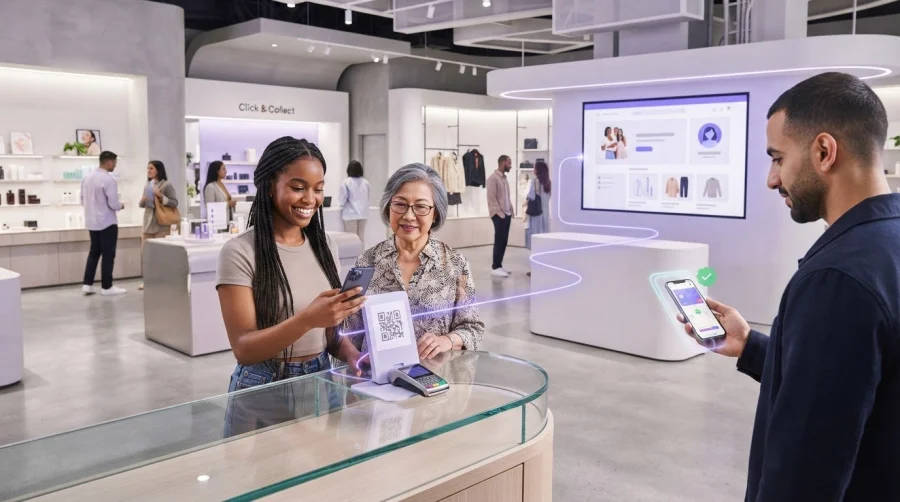
Your loyalty program doesn’t need to appear on every channel to feel connected. An omnichannel loyalty experience lets customers earn, track, and use rewards consistently across the touchpoints that matter to your business. If an in-store visit, an online order, and a mobile wallet each behave like separate programs, customers notice the gaps.
That disconnect is frustrating, but fixing it doesn’t have to mean connecting every touchpoint at once or adding specialized hardware. Start with the customer journey that matters most. Then make each step, from joining to redeeming, clear and dependable.
This guide shows you how to map a manageable journey across key channels, choose a reward mechanic such as a digital stamp card or points system, and decide what to measure as you roll it out. You’ll also learn how wallet integration can make rewards easier to find and when a branded app may fit your customer experience. The goal is practical: one recognizable rewards journey customers can follow wherever they meet your business.
Key Takeaways
- Build an omnichannel loyalty experience around consistent rewards, not a presence on every possible channel.
- Map how customers discover, join, earn, track progress, and redeem to spot gaps in the rewards journey.
- Compare loyalty approaches by continuity, setup needs, branding, and room to grow before choosing a direction.
- Start with the customer interactions that matter most, then launch, measure, and improve in manageable steps.
- See how digital stamp cards, points, wallet integration, and branded app experiences can support connected loyalty.
What Does an Omnichannel Loyalty Experience Actually Mean?
An omnichannel loyalty experience gives customers a consistent rewards journey across the touchpoints that matter to your business. They should be able to understand how to join, earn rewards, check progress, and redeem without having to learn different rules for each interaction.
That continuity is the key. A business may have a website, a physical location, and mobile options, but simply offering all three doesn’t make its loyalty program omnichannel. The touchpoints need to work together so customers can recognize the program and understand what happens next as they move between them. This reflects the broader idea behind omnichannel retail strategy: connecting online and offline experiences rather than treating them as separate destinations.
How Is Omnichannel Loyalty Different from Multichannel Loyalty?
With disconnected multichannel loyalty, each channel can operate like its own program. A customer might sign up during a visit, then find that a later website interaction doesn’t reflect their membership or reward progress. An omnichannel approach plans the journey across touchpoints so customers can recognize the program and understand what to do next.
For example, someone discovers a local café on its website, joins its rewards program during a visit, and returns later to use a reward. The experience feels connected when the enrollment steps, progress, and redemption rules are clear at each stage. Multichannel loyalty puts rewards in several places; omnichannel loyalty connects those places into one understandable journey.
Which Customer Touchpoints Belong in the Experience?
Start with the interactions customers already use. Depending on your business, these might include a website, a physical location, a mobile device, or a digital loyalty card saved to a mobile wallet. The right mix depends on how customers discover you, make purchases, and come back. A business centered on in-person visits may need a different setup from one with regular online orders.
Choose touchpoints based on their role in the journey, not because a channel seems essential for every business:
- Discovery: Where do new customers learn about your business and its rewards?
- Enrollment: Where can they join with minimal friction?
- Progress: How can they check what they’ve earned and what comes next?
- Redemption: Where can they use a reward, and are the rules easy to follow?
Keep the first version focused. Connecting the few touchpoints customers rely on is more useful than adding channels that don’t fit their habits. For broader guidance on shaping a loyalty program, see this loyalty program management guide.
How Do the Channels and Loyalty Mechanics Work Together?
A connected rewards journey follows the customer from first interest to a return visit. Imagine someone discovers a bakery through its website, joins the program during an in-person visit, earns progress with a purchase, checks that progress on a phone, then redeems a reward on a later visit. Each interaction should make the next step clear.
Customers see the visible parts: joining, earning, checking progress, and redeeming. Behind the scenes, the business needs a reliable way to keep membership and reward activity aligned across the touchpoints it uses. The technology can vary, but the goal is the same: avoid conflicting balances, missed progress, or rules that change by channel. MIT Sloan Management Review explores this joined-up view in Competing in the Age of Omnichannel Retailing.
Consistent reward rules matter more than channel count: customers need to know what they’ll earn and how to use it wherever they interact. State the qualifying action, how progress adds up, and the redemption terms in plain language. Keep those details consistent wherever customers encounter the program.
How Can Customers Earn and Redeem Rewards Across Touchpoints?
Make earning and redemption instructions easy to find when customers join and when they check their progress. A stamp-based program can suit a simple repeat action, such as earning a stamp with each qualifying visit. A points-based program can accommodate different earning and reward values, but customers need a clear explanation of how points accumulate and what they can redeem. Neither model fits every business. Choose the one customers can understand and staff can explain consistently. For more on design choices, see this digital reward points system guide.
What Role Can Mobile Wallets Play in Loyalty?
Apple Wallet and Google Wallet can make a digital loyalty pass accessible from a customer’s phone. This can bridge an in-person interaction with a digital way to keep the program close at hand. Wallet access is one touchpoint, not the whole strategy: customers still need clear joining instructions, understandable reward rules, and a straightforward way to use what they earn. Explore the options in this digital wallet pass guide.
How Do You Compare Omnichannel Loyalty Approaches?
The right setup connects the customer interactions that matter without adding technology your business doesn’t need. Compare options by how smoothly customers can move between touchpoints, what staff need to do, and how much control you want over the brand experience. A practical omnichannel loyalty experience can begin with a few priority interactions.
| Approach | Customer continuity | Setup complexity | Hardware needs | Branding | Scalability |
|---|---|---|---|---|---|
| Disconnected channel programs | Can feel inconsistent when rules or progress differ by channel. | May be simple to start in each channel, but separate processes can add staff effort. | Depends on the tools used in each channel. | Varies across channel-specific tools. | Adding channels may create more work to keep experiences aligned. |
| Connected digital loyalty | Designed to keep reward rules and customer progress clear across selected touchpoints. | Focused setup around a chosen rewards model and channel mix. | Can operate digitally without physical plastic cards or specialized POS hardware. | Uses a digital loyalty experience that can reflect the business. | Can expand as customer needs and priorities develop. |
| Custom branded app experience | Can make the branded app a central loyalty touchpoint. | Requires planning the app experience alongside the program. | Digital access; requirements depend on the business’s setup. | Offers a dedicated branded app experience. | Can support a broader branded experience as the program evolves. |
What Should You Evaluate Before Choosing a Loyalty Setup?
Begin with the actual customer journey and the staff workflow that supports it. Identify where customers join, earn, check progress, and redeem. Then note any step that could cause confusion or slow service. Match the reward model to the behavior you want to encourage: a digital stamp card may suit a straightforward repeat visit, while points can offer more flexible reward values.
Separate essentials from later enhancements. Clear rules, simple enrollment, and an understandable redemption process are foundational. Wallet access or a custom branded app may be useful when they fit customer habits and your brand priorities, but they don’t need to come first.
Can a Digital Program Work Without Physical Cards or POS Hardware?
Yes. A digital-first program can give customers access to loyalty without physical plastic cards or specialized POS hardware. But digital access alone doesn’t make the journey effortless. Customers still need clear instructions for joining, earning, checking progress, and redeeming, while staff need a straightforward way to explain the same rules.
Choose the simplest setup that supports those steps. Add complexity only when it solves a real customer or operational need.
How Can You Plan and Launch a Connected Loyalty Experience?
A manageable rollout keeps the work focused: connect the customer interactions that matter most, check that the steps make sense, then improve based on real activity. You don’t need to activate every channel before launching. Use this sequence to turn your omnichannel loyalty experience into a practical plan.
- 1. Map the journey. Note how customers discover your business, make a purchase, and return. Mark where they might want to join, check reward progress, or learn which purchases qualify.
- 2. Select priority touchpoints. Choose the interactions that matter most to customers and staff. Start with a small, useful channel mix rather than building for every possible scenario.
- 3. Choose the reward mechanic. Pick a digital stamp card or points system that fits the behavior you want to encourage and is easy to explain.
- 4. Configure the experience. Set clear earning and redemption rules. Prepare enrollment instructions and make sure staff know how to guide customers through the process.
- 5. Launch and observe. Introduce the program at the touchpoints you selected. Watch for questions, missed steps, and points where customers or staff get stuck.
- 6. Review and improve. Use program activity and feedback to refine the journey. Add touchpoints or features when they solve a real need, not simply because they’re available.
How Do You Map the Customer Journey Before Launch?
Sketch the journey from the customer’s point of view. For a service business, that might begin with finding the business online, continue with booking or visiting, and end with returning for another service. At each stage, ask: Is the reward offer visible? Is joining straightforward? Can customers tell what qualifies and what to do next?
Prioritize friction your loyalty program can address. If customers forget to join during a visit, make enrollment easier to notice. If they don’t understand how close they are to a reward, make progress easier to interpret. Keep the first version focused on these specific needs.
How Should You Test and Improve the First Version?
Before promoting the program, walk through enrollment and redemption as a customer would. Check whether the instructions make sense without extra explanation. Then ask staff to try the steps and flag anything that interrupts their usual workflow.
Track a few useful measures: enrollment, reward activity, repeat visits, and redemption. Look for patterns rather than comparing results with unsupported benchmarks. Customer questions and staff feedback can reveal confusing rules; program activity can show whether customers are using rewards as intended. Review both regularly, then adjust one part of the experience at a time.
Include loyalty platform pricing in your planning. When you’re ready to put your plan into action, get started with a loyalty program.
How Can BonusQR Support a Digital Omnichannel Loyalty Experience?
Once you’ve mapped the customer journey and chosen the touchpoints to connect, digital tools can help make rewards easier to access and understand. BonusQR provides a digital loyalty platform with digital stamp cards and points systems, plus Apple and Google Wallet integration. These options can support the journey you’ve planned without adding features for their own sake.
Which BonusQR Capabilities Fit a Connected Customer Journey?
A digital stamp card can make progress toward a repeat-visit reward easy to follow. A points system can suit programs where customers earn points and use them toward rewards. Choose the mechanic that best matches the action you want to encourage, then make the earning and redemption rules clear at every relevant interaction.
Apple and Google Wallet integration gives customers another way to access digital loyalty on a phone. Wallet access can support a connected journey, but it works best as one part of a program with clear enrollment, reward progress, and redemption steps. For businesses that want loyalty within their own branded app experience, BonusQR also offers custom white-label app development.
What Is a Practical Next Step for Your Business?
Choose one customer journey to shape first. Define how customers will enroll, what earns a stamp or points, how they can check progress, and how they’ll redeem a reward. Then make those steps easy for both customers and staff to follow. You can build around the interactions that matter most without trying to activate every possible channel at launch.
A digital loyalty platform can help you move beyond physical loyalty cards and specialized POS hardware. Keep the first experience focused, explain the rules simply, and expand as you learn what customers use. Start setting up a digital loyalty program and take the next step toward a connected rewards journey.
Make Your Next Loyalty Step Count
A connected loyalty program doesn’t require every channel from day one. Start with the customer journey that matters most, make earning and redemption rules easy to follow, then improve the experience as you learn what customers use.
The right tools should support that journey without adding unnecessary complexity. Digital stamp cards and points systems offer practical reward options, while Apple and Google Wallet integration can make loyalty easier to access on a phone. If your business wants a dedicated branded app experience, custom white-label app development is another path. Digital loyalty can also help you move beyond physical plastic cards and specialized POS hardware.
Build your omnichannel loyalty experience one clear step at a time. Choose a priority journey, define how customers enroll, earn, and redeem, and give your team a simple experience to support. Start building your digital loyalty experience with a focused first step. A more connected rewards journey is within reach.
Frequently Asked Questions
What is an omnichannel loyalty experience?
An omnichannel loyalty experience gives customers a consistent rewards journey across the touchpoints a business uses. Customers should be able to understand how to join, earn, track, and redeem rewards without running into different rules at each interaction. For example, a customer might discover a program online, join during a visit, and later check progress on a phone. The channels can differ, but the experience should feel connected.
How do you create an omnichannel loyalty program?
Start by mapping how customers discover your business, make a purchase, and return. Choose the touchpoints that matter most, then select a reward mechanic, such as stamps or points, that suits your business and is easy to explain. Keep enrollment, earning, and redemption instructions consistent. Test the process from the customer’s perspective, then review program activity and feedback to improve it in stages.
Can a small business offer an omnichannel loyalty experience?
Yes. A small business can connect a few relevant customer touchpoints without building a complex system for every channel. Begin with clear program rules, convenient digital access to loyalty information, and a consistent way to earn and redeem rewards. A digital loyalty platform can support this approach without physical plastic cards or specialized POS hardware. Add more touchpoints only when they serve a clear customer or business need.
Do customers need an app for omnichannel loyalty?
No. The right access method depends on your business and how customers prefer to interact with it. Digital loyalty can include a pass accessible through Apple Wallet or Google Wallet, while custom white-label app development can suit businesses seeking a dedicated branded app experience. Whichever format you choose, make joining and accessing rewards straightforward. Pick technology to support the customer journey, rather than adding it without a clear purpose.
What should a business measure in an omnichannel loyalty program?
Track enrollment, reward activity, redemption, and repeat visits to see whether customers are joining and using the program. Review these measures over time rather than relying on a single result as proof of success. Look for possible friction, such as members who enroll but don’t earn or redeem rewards. Pair activity data with customer and staff feedback to identify confusing steps and decide what to improve next.


