Yes, gamification can lift engagement and specific loyalty behaviours, but only when you design it around one measurable objective and protect it with proper guardrails. Random points multipliers and generic spin-to-win wheels bolted onto an existing programme rarely move the needle. A mechanic chosen to fix one clearly defined problem, tested against a control group, does.
The evidence backs this up. Research into gamified loyalty programmes shows they increase both consumer loyalty and app download intent, with the effect strongest when rewards feel personally meaningful rather than generic. On the operational side, BonusQR’s own loyalty gamification tools show that businesses adopting modular mechanics such as stamp cards and instant-win prompts see faster enrolment simply because the mechanic gives customers a reason to open the app twice, not once.
Here is your first move, before you read another word of strategy:
- Pick one customer behaviour you want more of (a second visit within 14 days, a higher basket size, a completed profile).
- Define the single metric that proves it worked (redemption rate, repeat-purchase rate, participation rate).
- Choose one mechanic that maps to that behaviour, and nothing else, for the pilot.
Key Takeaways
Gamification lifts loyalty engagement only when it targets one defined behaviour, uses a matched mechanic, and is measured against a control group over 30 to 90 days.
| Point | Details |
|---|---|
| Start with one behaviour | Define the single metric you want to move before choosing any mechanic. |
| Match mechanic to goal | Use streaks for habit, tiers for value, challenges for exploration, and instant-win for reactivation. |
| Mobile-first is essential | Push-driven, in-app mechanics consistently outperform desktop-only or disconnected experiences. |
| Guard against reward fatigue | Cap budgets, publish odds transparently, and rotate challenges seasonally to avoid burnout. |
| Measure incrementality, not plays | Use a holdout group and track purchase frequency lift, not participation counts. |
| Pilot with BonusQR | BonusQR’s stamp card, points, and instant-win modules let you launch a measured pilot without POS integration or custom engineering. |
What is gamification in loyalty and why does it work psychologically?
Gamification in loyalty means applying game mechanics, points, progress bars, streaks, challenges, and chance-based rewards, to a loyalty programme so that ordinary purchase behaviour starts to feel like play rather than a transaction. The mechanics themselves are simple. What makes them effective is the psychology underneath.
Four drivers explain most of the lift you see in well-designed programmes:
- Progress (the goal-gradient effect): people accelerate their behaviour as they near a finish line, whether that is a free coffee or a tier upgrade.
- Competence and mastery: unlocking a badge or completing a challenge signals skill, not just spend, which keeps people coming back to prove it again.
- Social drivers: leaderboards, shared milestones, and referral challenges tap into comparison and belonging, though they need careful handling in smaller programmes.
- Variable reinforcement: unpredictable rewards (spin-to-win, mystery scratch cards) create the same anticipation loop that keeps people checking a slot machine, or a notifications tray.
Statistic Callout: Gamified loyalty programmes increase both loyalty and app download intent through playfulness, and the effect is measurably stronger when rewards are self-oriented rather than generic discounts.
Gamification is not always the right tool. Before you build anything, run through this readiness checklist:
- Do you already have a functioning loyalty programme with baseline data, or would gamification be covering for a weak core offer?
- Is your customer base mobile-engaged enough to receive push notifications and in-app prompts?
- Can you commit to at least one full quarter of consistent mechanic rotation, rather than a one-off campaign?
If you answered no to any of those, fix the foundation first. Gamification amplifies a loyalty programme; it does not rescue a broken one.
Which loyalty gamification mechanics fit which business goal?
Different mechanics drive different behaviours, and matching the wrong one to your goal is the single most common design mistake marketing managers make. Here is how the main mechanics map to outcomes, along with the pitfalls attached to each.
- Streaks build habit. Best for driving visit frequency (a coffee shop’s “five days running” bonus). Typical reward: small, frequent perks rather than one large prize. Pitfall: a broken streak that feels punitive causes drop-off, so always offer a one-time streak freeze.
- Tiers build long-term value. Best for encouraging higher spend and status attachment (silver to gold to platinum). Typical reward: escalating perks, early access, or free shipping thresholds. Pitfall: tiers that never change status once achieved lose their pull; add periodic re-qualification.
- Challenges and quests drive category exploration. Best for cross-selling (“buy from three different categories this month”). Typical reward: bonus points or a coupon. Pitfall: overly complex quest rules confuse customers; cap it at two or three simple steps.
- Instant-win, spin, and scratch mechanics drive reactivation and enrolment. Best for lapsed customers or new sign-ups. Typical reward: small guaranteed prizes with occasional larger ones. Pitfall: budget burn if win probabilities aren’t capped and monitored daily.
- Leaderboards drive social competition. Best for engaged communities such as gyms or hobbyist retailers. Pitfall: they alienate casual customers who will never top the board, and can demotivate rather than motivate the majority.
- Badges drive recognition. Best for milestone-based loyalty (first purchase, tenth visit, anniversary). Typical reward: symbolic, low-cost, but high in perceived status.
Pro Tip: *If you run a small or mid-sized loyalty programme, favour personal progress bars over public leaderboards.
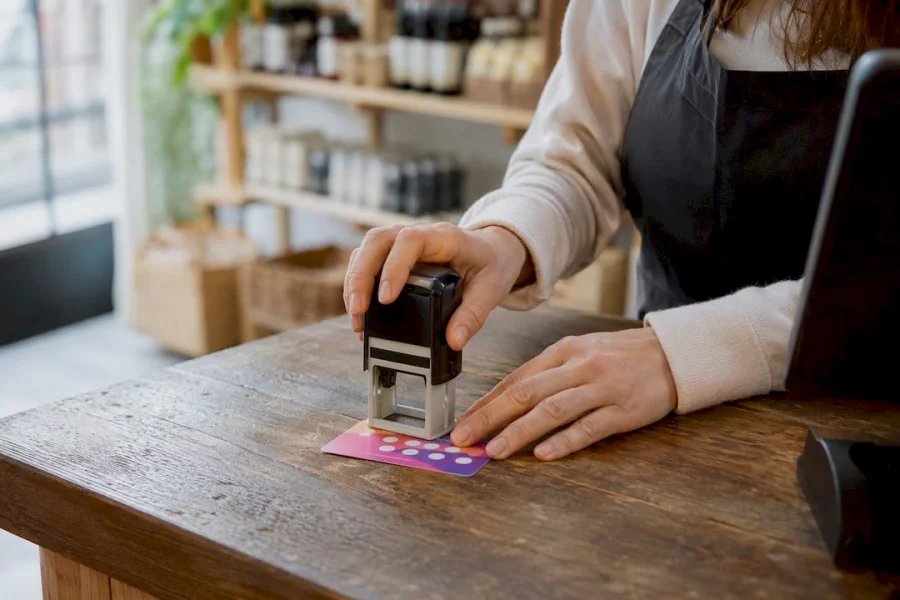
For smaller operators without the volume to sustain a competitive leaderboard, personal milestones and streaks do the heavier lifting. A stamp card mechanic captures most of the same progress psychology without needing hundreds of active participants to feel alive.
How do you design and roll out a gamified loyalty pilot?
Treat your first gamification pilot as an experiment, not a launch. Five steps take you from idea to a measurable result you can defend to a finance director.
Step 1: Define the business metric and target effect size. Decide, in numbers, what success looks like before you design anything. “Boost engagement” is not. Write the number down and share it with whoever approves the budget.
Step 2: Choose one mechanic that maps to that behaviour. If your target is repeat visits within a short window, a streak mechanic fits. If your target is reactivating lapsed members, an instant-win prompt sent by push notification fits better. Sketch the user flow on paper: what does the customer see when they open the app, what triggers the reward, what happens if they miss a day.
Step 3: Set eligibility rules, budget caps, and anti-abuse measures. This is the step most teams skip, and it is the one that protects your margin. Decide:
- Maximum reward value per customer per month.
- Win probability for chance-based mechanics, reviewed weekly against redemption data.
- Rules to block the same device or account from repeat wins within a cooldown window.
- Clear terms on expiry, so rewards don’t accumulate into an open liability.
Step 4: Build mobile-first UX and messaging. Mobile-first execution and consistent identity resolution across channels are consistently cited as prerequisites for gamification to succeed, because a mechanic that only works on desktop misses the moment of purchase entirely.
Step 5: Pilot with a holdout group and measure for 30 to 90 days. Split your active members into a treatment group who sees the mechanic and a control group who does not. Compare the two groups on your Step 1 metric, not on raw participation. Thirty days gives you a directional read; ninety gives you something closer to statistical confidence, particularly if your baseline behaviour is seasonal.
- Review results weekly, not daily. Chance-based mechanics need a few hundred plays before the numbers settle.
- Only scale the mechanic once the treatment group beats the control group on your defined metric, not just on “engagement.”
- If the mechanic underperforms after 90 days, retire it. Don’t keep a losing mechanic running out of sunk-cost attachment.
How do you measure whether gamification actually moved the needle?
The trap almost every marketing manager falls into is celebrating participation numbers that never translate into revenue.
Prioritise these KPIs, in this order of importance:
- Conversion of the targeted behaviour (did the specific action you defined in Step 1 actually increase?).
- Purchase frequency lift in the treatment group versus the control group.
- Change in member lifetime value, tracked over a longer window than the pilot itself.
- Redemption rate, which tells you whether rewards are perceived as attainable or too far out of reach.
- Participation and completion rate, useful as a diagnostic, but never the headline number you report to leadership.
Statistic Callout: Gamified motivation does not rise steadily across a loyalty journey. It moves in non-monotonic patterns, and framing progress as “how far to go” rather than “how far you’ve come” helps sustain intrinsic motivation in the later stages, when enthusiasm typically dips.
For a simple holdout test, you don’t need enterprise-scale volume. Even a few hundred active members split evenly between treatment and control will show a directional signal within a month, though you should treat anything under a couple of hundred per group as suggestive rather than conclusive. Report results monthly, note any promotional overlap that might distort attribution, and resist the temptation to lead your report with “plays” or “impressions” when the real story is whether the targeted behaviour shifted.
What are the biggest pitfalls in loyalty gamification?
Most failed programmes share the same root cause: they gamified everything at once instead of one behaviour at a time. Add to that over-salient rewards (jackpot prizes so large they overshadow the brand), opaque rules, and quiet devaluations, and you have a recipe for member distrust.
Protect the programme with these guardrails, as discussed in The role of eco branding in building brand loyalty:
- Publish reward odds and rules in plain language; never bury a devaluation in a terms update nobody reads.
- Cap reward value per member per period and monitor spend against budget weekly, not monthly.
- Use cooldowns and repeat-winner blocks so the same accounts don’t dominate chance-based rewards.
- Keep a control group running permanently, not just for the pilot, so you always have a baseline to compare against.
- Set clear expiry policies on points and rewards to avoid an open-ended liability building on your books.
Pro Tip: Rigid, highly salient rewards can actually reduce intrinsic motivation unless the feedback loop also supports a sense of competence and choice. Give members some control, such as choosing which reward to work towards, rather than dictating a single fixed prize.
Novelty needs a rhythm too. Rotate challenges seasonally rather than leaving the same static mechanic running for a year; a programme that never refreshes fades from attention within months.

What do real gamified loyalty results look like?
Numbers matter more than theory here, and the pattern across scales is consistent: one mechanic, one clear goal, measured properly.
- Large brand, instant-win at point of sale: a grocery chain connected a spin-to-win mechanic to in-store redemption and saw a measurable footfall lift, because the reward was tied to a specific, achievable action rather than a vague points balance. Copy this if you have a physical location and want a short-term visit spike; avoid it if your redemption process can’t handle a sudden surge.
- Mid-market retailer, tiered progress: app-first exclusive mechanics, where certain rewards are only unlockable through the app rather than in-store, have been shown to drive app open rates two to three times higher than treating the app as a secondary channel. The lesson: if you want app adoption, make the app the only door to the best reward.
- Small business, 30-day micro-pilot: a single café or salon can test a simple visit-streak stamp card, five visits in 30 days unlocks a reward, without any new hardware. The mechanic to copy is simplicity itself; the mistake to avoid is adding a second competing mechanic before you’ve measured the first.
BonusQR’s practical template for a gamified rollout
BonusQR’s loyalty gamification module bundles stamp cards, points, tiered cashback, and instant-win prompts into one platform, with push notifications and real-time analytics built in and no POS integration required to launch. That combination lets you run the exact playbook above without commissioning custom engineering.
A practical 30/60/90 template looks like this:
- Days 1 to 30: Launch a single stamp card or streak mechanic tied to one behaviour. Track opens and completions through built-in analytics.
- Days 31 to 60: Layer in a targeted push notification sequence at key progress points, and introduce an instant-win prompt for lapsed members.
- Days 61 to 90: Compare treatment and control groups on your defined metric, then decide whether to scale the mechanic, adjust reward tiers, or retire it.
How should you segment customers for personalised gamification?
Treating every member the same way is the fastest route to a mediocre gamification programme. New members respond to onboarding challenges and welcome streaks; established high-frequency customers respond better to tier progression and exclusive early access than to another points multiplier they’ve already seen a dozen times.
Segment on three practical axes before designing mechanics:
- Lifecycle stage: new sign-ups need low-friction, quick wins (a first-purchase badge); lapsed members need a reactivation nudge with a stronger, time-limited incentive; loyal regulars need recognition and status, not another discount.
- Behavioural pattern: frequent-but-low-spend customers respond to challenges that widen basket size; infrequent-but-high-spend customers respond better to tier perks that reward the visits they do make.
- Channel preference: members who never open your app need SMS or email framing of the same mechanic, while app-engaged members can receive richer in-app visuals like progress bars and animated unlocks.
The practical output of this segmentation is not five different programmes, it’s the same core mechanics with different entry points and messaging tuned to each group. A points-based tier system stays the same underlying structure, but the welcome message a new member sees should differ sharply from the “you’re one visit from gold status” nudge sent to someone three purchases deep. Personalisation at this level is what separates a gamified programme that feels relevant from one that feels like generic spam with a badge attached.
How does gamification fit with your existing loyalty technology?
Gamification mechanics only work if they sit on top of a loyalty system that already tracks members accurately across channels. Bolting a spin-to-win wheel onto a spreadsheet-based punch card system creates more problems than it solves, because you can’t verify eligibility, prevent abuse, or measure incrementality without reliable member data underneath.
The integration priorities, in order, are identity resolution, event tracking, and reward fulfilment. Identity resolution means recognising the same customer whether they interact in-store, on the app, or through email, a point industry research on gamified engagement consistently flags as a prerequisite rather than a nice-to-have. Event tracking means your platform needs to log the specific actions your mechanic depends on: a visit, a completed challenge step, a redemption. Reward fulfilment means the mechanic needs a direct path to deliver the prize, whether that’s an automatic points credit or a coupon issued instantly at checkout.
Most modern loyalty platforms, including BonusQR, build these mechanics as modules within the existing system rather than as bolt-on add-ons, which avoids the integration headache smaller businesses often hit when they try to stitch together a separate gamification tool and a separate loyalty database. If you’re evaluating a platform, ask directly whether gamification mechanics share the same customer record as your core points or stamp system, because a disconnected setup will cost you accuracy in every measurement step covered earlier in this guide.
What legal and privacy rules apply to gamified loyalty programmes?
Chance-based mechanics carry more regulatory weight than standard points programmes, and the line between a permitted promotional game and a regulated sweepstake or lottery depends on factors such as whether entry requires payment, whether the outcome depends on chance versus skill, and how prizes are structured. Rules on this vary by jurisdiction and by mechanic, so treat any instant-win, spin, or scratch feature as something to review with legal counsel familiar with promotional law in your specific market before launch, rather than assuming a mechanic that works elsewhere is automatically compliant where you operate.
Data privacy is the second area demanding real attention. Gamification mechanics generate rich behavioural data, what challenges a member attempts, how often they open the app, which rewards they choose, and that data is subject to the same consent and handling obligations as any other customer data you collect. Be explicit in your terms about what you track, how long you retain it, and whether gameplay data feeds into other marketing decisions.
Transparency protects you as much as it protects the member. Publish win probabilities, reward expiry terms, and eligibility rules in plain language rather than in dense legal text nobody reads, and update those terms visibly rather than quietly, since a hidden devaluation discovered by members tends to generate far more reputational damage than the cost saved by cutting the reward.
A priority for marketing managers heading into 2026
The biggest mistake teams make going into next year isn’t choosing the wrong mechanic, it’s launching too many at once and calling it a strategy. My honest read of the evidence is that small, consistent, measured experiments beat big flashy launches every time. Pick one behaviour, run it properly for 90 days, and let the data decide what earns a permanent place in your programme.
How BonusQR helps you pilot gamification without an engineering team
BonusQR is the practical alternative to briefing an agency or building custom mechanics from scratch: you get prebuilt gamification modules live in days, not months, with no POS integration required to start testing.
- Launch stamp cards, points, or instant-win prompts straight from the platform, without writing a line of code.
- Track participation, redemption, and repeat-visit lift through built-in real-time analytics rather than stitching together spreadsheets.
- Issue and manage digital coupons alongside your gamified mechanics, so rewards and redemption sit in one place.
- Scale into a fully branded white-label app once your pilot proves the numbers, without starting the build over from zero.
If you want to run the 30-day micro-pilot described earlier this week, set up your first loyalty programme and pick one mechanic to test against your own baseline.
Frequently asked questions
Does gamification work for small loyalty programmes with few members? Yes, though you should favour personal progress mechanics like streaks and stamp cards over public leaderboards, since a small membership base rarely has the volume to sustain healthy competition dynamics.
How long should a gamification pilot run before you decide to scale it? Thirty days gives a directional read, but 90 days against a holdout control group gives a far more reliable signal, particularly if your business has any seasonal purchase pattern.
Can gamification hurt customer trust if it goes wrong? Yes. Opaque rules, hidden reward devaluations, and jackpot prizes that feel unreachable are the most common causes of member distrust, which is why transparency and reward caps matter as much as the mechanic itself.
What is the single most common mistake businesses make with loyalty gamification? Gamifying too many behaviours at once instead of picking one, matching it to a single mechanic, and measuring it properly before adding another layer.
Do gamified rewards need to involve chance to be effective? No. Streaks, tiers, badges, and challenges all work without any chance element, and they typically carry fewer legal and regulatory considerations than spin-to-win or scratch-card mechanics.
Sources
- Having fun while receiving rewards?: Exploration of gamification in loyalty programs for consumer loyalty
- Is gamification always beneficial? Exploring non-monotonic consumer motivation and progress framing in gamified loyalty programs (2026)
- The role of gamification in enhancing intrinsic motivation to use a loyalty program (Kim & Ahn, 2017)


