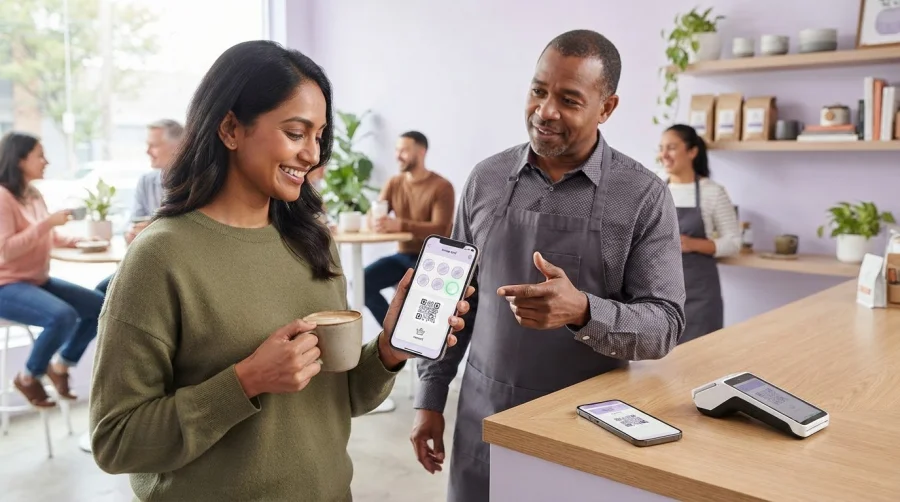
A loyalty reward only works when customers can see their progress and use it easily. The benefits of a digital punch card system come from replacing a paper card with a digital record of visits or purchases, then rewarding customers when they reach a set milestone. A familiar example is buying 9 items to earn the 10th free.
A digital punch card can do more than count visits. Customers can access and track their rewards on a phone, while businesses can record qualifying activity and make redemption easier. The program still needs clear rules: customers should know what earns a stamp, how many they need, and how to claim the reward.
This guide explains what a digital punch card system is, how it works, and which rewards it can offer, from sign-up perks to discounts and free items. You’ll also see how wallet and checkout experiences can support customer engagement, what to consider when shaping a program, and how BonusQR’s digital stamp cards, loyalty platform, and Google and Apple Wallet integration can fit into that approach.
Key Takeaways
- Set clear earning rules so customers know which purchases count and what milestone unlocks a reward.
- Choose rewards that fit your business, from discounts and free items to sign-up, birthday, or progress-based perks.
- Use customer activity and purchase patterns to shape relevant offers and encourage repeat visits.
- Make it easy for customers to access and track their card, with mobile wallet and checkout experiences that fit your business.
- Review engagement, redemptions, and customer feedback to refine the program over time.
Customer engagement through discounts and exclusive offers
Digital punch cards increase visits by giving customers a clear reason to return and complete a reward milestone. They also support retention by making loyalty progress visible and allowing businesses to send relevant offers between purchases.
A digital program can record qualifying purchases and progress toward rewards, helping a business see how customers engage with its offers. Customers benefit from being able to check their progress and earn a perk without carrying a paper card.
Discounts and Exclusive Offers
Discounts and exclusive offers are rewards tied to customer activity, such as reaching a punch milestone or responding to a targeted campaign. A coffee shop could offer a free coffee after 10 punches, giving customers a clear reason to choose it again. Loyalty program segmentation can group participants and support customized offers, so a frequent visitor might receive a different promotion from someone who has not visited recently.
Match the offer to the action you want to encourage. A discount can prompt another purchase, while an exclusive offer can recognize loyal customers. One of the benefits of a digital punch card system is the ability to group customers by activity and tailor offers, rather than sending the same message to everyone.
Signup, Punches, and Reward Redemption
Signup creates a customer record, purchases earn punches according to the program’s rules, and redemption lets customers claim the reward after reaching the set milestone. Digital loyalty programs may ask for an email address or phone number during enrollment, then update punch counts as qualifying purchases are recorded.
Clear rules matter at each step. State which purchases count, how customers can track progress, and how they redeem the reward. A digital stamp card program can replace the paper card with a record customers can access digitally, helping them see how close they are to their next perk.
Communication can bring customers back between visits. Businesses can use push notifications or SMS to share a relevant offer, explain a reward, or remind an inactive customer about their progress. A program may send a reminder after 30 days without activity, while messages to customers who are 1-2 punches away can highlight how close they are to a reward.
Send campaigns that reflect customer activity, rather than adding noise. For example, a business can group customers by visit or purchase behavior and send a relevant offer to those who have not returned recently. Messaging tools can help businesses stay in touch between visits, provided each message has a clear purpose.
Program activity also gives businesses a way to assess what engages customers. Track participation, reward redemptions, and responses to campaigns, then adjust the offer or earning criteria when customers stop progressing. The research figures state that 81% of U.S. loyalty members buy more frequently than non-loyalty members, and 37.5% of customers join loyalty programs for rewards, reinforcing the value of making the reward clear and attainable.
What is a digital punch card system?
A digital punch card is an electronic loyalty record that tracks qualifying purchases and progress toward a reward. Instead of collecting marks on paper, customers access their card through a mobile app or web application, and may also save it to a digital wallet.
For U.S. programs, explain how customers earn and redeem rewards, any offer limits, and how their information is used. Collect only the data needed to run the program, protect it with secure authentication and encryption, and follow applicable privacy requirements.
The main drawbacks are enrollment friction, privacy concerns, and dependence on a reliable digital experience. Customers without a suitable device may find participation harder, and unclear terms or missed purchase records can undermine trust. Keep sign-up simple, show progress clearly, and explain redemption steps before customers join.
The idea has changed over time. Punch cards date back to the 1700s, while smaller U.S. retailers developed in-store loyalty programs after competition grew following the 1950s. Plastic loyalty cards became common in the 1990s, and some later added magnetic strips or scannable barcodes. Keychain versions followed in the early 2000s. Digital programs carry the same basic exchange into an electronic format: customers participate, record eligible activity, and redeem a defined reward.
Digital loyalty can also start with participation, rather than a long points menu. A business might first offer a clear visit-based reward, then add points or other earning actions if customer behavior supports them. The rules should identify which purchases qualify and how progress leads to redemption. A digital punch card program can be configured in under 15 minutes, according to the cited market information, though the setup still needs clear criteria and reward terms.
Wallet use makes access part of the experience. There were 4.4 billion digital wallet users worldwide in 2025, and the number is forecast to reach 6 billion by 2030. Digital wallets are forecast to account for over 70% of the global population by 2030. Mobile wallets account for 53% of online purchases globally and 32% of in-store point-of-sale transactions globally. These figures make wallet access a practical consideration for a program serving customers across digital and in-person purchases.
Program pricing depends on scope, features, customization, and integrations; the price depends on the case and is given after a quote request. Compare setup and ongoing costs alongside how customers enroll, track progress, and redeem rewards, so the program fits both daily operations and customer habits.
Reward types, including sign-up, birthday, and interim rewards
A digital reward can recognize enrollment, a birthday, purchase activity, or another customer action. A business might welcome new members with a sign-up perk, send a birthday offer, and offer a smaller reward before customers reach the main milestone. These smaller moments can give customers reasons to engage between purchases.
Interim rewards can keep progress feeling active. A business might contact customers when they are 1-2 punches away from a reward, helping them notice an achievable next step. Digital punch cards may also award points for actions beyond purchases, such as completing a profile or referring a friend. Set clear earning rules so customers understand which actions qualify.
A punch card offers a simple exchange: complete defined actions, then claim a reward. A broader rewards program can add points, multiple reward choices, and offers based on customer activity. For example, a points system could let customers redeem points for discounts, free items, or other perks. Choose a format that fits customer buying habits and your team’s capacity.
Digital rewards replace paper tracking with an electronic record, which can reduce paper use and support contactless participation. A cited Visa study found that 90% of consumers prefer a virtual punch card to a paper one. Customers can access their reward information digitally rather than carrying a physical card, making progress easier to track during everyday purchases.
Digital programs can collect enrollment details, such as an email address or phone number, as well as visit and spending activity. Businesses can use this information to understand purchase patterns and tailor offers. Keep data collection focused on running the program, protect customer information and transactions with secure authentication and encryption, and follow relevant privacy requirements.
Personalization is most useful when it responds to relevant customer signals. Grouping participants by preferences or purchase behavior can help a business share a specific suggestion instead of a general promotion. For instance, a café could highlight a new drink to customers who often buy beverages. Review redemptions and customer feedback, then adjust the rewards to better fit customer interests.
Make rewards easy to find, understand, and use. Show the earning criteria, current progress, and redemption conditions in the digital experience. A sign-up offer, birthday reward, and interim perk each serve a different purpose, so decide what action each should encourage before adding it to the program.
How digital punch cards work
A digital punch card records qualifying purchases electronically and tracks progress toward a defined reward. Unlike paper punch cards, it keeps the record in a digital account. Points-based programs work differently: customers accumulate points and redeem them for a range of rewards.
How Digital Punch Cards Track Progress
A digital punch card tracks each eligible visit or purchase and updates the customer’s progress toward a reward. Customers can access their card, view progress, and check transaction history through a digital interface. A merchant dashboard can validate punches and manage program rules. Because the record is digital, customers don’t need to keep a paper card in a wallet or remember where they placed it.
For example, a business can set a 10-punch threshold, then define which purchases qualify. After a qualifying transaction, the system updates the count and shows how far the customer has left to go. Clear criteria help prevent confusion: explain whether every purchase counts, whether a specific product is required, and what happens when the customer reaches the milestone.
A digital record also helps businesses review visits and spending. Staff can check a customer’s progress before confirming a reward, and customers can see their own card instead of asking how many paper punches they have collected.
Punch Cards and Stamp Cards
A digital stamp card follows the same milestone structure as a punch card, recording each qualifying action as a stamp. Customers collect stamps and claim the reward after reaching the stated target. For instance, a café could award one stamp per qualifying drink and display the reward terms on the card.
Digital stamps replace ink marks and paper cards with an electronic record, reducing the chance that customers forget or misplace their card. The business still needs a clear validation process so staff know which purchases earn stamps and how to confirm a redemption.
Punch Cards and Points-Based Programs
A punch card links progress to a set number of qualifying purchases or visits. A points-based program can instead award points according to spending, such as 10 points per dollar spent, and let customers redeem them at defined thresholds. The punch format is direct; points allow more flexible earning and reward choices.
Choose a program that fits the purchase pattern. A repeatable product or service may suit a simple stamp target, while varied spending may work better with points. Either way, explain how each qualifying transaction moves customers closer to a reward.
Mobile wallet and point-of-sale integrations
A digital wallet gives customers convenient access to a loyalty card, while a point-of-sale system records purchases. Connecting the two can link checkout activity to loyalty progress and reduce manual steps. Wallet access helps customers find their card; point-of-sale integration can validate eligible purchases automatically.
Mobile wallets account for 32% of in-store point-of-sale transactions globally. That makes the checkout experience a practical part of customer loyalty, not just a back-office detail. For example, a customer buying a qualifying item could present a wallet-based card, have the purchase validated, and see progress updated automatically when the systems are connected.
Plan the transaction flow around three checks: identify the loyalty account, confirm that the purchase qualifies, and record the resulting stamp or points. A café might exclude merchandise from a drink-based card while counting eligible beverage purchases. Clear rules help staff handle exceptions and explain why a transaction did or didn’t earn progress.
Wallet integration and point-of-sale integration serve different purposes. Apple Wallet or Google Wallet gives customers access to a loyalty card on their phone; a point-of-sale connection can validate purchases. Together, these can replace paper cards and reduce duplicate data entry. Without a connected checkout, staff need another way to validate purchases, which can add a step during busy periods.
Plan for practical checkout scenarios before launch. Test a qualifying purchase, an excluded item, a reward redemption, and a transaction that needs correction. Confirm that the customer sees the right balance after each step, and give staff a clear way to resolve a missed stamp. These checks help protect retention by keeping the loyalty record consistent with the purchase.
Mobile wallet use also matters beyond the store. Wallets account for 53% of online purchases globally, so a connected loyalty experience can support customers across digital and in-person activity. Keep the earning criteria consistent across channels, and explain how an online order connects to the customer’s loyalty account.
Review integration performance through practical measures: qualifying purchases recorded, reward redemptions, and staff corrections. If customers frequently need help finding a card, improve wallet enrollment instructions. If checkout records miss eligible transactions, refine the matching and validation process. For a connected loyalty setup, start setting up a digital loyalty program.
BonusQR: Loyalty application
BonusQR gives businesses a digital way to put a rewards program into practice. Its loyalty application, platform, and software support digital stamp cards, helping customers track progress and businesses manage a straightforward reward structure.
Turn to BonusQR when you’re ready to replace paper tracking with a digital stamp card or set up a loyalty platform for customer rewards. Define a clear milestone, such as a reward after qualifying purchases, so customers have an easy-to-follow reason to return.
Explore the options at bonusqr.com and see how a digital loyalty approach could fit your business.
Make your next loyalty move count
Start with one customer action you want to encourage, such as making another purchase or trying a new offer. Match the reward to that action and decide how you’ll assess participation. This gives the program a clear purpose before you add campaigns or other reward options.
The benefits of a digital punch card system are easiest to assess against a clear business goal. Consider whether the program encourages repeat visits, whether customers understand the reward, and whether your team can manage it smoothly. Use what you learn to refine the experience.
BonusQR offers a loyalty application, loyalty platform, and loyalty software for businesses building digital rewards. If you’re ready to explore how a loyalty program could fit your goals, contact BonusQR to discuss loyalty.
Choose a simple starting point, learn from customer participation, and build from there.
Frequently Asked Questions
What are some examples of Small Businesses using Punch Card Apps?
Cafés, salons, gyms, restaurants, and independent retailers can use punch card apps to encourage repeat purchases or visits. A salon could reward regular haircut bookings, while a bakery might count qualifying purchases toward a future treat. Service businesses can define a qualifying visit, and shops can base progress on selected products. The format works best when customers understand the repeat behavior being rewarded and staff can record it consistently.
What are the main benefits of a digital punch card loyalty system for small businesses?
Small businesses can replace paper-card administration with digital records and get a clearer view of participation. For example, a shop can compare which rewards are redeemed, then adjust the offer or eligibility rules. Digital records can also make participation easier to manage across staff shifts. Start with a simple reward and review activity before adding more features.
How do customers use a digital punch card at checkout?
Customers open their loyalty card on a phone, then present it during payment or service. Staff record the qualifying activity using the program’s validation method, such as scanning a QR code. BonusQR runs QR-based loyalty without point-of-sale integration: customers access the program through a shared QR code, and staff use staff access to scan QR codes. Customers can check their updated progress before leaving.
What features should businesses look for in a digital punch card system?
Look for clear earning rules, progress tracking, redemption controls, and a staff view for validating activity. Useful management features include customer groups, campaign messaging, and analytics for visits or spending patterns. Consider whether customers can access the card through an app or digital wallet. A café with several staff members, for example, needs a consistent validation process so stamps remain accurate across shifts.
How do digital punch cards integrate with POS systems and mobile wallets?
Some loyalty systems connect purchase records to a point-of-sale system; others validate activity separately. BonusQR does not require point-of-sale integration and supports Google Wallet and Apple Wallet, so customers can keep a digital card on their phones. Before choosing a setup, consider how staff will validate purchases and how customers will access their cards. Start your BonusQR loyalty program by setting its rules and sharing the QR code with customers.
What rewards and punch thresholds work best for digital punch cards?
For hospitality businesses, a typical reward threshold is 8-12 punches; high-frequency businesses such as daily coffee shops and weekly lunch businesses may use 10 punches. Match the threshold to how often customers visit and how compelling the reward feels. A reward that takes too long to reach may lose appeal, while one earned too quickly may not support repeat behavior. Track redemption and customer response, then adjust the criteria.


