
 Deutsch
 Español
 Français
 Italiano
 Magyar
 Polski
 Slovenčina
 Čeština
A familiar regular walks past the café window carrying a competitor's cup. Behind the till sits a stack of loyalty cards, a generous reward and no clear explanation for why that customer stopped coming in. The salon owner faces the same problem when a previously reliable client disappears from the appointment book.
Customer rewards programs should answer that question, not just distribute discounts. For a small business, the useful exchange is straightforward: customers receive a worthwhile benefit, while the owner learns which customers return, what they spend and which offers deserve another run.
Why Most Customer Rewards Programs Quietly Fail
The regular with the competitor's cup might still have a half-completed loyalty card. Membership hasn't stopped them choosing somewhere closer, quicker or more appealing that morning. A reward can influence a purchase, but it can't repair inconvenient opening hours or an appointment that consistently starts late.
Research reported by KPMG using Ipsos data on Britons aged 16–75 found 95% possessed at least one supermarket loyalty card, while 79% used multiple cards, a clear reminder that enrolment doesn't equal exclusive loyalty. That evidence concerns supermarkets, not independent salons, but the distinction is useful across physical retail.
The discount isn't the diagnosis
A café can keep making its reward more generous without discovering why customers leave. A salon can offer money off the next appointment without checking whether clients can find a suitable booking slot.
Paper punch cards present another limitation. Unless staff separately record transactions, the owner sees completed cards rather than a usable history of visits. The customer gets a progress tracker; the business gets little help identifying changes in behaviour.
Practical rule: A reward should encourage a defined behaviour and leave enough information to assess whether that behaviour happened.
Complexity makes the problem harder. If staff need to explain membership levels, exclusions and conversion rules while a queue builds, they'll be tempted to skip the explanation altogether.
What the owner needs to know
Instead of starting with a larger discount, the owner should identify the missing operational question:
- Returning customers: Which previously frequent visitors have become less active?
- Reward usefulness: Which earned benefits remain unclaimed?
- Commercial value: Which customers spend consistently without requiring repeated promotions?
- Service friction: Do customer questions concern the reward, the booking process or the underlying offer?
These are different problems and deserve different responses. A reward reminder won't solve poor appointment availability. A clearer redemption process won't fix disappointing coffee.
The strongest starting point is a scheme that records ordinary purchasing behaviour without adding awkward work at the counter. Owners can then stop treating every customer as equally discount-sensitive and make decisions based on observed activity.
The Four Reward Mechanics Explained in Plain English
Small businesses don't need an airline-style loyalty system. They need an earning rule customers understand and staff can apply consistently. The practical starting choices are stamps, points, cashback and visit or spend thresholds.
How customers earn and redeem
Stamps turn eligible purchases or visits into visible progress. A coffee shop customer accumulates stamps towards a drink reward. The important distinction is whether a stamp represents a visit, a qualifying drink or a transaction, because those rules encourage different behaviour.
Points convert eligible spending into a balance. In a bookshop, a customer's purchases build points that can later fund a reward. Staff need to explain both earning and redemption, not just announce that points are available.
Cashback returns part of eligible spending as value. A deli might offer credit towards a later purchase. The rules must distinguish store credit from cash paid back, otherwise the name can create an expectation the business doesn't intend to meet.
Thresholds trigger a benefit when a customer reaches a defined visit or spending target. A hair salon might attach an added service to a completed sequence of eligible appointments, rather than reducing every bill.
The visual below also includes tiers and referrals. Tiers can build on spending thresholds, while referrals reward customer introductions rather than purchasing activity.
Engagement versus financial value
The useful distinction isn't which mechanic sounds more refined. It's what the owner wants customers to do.
- Engagement mechanics: Stamps and visit thresholds make progress towards another visit easy to see.
- Value mechanics: Points and cashback connect benefits more closely to eligible spending.
- Attendance use: A stamp card for gyms can recognise participation, but attendance rewards shouldn't undermine existing membership pricing.
A business may already operate an informal version of these mechanics. A receptionist remembers regular clients; a café owner occasionally treats a familiar customer. Formalising that practice creates consistency, but the earning rule should remain understandable without a lengthy explanation.
Choosing the Right Mechanic for Your Type of Business
The right mechanic depends on the purchase pattern, not the business category alone. A takeaway counter with similarly priced orders has a different challenge from a restaurant where bills vary substantially.
The comparison below is a practical assessment of setup effort and customer-facing complexity, not a ranking based on measured performance. Configuration, reward generosity and transaction handling all affect the eventual workload.
Reward mechanic comparison for small UK businesses
| Mechanic | Effort to Launch | Customer Understanding | Best Fit |
|---|---|---|---|
| Stamps | Low when eligible purchases are clear | Visible progress, little calculation | Cafés and quick-service eateries |
| Points | Moderate, with earning and redemption rules | Requires a clear conversion explanation | Restaurants and retailers with varied bills |
| Cashback | Moderate, with credit and refund rules | Familiar value, but restrictions need clarity | Repeat-purchase shops and delis |
| Visit or spend thresholds | Low to moderate, depending on exclusions | Clear when the target and reward are visible | Salons, gyms and independent retailers |
A café should consider stamps when the priority is encouraging another ordinary purchase. However, counting transactions rather than eligible items may invite customers to split orders. The launch rule needs to resolve that before staff face the question.
For salons and gyms, visit thresholds can recognise continuity. The owner should decide whether a qualifying visit means attendance, a completed paid service or a particular treatment category. Cancelled bookings shouldn't be mistaken for completed activity.
Choose around the operational constraint
Restaurants with varied bills may find points more appropriate than equal rewards for every visit. Retailers can consider spend thresholds when they want to recognise cumulative purchasing without explaining a running points conversion.
Cashback deserves careful margin scrutiny. A visible credit balance is attractive, but the owner must allow for future redemption and decide what happens after a refund.
- Limited staff capacity: Favour a rule that requires the fewest transaction judgements.
- Wide price variation: Connect earning to eligible spend rather than treating every purchase equally.
- Mixed-format businesses: Start with the core purchase journey before adding a second mechanic.
A salon selling retail products could use an appointment threshold alongside a separate retail spending reward. Both rules should have distinct labels and exclusions. If staff can't explain the difference quickly, the combination isn't ready to launch.
Setting Up a Programme You Can Launch This Week
Launch preparation should focus on the customer's redemption experience, not just the sign-up poster. A 2024 YouGov survey of 1,019 adults in Great Britain found 87% rated ease of reward redemption as important, making it the most valued programme feature.
A practical setup session should produce written rules, a working customer journey and a staff test. Choosing the reward is only the beginning.
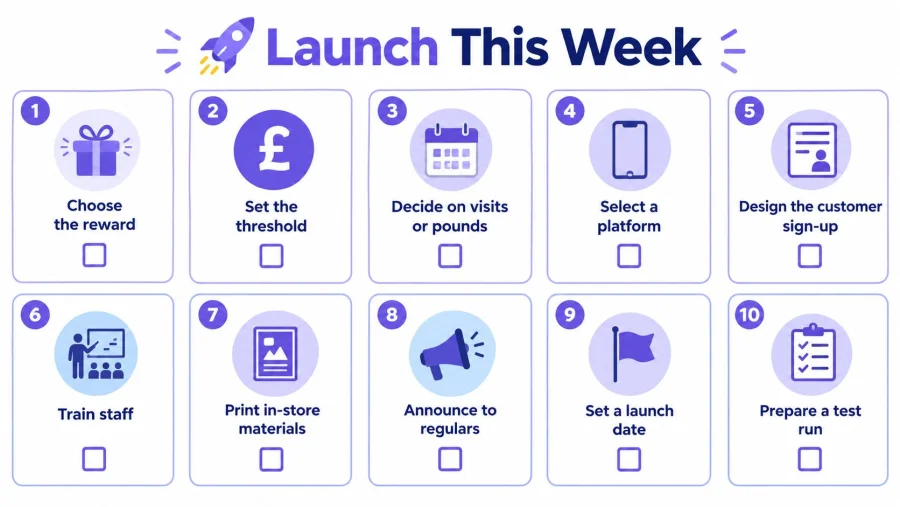
The launch decisions
- Choose the reward. Prefer something customers recognise as useful. Cost it using ingredients, stock, staff time and any capacity it consumes.
- Set the threshold. Base the target on normal purchasing habits and affordable reward cost, rather than copying a nearby competitor.
- Define eligible activity. Specify visits, products or pounds spent. Include refund handling and exclusions.
- Choose expiry rules. A deadline may encourage action, but a slow-frequency salon client needs a realistic opportunity to redeem.
- Decide whether offers stack. Clarify whether rewards combine with sale prices, packages or other coupons. Staff shouldn't negotiate this at checkout.
- Select the platform and sign-up route. Test QR, mobile and web access on the devices customers are likely to use.
- Separate marketing preferences. Keep promotional choices distinct from joining the rewards scheme. Record the customer's decision.
- Brief staff. Cover earning, redemption, mistaken scans, refunds and escalation. Give staff a short reference sheet.
- Prepare signage and announcements. Put the benefit beside the QR code near the till or reception desk. Explain the scheme to existing regulars without interrupting service.
- Set the launch date and test. Complete the entire journey, including reward redemption, before inviting customers.
The one-afternoon acceptance check
The owner should test more than a successful scan. A customer must be able to discover the reward, understand eligibility, check progress and redeem without a manager inventing an exception.
- Customer check: The sign explains the benefit without relying on a staff sales pitch.
- Staff check: A team member can handle an error using the written process.
- Owner check: A test transaction appears in the correct customer history.
Unstaffed onboarding can reduce interruptions, but it needs clearer signage. A QR code without context is an instruction to scan, not a reason to join.
The Personalisation Trap and How to Avoid It
A personalised message isn't automatically a welcome message. Customers may appreciate a relevant reward while disliking the amount of information collected or the frequency of reminders.
Research covering more than 1,000 consumers across the UK and European markets found 78% of brands believed customers wanted more personalisation, but only 13% of shoppers ranked it as their most important loyalty factor; 32% identified excessive notifications as their leading app frustration, according to the loyalty-app research reported by Retail Times.
Use relevance sparingly
The practical alternative is selective, transparent, low-noise relevance. A message should help the customer use an existing benefit or make a useful purchase decision.
A salon doesn't need an elaborate personal profile to explain that an earned treatment upgrade is available. A café doesn't need to send a promotional message after every quiet afternoon.
- Collect less: Request information needed to operate the scheme, then justify any optional fields.
- Set quiet hours: Avoid sending offers when customers are unlikely to welcome them.
- Cap promotional frequency: Establish a weekly ceiling, then test lower frequency rather than filling every available slot.
- Offer preference controls: Let customers choose relevant channels and withdraw from promotions.
- Keep an in-store alternative: Provide a workable route for customers who don't want an app.
Consent needs its own decision
The ICO's direct marketing planning guidance states that consent must be specific, informed, prominent and separate from general privacy information. Pre-ticked boxes don't demonstrate valid consent; operators should explain the messages and channels covered and record when and how consent was obtained.
Joining a rewards scheme shouldn't silently become permission for every future promotion.
Customer feedback can reveal whether communications feel helpful. When preparing a feedback request, testimonial ideas from SignalZen offer a resource for considering how customer experiences might be presented. The owner should ask about a specific interaction, such as redemption, rather than soliciting vague praise.
Positive feedback doesn't justify heavier messaging. The useful test is whether customers continue using the programme comfortably, including those who decline marketing.
Three Small Businesses That Switched from Paper to QR
The following are illustrative switching scenarios, not documented case studies or claims of measured improvement. They show how a café, salon and grocery shop could redesign familiar paper-based routines without inventing results.
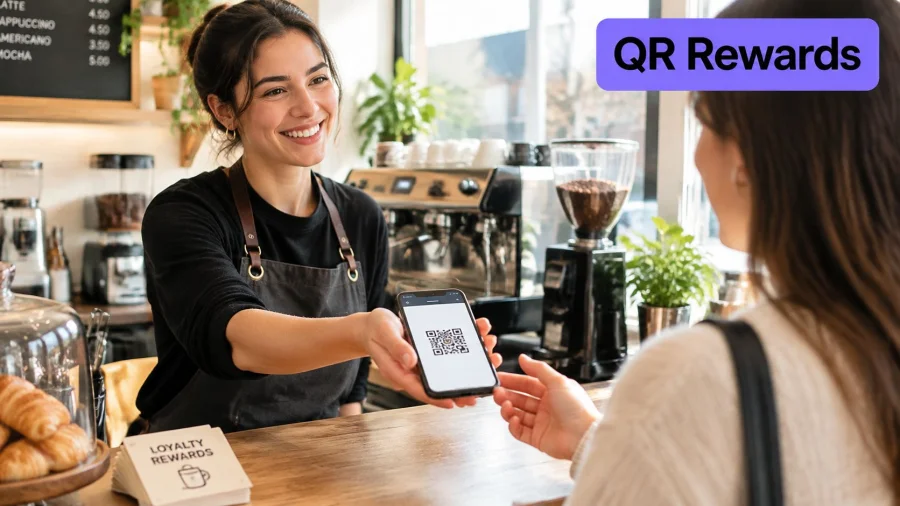
A café replaces the punch card
The café moves eligible drink purchases onto a QR-based stamp record. Staff confirm the qualifying purchase before issuing progress, and the customer checks the balance digitally rather than searching for a paper card.
The owner can examine recorded visit histories and avoid routinely reprinting individual punch cards, although counter signage may still need replacing. Clear scanning permissions remain important: a photograph of a public sign shouldn't itself authorise an earned stamp.
For cafés reviewing their digital menu alongside loyalty signage, the option to compare PDF menu vs QR options provides a separate planning resource. Menu access and reward earning should remain visibly different actions.
A salon formalises appointment recognition
The salon replaces handwritten reward notes with a threshold tied to completed eligible appointments. Reception staff check the customer's record instead of interpreting another colleague's handwriting.
The owner could then examine rebooking behaviour, but shouldn't claim an improvement until the appointment records support it.
- Staff change: A defined eligibility rule replaces discretionary recognition.
- Customer change: The earned benefit and qualifying progress are easier to inspect.
A grocery shop connects rewards to purchasing
The grocery owner considers points for eligible purchases and a separate cumulative spending benefit. That hybrid needs reliable spend recording; QR identification alone doesn't capture the contents of a basket.
A digital profile could help reveal consistent customers who previously remained anonymous. An Apple Wallet integration for retail loyalty also offers a way to keep the loyalty pass accessible.
Digital rewards needn't feel corporate. Staff can keep the interaction friendly while applying a consistent rule. Standalone workflows may avoid POS integration, but the owner must still check whether manual entry is practical during busy periods.
Measuring What Actually Matters
A busy sign-up dashboard doesn't establish that a programme pays back. A 2025 UK loyalty analysis found 66% of surveyed brands reported increased purchase frequency among members and 59% reported higher revenue per customer, while members generated 52% of total sales revenue, according to the Collinson loyalty landscape analysis. These are reported outcomes, not a forecast for an individual business.
The infographic below is illustrative. Its displayed figures aren't benchmarks or expected results for a merchant.
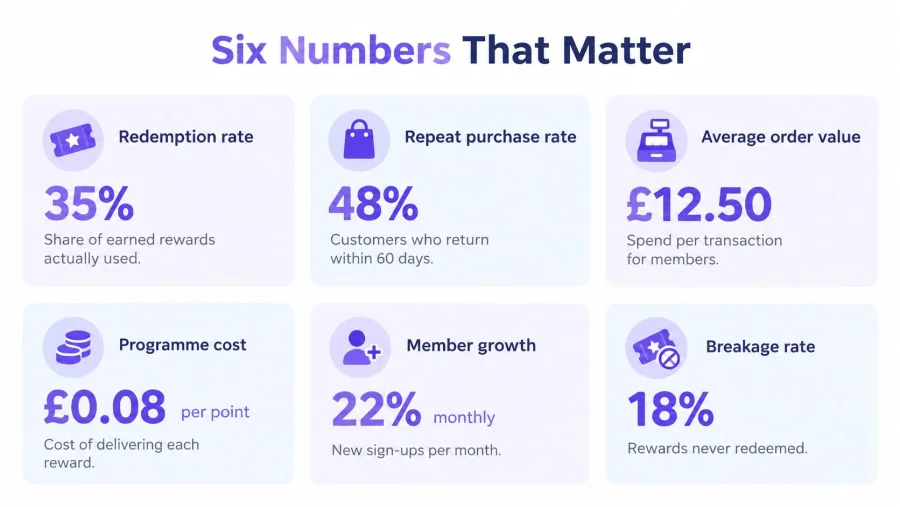
Measures that support decisions
- Redemption rate: Divide redeemed rewards by issued rewards from the same eligible group. Recent rewards may not have had time to be used.
- Repeat-visit lift: Compare return behaviour over a consistent window before and after a change.
- Incremental spend per member: Start with average transaction value, but treat member versus non-member differences as descriptive until a stronger comparison supports causation.
- Active member share: Measure members with a qualifying visit during a defined activity window, not merely registered accounts.
- Top-customer concentration: Examine how much recorded revenue comes from the highest-value member group.
- Reward liability: Track outstanding commitments and their likely fulfilment cost, including stock and service capacity.
A loyalty analytics stats overview can help owners identify available reporting. The broader planning resource, MyOfficeOps on understanding key metrics, provides context for choosing indicators rather than collecting dashboards indiscriminately.
Separate correlation from programme impact
Academic analysis of loyalty data in UK grocery retail supports treating transaction histories as operational information, not just discount records. Useful fields include customer identifier, visit timestamp, spend, reward issuance, redemption and campaign source.
Measurement caution: A customer who already visits frequently may join because the reward is convenient. Membership alone doesn't prove the programme caused those visits.
Matched customer groups, staggered campaigns or a holdout group provide stronger comparisons than a simple launch-date chart. Owners should also consider seasonality, price changes and appointment availability.
The quick action is to identify a question, inspect the relevant records and change a rule or offer. Credible evidence of impact takes longer than opening the dashboard.
Your Next Step Toward a Programme That Actually Pays Back
A small business doesn't need to settle every future loyalty decision before launch. It needs an affordable first version, dependable transaction records and a clear reason to review the results.
The useful outcome isn't a larger database by itself. It's an owner who can identify a customer pattern and act without commissioning a lengthy analysis. That might mean correcting a confusing reward, recognising dependable clients or stopping an offer that consumes margin without supporting the intended behaviour.
The owner's priority list
- Write the business question: Name the purchasing or attendance pattern that needs attention.
- Approve the economics: Check fulfilment cost and operational capacity before announcing the benefit.
- Assign responsibility: Identify who handles staff questions, transaction corrections and the review.
- Schedule the first review: Use the same definitions throughout, and avoid changing several rules simultaneously.
Choose a route that fits the location
Paper cards, booking-system tools and standalone QR platforms remain different options. BonusQR offers stamps, points, cashback and visit or spend thresholds, with mobile or web sign-up, staff scanning and redemption, and built-in analytics. Its platform information describes a free starting option, no required POS integration or additional hardware, and white-label branding for businesses that later need their own app.
A digital platform doesn't remove the merchant's responsibility for clear consent choices, appropriate access controls and accurate earning records. Existing phones and simple signage may be enough for the workflow, but the owner should test connectivity and staff handling before committing.
The immediate next step is concrete: the owner should write a qualifying-purchase rule, select an affordable reward and complete a test sign-up and redemption with a staff member. Launching that working version gives customers a visible benefit and gives the business a reliable starting point for deciding what deserves to continue.