
 Deutsch
 Español
 Français
 Italiano
 Magyar
 Polski
 Slovenčina
 Čeština
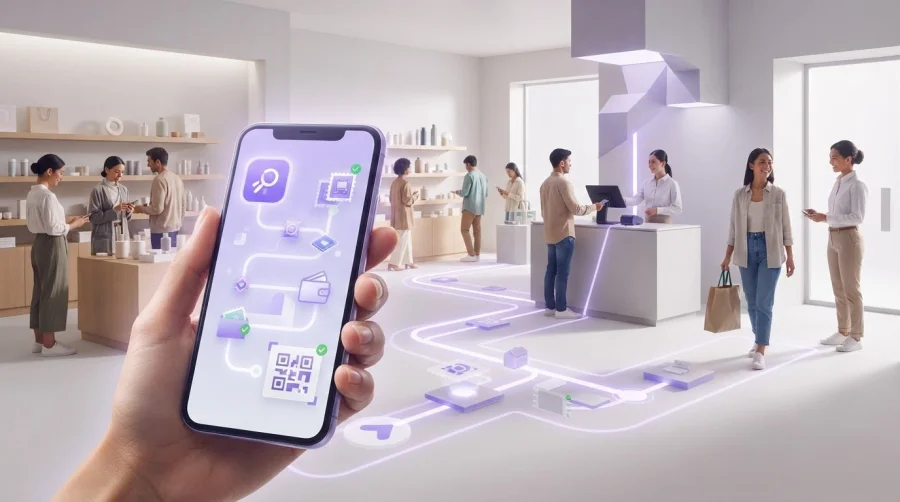
A smooth customer journey rarely breaks at the big moments. It breaks in the handoffs: when a customer moves from an ad to your website, from browsing to booking, or from a first purchase to a return visit. Creating a seamless customer journey means connecting those interactions, not just polishing each one on its own.
When teams focus on separate touchpoints, it’s easy to miss confusing steps, repeated questions, or reasons people don’t come back. You don’t need to add more tools to make progress. Start by finding where the journey feels difficult, then fix the handoffs causing the most friction.
This guide shows you how to map customer needs from discovery through repeat engagement, use feedback and business signals to prioritize improvements, and create more consistent experiences across channels. You’ll also see how digital stamp cards, points systems, and Google and Apple Wallet integration can support an easier path to returning. First, look at the journey as customers experience it.
Key Takeaways
- Map one customer type and one important goal at a time, using evidence to capture the journey customers actually experience.
- Creating a seamless customer journey doesn’t require a new platform for every channel. First identify whether friction comes from a process, a communication gap, or a technology limitation.
- Choose one high-friction touchpoint to improve by weighing its impact on customers, how often it occurs, and the effort needed to fix it.
- Give each improvement a clear owner, a focused change, and a regular review so progress stays visible and practical.
- Consider digital stamp cards or points as convenient ways to recognize customers and make repeat engagement easier.
What creating a seamless customer journey means for your business
Creating a seamless customer journey means connecting customer interactions so they feel consistent and easy to navigate. Customers shouldn’t have to start over, guess what to do next, or find conflicting information as they move between channels. Each step should make the next one clearer.
Three related ideas make this practical. The customer journey is the path a person takes toward a goal, such as choosing and buying a service. Touchpoints are the individual moments along that path, including a social post, a booking page, an in-person conversation, or a support message. The customer experience is the person’s overall impression of those interactions and how well they work together.
Consider someone who discovers a local business through search, checks its website, makes a first purchase in person, then contacts the business with a question. Later, they decide whether to return. Discovery, purchase, support, and repeat visits are connected stages, not separate stories. What happens at one can shape what the customer expects from the next.
Fewer handoff problems create a more coherent customer experience because customers can move forward without repeating themselves or piecing together what to do next.
How a customer journey differs from a collection of touchpoints
A list of touchpoints shows where customers meet your business. A journey shows the transitions between those moments. For example, a customer sees a post about a café, checks its opening hours online, visits to buy a drink, and later returns after receiving a clear invitation. If the listed hours are wrong or the next step is unclear, the gap between touchpoints becomes part of the experience, too.
Journeys can cross digital, in-person, and service interactions. A customer might discover a business on a phone, ask a question face-to-face, then follow up by email. Map what the customer is trying to accomplish at each stage, not just which team or channel handled the interaction.
Why consistency matters before adding more channels
More channels don’t automatically make the journey easier. If a website gives different information from staff, or a customer receives no clear next step after a purchase, adding another platform may create another place for confusion. Customers benefit more from relevant, connected interactions than from a business simply appearing everywhere.
Start by checking the handoffs you already have. Look for unclear instructions, repeated questions, inconsistent details, or gaps between a customer’s action and your response. Then decide whether the cause is a process, communication, or technology issue. Fixing the transition often matters more than expanding the channel mix.
This gives your team a shared view of the experience without requiring a complicated system. Follow one customer goal from discovery through return, and note where the person must wait, repeat information, or work out the next step alone. Those observations create a practical starting point for mapping the journey.
Mapping Customer Journeys: Discovery to Engagement
A useful journey map gives your team an evidence-based view of what a customer is trying to do and where the experience could be clearer. Keep the first map manageable: focus on one customer type and one meaningful outcome, such as making a first purchase and deciding to return. This gives a small business a practical starting point instead of a sprawling project.
Choose the customer, goal, and journey boundaries
Define who the map follows, what they want, and where the journey begins and ends. For a first-purchase scenario, the journey might start with discovering the business; success might mean completing a purchase and understanding how to come back. Include the customer’s actions, questions, and expectations alongside the business interactions that shape each step.
Then work through five steps:
- Choose a customer goal. State the outcome in the customer’s terms, such as “find a suitable service and book it.”
- Set boundaries. Decide which stages belong in this map and where the journey starts and finishes. Save other customer types and goals for separate maps.
- Gather evidence. Review customer conversations, feedback, and available business records. Ask staff what questions or sticking points they regularly encounter.
- Map the stages. Lay out the customer’s progress in order, from discovery through purchase, support, and the next expected action.
- Validate the draft. Review it with staff who handle different parts of the experience, then check uncertain details with customers or additional evidence.
Build and validate a useful journey map
For each stage, record the touchpoint, customer need, action, possible friction, and next expected action. A simple table or shared document is enough. For example, beside “checks opening hours,” note where the customer looks, what they need to know, and what they’re likely to do next. This makes gaps easier to spot than a channel list alone.
Separate what you know from what you assume. Mark a customer action as observed when it comes from feedback, a conversation, or a business record. Flag uncertain points as questions to follow up, rather than presenting a team guess as fact. If staff say customers often ask about return visits, record the observation and investigate what information customers need before deciding to come back.
Validation helps reveal mismatches between teams’ views of the same journey. A staff member handling a purchase may see a different transition than someone responding to follow-up questions. Ask each person to check whether the stages and handoffs reflect what actually happens, and note where their accounts differ. Those differences can guide what to investigate next.
If the journey includes rewards or repeat visits, map that interaction before deciding how to support it. For example, explore a digital loyalty setup as one way to make customer progress and rewards easier to access. If you’re choosing a loyalty application, assess how it fits the customer’s existing path rather than treating it as a separate journey.
How to find journey friction without adding unnecessary tools
A smoother journey doesn’t require a new platform for every channel. Often, the obstacle is an unclear process, missing information, or a handoff that leaves customers unsure what to do next. Diagnose the cause before choosing a fix. “A broken handoff should be diagnosed before another tool is added, or the new tool may simply move the friction somewhere else.”
Start with a specific customer task and compare what the person expects with what actually happens. If someone asks a question before buying, for example, is it clear who responds, what information they need, and what the customer should expect next? The gaps between those steps may be the problem, even if each channel works on its own.
Separate customer friction from internal process friction
Ask frontline staff where customers pause, repeat information, or need extra help. Look for repeated questions, duplicated steps, unclear ownership, and conflicting details. Then trace each example: is the customer struggling with the interaction itself, or is an internal process making it confusing? That distinction helps you avoid solving a communication or ownership problem by purchasing software you may not need.
Use feedback and journey evidence to identify causes
Combine customer comments with observable behavior and recurring support questions. A single complaint can point to a problem, while repeated questions or similar difficulties across interactions can help show where it occurs. Check whether the issue sits within one touchpoint or between teams or channels. The handoff is often the clue.
Symptom: Customers ask the same question before completing a purchase.
Evidence to collect: The questions customers ask and the information they saw beforehand.
First action: Clarify or update the relevant instructions.
Symptom: Customers repeat details when moving from one team to another.
Evidence to collect: Which details are requested again and where the handoff happens.
First action: Agree who owns the transition and how necessary information is passed along.
Symptom: Customers can’t access a loyalty reward as expected.
Evidence to collect: Where they expect to find the reward and what steps they must take.
First action: Simplify the instructions or review whether digital access, such as a wallet pass, better fits that moment.
Use a simple diagnostic before selecting a solution: process friction points to unclear steps or ownership; communication gaps show up as missing, inconsistent, or hard-to-find information; technology limitations appear when an existing tool can’t support a needed action. Fix the smallest underlying cause first, then observe whether customers can move forward more easily.
For a loyalty-related friction point, a digital stamp card or points system can make participation easier to access. Explore a digital loyalty setup as one option within the wider journey, not as a replacement for fixing unrelated process or communication problems.
How to prioritize and improve customer journey touchpoints
Once you’ve identified friction, resist the urge to fix everything at once. Choose one moment where a small, well-defined change could make the journey easier. A focused improvement is simpler to deliver, easier to evaluate, and less likely to overwhelm a small team.
Select a first improvement the team can deliver
Compare possible fixes using three questions: How much could this help customers? How often does the issue occur? How much effort will the change take? Use the evidence you already have to judge impact and frequency. A recurring obstacle with a straightforward fix may be a stronger first choice than a complex redesign based on limited feedback.
Keep the change specific. If customers are unsure what happens after booking, for example, clarify the confirmation message before reworking the entire booking experience. Record the issue, proposed change, responsible person, expected customer outcome, and review date. This gives everyone a clear next step and makes it easier to assess whether the improvement worked.
- Customer impact: What task will become clearer or easier?
- Frequency: How often does the friction appear in feedback or business records?
- Effort: Can the team make the change with its current process and resources?
Choose one measure that matches the intended outcome. If the change should help more customers finish a task, review completion. If it should support return visits, look at repeat engagement. If the goal is clearer communication, ask customers whether they understood what to do next. Don’t track a measure just because it’s available; make sure it tells you something about the change.
Review results and keep improving the journey
Before making the change, note how you’ll assess the current experience. Afterward, use the same measure and method so the comparison is useful. Pair records or numbers with customer comments. A measure can show whether behavior changed, while feedback may explain why the new step felt clearer or why a problem remains.
Set a review date when you assign the work, then decide whether to keep, adjust, or reverse the change. If results are unclear, check whether the change was applied consistently and whether you’re measuring the right outcome before drawing a conclusion. This review cycle makes creating a seamless customer journey an ongoing practice, not a one-time map or project.
For a repeat-engagement improvement, include loyalty only where it supports the customer’s next step. A digital stamp card or points system can make progress and rewards easier to access. Clear ownership and review also matter as loyalty activity grows, which is where a defined approach to customer loyalty program management can help keep the experience consistent.
If a digital loyalty touchpoint fits the improvement you’ve chosen, set up a digital loyalty experience to support customer participation.
How digital loyalty can make the repeat customer journey easier
Loyalty can give customers a clear reason to engage again, but it isn’t a fix for every journey problem. It works best as an optional touchpoint that recognizes returning customers and makes participation straightforward. First make sure the core experience is useful and clear. Then consider whether a reward can make the next visit easier to understand or more appealing.
Choose a loyalty interaction that fits the customer journey
A digital stamp card suits a simple sequence of qualifying visits, such as collecting stamps toward a stated reward. Customers can see their progress and understand what they need to do next. A points system offers a more flexible structure when rewards are tied to different customer activities. Choose the format that matches how people already interact with your business, and explain the reward and next step in plain language.
For example, after a purchase, a customer might be invited to join, see how progress is recorded, and learn what action earns the next stamp or points. Keep each step easy to follow. If the rules take too long to explain, simplify the reward structure before adding more messages or requirements.
Make participation easy to access and manage
Digital loyalty can replace paper or plastic cards with a digital way to access a reward. With Google and Apple Wallet integration, customers can keep a loyalty pass in a familiar mobile wallet. That’s an access option, not a promise of more visits. The reward still needs to feel relevant, and the process needs to fit naturally into the customer’s experience.
For stamp-based rewards, digital stamp card software can help make progress visible without asking customers to keep track of a physical card. Consider where customers will encounter the offer, how they’ll join, and how they’ll check their progress. A clear explanation at the point of participation can reduce uncertainty and help customers understand the value of taking part.
Include loyalty in the wider journey map. Note when customers first hear about it, how they participate, where they access their progress, and what happens when they earn a reward. This makes it easier to spot avoidable steps, such as unclear instructions or a reward that’s difficult to find. Creating a seamless customer journey means making this touchpoint work alongside the rest of the experience, rather than expecting loyalty to solve unrelated friction.
When assessing whether a loyalty platform fits your customer journey, consider how its features support the experience you want to create. When you’re ready to put a digital loyalty touchpoint into practice, create a BonusQR account.
Turn one customer insight into your next improvement
Creating a seamless customer journey isn’t a finish line. It’s a way of working: notice where customers hesitate, make a practical change, and learn from what happens next. Choose one improvement your team can own now. Give it a clear customer-focused purpose, then review whether the change made the experience easier.
As you plan future improvements, consider which tools support the experience you want customers to have. BonusQR offers digital stamp cards and points systems, Google and Apple Wallet integration, and custom white-label app development. These digital loyalty options work without physical plastic cards or specialized POS hardware. They’re one way to make rewards easier to access, not a replacement for a clear and helpful experience.
Ready to put a digital loyalty touchpoint into practice? Create your BonusQR account to take the next step toward making customer engagement easier. Small, well-chosen improvements can build a more consistent experience over time.
Frequently Asked Questions
What is the difference between a customer journey and a customer experience?
The customer journey describes the steps and interactions a person moves through while trying to achieve a goal. Customer experience is how that person perceives those steps overall. For example, the journey might include comparing options, booking, and asking a follow-up question. The experience reflects whether those moments felt clear, reassuring, or frustrating. A journey map outlines the path; customer feedback helps reveal how it felt.
How do you create a customer journey map with limited customer data?
Start with what you can observe rather than waiting for a large dataset. Review common questions, booking or purchase records, customer comments, and staff notes. Sketch the likely steps for one customer goal, then mark which details are verified and which are assumptions. A few short customer conversations can help test uncertain points. Update the map as new evidence comes in instead of treating early guesses as facts.
Can a small business create a seamless customer journey without omnichannel software?
Yes. Creating a seamless customer journey starts with clear steps and consistent information, not a specific software stack. A small team can use a shared document to record what customers need at each stage and who handles the next action. For instance, agree on one accurate answer to a common service question and make sure staff use it in person and in messages. Add technology only when it solves a diagnosed limitation.
How often should a business update its customer journey map?
Update the map when evidence shows that the customer path or business process has changed. That might happen after introducing a new booking step, changing a return policy, or noticing a new pattern in customer questions. It’s also useful to schedule a regular review, even if the map seems stable, so outdated assumptions don’t linger. Keep a note of the date and reason for each change to make revisions traceable.
How can businesses personalize customer journeys without making customers uncomfortable?
Personalize around information customers have willingly shared and use it to make an interaction more relevant. For example, a business could remember a stated preference or tailor a message to a customer’s chosen interests. Keep personalization proportionate: explain why a message is relevant, avoid using details customers wouldn’t expect you to use, and make it easy to change communication preferences. Helpful recognition should feel natural, not overly familiar.
What should a business do when customers use different channels at different stages?
Make each channel useful on its own while keeping key details consistent across them. A customer might discover an offer online, ask a question in person, then complete a purchase by phone. Ensure staff can give the same essential information, and make the next step clear regardless of where the customer arrives. If details need to carry across channels, define a simple way to record and share them with the team.
How can digital loyalty fit into a customer journey without disrupting the purchase?
Keep joining optional and make the invitation brief. A business can introduce a digital loyalty option after the purchase is complete, or at another natural pause, rather than making enrollment a condition of checkout. Explain the immediate value and what the customer needs to do next. Digital stamp cards, points systems, and Google or Apple Wallet integration can support access, while a clear purchase flow remains the priority.