
 Deutsch
 Español
 Français
 Italiano
 Magyar
 Polski
 Slovenčina
 Čeština
The most effective appointment loyalty approach ties rewards to a completed, paid visit through a stamp card or points system, because it rewards the revenue-driving action rather than the booking itself. This structure is simple for staff to run and hard for clients to misunderstand. Below, you will find ready-to-use reward ideas, rules that protect your margins, and a short checklist to get a programme live.
TL;DR:
- Use a stamp card offering a free service after eight appointments for recurring services that cost less; choose points when prices vary.
- Set redemption within five to ten visits, use a six to twelve month expiry, and require a card on file to limit missed visits.
- Link rewards to completed booking status and payment capture, then test a full transaction; manual staff checks are slower and likelier to contain errors.
- Pilot one reward for 60 to 90 days, track repeat bookings and redemptions weekly, and assess results over three to six months before adding tiers.
- Compare average revenue per client as well as repeat bookings; higher visit frequency alone does not show that rewards are profitable.
1. Reward ideas you can launch this month
The strongest appointment loyalty ideas share one trait: they only pay out once a client shows up and pays. Here are seven you can adapt without rebuilding your booking process.
- Stamp card for completed visits: after eight paid visits, the client earns a free service; this works best for recurring, lower-cost appointments like haircuts or massages.
- Points per paid appointment: clients earn points convertible into a discount or service credit, suited to businesses with varied pricing tiers such as clinics or salons.
- Prepaid appointment bundles: buy five sessions and get one free, which suits treatments clients already book in a series, like physiotherapy or personal training.
- Tiered VIP access: clients unlock priority booking slots or early access to offers once they hit a visit or spend threshold, rewarding your most consistent clients without discounting every visit.
- Referral credits: a client who refers someone gets credit applied to their next appointment, which grows your client base without paid advertising.
- Time-bound rebooking discounts: offer a percentage off when a client books again within 30 days, which keeps gaps between visits short and reduces drop-off.
- Special-occasion credits: a birthday or anniversary credit toward a future appointment, which gives you a natural reason to message clients who have gone quiet.
Pro Tip: Start with one reward type rather than three at once. A stamp card alone, run well, outperforms a complicated multi-tier system that staff forget to explain.
Each of these works because it is attached to something the client already does: book, show up, pay. None of them ask you to reward intent, only outcome, which is the detail that separates a loyalty programme that pays for itself from one that quietly erodes margin.
2. Build earning and redemption rules that protect your margin
Award points or stamps only for completed, paid appointments. A reservation that ends in a no-show or late cancellation should earn nothing, because paying out on bookings rather than visits dilutes the programme and rewards behaviour that costs you money instead of making you money.
When setting up your rubric, work through these decisions in order:
- Choose the earning trigger: a flat reward per completed visit is simpler to explain than one tied to a spend threshold, though spend-based earning suits businesses with wide price ranges.
- Set the redemption threshold: low enough that clients reach it within a realistic number of visits, typically five to ten for weekly or monthly services.
- Decide on expiry: a 6 to 12 month expiry keeps the programme active without punishing occasional clients, and you should state the policy clearly at sign-up.
- Lock in no-show rules: require payment or a card on file at booking, and mark a visit as reward-eligible only once your system confirms it as completed.
Three example rule sets show how this plays out: a high-frequency, low-value business (nail salons) might reward every third paid visit; a low-frequency, high-value business (dental or cosmetic clinics) might reward annual spend milestones; a mixed model combines a visit-based stamp with a referral bonus layered on top.
Loyalty systems that integrate directly with booking software can confirm a visit was completed and paid before issuing a reward, which is the mechanism that keeps the whole structure honest.
3. Link loyalty to your booking and payment system
A loyalty programme only works if it reflects what actually happened at the appointment, not what was scheduled. You have three integration routes:
- Loyalty-capable booking plugins that sit inside your existing scheduling software and trigger rewards automatically.
- A loyalty SaaS platform with its own booking widget, which keeps scheduling and rewards in one place.
- Manual check-in with staff confirmation, workable for smaller operations but slower and more prone to error.
Whichever route you choose, points should only release after a booking status changes to completed and payment is captured, whether that is through payment-on-book or a post-visit confirmation step. On the client side, offer redemption through an in-app wallet, an emailed coupon, a code entered at checkout, or an Apple or Google Wallet pass, so clients can redeem however they already pay.
Pro Tip: Train staff on one sentence they can say at checkout, such as “you’re two visits from your free service”, rather than handing them a manual to memorise.
Before launch day, confirm every booking status syncs correctly and run a test transaction through the full cycle, from booking to completed visit to reward issued.
4. Track the metrics that show whether it is working
Four numbers tell you whether a loyalty programme is paying for itself: repeat booking rate, redemption rate, change in average revenue per client, and churn or no-show rate. Watch these over a three to six month window, since appointment businesses often have booking cycles too long to judge in a few weeks.
- Repeat booking rate: are enrolled clients rebooking sooner than before the programme started?
- Redemption rate: a very low rate suggests the threshold is too high or clients do not understand how to redeem.
- Average revenue per client: this should rise, not just visit frequency, otherwise you may be discounting visits clients would have booked anyway.
- Churn and no-show rate: a working programme should nudge this down over time.
Run simple experiments rather than overhauling the whole system: test two threshold sizes, a welcome bonus against none, a 6 month expiry against 12, or a rebooking discount offered at different points after a visit. Programmes that reward only completed, paid visits tend to show cleaner redemption data, because every point in the system maps to real revenue rather than a mix of visits and no-shows.
5. A loyalty operator’s view on what keeps programmes honest
Running a loyalty platform used by appointment-based businesses makes one pattern obvious: programmes fail less often from bad reward ideas and more often from loose rules about when a reward is earned. The businesses that get the most out of a stamp or points system are the ones that tie every reward strictly to a completed, paid visit and never to a booking alone.
Tying rewards to completed, paid visits rather than bookings is the single rule that keeps an appointment loyalty programme financially sound.
— Michal
6. Keep it simple and measure before you expand
If you take one thing from this, pilot a single reward idea for 60 to 90 days before adding tiers or referral layers. Measure repeat booking rate and redemption rate weekly, adjust the threshold or expiry if the numbers stall, and only then build out the rest.
— Michal
7. How Bonusqr helps you launch a programme without the setup headache
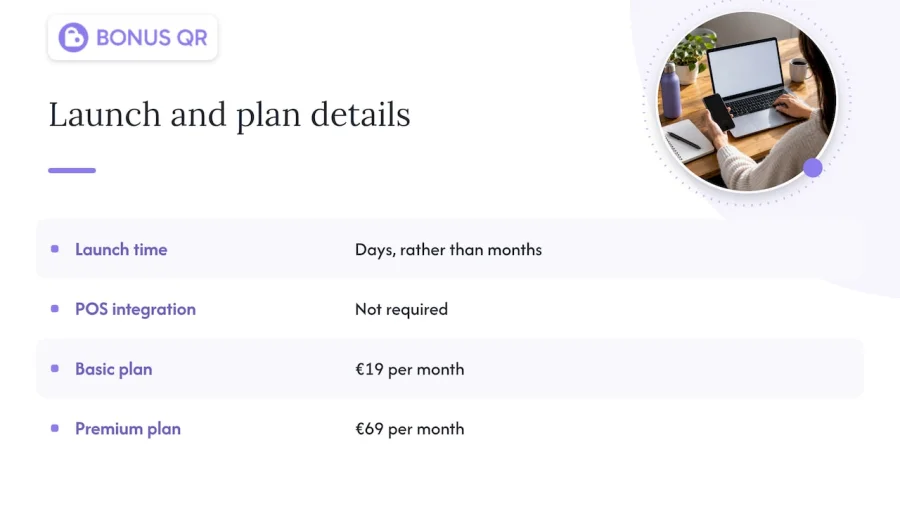
We built a platform so appointment businesses can go from idea to live programme in days rather than months, with no POS integration required. Our stamp cards, points systems, and birthday or special-occasion offers map directly onto the reward ideas above, and our booking widget, automated messages, and Apple and Google Wallet support handle the technical side we described earlier.
If you want to start with a straightforward stamp or points programme, our Free, Basic and Premium plans cover most appointment businesses, with Basic at €19 per month and Premium at €69 per month. Larger operations wanting a fully branded experience can look at our white-label app options. Either way, the next step is to pick one reward idea from this guide and set it up this week.
FAQ
How do I redeem my loyalty points?
Redemption typically happens through an in-app wallet, an emailed coupon, a code entered at checkout, or a digital wallet pass on Apple or Google Wallet. The exact method depends on the platform the business uses, but the client should always be able to redeem at the point of payment without extra steps.
How do loyalty cards work?
A loyalty card tracks either stamps for completed visits or points for paid spend, and the client redeems once they hit a set threshold, such as a free service after eight visits. Digital versions sync with booking and payment systems so rewards only trigger once a visit is confirmed complete.
Can you give me some examples of loyalty programmes?
Common examples for appointment businesses include visit-based stamp cards, points convertible to service credit, prepaid bundles like buy five get one free, and referral credits applied to a client’s next booking. A trade or partner programme, such as a designer trade programme, shows how referral-style rewards can extend beyond individual clients to professional partners.
What are the four types of loyalty?
Definitions vary, but a common version splits loyalty into transactional (discounts and points), social (referral and community-based rewards), experiential (VIP access and personalised perks), and partnership-based loyalty built through cross-business arrangements. Most appointment loyalty programmes mix transactional and experiential elements, such as a stamp card paired with VIP priority booking.
Useful sources and next steps
For plan details and pricing, see our pricing page. Businesses wanting a branded app should review our white-label setup, and those needing a bespoke build can check custom app development. For an example of a partner-style reward scheme, see become a retailer.