The most popular advice about customer engagement is incomplete: collect more sign-ups, send more messages, and add more rewards. That approach can leave a café, salon, or independent shop with a large database and very little additional footfall. A loyalty sign-up is not engagement. It's only permission to begin earning attention.
The more useful question is, why is customer engagement important for growth when customers already belong to several loyalty schemes? The answer sits in the difference between passive membership and active behaviour. Customers need a reason to return, a reward they can understand, and an experience that feels convenient rather than demanding.
For high-street businesses, engagement matters because repeat visits are easier to build from existing local demand than from constant acquisition. The strongest programmes don't try to turn every customer into a points collector. They make the next visit more likely, more relevant, and easier to remember.
The Hidden Cost of Loyalty Fatigue
A customer joining a loyalty scheme can feel like a clear win. The business captures contact details, the customer receives a digital card, and the owner sees the membership total increase. But a growing membership list doesn't prove that customers are returning or spending more.
Mintel's UK Customer Loyalty in Retailing 2026 report found that 55% of consumers belong to at least four schemes, while 58% have actively used three or fewer in the past six months. Possession and participation are different behaviours. A customer may have a café card, a supermarket account, a salon offer, and several retail memberships, yet rarely open or use most of them.
That's loyalty fatigue. Customers don't necessarily reject rewards. They ignore programmes that demand too much attention for too little value.
Sign-up isn't the same as activation
Passive enrolment happens when a customer joins at checkout and then forgets the programme. Active activation happens when that customer checks a balance, scans a visit, redeems a reward, responds to an offer, or returns because the programme gave them a useful reason.
The distinction changes what a business should measure. A sign-up campaign may look successful while the scheme remains commercially dormant. The true test is whether customer behaviour changes after enrolment.
Complex rules create another problem. If customers need to understand several tiers, exclusions, expiry conditions, or delayed thresholds, the reward becomes mentally expensive. A stamp card that takes too long to complete can disappear from memory. A points balance with no obvious next benefit can feel like an account rather than an incentive.
Practical rule: If a customer can't explain the next reward quickly, the programme is carrying too much friction.
The UK loyalty research cited above shows why this matters. 58% of members have actively used three or fewer schemes in the past six months, so businesses aren't competing only with nearby cafés or salons. They're competing with every other programme in a customer's wallet for attention.
Build for the next useful action
A local business should treat sign-up as the start of a short activation journey:
- Make the first benefit visible: Show customers what they can earn and how the next reward works.
- Remove unnecessary steps: A quick scan or tap is more practical than a long form at a busy counter.
- Reward meaningful behaviour: Visits, purchases, referrals, and reviews can each have a clear purpose, but customers shouldn't face a maze of rules.
- Give customers a reason to return: A relevant reminder or timely offer should connect to an actual buying pattern.
- Review inactive members: A dormant account shouldn't be counted as an engaged customer.
The goal isn't the largest database. It's a group of customers who remember the business, understand the benefit, and choose to come back.
How Engagement Drives Local Revenue
Local businesses rarely need to create entirely new demand. The better opportunity is capturing more of the recurring demand already present in the neighbourhood. Square's UK Local Economy Report, as summarised by Kaizen Loyalty's UK loyalty programme statistics, says 70% of UK consumers shop locally at least weekly. The same source reports that 74% make local restaurant or café purchases a few times a month or more, while 44% visit cafés or restaurants weekly.
That regular demand gives cafés, restaurants, salons, gyms, and independent retailers something valuable to work with. Customers already buy coffee, book treatments, attend classes, eat out, and shop locally. The commercial challenge is staying memorable without adding another noisy loyalty scheme to an already crowded phone. Useful engagement keeps a particular business in view when the next purchase decision arrives.
Regulars concentrate commercial value
A regular customer creates value through repeated behaviour. They may visit without needing a large discount, bring a friend, try another service, or respond to a reminder when their usual routine has slipped. An occasional visitor can still be worthwhile, but the business has fewer chances to recover acquisition costs, build familiarity, and establish a repeat pattern.
The Collinson 2025 study of loyalty programmes provides a direct revenue signal. 61% of loyalty members made a purchase in the previous 12 months, and those members generated 52% of total sales revenue. For a local operator, the practical conclusion is clear: active members can represent a larger share of sales than their proportion of the customer database suggests.
The same study says around two-thirds of UK programme operators track spend-based measures such as revenue or order value, while 56% track retention and 49% track engagement. Those measures connect customer activity to the outcomes that justify continued investment. Sign-ups alone do not show whether a programme is working. Repeat visits, spend, retention, and profitable actions do.
Engagement protects repeat footfall
A loyalty mechanic earns its place when it supports an existing habit. A café might use a visit reward to bring a customer back to the same location. A salon might send a rebooking message after an appointment. A gym might remind a member about a class or offer a relevant incentive when attendance starts to decline.
Choose the mechanism according to the buying pattern:
- Stamps suit repeated, familiar visits, such as coffee, lunch, or routine beauty services.
- Points suit varied baskets, where customers can earn against different products or services.
- Cashback suits customers who value flexibility, particularly when the business wants to encourage a larger future purchase.
- Threshold rewards suit spend growth, provided the target feels attainable and the benefit is clear.
Square's report also says 27% of UK consumers spend more per visit when the experience is right, according to the same Kaizen Loyalty summary. That does not mean every café or salon should push larger orders. It means service quality, convenience, and relevant recognition can increase the value of a visit the customer already intended to make.
The Power of Personalised and Timely Rewards
Generic rewards often fail because they treat every customer as if they has the same reason for visiting. A weekday coffee customer, a weekend brunch customer, and a seasonal gift buyer may all appear in one database, but a single offer won't necessarily motivate any of them.
Personalisation doesn't require elaborate individual marketing. It can start with basic distinctions: visit frequency, preferred service, recent purchase, birthday, lapsed behaviour, or typical visit day. A salon can promote a relevant treatment after a suitable interval. A café can send a quiet-period offer to customers who already visit during that part of the week. A retailer can highlight a category connected to a previous purchase.
The commercial case is clear in this UK report on personalised customer engagement. Brits spend an average of 41% more when engagements are personalised, according to the report. It also says 58% of UK businesses felt digital customer engagement investment improved their ability to meet changing customer needs.
Speed is part of the reward
A reward that arrives too late loses persuasive power. A customer who completes a visit target should know what has been earned and how to use it. A post-purchase message should arrive while the business is still relevant, not after the customer has forgotten the interaction.
The same UK loyalty research reports that 54% of active members checked points or cashpot balances at least weekly, and 51% actively looked for ways to build points weekly. Those behaviours show that customers will engage regularly when the programme gives them a clear, useful journey.
The opposite is also true. 57% of UK consumers feel deep frustration when a programme takes too long to deliver a usable reward, while 47% abandon schemes when rewards feel low in value or irrelevant, as reported by the same source. A long path to a minor reward isn't a retention strategy. It's a reason for customers to stop paying attention.
A relevant reward delivered at the right moment can outperform a larger reward that arrives after the customer has moved on.
Post-sale communication deserves particular attention. A UK study on post-purchase engagement found that 49% of consumers are more likely to repeat purchase after receiving personalised offers in post-purchase tracking communications, and 50% say those offers increase confidence in the brand.
A practical reward journey should therefore answer three questions. Is the offer relevant to this customer? Can the customer understand it immediately? Can the customer redeem it without asking staff to explain a complicated process?
For more detail on designing retention-focused reward journeys, businesses can review this guide to a loyalty programme app with smart rewards.
Key Metrics to Track for Brick and Mortar
A local business can have thousands of sign-ups and still lack an effective engagement programme. The useful dashboard is smaller and closer to revenue. It should show whether customers return, whether they use the rewards, and whether engaged customers contribute worthwhile sales.
The first step is to define the customer action that matters. For a café, that may be repeat visits. For a salon, it may be rebooking. For a gym, it may be attendance followed by continued membership activity. For a retailer, it may be a second purchase within a sensible buying cycle.
Replace vanity metrics with operating signals
The following framework keeps measurement practical:
| Metric | What It Measures | Why It Matters |
|---|---|---|
| Repeat visit frequency | How often identified customers return | Shows whether engagement supports a real habit |
| Reward redemption rate | How often issued rewards are used | Reveals whether rewards are clear, relevant, and attainable |
| Revenue from engaged members | Sales linked to active programme customers | Connects engagement to commercial contribution |
| Time between visits | The gap between customer interactions | Helps identify declining habits and win-back opportunities |
| Offer performance | Visits or purchases linked to a specific campaign | Shows which promotions deserve further investment |
| Welcome reward activation | Whether new members take a second action | Separates genuine activation from passive sign-up |
| Lapsed regulars | Previously active customers who have stopped returning | Creates a focused audience for timely re-engagement |
A business should compare these measures by customer group rather than relying only on totals. A high redemption rate may reflect a generous offer that attracts low-value transactions. A lower rate may be acceptable if the reward protects margin and brings customers back at a useful interval.
The SleekPost engagement guide offers useful background on the broader meaning of audience engagement, including the value of measuring interaction rather than treating reach as the final outcome. For a physical business, that principle means connecting digital activity to visits, purchases, bookings, or conversations at the counter.
Use the dashboard to make decisions
A monthly review should identify the strongest customer group, the campaign with the clearest commercial outcome, and the point where customers stop progressing. If welcome bonuses attract sign-ups but few second visits, the activation step needs attention. If customers earn rewards but don't redeem them, the offer may lack relevance or the redemption process may be unclear.
Businesses can also assess the cost of each reward. A free item, discount, or cashback amount should be judged against the behaviour it creates, not against the number of customers who claim it. A promotion that produces activity without profitable repeat business may need a smaller incentive, a better audience, or a different timing.
A deeper framework for turning these signals into decisions appears in this guide to measuring customer engagement for real growth.
Balancing Digital Convenience with Human Connection
Digital engagement works best when it removes routine friction, not when it tries to replace the relationship that makes a local business valuable. Customers may want a quick way to check a reward, find an offer, book a service, or receive a reminder. They may also want a person when something goes wrong or the situation needs judgement.
The UK Customer Experience Decision-Makers' Guide 2026 reports that 73% of businesses say customers are better off ringing the contact centre for urgent issues, 71% for complex issues, and 81% for emotional issues. Only 43% prefer AI for a quick, simple answer, according to the same guide.
Those figures point to a sensible division of labour. Digital tools should handle predictable tasks, while staff remain available for moments that require empathy, flexibility, or local knowledge.
Give each channel a clear job
A QR code can make reward collection simple. A digital wallet pass can keep an offer available without requiring a customer to search through messages. Automated communication can remind a customer about a relevant reward or request feedback after a visit.
Staff should then focus on the parts of the experience that automation can't deliver well:
- Recognition: Remembering a regular's preference and greeting them naturally.
- Recovery: Listening when a service or order has disappointed a customer.
- Judgement: Adjusting a booking, recommendation, or reward when circumstances warrant discretion.
- Hospitality: Making the visit feel welcoming rather than mechanically processed.
Resources covering customer experience tools from AI Tools for can help businesses assess the digital side of the experience. The technology should support the team's service standards, not create a barrier between customers and staff.
Human connection remains the differentiator: automation can remember the reward, but staff create the feeling that makes customers want to return.
A café that forces every issue through an automated form may save a small amount of staff time while losing trust. A salon that sends perfectly timed reminders but delivers an impersonal appointment can create the same problem. The strongest model uses digital convenience before and after the visit, then gives people room to provide attentive service during it.
Businesses exploring mobile loyalty can also review this guide to building customer loyalty with an application in the digital age.
Launching a Frictionless Loyalty Programme
A loyalty programme should fit the pace of the shop floor. If staff need special hardware, complicated till changes, or lengthy training, the project can stall before customers experience any benefit.
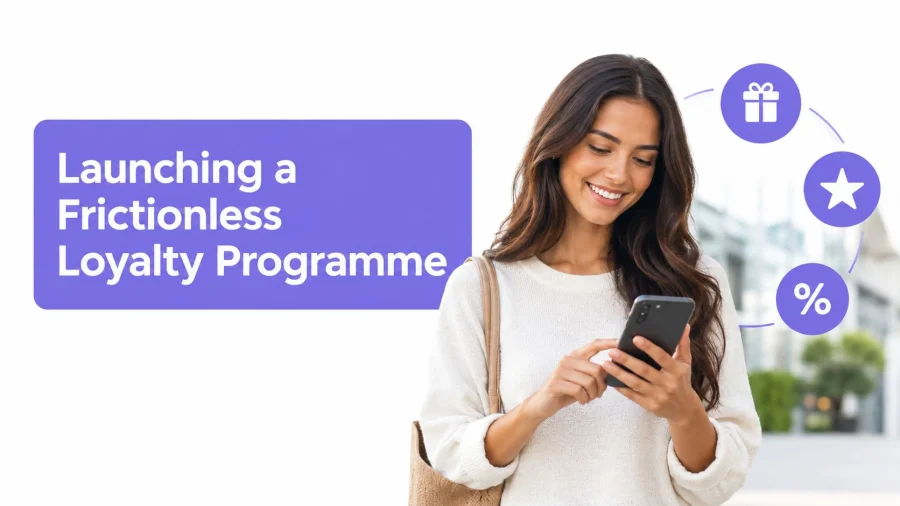
A QR-based setup gives a local operator a more manageable starting point. The business defines the behaviour to reward, prepares the customer-facing explanation, and trains staff on one simple action: scan and redeem.
Start with one repeat behaviour
The initial design should stay narrow. A café might begin with visits, a salon with completed appointments, and a gym with attendance or referrals. Once customers understand the basic action, the business can add points, cashback, spend thresholds, birthday rewards, or seasonal coupons.
A practical launch sequence looks like this:
- Choose the commercial objective. Decide whether the programme should increase visit frequency, encourage rebooking, raise spend, or reactivate lapsed customers.
- Select the simplest reward mechanic. Use stamps for a familiar repeat purchase, points for varied purchases, or cashback when customers need flexibility.
- Make enrolment quick. Mobile or web sign-up should take place without creating a queue or demanding unnecessary information.
- Explain the value at the point of sale. Staff should be able to state the benefit in one short sentence.
- Put the QR prompt where customers naturally pause. Counter cards, receipts, menus, mirrors, booking confirmations, and packaging can all support discovery.
- Review the first customer actions. Check whether people join, earn, redeem, and return before adding more rules.
BonusQR is one option for this model. Its QR-based loyalty platform lets brick-and-mortar businesses create stamps, points, cashback, visit and spend thresholds, fixed discounts, welcome bonuses, birthday coupons, and seasonal offers without POS integration or extra hardware. Customers can sign up on mobile or web, receive a personal QR code, and use wallet passes, while staff scan and redeem through the app.
Keep operations simple
The owner should write a short staff script, test the redemption flow during a quiet period, and decide who can amend a reward when a genuine service issue occurs. Printed materials and digital prompts should use the same wording, so customers don't receive conflicting explanations.
The first version doesn't need every available feature. A clear reward that customers can reach and use is more valuable than a scheme that staff avoid mentioning. Once the operating routine feels natural, analytics can show which customer actions deserve further investment.
Turning First Time Buyers into Lifelong Advocates
A local business can change its customer relationship without changing its identity. Consider an independent café with a paper punch card kept behind the counter. Regulars remember to bring it, some cards are lost, and the owner has no reliable way to tell which customers have stopped visiting. The card rewards transactions, but it doesn't create an ongoing conversation.
A digital engagement system changes the sequence. The customer joins after a purchase, sees the next available reward, and receives a useful reminder rather than a generic broadcast. The owner can recognise active customers, identify people whose visits have slowed, and test whether a seasonal offer brings customers back.
A practical customer journey
The café might shape the experience like this:
- First visit: The customer receives a clear invitation to join, with the benefit explained before the transaction ends.
- Early activation: The first few interactions make progress visible, so the customer understands that the programme is working.
- Established habit: The business sends relevant updates rather than constant discounts, preserving the value of the relationship.
- Lapsed behaviour: A customer who has stopped visiting receives a timely reason to return, rather than being left in a large inactive database.
- Advocacy: A satisfied regular is invited to leave a review, recommend the café, or bring someone new.
The same pattern works for a salon. A new client can receive a relevant follow-up, see an easy route to rebook, and receive a birthday or seasonal offer that fits their service history. A gym can use engagement to recognise attendance, support a returning member, and make progress visible without turning every communication into a sales pitch.
Advocacy starts with dependable value
Customers recommend businesses when the experience gives them a story worth sharing. That story may involve a thoughtful recovery after a mistake, a staff member remembering a preference, a reward that arrives at the right time, or a booking process that removes an everyday annoyance.
The SumUp UK loyalty programme survey reports that 73% of British consumers say loyalty cards offer good value for money, while 70% say loyalty schemes encourage them to return to the same shops. The figures support the role of loyalty in repeat visitation, but they don't remove the need for good service. A reward can create another opportunity to visit. The experience determines whether the customer becomes an advocate.
The strongest loyalty programme doesn't make a weak experience persuasive. It helps a good local experience stay memorable.
A small business doesn't need an enterprise budget to build this kind of relationship. It needs a clear behaviour to reward, a low-effort customer journey, sensible timing, and a dashboard that shows whether the programme is creating profitable repeat behaviour. That combination turns first-time buyers into recognised regulars, and recognised regulars into people who actively recommend the business.
Local business owners should audit their current loyalty scheme before adding another promotion. Identify the gap between sign-ups and active customers, choose one repeat behaviour to improve, and test a simple QR-based journey with a clear reward. Visit BonusQR to explore a practical way to launch and measure customer engagement for a café, salon, gym, restaurant, or local shop.


