A café owner sends the same “10% off your next visit” message to everyone. A customer who visited yesterday gets it. A regular who already buys every week gets it. Someone who hasn't returned in months receives the same offer too. The message reaches a full inbox, but repeat visits stay flat and margin disappears.
Loyalty segmentation solves that mismatch by grouping customers according to how they behave, then matching each group with a useful reason to return. A new customer needs reassurance, a regular may value recognition, and a lapsed visitor may need a timely nudge rather than a permanent discount.
That matters in the UK, where loyalty membership is already widespread. 97% of UK shoppers belong to at least one supermarket loyalty scheme, and shoppers belong to an average of three schemes, while 21% hold memberships in five or more, according to the UK Government's groceries loyalty-pricing review. Acquiring another member isn't enough. A small business needs to understand which members are active, valuable, drifting away, or mainly comparing offers.
The practical approach below uses visit and spend thresholds, not complicated customer science. It shows how cafés, salons, gyms, restaurants, and retailers can define useful groups, choose a reward mechanic, launch campaigns without POS integration, and measure whether the offer creates an incremental visit.
Why One Offer Fails Every Customer
A single offer feels efficient because it's easy to create. One coupon goes to the full customer list, staff only need to recognise one promotion, and the owner can report the number of redemptions. The trouble begins when customers respond for different reasons.
A coffee shop's newest member might still be deciding whether the shop fits their routine. A customer who visits several times a week already knows the menu and may respond better to an exclusive drink, early access to a seasonal product, or a simple thank-you. A customer who used to visit regularly but has gone quiet has a different problem altogether. A discount could bring them back, but the timing and message need to acknowledge that they've become inactive.
The same pattern appears in other local businesses:
- Salons: A first-time client may need a follow-up booking prompt, while a high-spend client may appreciate priority appointment access.
- Gyms: A new member needs a habit-building reminder, while an at-risk member needs encouragement to attend again.
- Restaurants: A frequent diner may respond to a chef's special, while a price-sensitive switcher may need a carefully limited value offer.
- Retailers: A customer who buys one category repeatedly shouldn't receive an unrelated promotion.
The UK data makes generic acquisition even less useful. Tesco Clubcard was the most common scheme among regular grocery shoppers at 77%, followed by Sainsbury's Nectar at 57%, as reported in the UK loyalty programme statistics review. Those figures describe supermarket participation, but the operational lesson applies to independent businesses too. Customers already manage several reward relationships, so another blanket discount has to compete for attention.
The cost of treating regulars like strangers
A universal discount can train full-price customers to wait for a promotion. It can also waste a valuable chance to win back someone who has stopped visiting. The owner sees one campaign, but the customer sees a message that may have nothing to do with their current behaviour.
Segmentation changes the question from “What offer should everyone receive?” to “What action should this customer take next?” That shift protects margin and makes campaigns easier to judge.
Practical rule: A reward should have a job. It should encourage a second visit, increase visit frequency, recover a lapsed customer, or recognise valuable behaviour.
A QR-based loyalty system gives a small business a workable starting point without requiring a full customer data platform. Customers can join on their phones, collect rewards, and scan at the counter. The business can then use simple rules such as recent visit, number of visits, spend threshold, or reward status.
The result isn't a complex marketing department. It's a short list of customer groups with clear actions attached to each one.
Understanding Loyalty Segmentation in Plain Terms
Consider a café counter during a busy morning. The barista may recognise several types of customer without formally naming them. One person is visiting for the first time. Another arrives every Tuesday. A third buys a coffee and breakfast whenever they pass through town. Someone else used to come often but hasn't appeared recently.
Loyalty segmentation turns that informal recognition into organised groups. A segment is a collection of customers who share a behaviour or need. The business then creates a message, reward, or experience that fits that group.
Segmentation and personalisation aren't identical. Segmentation groups similar customers. Personalisation changes the content or offer for an individual, or for a small group, based on the information available. A café might create an “inactive regulars” segment, then send each person a message with the same win-back reward. That is segmented marketing, even if every message uses the same offer.
Start with behaviour, not assumptions
Demographics can help, but visit behaviour usually gives a more direct operational signal. A customer's age or gender doesn't automatically show whether they're about to return. A recent visit, a repeated purchase pattern, or a long gap does.
YouGov found that 77% of Britons belonged to a loyalty programme, with membership at 85% among women and 70% among men. Membership was 61% among 18–24-year-olds, according to YouGov's UK loyalty research. Another UK report found that 91% of consumers had a loyalty card, falling to 83% among 16–24-year-olds and rising to 95% among people over 75, as summarised in the Cardlytics UK loyalty movement report.
Those differences can guide tone, channel, and sign-up design, but behaviour should decide the campaign. A young customer who visits frequently may deserve recognition, regardless of the broad age segment. An older customer who joined but never returned needs an activation message, not a VIP reward.
A simple operating model
A small business can begin with four questions:
- Has the customer visited recently?
- How often have they visited during the chosen period?
- How much have they spent, where reliable spend data exists?
- What action would make the next visit more likely?
The answers create practical groups such as new joiners, active regulars, high spenders, lapsed visitors, and value-sensitive customers. The group names matter less than the rule behind them.
A QR-based profile can capture the visits and redemptions needed for this lightweight approach. Businesses exploring the mechanics can also review the Segments page for loyalty for examples of grouping customers by behaviour.
Segmentation isn't about building a complicated database. It's about making the next message more relevant.
Core Frameworks You Can Actually Use
Different businesses need different lenses. A coffee shop usually benefits from visit frequency. A salon may need booking recency and spend. A gym may care more about attendance gaps than transaction value. Retailers often need both spend and product preference.
The most useful frameworks are practical because each one can trigger a reward.
Behavioural segmentation
This groups customers by an action, such as joining, visiting, redeeming, or becoming inactive. It's the easiest starting point for a business with limited data.
- A café can separate new joiners, active regulars, and lapsed visitors.
- A gym can identify members who have stopped scanning in.
- A salon can distinguish clients who book consistently from those who only return after a promotion.
Best fit: businesses focused on visit timing and repeat behaviour.
Mechanic match: stamps, visit rewards, welcome coupons, and win-back offers.
RFM scoring
RFM means recency, frequency, and monetary value. It asks when someone last visited, how often they visit, and how much they spend. A small business doesn't need an elaborate score to use the idea. Simple bands such as recent, frequent, and high-spend can produce useful decisions.
Best fit: salons, restaurants, and retailers with dependable spend information.
Mechanic match: points, cashback, spend thresholds, and VIP tiers.
Visit and spend thresholds
Thresholds turn behaviour into an easy rule. For example, a business could reward a customer after a chosen number of visits, or offer a benefit after a chosen spend level. The exact threshold should reflect normal customer behaviour and margin, not a competitor's programme.
This framework is particularly helpful when the team needs something easy to explain at the till. Staff can see whether the customer has reached the rule, and customers can understand what they're working towards.
Best fit: cafés, quick-service restaurants, and retail stores.
Mechanic match: stamp cards, points, cashback, fixed discounts, and tier upgrades.
Lifecycle stages
Lifecycle segmentation follows the customer journey: new, active, at risk, lapsed, and reactivated. It helps the business choose the right message without assuming every customer is ready for the same offer.
Best fit: businesses with clear gaps between visits, including gyms and salons.
Mechanic match: welcome rewards, reminders, reactivation coupons, and milestone benefits.
Light demographic layering
Age, gender, location, or birthday information can refine a campaign, but it shouldn't replace behaviour. UK membership patterns show why broad demographics can matter, but a demographic label alone can't tell an owner whether a customer is likely to visit tomorrow.
Best fit: businesses with a clear local audience or birthday programme.
Mechanic match: birthday rewards, seasonal coupons, and location-specific messages.
| Framework | What It Groups By | Best For | BonusQR Mechanic Match |
|---|---|---|---|
| Behavioural | Actions and engagement | Cafés, gyms, salons | Stamps, visit rewards, win-back offers |
| RFM | Recency, frequency, spend | Salons, restaurants, retail | Points, cashback, tiers |
| Visit and spend thresholds | Milestones | Cafés, restaurants, shops | Stamps, discounts, threshold rewards |
| Lifecycle | Customer stage | Gyms, salons, subscription-like visits | Welcome, reminder, reactivation campaigns |
| Demographic layering | Customer attributes | Local and seasonal campaigns | Birthday and tailored seasonal rewards |
Most SMBs should start with one behavioural framework and one value rule. More layers can wait until staff can run the first campaign consistently.
Segment Definitions and Campaign Examples That Work
A useful segment has three parts: a trigger, a reward, and a channel. Without all three, a segment remains a label in a spreadsheet rather than a campaign someone can run.
The thresholds below are deliberately expressed as rules, not universal numbers. Each owner should choose a period and threshold that match normal visit patterns, margin, and capacity.
New joiners
Trigger: A customer joins the loyalty programme but hasn't completed a meaningful repeat action.
Reward: A welcome stamp, a small fixed discount, or a bonus toward the next visit.
Channel: Push notification or email shortly after sign-up.
A café can use this segment to move a first visit towards a routine. A salon can send a follow-up booking prompt after an introductory appointment. The message should explain the next step clearly, rather than presenting a long menu of rewards.
Active regulars
Trigger: The customer has visited recently and meets the business's chosen frequency rule.
Reward: Recognition, a limited seasonal item, early access, or a non-discount perk.
Channel: Push notification, Wallet pass, or a message shown in the loyalty profile.
Regulars shouldn't automatically receive the deepest discount. A restaurant might invite them to try a new dish before general promotion. A gym might provide access to a special class or member event. Recognition protects the relationship without teaching the customer to wait for price reductions.
High spenders
Trigger: The customer reaches a chosen spend threshold or consistently purchases higher-value services.
Reward: Cashback, a tier benefit, priority booking, or early access.
Channel: Personalised email, push message, or staff-led acknowledgement.
A salon could recognise clients who book premium services with priority appointment access. The reward should make the customer feel understood, not merely bought. If spend data is incomplete, visit frequency and service category can act as a practical proxy.
Lapsed visitors
Trigger: The customer has passed the business's normal return window without a visit.
Reward: A bonus stamp, a modest fixed reward, or a service-specific prompt.
Channel: Push or email, with a frequency cap so the customer doesn't feel chased.
A café can offer a bonus stamp on the next drink. A gym can send a supportive return reminder rather than a sales-heavy message. A salon can connect the prompt to the customer's usual service cycle, provided the business has consent and a useful reason to contact them.
Birthday and seasonal cohorts
Trigger: A recorded birthday or a relevant seasonal period.
Reward: A small gift, bonus points, a free add-on, or a time-limited coupon.
Channel: Email, push, or Wallet pass.
Birthday campaigns work best when the reward is simple to redeem and the expiry period is reasonable. Seasonal campaigns should also respect capacity. A salon may avoid promoting a peak-time offer when appointments are already full.
Value-sensitive switchers
Trigger: The customer redeems price-led offers, visits irregularly, or appears to alternate between providers.
Reward: A carefully limited value bundle, threshold saving, or bonus for a return visit.
Channel: Targeted push or email.
UK retail coverage suggests loyalty has become more selective. One report found that 61% of shoppers returned to the same retailer in 2025, down from 65% the year before, while another reported that 41% of UK grocery shoppers moved away from their primary grocer in June 2025, with discounters reaching 20% share. These figures appear in UK retail coverage on shoppers spending more selectively.
The operational lesson is to avoid sending the same offer to switchers and core loyalists. A switcher may need a clear economic reason to return. A core loyalist may respond better to access, convenience, or recognition.
For businesses refining the message itself, guidance on how to boost sales with fit-based suggestions can help connect an offer to what a customer already buys.
Putting Segmentation Live With BonusQR
Implementation should feel like setting up a counter routine, not installing a new IT department. The business needs a clear sign-up path, a few rules, and staff who know what happens when a customer scans.
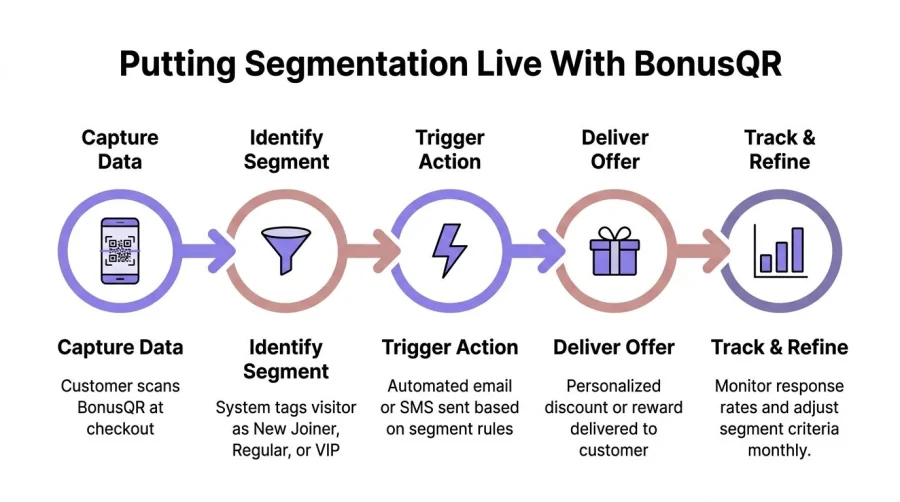
Step 1 Capture permission and useful data
Create a QR sign-up point at the till, on menus, at reception, or on printed cards. Customers join through mobile or web, receive a personal QR code, and can keep rewards available through Google Wallet or Apple Wallet passes.
Ask only for information that supports a real campaign. A birthday can support a birthday reward. Visit history can support a return reminder. Unnecessary fields create friction without improving the experience.
Step 2 Choose the first segments
Start with groups staff can recognise:
- New joiners: customers who have just enrolled.
- Active regulars: customers who meet the chosen visit rule.
- Lapsed visitors: customers who have exceeded the normal return gap.
- High-value customers: customers who meet a spend or tier rule.
A business doesn't need to launch every group at once. Two segments with clear actions are more useful than a dozen labels nobody checks.
Step 3 Attach a mechanic
Use stamps when the business wants to encourage repeated visits. Use points or cashback when spend varies. Use tiers when recognition and progression matter. Use fixed discounts when the customer needs a straightforward incentive.
BonusQR supports these reward types, along with visit and spend thresholds, welcome bonuses, birthday and seasonal coupons, and staff scan-and-redeem workflows. Staff can scan the customer's QR code at the counter without extra hardware or a POS integration.
Step 4 Build the message flow
A welcome message can explain the first reward. A lapsed campaign can provide one reason to return. A VIP message can offer access rather than a discount. Push and email campaigns should include the reward, expiry condition, redemption instruction, and a clear next action.
The system can also host menus, price lists, news, reviews, and reservations alongside the loyalty profile. That keeps the customer journey in one place instead of sending customers across disconnected tools.
Businesses comparing QR-based options can browse QR-based rewards for retail while deciding which mechanics fit their counter process.
Step 5 Test the staff routine
Before launch, a manager should scan a test profile, redeem an offer, check the balance, and confirm that staff can explain the rule in one sentence. The test should cover an ordinary customer, a new joiner, and a customer with a reward ready to use.
Built-in analytics can then show top customers, coupon performance, and visit trends. Owners can adjust thresholds and messages as behaviour changes, rather than leaving segments frozen.
Measuring What Matters and Testing Smarter
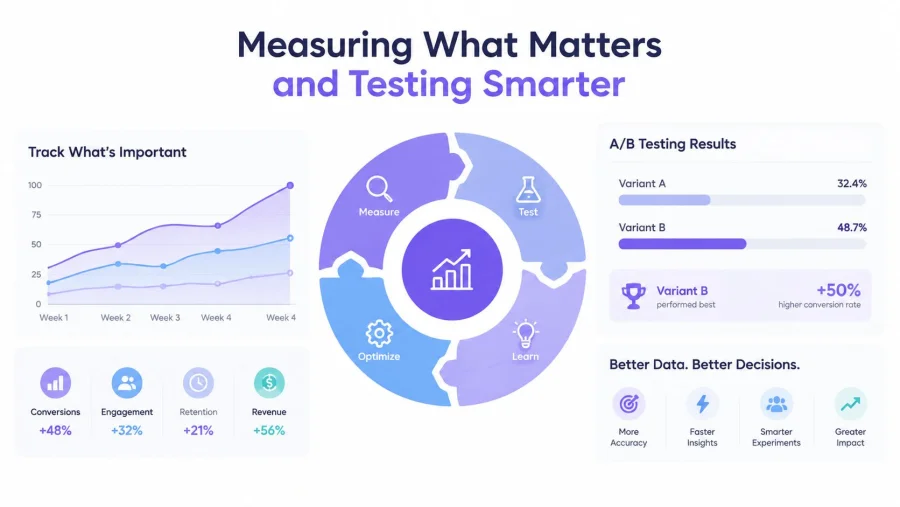
A loyalty dashboard can look busy while the business learns very little. Membership totals and reward balances show activity, but they don't prove that segmentation created an additional visit or protected revenue.
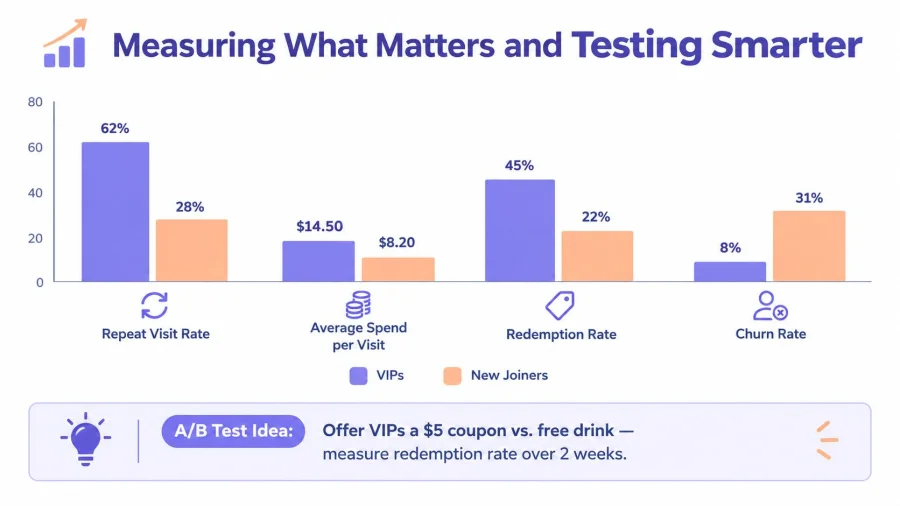
The first useful measure is repeat visit rate. New joiners should be measured on whether they return. Active regulars should be measured on whether their visit pattern holds. Lapsed customers should be measured on reactivation, not message opens.
Use a small KPI set
- Repeat visit rate: Shows whether a campaign moves customers beyond the initial visit.
- Average spend per visit: Shows whether a reward supports a healthy basket.
- Redemption rate: Shows whether the offer is clear and relevant, but not whether it was profitable by itself.
- Lapsed customer reactivation: Shows whether inactive customers return after the campaign.
- Coupon performance by cohort: Shows which segments respond and which offers mainly subsidise existing behaviour.
The UK grocery evidence supports prioritising value, frequency, and lapsed status. Cardlytics found that 25% of grocery customers were in the loyal segment, yet they accounted for 67% share of wallet, compared with 13% for not-loyal customers, according to the Mintel summary of UK customer loyalty in retail. The implication is clear. The minority of highly valuable customers deserves a different experience from occasional shoppers.
Test one decision at a time
An A/B test doesn't need a large marketing team. Split a suitable segment into two comparable groups and change one variable:
- Reward test: Compare a fixed coupon with a free add-on.
- Access test: Compare a discount with early access to a new product or appointment slot.
- Timing test: Send a lapsed reminder earlier or later in the usual return cycle.
- Threshold test: Compare a lower visit requirement with a higher reward requirement.
- Message test: Compare a direct value message with a recognition-led message.
Track the result by segment and include the cost of the reward. A high redemption rate can still be unhelpful if customers would have visited anyway or if the offer reduces the value of every purchase.
BonusQR performance insights can support review of top customers, coupon results, and visit trends. The owner's monthly routine should be simple: identify a segment that changed, review the campaign outcome, keep or adjust the rule, and stop offers that don't produce a worthwhile action.
Measurement habit: Count the behaviour the campaign was designed to change, not the activity that is easiest to display.
Staying Compliant and Keeping Operations Simple
A useful segment should help staff serve customers, not create a new administrative burden. Keep the rules visible, limit the number of live campaigns, and make every reward easy to explain at the counter or reception desk.
Businesses should collect data for a clear purpose, provide appropriate privacy information, and obtain the required consent before sending marketing emails or push messages. Customers should be able to manage their communication preferences, and the business should avoid collecting sensitive information that isn't needed for the loyalty experience.
Set practical guardrails
- Use data minimisation: Collect only details connected to a real reward or service.
- Respect consent: Separate programme participation from optional marketing where required.
- Cap contact frequency: A lapsed customer shouldn't receive repeated reminders for the same missed visit.
- Make terms clear: State expiry dates, exclusions, and redemption conditions in plain language.
- Protect fairness: Avoid offers that make existing customers feel penalised for joining early or paying full price.
- Review access: Limit staff permissions to the actions needed for scanning and redemption.
A QR-based programme can stay lightweight because customers use their phones and staff scan within the loyalty app. No extra card stock, dedicated terminal, or POS integration is required for the basic workflow. A guided setup, ready-to-print materials, Wallet passes, automated campaigns, and built-in analytics can help a small team run the programme without adding a separate technology project.
Businesses can start free with BonusQR, launch an affordable white-label app under their own icon in about 14 days, or commission a custom app with advanced integrations. The sensible next step is to choose two customer groups, define one visit or spend rule for each, and launch a first campaign that gives every group a reason to return.
Start with a free BonusQR setup for the business's most important repeat-visit problem. Create a QR sign-up point, choose a new-joiner or lapsed-visitor campaign, brief staff on the scan process, and review the first results before adding more segments.


