
 Deutsch
 Español
 Français
 Italiano
 Magyar
 Polski
 Slovenčina
 Čeština

Setting up a digital rewards program can feel overwhelming for small and medium-sized businesses. You need clear goals, the right technology, and a structured implementation plan. Many SMB owners struggle with platform selection, integration challenges, and ensuring customer adoption. This guide walks you through the complete digital rewards setup process with actionable steps designed for 2026. You’ll learn how to prepare effectively, execute flawlessly, and verify success. By following this structured approach, you can launch a customizable loyalty system that drives retention and increases customer lifetime value.
Key takeaways
| Point | Details |
|---|---|
| Define clear goals | Establish specific loyalty objectives aligned with your business strategy before selecting technology. |
| Choose the right platform | Evaluate customization options, integration capabilities, and scalability to match your needs. |
| Follow structured implementation | Execute setup in phases including configuration, testing, training, and launch communication. |
| Avoid common pitfalls | Prevent failures by addressing integration issues, staff training gaps, and customer communication early. |
| Monitor and optimize continuously | Track enrollment, redemption rates, and customer feedback to refine your program over time. |
Understanding the digital rewards setup process
Digital rewards programs use technology to track customer purchases and engagement, then deliver incentives like points, discounts, or exclusive perks. These systems replace traditional punch cards with mobile apps, web platforms, and automated tracking. When designed with customization in mind, digital rewards programs significantly enhance customer retention by creating personalized experiences that keep customers coming back.
The business benefits extend beyond repeat purchases. You gain valuable customer data that reveals buying patterns and preferences. This intelligence helps you craft targeted promotions and improve inventory decisions. Engaged loyalty members typically spend 12 to 18% more than non-members and visit your business more frequently.
Before diving into setup, assess your readiness across four critical areas:
- Clear business objectives for your loyalty program
- Allocated budget covering software, implementation, and marketing
- Stakeholder buy-in from leadership and frontline staff
- Clean customer data ready for import and segmentation
Technology options range from turnkey platforms requiring minimal technical expertise to fully customized solutions with advanced integrations. Most SMBs benefit from configurable platforms that balance ease of use with flexibility. These systems typically offer modules for points collection, stamp cards, cashback, tiered rewards, and promotional campaigns that you can mix and match based on your industry and customer preferences.
Pro Tip: Start with a pilot program targeting your most engaged customers before rolling out to your entire customer base. This approach lets you refine the experience and work out technical issues with lower risk.
Preparing for setup: what you need to get started
Successful digital rewards implementation begins with crystal clear program goals. Define what success looks like for your business. Are you aiming to increase visit frequency by 25%? Boost average transaction value by 15%? Reduce customer churn by 30%? Specific, measurable objectives guide every subsequent decision from platform features to reward structures.
Platform selection requires evaluating core capabilities against your requirements. Compare these essential loyalty system features across potential vendors:
| Feature Category | Must-Have Capabilities | Why It Matters |
|---|---|---|
| Customization | Flexible reward rules, branding options, multiple reward types | Aligns program with your unique business model and customer expectations |
| Integration | POS compatibility, CRM connectivity, payment processor links | Ensures seamless data flow and eliminates manual entry errors |
| User Experience | Mobile app, web access, intuitive customer interface | Drives adoption and reduces support burden |
| Analytics | Real-time dashboards, customer segmentation, campaign tracking | Enables data-driven optimization and ROI measurement |
| Automation | Triggered communications, birthday rewards, tier upgrades | Reduces manual workload while personalizing customer touchpoints |
Assess your technical infrastructure compatibility before committing to a platform. Document your current systems including point of sale software, customer relationship management tools, email marketing platforms, and payment processors. Verify that your chosen loyalty platform offers native integrations or robust APIs for these systems. Poor integration planning creates data silos that undermine program effectiveness.
Resource planning extends beyond technology costs. Budget for staff training time, initial customer acquisition campaigns, and ongoing program management. Designate a program owner responsible for monitoring performance and making optimization decisions. Smaller teams may assign this role to a marketing manager, while larger organizations might create a dedicated loyalty position.
Prepare customer data by cleaning your existing database. Remove duplicates, update contact information, and segment customers based on purchase history or engagement level. This groundwork enables personalized onboarding experiences and targeted reward offers from day one. Consider how you’ll handle types of rewards for retailers based on different customer segments.
Pro Tip: Create a detailed implementation timeline working backward from your desired launch date. Include milestones for platform configuration, integration testing, staff training, and soft launch phases to keep your project on track.
Step-by-step digital rewards setup instructions
Follow this structured approach to implement your digital rewards system successfully. Each step builds on the previous one to create a solid foundation.
-
Register your platform account and complete initial configuration. Set up your business profile including branding elements like logo, color scheme, and program name. Configure basic settings such as currency, time zone, and customer communication preferences. Most platforms walk you through this setup wizard in 15 to 30 minutes.
-
Customize your rewards structure and program rules. Define how customers earn points or stamps, what actions trigger rewards, and what redemption options you’ll offer. Establish tier levels if using a tiered system. Set expiration policies for points and rewards. Map out your customer retention workflow to ensure proper execution increases adoption rates. Create special promotions for new member onboarding and milestone achievements.
-
Integrate with existing business systems. Connect your POS system to automatically track purchases and award points. Link your CRM to sync customer profiles and communication preferences. Configure payment processor integration if offering cashback rewards. Test data flow in both directions to verify accuracy. This step typically requires technical support from your platform vendor and may take several days to complete properly.
-
Conduct thorough internal testing before customer launch. Create test accounts and simulate the complete customer journey from enrollment through earning and redemption. Verify that points calculate correctly, rewards trigger as expected, and communications send appropriately. Test across multiple devices and browsers. Document any issues and work with your platform provider to resolve them.
-
Train your team comprehensively on program management and customer support. Ensure staff understand how to enroll customers, explain program benefits, troubleshoot common issues, and access the management dashboard. Create quick reference guides for point of sale procedures. Role play customer scenarios to build confidence. Well-trained staff become program advocates who drive enrollment and engagement.
-
Launch with a coordinated communication plan. Announce your program through email, social media, in-store signage, and at checkout. Offer a signup bonus to incentivize immediate enrollment. Provide clear instructions for downloading your app or accessing the web portal. Consider implementing retention strategies for SMBs that complement your rewards program. Monitor enrollment closely in the first week and address any friction points quickly.
Common setup challenges and how to avoid them
Many businesses stumble during digital rewards implementation due to preventable mistakes. Understanding these pitfalls helps you navigate around them.

Lack of clear goals creates confusing rewards structures that fail to motivate desired behaviors. Without specific objectives, you might offer rewards that cost more than the value they generate or incentivize actions that don’t align with business priorities. Solution: Document your top three program goals and design every reward element to support at least one of them. Review rewards program challenges to understand awareness of common implementation mistakes that reduce failure rates.
Poor integration planning leads to data errors, delayed point crediting, and frustrated customers. Manual workarounds defeat the purpose of automation and create unsustainable operational burdens. Solution: Prioritize platforms with proven integrations for your specific POS and CRM systems. Allocate extra time for integration testing and involve your IT team or technical vendor early in the process.
Neglecting staff training results in subpar program management and inconsistent customer experiences. Frontline employees who don’t understand the program can’t effectively promote it or resolve member questions. Solution: Invest in comprehensive training before launch and ongoing education as you add features. Make training materials easily accessible and reward staff who excel at driving program enrollment.
Under-communicating program benefits to customers leaves money on the table. Even the best designed program fails without awareness and understanding. Solution: Create a multi-channel launch campaign and maintain consistent program visibility through email, app notifications, in-store displays, and receipt messaging. Explain the value proposition clearly and show concrete examples of rewards customers can earn.
Ignoring user feedback post-launch perpetuates problems and misses optimization opportunities. Customer behavior and preferences reveal what’s working and what needs adjustment. Solution: Establish feedback channels through surveys, reviews, and direct outreach. Monitor support tickets for recurring issues. Analyze redemption patterns to identify popular rewards and underperforming offers.
Pro Tip: Schedule a post-launch review meeting 30 days after going live. Gather your team to assess enrollment numbers, identify technical issues, review customer feedback, and plan your first program optimization.
Measuring success and verifying your digital rewards program
Effective measurement transforms your loyalty program from a cost center into a strategic asset. Track these key performance indicators to gauge program health and identify optimization opportunities.
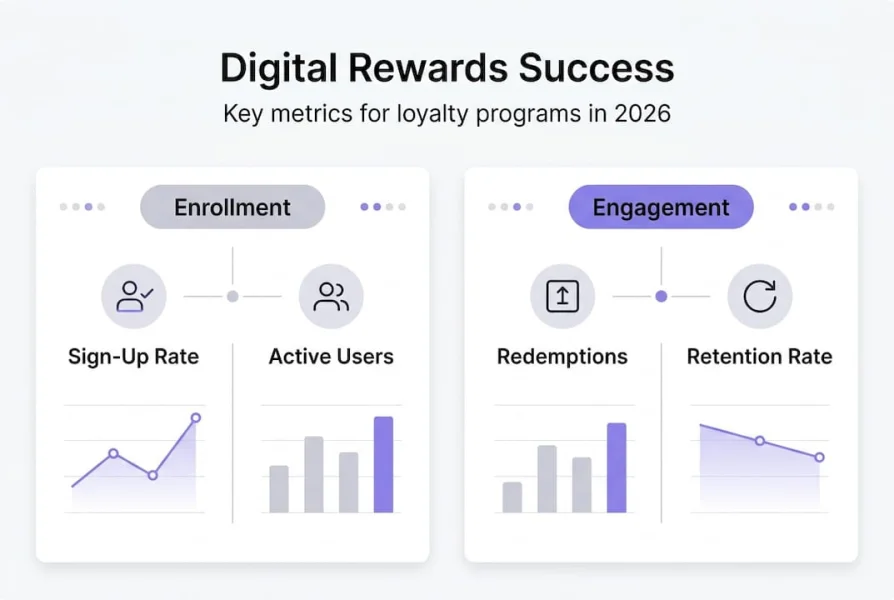
| Metric | Target Range | What It Reveals |
|---|---|---|
| Enrollment Rate | 40-60% of customers | Program appeal and staff effectiveness at promoting signup |
| Active Member Rate | 30-50% of enrolled | Engagement level and reward structure relevance |
| Redemption Rate | 20-40% of earned rewards | Reward attractiveness and ease of redemption process |
| Repeat Purchase Frequency | 15-25% increase | Program impact on customer behavior and loyalty |
| Average Transaction Value | 10-20% increase for members | Effectiveness of spend-based rewards and tier incentives |
Your loyalty platform dashboard provides real-time visibility into these metrics and more. Set up automated reports delivered weekly to track trends and spot anomalies quickly. Segment data by customer demographics, purchase categories, and membership tiers to understand which groups drive the most value. Continuous measurement and optimization drives long-term loyalty program effectiveness and maximizes return on investment.
Gather qualitative feedback through multiple channels:
- Post-redemption surveys asking about satisfaction and experience
- Net Promoter Score questions measuring likelihood to recommend
- Social media monitoring for organic mentions and sentiment
- Customer service interactions revealing pain points and confusion
Behavioral data complements survey responses by showing what customers actually do versus what they say. Analyze which rewards get redeemed most frequently, what earning actions customers engage with, and where drop-off occurs in the customer journey. This intelligence guides iterative improvements to your program structure and reward catalog.
Optimization strategies based on data might include adjusting point values to improve redemption rates, introducing new reward options that match customer preferences, or creating targeted campaigns for inactive members. Test changes with small customer segments before rolling out broadly. Document results to build institutional knowledge about what works for your specific audience.
Celebrate program milestones publicly to maintain momentum and encourage ongoing participation. Recognize top earning members, announce when your program reaches enrollment goals, and share success stories of customers who benefited from rewards. These celebrations reinforce the value proposition and keep your loyalty program top of mind.
Enhance your digital rewards setup with BonusQR
BonusQR streamlines every phase of digital rewards implementation with a comprehensive platform built specifically for SMBs. Our loyalty system features include customizable modules for points, stamps, cashback, and tiered rewards that you can configure without technical expertise. Seamless integration with existing business tools ensures accurate data flow and eliminates manual entry.
Whether you operate in retail, hospitality, services, or another sector, BonusQR adapts to your unique business model. Our loyalty application for services provides industry-specific templates that accelerate setup while maintaining flexibility. The electronic reward platform delivers mobile and web experiences that customers love, driving higher enrollment and engagement rates.
Dedicated support guides you through implementation and beyond. Our team helps you design effective reward structures, troubleshoot technical issues, and optimize program performance based on your data. Start building customer loyalty today with technology designed for sustainable growth and measurable results.
FAQ
What is the first step in setting up a digital rewards program?
Define clear, measurable program goals aligned with your business objectives before selecting any technology. Determine whether you’re prioritizing increased visit frequency, higher transaction values, or reduced churn. These goals guide every subsequent decision from platform features to reward structures. Document your objectives and share them with stakeholders to ensure alignment.
How can a small business choose the right digital rewards platform?
Evaluate platforms based on customization flexibility, integration capabilities with your existing systems, and scalability to grow with your business. Review loyalty system features to understand essential capabilities like mobile access, automated communications, and real-time analytics. Request demos focused on your specific industry and use cases. Verify that the platform offers responsive support and transparent pricing that fits your budget.
What are common challenges faced during digital rewards setup?
Businesses frequently encounter unclear program goals leading to ineffective reward structures, poor system integration causing data errors, insufficient staff training resulting in weak promotion, and under-communication of program benefits to customers. Review rewards program challenges to understand implementation mistakes that increase failure risk. Address these issues proactively through careful planning, thorough testing, comprehensive training, and multi-channel launch communications.
How do I measure if my digital rewards program is successful?
Track enrollment rates, active member percentages, redemption rates, repeat purchase frequency, and average transaction value increases for members versus non-members. Monitor loyalty program success metrics through your platform dashboard and set up automated reporting. Gather customer feedback through surveys and analyze behavioral data to identify optimization opportunities. Compare performance against your initial goals and industry benchmarks to assess ROI and guide continuous improvement efforts.