
Many hospitality professionals question whether loyalty programs truly deliver measurable returns or simply add complexity to operations. The reality might surprise you: loyalty members deliver significantly more revenue than regular guests, and restaurant loyalty visits doubled since 2019. Smart technology investments accelerate these returns exponentially over time, transforming initial costs into substantial long-term value. This guide reveals evidence-backed strategies to analyze and boost your loyalty program ROI, helping you make confident investment decisions that enhance guest retention and revenue growth.
Key takeaways
| Point | Details |
|---|---|
| Member spending premium | Loyalty members spend 12-25% more annually than non-members across hospitality venues. |
| Growing visit share | 39% of restaurant visits now come from loyalty members, doubling since 2019. |
| Average ROI multiple | Well-executed loyalty programs deliver approximately 4.8x return on investment. |
| Technology compounds value | Strategic tech investments create exponential loyalty returns over multiple years. |
| Automation efficiency gains | Automated systems free staff time for personalized guest experiences that strengthen loyalty. |
Understanding loyalty program ROI in hospitality
Loyalty program ROI measures the net financial benefit your hotel or restaurant gains from loyalty initiatives compared to the costs of running them. This metric captures direct revenue increases, visit frequency improvements, and retention rate gains that loyal guests generate. For hospitality managers, understanding this ROI guides critical decisions about program design, technology investments, and marketing budget allocation.
The financial impact of loyalty members on your bottom line is substantial. Research shows loyalty members spend 12-25% more annually than non-members across various hospitality settings. This spending premium stems from increased visit frequency, higher average checks, and greater willingness to try premium offerings. Your most loyal guests don’t just return more often; they spend more generously each time they visit.
The composition of your guest base is shifting dramatically toward loyalty participation. Data reveals that 39% of restaurant visits come from loyalty members, a figure that has doubled since 2019. This trend reflects changing consumer expectations where guests actively seek venues offering rewards and recognition. Hotels and restaurants without competitive loyalty programs risk losing market share to competitors who meet these expectations.
Calculating your loyalty program ROI involves tracking several key metrics:
- Incremental revenue from loyalty members versus non-members
- Retention rate improvements among program participants
- Average guest lifetime value increases
- Program operational costs including technology, rewards, and staff time
- Marketing efficiency gains from targeted loyalty communications
Pro Tip: Track your loyalty program metrics monthly rather than quarterly to identify trends early and adjust strategies before small issues become revenue problems.
Understanding ROI transforms loyalty programs from cost centers into strategic revenue drivers that justify continued investment and expansion.
The loyalty program ROI insights available through modern analytics platforms enable hospitality managers to move beyond gut feelings and make data-driven decisions. When you can quantify exactly how much additional revenue each loyalty dollar generates, you gain confidence to scale successful initiatives and eliminate underperforming elements.
How technology investments boost and multiply loyalty returns
Technology investments in loyalty programs deliver exponential rather than linear returns, creating compounding value that accelerates dramatically over time. The initial year focuses on foundation building, establishing systems, training staff, and beginning to capture guest data. Returns during this phase are measurable but modest as you’re still building momentum and refining your approach.
Year one loyalty technology investments typically yield 35-65% ROI with solid direct booking increases and guest satisfaction improvements. These first-year gains come from basic program participation, initial reward redemptions, and the novelty factor that drives early engagement. Your technology platform captures valuable guest preference data that becomes increasingly valuable in subsequent years.
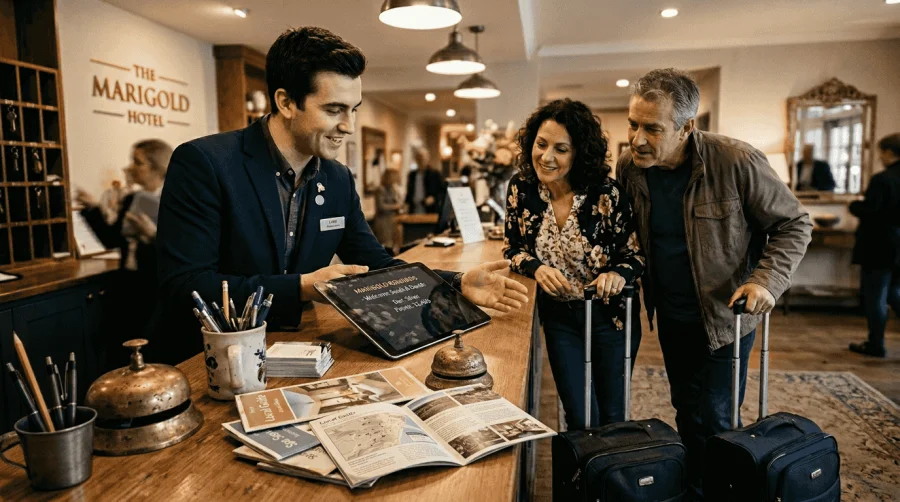
The real magic happens in year two and beyond when loyalty multipliers kick in. A compelling case study shows a 200-room hotel investing $780K in 2021 generated $6.2M cumulative value by 2030, demonstrating how strategic technology investments compound over time. This exponential growth occurs because returning loyal guests spend more, refer others, provide valuable feedback, and become brand advocates.
| Metric | Year 1 Performance | Year 2+ Performance | | — | — | | ROI Percentage | 35-65% | 150-300%+ | | Direct Booking Increase | 8-12% | 25-40% | | Repeat Visit Rate | 15-20% gain | 40-60% gain | | Guest Lifetime Value | 20-30% increase | 80-120% increase | | Referral Generation | Minimal | Substantial |
The compounding effect stems from network effects where satisfied loyalty members attract new members through word of mouth and social sharing. Your technology platform enables personalized communications that deepen relationships over time, creating emotional connections beyond transactional rewards. Each interaction generates data that improves future personalization, creating a virtuous cycle of increasing value.
Pro Tip: Budget for a three-year technology investment horizon rather than expecting immediate payback, allowing time for compounding effects to materialize fully.
Implementing customer retention strategies through modern technology platforms positions your property to capture these exponential returns. The key is choosing scalable systems that grow with your program, avoiding the need for costly platform migrations that reset your progress. Integration capabilities matter enormously because disconnected systems create data silos that prevent the holistic guest view necessary for maximizing loyalty value.
Automation and operational efficiencies unlocking hidden loyalty ROI
Operational automation delivers indirect but substantial loyalty ROI by freeing staff time for high-value guest interactions that strengthen emotional connections. When your team spends less time on repetitive administrative tasks, they can focus on personalized service moments that guests remember and value. This shift from operational firefighting to proactive hospitality creates the experiences that drive loyalty program success.
Housekeeping automation provides dramatic efficiency gains that ripple through your entire operation. Strawberry Hotels reduced planning time from 4 hours to 30 minutes using automated housekeeping management, freeing supervisors to train staff and address quality issues. This time savings translates to cleaner rooms, faster turnovers, and ultimately higher guest satisfaction scores that correlate directly with loyalty program participation.
The scale of automation benefits becomes clear when you examine comprehensive implementations. Villa Copenhagen automated 13,700 tasks, saving 150 hours that staff redirected toward guest experience enhancements. These hours represent thousands of additional guest interactions, personalized recommendations, and service recovery opportunities that build the loyalty foundation supporting long-term ROI.
Automation impacts loyalty ROI through several channels:
- Reduced labor costs that improve program profitability
- Faster service delivery that enhances guest satisfaction
- Consistent quality that builds trust and repeat visits
- Data capture that enables personalization at scale
- Staff satisfaction improvements that reduce turnover costs
Pro Tip: Choose automation technology that integrates seamlessly with your property management system to avoid creating operational disconnects that frustrate staff and degrade guest experiences.
Automation transforms loyalty programs from resource-intensive initiatives into efficient engines that generate returns while reducing operational burden.
The connection between operational efficiency and loyalty value often goes unmeasured but represents a significant ROI component. When guests experience smooth, effortless service enabled by behind-the-scenes automation, they attribute that quality to your brand rather than your systems. This perception builds the trust and satisfaction that converts occasional visitors into loyal advocates.
Implementing customizable loyalty benefits becomes operationally feasible only when automation handles the complexity of tracking, fulfillment, and communication. Manual loyalty program management quickly becomes overwhelming as membership grows, leading to errors, delays, and missed opportunities that erode rather than build loyalty. Automation ensures every member receives consistent, timely recognition that reinforces their decision to participate.
Choosing and optimizing loyalty programs for maximum ROI in 2026
Selecting the right loyalty program model for your hospitality venue requires understanding how different structures align with guest preferences, operational capabilities, and revenue goals. Each program type offers distinct advantages and challenges that impact both guest engagement and your bottom-line returns. The optimal choice depends on your guest demographics, visit frequency patterns, and competitive positioning.
Common loyalty program models serve different hospitality contexts:
| Program Type | Key Benefits | Ideal Use Cases | ROI Potential | Tech Requirements |
|---|---|---|---|---|
| Points-based | Flexible redemption, gamification | Hotels, upscale restaurants | High, 4-6x | Moderate, POS integration helpful |
| Tiered | Status motivation, VIP experience | Full-service hotels, fine dining | Very high, 5-8x | High, robust tracking needed |
| Cashback | Simple value proposition, broad appeal | Casual dining, limited service hotels | Moderate, 3-5x | Low, basic tracking sufficient |
| Stamp cards | Easy to understand, quick wins | Coffee shops, quick service | Moderate, 3-4x | Very low, mobile app ideal |
Points-based programs excel at driving incremental spending because guests can see their progress toward rewards in real time. The 12-25% revenue boost from members stems partly from this visibility that encourages guests to add items or upgrade to reach the next reward threshold. However, points programs require robust technology to track balances accurately and prevent fraud.
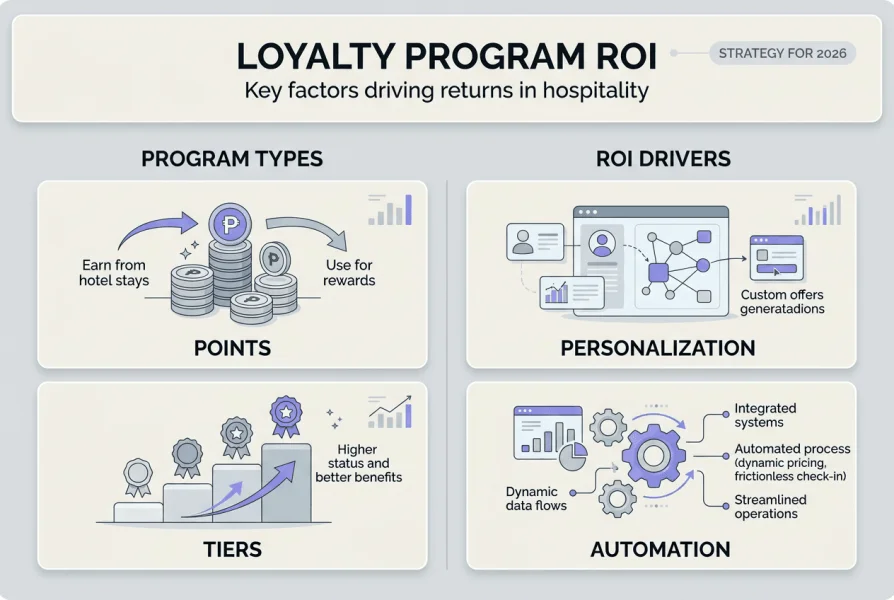
Tiered programs create powerful psychological motivation through status recognition that resonates especially with business travelers and affluent guests. The pursuit of elite status drives visit frequency and spending concentration as guests consolidate their hospitality spending with your brand. This model demands sophisticated technology to manage tier thresholds, benefits, and communications across member segments.
Optimizing your loyalty program for maximum ROI in 2026 requires following these strategic steps:
- Analyze your current guest data to identify high-value segments worth targeting with loyalty incentives
- Select program features that align with guest preferences revealed through surveys and behavioral analysis
- Implement technology that captures comprehensive data while remaining user-friendly for both guests and staff
- Design reward structures that encourage desired behaviors like direct bookings, off-peak visits, or ancillary purchases
- Automate communications to deliver timely, personalized messages that drive engagement without overwhelming guests
- Monitor performance metrics monthly and adjust reward values, earning rates, and promotional strategies based on results
- Train staff thoroughly on program benefits and enrollment processes to maximize participation rates
Leveraging guest data for personalization represents the frontier of loyalty program optimization. When you can tailor rewards, communications, and experiences to individual preferences, you create relevance that generic programs cannot match. This personalization requires technology that integrates data from reservations, point of sale, preferences, and interactions into unified guest profiles.
Exploring restaurant loyalty program software options reveals the range of capabilities available in 2026, from basic punch cards to sophisticated platforms offering predictive analytics and AI-driven personalization. Your technology choice should balance current needs with future growth, avoiding platforms that limit your ability to evolve as guest expectations advance.
Implementing innovative loyalty schemes differentiates your program from competitors who offer generic discounts and free nights. Consider experiential rewards, exclusive access, personalized recognition, and community-building elements that create emotional connections beyond transactional value. These innovations often cost less than traditional rewards while generating stronger loyalty and advocacy.
Drive loyalty success with BonusQR solutions
BonusQR provides hospitality venues with tailored loyalty platform solutions that simplify implementation while maximizing ROI through proven engagement features. The electronic reward loyalty platform enables you to design flexible programs matching your specific guest demographics and business model. Whether you operate a boutique hotel, restaurant group, or independent venue, BonusQR’s modular approach lets you activate only the features you need without paying for unnecessary complexity.
The stamp card loyalty program option delivers particular value for hospitality businesses seeking simple, high-impact solutions that guests understand immediately. Digital stamp cards eliminate the hassle of physical cards while providing the data insights necessary to optimize your program over time. Real-time analytics show exactly which rewards drive the most visits and spending, enabling you to refine your strategy continuously.
BonusQR’s user-friendly platforms support seamless technology adoption without requiring extensive staff training or complex integrations. You can launch a professional loyalty program in days rather than months, beginning to capture the ROI benefits immediately. The BonusQR homepage provides detailed information about pricing tiers, features, and implementation support to help you evaluate whether the platform fits your needs and budget.
Frequently asked questions
What is a good ROI for a hospitality loyalty program?
A well-executed hospitality loyalty program typically delivers approximately 4.8x ROI, though results vary based on program design, guest demographics, and operational execution. First-year returns often range from 35-65% as you build membership and refine your approach, while mature programs in years two and beyond can achieve 150-300% annual returns through compounding effects. Your specific ROI depends on factors like reward generosity, technology capabilities, staff engagement, and competitive intensity in your market.
How does technology impact long-term loyalty program ROI?
Technology investments create exponential rather than linear ROI growth by enabling personalization, automation, and data-driven optimization that compound over time. Modern platforms capture guest preferences, purchase history, and engagement patterns that inform increasingly relevant communications and offers. This relevance drives higher participation rates, more frequent visits, and greater spending per visit. Technology also reduces operational costs through automation, freeing staff time for high-value guest interactions that strengthen emotional loyalty beyond transactional rewards.
What metrics should I track to measure loyalty program success?
Track member spending compared to non-members, visit frequency increases, retention rate improvements, program participation rates, reward redemption patterns, and net promoter scores among members versus non-members. Calculate customer lifetime value for loyalty participants and monitor how it changes over time. Measure operational metrics like enrollment conversion rates, app engagement, email open rates, and staff participation in promoting the program. These metrics together provide a comprehensive view of program health and ROI, enabling you to identify opportunities for optimization.
How do I choose between points, tiers, cashback, and stamp card programs?
Choose based on your guest visit frequency, average transaction value, and operational complexity tolerance. Stamp cards work best for high-frequency, lower-value transactions like coffee shops or quick-service restaurants. Points programs suit moderate-frequency venues like casual dining where guests visit monthly and appreciate flexible redemption. Tiered programs excel for hotels and upscale restaurants where status recognition motivates consolidation of spending. Cashback appeals to price-sensitive guests who prefer simple, transparent value over gamification or status.
When should I expect to see positive returns from loyalty investments?
Expect modest positive returns within 3-6 months as initial members begin redeeming rewards and increasing visit frequency. Meaningful ROI typically appears by month 12 once you’ve built critical mass membership and refined your program based on early data. The most substantial returns emerge in years two and three when compounding effects, word-of-mouth growth, and operational efficiencies fully materialize. Budget for a three-year investment horizon to capture the full exponential value that loyalty technology and programs generate over time.


