Did you know that a modest 5% increase in customer retention can boost your profits by as much as 95%? For most shop owners, the struggle isn't finding new shoppers; it's keeping the ones they already have. If you're still relying on paper punch cards that get lost or forgotten, you're likely missing out on the 65% of revenue that typically comes from repeat business. Transitioning to a modern digital loyalty strategy for retail is no longer a luxury reserved for big-box brands. It's a survival tool for 2026 that turns casual visitors into brand advocates.
We understand the frustration of low redemption rates and the intimidating price tags of custom app development. You want a professional image without the technical headache or friction at checkout. This guide shows you how to launch a high-conversion loyalty system that lives directly in your customers' mobile wallets. We'll explore how to automate your marketing, capture vital behavior data, and increase your customer lifetime value. Get ready to simplify your rewards process and watch your repeat visit frequency climb.
Key Takeaways
- Modernize your approach by replacing physical cards with a mobile-first ecosystem that fits 2026 consumer habits.
- Choose the right framework for your business, whether it's a flexible points system or a simple digital stamp card.
- Implement a digital loyalty strategy for retail that utilizes native mobile wallets to ensure a zero-download, high-speed checkout experience.
- Leverage first-party data to move beyond anonymous transactions and personalize rewards for your best customers.
- Launch a professional, white-label loyalty application quickly and easily without the high costs of custom development.
The Evolution of Retail Loyalty: Why Digital is Non-Negotiable in 2026
Retail has changed. A modern digital loyalty strategy for retail isn't just a digital version of a punch card; it's a mobile-first retention ecosystem that lives where your customers spend their time. In 2026, the traditional loyalty program has moved from the physical wallet to the smartphone. Physical plastic cards and paper stamps are effectively dead because modern shoppers reject the clutter and the friction of manual entry. They want rewards that are as fast as their internet connection. If your loyalty process requires digging through a purse or typing a phone number into a keypad, you're building a wall between your brand and your revenue.
Digital systems tap into the psychology of instant gratification. When a customer sees a digital stamp appear on their screen immediately after a purchase, the brain registers a win that paper cards can't match. This creates a powerful Value Exchange model. Your customers are willing to share high-value first-party data about their preferences and habits in exchange for personalized rewards. This data is the lifeblood of a successful digital loyalty strategy for retail. It allows you to move away from anonymous transactions and start identifying your most loyal champion customers before they drift away.
Meeting the Expectations of Gen Z and Alpha
For younger demographics, mobile wallet integration is the absolute baseline. Gen Z and Alpha shoppers don't just want points; they want an emotional connection to the brands they support. They prioritize speed and simplicity above all else. Frictionless loyalty is the primary competitive advantage in 2026. If a customer has to download a bulky, standalone app just to earn a single point, you've already lost them. Native wallet passes solve this by removing every barrier to entry, allowing for a seamless transition from a physical store visit to a digital engagement that stays top-of-mind.
The ROI of Digital Retention vs. Acquisition
The math is clear and compelling. Research from Extu indicates that a 5% increase in customer retention can boost your profits by 25% to 95%. Acquiring a new customer is 5 to 25 times more expensive than keeping an existing one, according to Queue-it. By using loyalty software, you automate referral loops and slash your Customer Acquisition Cost (CAC). This shift allows you to accurately calculate and grow your Customer Lifetime Value (CLV) without the guesswork of physical trackers. When 65% of your revenue comes from repeat business, investing in retention isn't just a marketing choice; it's a financial imperative for sustainable growth.
Designing Your Framework: Points, Stamps, and Tiered Systems
Choosing the right structure is the foundation of your digital loyalty strategy for retail. It dictates how customers interact with your brand and how they perceive the value you offer. Points systems are ideal for high-frequency retail where transaction totals vary, such as fashion or electronics. This model allows you to reward big spenders proportionally to their investment. Conversely, a digital stamp card is the perfect fit for fixed-price items like coffee, car washes, or beauty services. It's a direct, visual replacement for the old paper punch card that lives conveniently in the mobile wallet.
To maximize engagement, consider tiered loyalty to reward your "VIP" 20%. These top-tier customers often drive the majority of your profit, so offering them exclusive perks creates an aspirational goal for the rest of your audience. Hybrid models are also gaining traction in 2026. These systems combine stamps for visit frequency with points for total spend. This ensures that every customer, regardless of their buying pattern, feels recognized and rewarded for their loyalty.
The 'Earn & Burn' Mechanics for Retail
Your program's success depends on a balanced "earn and burn" ratio. If a reward is too hard to reach, customers lose interest; if it's too easy, you risk your profit margins. Set clear redemption goals that shoppers can actually achieve within three to four visits. Assign points to revenue ranges carefully to ensure you're protecting your bottom line while still offering a meaningful incentive. You can explore scalable options on the BonusQR Pricing page to see how different frameworks can grow alongside your business.
Gamification: Turning Transactions into Interactions
Digital loyalty tools allow you to tap into powerful psychological triggers. Use progress bars and "nearly there" notifications to nudge customers toward their next purchase. These visual cues create a "collection" effect that paper cards simply can't match. You can also break transaction fatigue by using surprise and delight rewards. Sending an unexpected bonus or a "just because" discount keeps your brand top-of-mind and strengthens the emotional bond with your shoppers. If you want to see how easy it is to set these triggers up, you can start building your program today and test the mechanics yourself.
Eliminating Friction: The Power of Mobile Wallets and QR Technology
Friction is the silent killer of customer retention. If a shopper has to search for an app or wait for a slow login process, they'll likely abandon the effort entirely. A successful digital loyalty strategy for retail in 2026 prioritizes speed and accessibility. Native Apple and Google Wallet passes are the solution for 90% of retailers because they remove the need for a standalone app download. This "wallet-native" approach allows your brand to sit directly alongside a customer's credit cards, making your rewards as easy to access as their payment method.
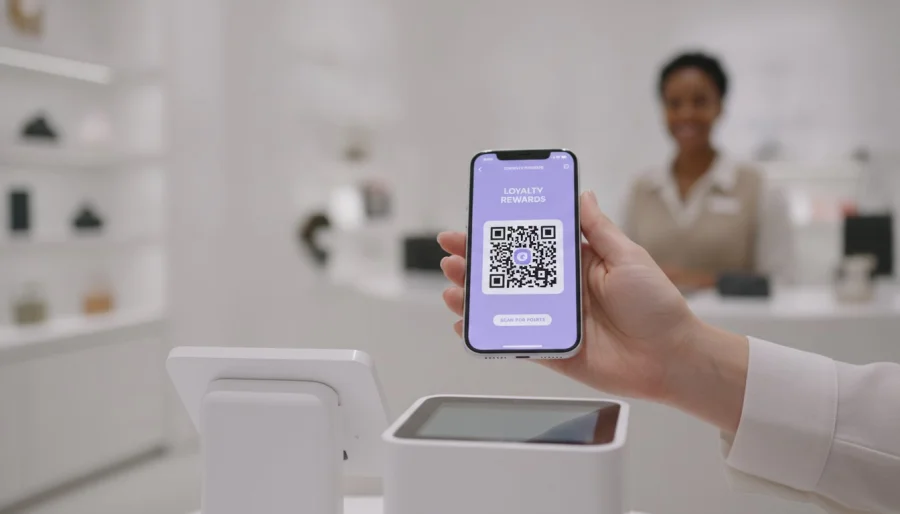
Zero-download loyalty changes the game for busy storefronts. By using a QR code, you enable customers to join your program in under 10 seconds. This immediate entry point captures interest at the height of the shopping experience. Beyond the initial signup, this technology turns the customer's phone into a communication channel. You can use geofencing to send location-based alerts or push notifications the moment a regular shopper walks within range of your store. It's a proactive way to drive foot traffic without a massive advertising budget.
Staff efficiency also improves with a hardware-free setup. You don't need expensive POS scanners or integrated hardware to manage your program. Your team can simply use a smartphone or tablet to scan a customer's digital pass. This setup slashes implementation costs and ensures that even small-scale operators can compete with major chains. It's a modern, light-touch approach that respects both your staff's time and your customer's patience.
Integrating with Apple and Google Wallet
Having your brand live in a mobile wallet provides a level of visibility that paper cards can't match. These passes update in real-time, showing new points or stamps the second a transaction finishes. This immediate feedback loop keeps shoppers engaged and motivated to reach their next reward. For a deeper look at how this works, check out our guide on the Digital Wallet Pass for Loyalty Programs. It's the most effective way to stay top-of-mind without cluttering a customer's home screen.
QR Codes: The Bridge Between Physical and Digital
Success with QR codes depends on smart placement. Position your codes at the point of sale, on table talkers, or even at the bottom of printed receipts to maximize signups. Dynamic QR codes are particularly powerful because they allow you to track exactly which marketing materials are performing best. You can see which store corner or specific flyer is driving your growth. Using "Scan-to-Earn" technology reduces checkout line friction by allowing rewards to be processed in a single, quick motion. This speed ensures your digital loyalty strategy for retail feels like a benefit rather than a chore for your customers.
Data-Driven Retention: Personalization Without the Complexity
One of the biggest flaws of traditional paper cards is their anonymity. You see a punch, but you don't see a person. A modern digital loyalty strategy for retail changes this by capturing first-party data with every single interaction. This shift allows you to move away from guesswork and toward a deep understanding of your clientele. You can finally identify your "Champion" customers who visit weekly and distinguish them from "Hibernating" shoppers who haven't walked through your door in a month. Understanding these patterns is the first step toward building a business that thrives on predictable revenue.
Automated win-back campaigns are a game changer for local shops. If a customer hasn't visited in 30 days, your system can automatically trigger a special "we miss you" reward directly to their mobile wallet. This personalized touch feels intentional rather than intrusive. You can also tailor rewards based on past purchase categories. If a shopper always buys specific items but ignores others, a targeted discount on their preferred category is far more effective than a generic coupon. Industry data from 2026 shows that 90% of shoppers are influenced by loyalty membership when making repeat purchase decisions. Personalized data makes that decision even easier for them.
Measuring Success: The Metrics That Matter
Tracking your progress is simple when the data is digital. You should focus on your Redemption Rate to see if your rewards are actually motivating action. If people earn points but never use them, your incentives might be too difficult to reach or simply unappealing. You also need to monitor your Participation Rate against total foot traffic to ensure your program is visible enough. For a deeper dive into these numbers, read our guide on Mastering Customer Loyalty Program Management. It will help you turn raw numbers into a clear growth plan.
Simplified AI and Automation
You don't need a massive tech team to use automation effectively. "Set and forget" triggers for birthday rewards and anniversary points do the heavy lifting for you. These small gestures build emotional loyalty without requiring any daily manual effort from your staff. While big corporations talk about complex AI, simple automation is often more powerful for local retail. Small data sets can still yield predictive insights that tell you exactly when a customer is about to drift away. To start seeing these insights for your own store, you can create your loyalty account now and begin connecting with your customers on a deeper level.
Implementing Your Strategy with BonusQR: From Concept to Branded App
Setting up a modern digital loyalty strategy for retail doesn't have to be a months-long development project. You can move from a basic concept to a live, functional system in just a few minutes. BonusQR is built for speed and ease of use. Whether you want to launch a simple digital stamp card or a sophisticated points system, the process is intuitive. You don't need to write code or hire a technical team to get started. This accessibility allows you to focus on your shoppers while the technology handles the heavy lifting in the background.
Transitioning away from physical paper cards is often the most daunting step for established retailers. We recommend a simple 3-step migration plan to keep your customers happy. First, announce the digital shift through in-store signage and social media. Second, offer a "trade-in" period where staff scan existing paper cards and instantly credit those points to the new digital pass. Finally, retire the paper system once your regulars are onboarded. This approach respects the loyalty your customers have already shown while moving your business into the digital age. As your brand grows, our platform scales effortlessly from a single boutique to a multi-store retail chain.
The BonusQR Advantage: No Hardware, No Hassle
Specialized POS hardware is expensive and often requires complex integrations that break. BonusQR removes this barrier by offering a hardware-free solution. Your team can manage the entire program using devices they already own, like smartphones or tablets. This saves you thousands in upfront costs and eliminates the need for IT support. We act as your friendly guide throughout the setup, providing a supportive path to modernization. To learn more about the specific tools available, explore our comprehensive guide on Digital Stamp Card Software.
Owning Your Brand Identity
Maintaining brand authority is essential in a crowded 2026 market. White-label development gives you the power to put your own logo and brand colors front and center. You can even launch your own branded app on the App Store without the high costs of custom development. This professional image builds deep trust with your audience. You have complete control over the look and feel of your digital passes to ensure they perfectly match your store's aesthetic. Ready to take the next step? Start building your digital loyalty strategy today at BonusQR and transform how you retain your customers.
Future-Proof Your Retail Growth Today
The shift from paper to digital is no longer a trend; it's a requirement for staying competitive. You've seen how a mobile-first approach removes friction and turns anonymous shoppers into loyal advocates. By focusing on a frictionless experience through Apple and Google Wallet integration, you meet your customers exactly where they are. Implementing a modern digital loyalty strategy for retail ensures you stay top-of-mind without the clutter of physical cards or the high cost of specialized POS hardware.
You can launch a professional, branded experience that scales with your ambition in minutes. Whether you need a simple stamp card or full white-label app development, the tools are ready to help you simplify the process. Don't let your retention rates stall while your competitors modernize. Take the lead and start rewarding your customers in a way that feels natural and rewarding for everyone involved. It's time to turn your storefront into a data-driven growth engine.
Build your retail loyalty strategy with BonusQR and watch your repeat business grow today.
Frequently Asked Questions
What is the most effective digital loyalty strategy for a small retail store?
A mobile-first approach using native wallet passes is the most effective strategy for smaller shops. It removes the barrier of app downloads and keeps your brand accessible. Small stores thrive with a digital loyalty strategy for retail that focuses on visit frequency, such as a digital stamp card, which is easy for both staff and customers to manage during a quick checkout.
How do I move my customers from paper punch cards to a digital loyalty app?
Implement a transition period where you honor existing physical stamps and credit them to the new digital pass. Display QR codes prominently at the point of sale so customers can sign up in seconds while they wait. This migration respects their past loyalty while introducing them to the convenience of a modern, hardware-free digital system.
Do I need to buy new POS hardware to start a digital loyalty program?
No, you don't need to purchase any specialized POS hardware to launch your program. Modern loyalty platforms allow your staff to scan customer passes using a standard smartphone or tablet. This setup saves you significant upfront costs and makes the system easy to implement in any retail environment without the need for complex technical installations.
Can digital loyalty cards work with Apple Wallet and Google Wallet?
Yes, digital loyalty cards integrate seamlessly with both Apple Wallet and Google Wallet. This integration allows your customers to store their rewards pass alongside their daily payment cards. They receive real-time updates on their points or stamps and can even get location-based notifications when they are near your physical store location.
Is a points-based system or a digital stamp card better for retail?
The choice depends on your specific inventory and transaction types. Digital stamp cards work best for fixed-price items like coffee or beauty services where you want to reward visit frequency. Points-based systems are better for retail environments with varying spend levels, such as fashion or electronics, where you want to reward the total value of each purchase.
How much does it cost to implement a digital loyalty strategy in 2026?
Costs vary depending on whether you choose a standard SaaS-based platform or a custom white-label solution. Monthly subscriptions for loyalty software are designed to be accessible for small businesses and avoid the high costs of custom app development. Investing in a digital loyalty strategy for retail is a cost-effective alternative to expensive customer acquisition efforts.
What data can I collect from a digital loyalty program?
You can capture valuable first-party data such as visit frequency, average transaction value, and specific product preferences. This information helps you move away from anonymous sales and understand your shoppers' habits. You can use these insights to segment your audience and send personalized offers that actually resonate with your customers' buying patterns.
How do I promote my digital loyalty program in-store?
Use high-visibility QR codes on table talkers, window decals, and receipts to drive immediate signups. Train your staff to mention the program during checkout, highlighting how quickly customers can join without downloading a separate app. Offering an immediate signup bonus or an extra stamp for the first visit is a great way to build program momentum.


