A customer sees a new pistachio latte on Instagram during the morning commute. At lunch, that customer checks the menu on a phone, then walks into the café after work. At the till, the staff member has no idea this person has already looked at the drink, read the reviews, and nearly ordered online.
That gap is where most small businesses lose momentum.
The same thing happens in salons, gyms, and local shops every day. A client books through social media messages, arrives in person, pays at the counter, then disappears into a forgotten paper loyalty card or a spreadsheet nobody updates. The business has plenty of customer touchpoints, but no joined-up picture of the customer.
That's what makes the question what is omnichannel customer experience so practical for a local business. It isn't a corporate phrase about call centres and giant software projects. It's a simple way to connect the moments customers already have with a business, so each visit, message, scan, booking, or purchase feels like part of one relationship instead of separate transactions.
Your Customer's Journey Is Already Everywhere
A regular customer might first notice a café through a tagged Instagram post from a friend. Later that evening, the same person checks opening hours on Google, glances at the menu, and decides to stop by the next morning. In the shop, the team serves the order well, but the visit still starts from zero.
Nothing from the digital side carries into the physical visit.
The same pattern shows up in a salon. A client asks about balayage prices on WhatsApp, books an appointment, comes in two weeks later, then leaves without any clear next step for rebooking, reviewing, or joining a reward programme. The staff gave good service, but the customer journey stayed fragmented.
A disconnected journey doesn't feel broken inside the business. It feels broken in the customer's head.
That's why omnichannel matters for small physical businesses. The customer already moves across channels. Social media, search, website, QR code, message, visit, review, repeat purchase. The only real question is whether the business connects those moments or lets them stay scattered.
The real problem isn't lack of channels
Most independent businesses already have multiple channels. They have a physical location, some kind of social presence, a phone number, maybe online booking, maybe email, and often a basic loyalty card. The issue isn't channel count. The issue is continuity.
When the business can't recognise the same customer across those moments, staff miss chances to:
- Reward repeat behaviour: A frequent guest still looks like a stranger at the counter.
- Follow up properly: A one-time booking never becomes an ongoing relationship.
- Make offers relevant: Promotions go out broadly instead of matching real visit habits.
- Reduce friction: Customers keep repeating details or starting over.
Omnichannel fixes that by making the journey feel connected. For a café owner, that can mean turning anonymous foot traffic into known regulars. For a salon owner, it can mean linking booking, attendance, rewards, and feedback into one simple flow.
What Omnichannel Really Means for Your Small Business
Omnichannel customer experience means a customer can move between channels without losing context. The business recognises the person, keeps the interaction connected, and makes the next step easy.
A simple way to explain it is this:
- Multichannel means a business is present in several places.
- Omnichannel means those places work together.
Multichannel versus omnichannel
Multichannel is like shouting the same message from different rooms. The website says one thing, Instagram says another, the till says nothing, and the loyalty card sits in a drawer.
Omnichannel is one continuous conversation. A customer discovers the business online, joins a digital loyalty programme in-store, receives a useful reminder later, and comes back with the reward already attached to the same profile.
Here's the practical difference:
| Approach | What it looks like in a local business | What the customer feels |
|---|---|---|
| Multichannel | Instagram, website, walk-ins, and email all exist separately | Starts over each time |
| Omnichannel | Browsing, visiting, earning, redeeming, and follow-up all connect | Recognised and remembered |
Why this matters in the UK right now
This isn't a future idea. In the UK, 83% of consumers explicitly prefer a blended shopping approach that combines in-store and online interactions, and the UK ranks second globally for how strongly these experiences influence decisions, according to Bazaarvoice's analysis of UK omnichannel buying behaviour.
For a small business, that changes the definition of “good service”. It's no longer enough to be friendly in-store and post regularly online. Customers expect those two worlds to make sense together.
What omnichannel means for a café or salon
It usually comes down to a few practical behaviours:
- A customer scans once and becomes known: A QR code joins the in-store visit to a digital profile.
- Rewards carry across touchpoints: The same account tracks visits, points, offers, and redemptions.
- Messages follow real behaviour: A business sends reminders or offers based on visits, bookings, or spend patterns.
- Staff can act with context: The team doesn't treat every return visit like a first encounter.
Practical rule: If a customer changes channel and the business loses the thread, it isn't omnichannel yet.
For small businesses, omnichannel doesn't need to start with heavy integrations. It starts when the business can recognise the same person online and offline, then use that knowledge to make the next interaction easier.
The Real-World Benefits of a Connected Customer Journey
For a small business owner, the benefit of omnichannel shows up in the day-to-day running of the shop. Fewer missed chances. Better repeat custom. Less guesswork about who is returning, what they responded to, and which offer brought them back through the door.
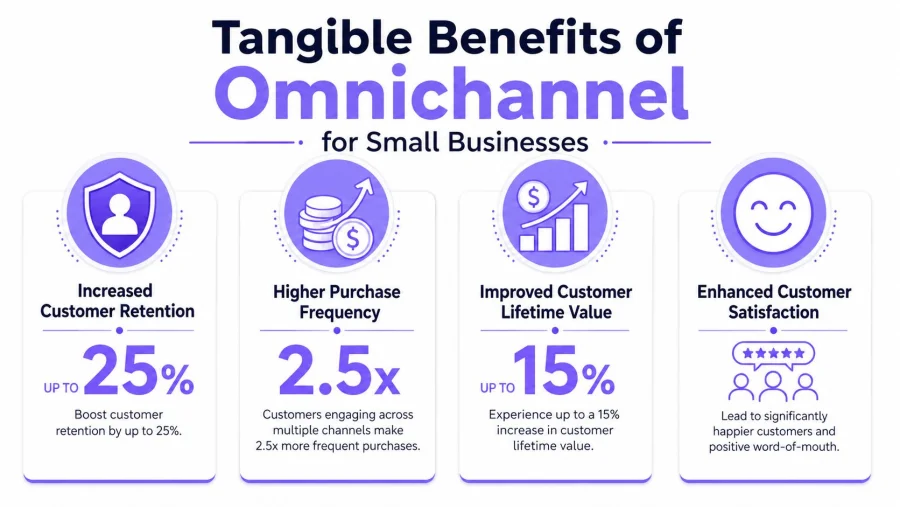
For UK businesses, the commercial case is already strong. £52 billion of UK online non-food sales in 2023 were boosted by physical touchpoints, and retailers that link physical and digital channels see customer loyalty jump by 8.5% and achieve 9.5% better sales growth, according to Retail Technology Review's report on UK omnichannel sales impact.
What the gains look like in practice
The biggest gains usually appear in four areas.
- Customers come back more often: A connected journey gives people a reason to return because their points, offers, and history are still there the next time they visit.
- Revenue gets steadier: Repeat visits are easier to drive when the business can follow up after a real visit instead of relying on one-off posts or memory.
- Customer value grows over time: Regulars are more likely to try add-ons, book again, or spend a little more when the experience feels consistent.
- Marketing waste drops: Offers go to people who have visited, scanned, or booked, which cuts down on blanket promotions that get ignored.
For a café, that could mean replacing a paper stamp card that gets lost in a wallet with a QR-based reward tied to the customer's phone. For a salon, it could mean sending a reminder or bounce-back offer based on the last appointment, not sending the same generic message to everyone.
Why these results happen
Connected journeys work because they remove friction at the exact points where small businesses usually lose momentum.
A customer sees a post on Instagram, visits the shop, scans once, earns a reward, and can be reached again later without starting from scratch. Staff do not need to ask the same questions every time. The customer does not need to keep track of another paper card. The business does not have to guess whether the person who liked a post is the same person who came in on Saturday.
That matters more in offline-first businesses than people often admit. A large retailer can spread the cost of clunky systems across multiple locations and teams. An independent café or salon cannot. If the setup is awkward at the till, staff will stop using it. If it slows down a busy lunch rush, it will fail. Good omnichannel for a local business needs to be light, fast, and easy to run in the middle of real service.
A connected customer journey works best when it fits the pace of the shop floor, not a software demo.
Why small businesses should care
The practical advantage is simple. The business starts remembering people properly.
That changes how loyalty works. Instead of hoping a customer keeps a paper card, remembers an offer, or happens to see the next Instagram post, the business creates a usable link between in-store visits and digital follow-up. That link is where more repeat trade comes from.
For many local UK businesses, this is the first real step toward omnichannel. Not a call centre. Not a complicated app. Just a reliable way to connect the person standing at the counter with the phone already in their hand.
Omnichannel in Action Simple Examples for Local Businesses
Theory only helps when it survives a busy day. These examples show what omnichannel looks like when a local business keeps it simple.
Coffee shop example
A customer notices a seasonal drink on Instagram in the morning. At lunch, that person checks the menu on a phone and sees a QR code offer for first-time loyalty sign-up. The next day, the customer comes into the café, scans the code at the till, and gets a digital stamp profile tied to the visit.
A week later, rain slows footfall. The café sends a mobile offer to customers who haven't visited in a few days. The same customer taps the message, comes in that afternoon, and redeems the offer with the same digital profile used during the first visit.
Nothing complicated happened. Social discovery, mobile sign-up, in-store earning, and digital re-engagement all worked as one path.
Salon example
A client finds a salon through Google, checks treatments on mobile, then books an appointment. On the day before the appointment, the reminder arrives through the channel the client uses. After the visit, the client gets a follow-up message asking for a review and offering a loyalty reward for the next booking.
At the next appointment, the staff member scans the customer profile and can see previous rewards and visit history. That doesn't replace personal service. It supports it.
Small retail example
A neighbourhood shop runs a weekend promotion on selected products. Instead of printing a one-off voucher that disappears after purchase, the shop asks customers to join a digital loyalty flow at checkout using a QR code.
The customer buys on Saturday, receives a follow-up message about a related product line, and returns the next week. Because the profile is already active, the second visit can trigger a reward or targeted offer without the customer needing to sign up again.
What these examples have in common
Each one connects physical presence to digital identity. That's the core move many small businesses miss.
The shared pattern looks like this:
- Discovery happens somewhere digital
- The first in-person visit captures identity
- Rewards or communication continue after the visit
- The next transaction starts with context, not guesswork
Most local businesses don't need more channels. They need one thread running through the channels they already have.
That's why offline-first omnichannel matters so much for cafés, salons, gyms, and local retail. The store visit is still the centre of the relationship. The digital tools primarily keep the relationship alive between visits.
Your Practical Roadmap to an Omnichannel Experience
Small businesses don't need an enterprise transformation plan. They need a clean starting point that fits the way a physical location works.
The biggest missed step is identity. Mainstream guides often jump straight to CRM integrations, marketing automation, or customer service workflows. For a café or salon, the fundamental starting point is more basic. The business needs a reliable way to connect a real person standing at the counter with a digital customer profile.
A useful framing for this comes from the offline-first integration gap. Most guides don't address it well. For small UK businesses, true omnichannel is often about context continuity using lightweight tools such as QR codes that link digital identity to physical presence, rather than expensive software stacks, as described in this discussion of the offline-first gap for small UK businesses.
Phase one starts in the shop
The first job is to make in-person visits trackable without slowing the queue.
That usually means:
- Use a QR-based join point: Put one clear code at the till, table, desk, or reception area.
- Create one customer profile: The same profile should hold visits, points, rewards, and basic history.
- Replace paper loyalty cards: Paper cards can't carry context into digital follow-up.
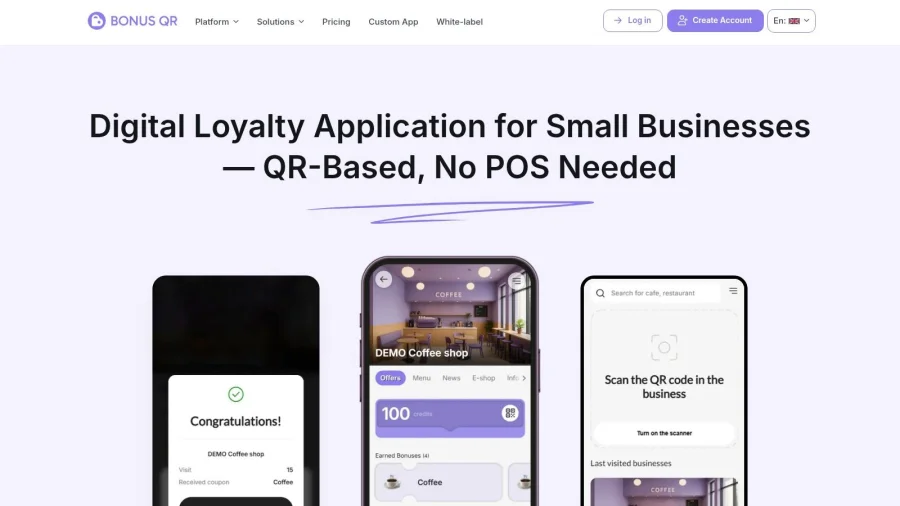
A lightweight system earns its place. BonusQR's mobile application is one example of a tool built around mobile sign-up, QR-based customer identity, rewards tracking, and in-store redemption without requiring complex POS integration.
Then connect the moments around the visit
Once identity is in place, the business can add useful touchpoints around it.
Link discovery to sign-up
Make sure social media, website, Google profile, and printed materials all point customers toward the same loyalty or customer profile flow. If each channel sends people somewhere different, the journey fragments again.
Use behaviour, not guesswork
Send messages based on real actions. A welcome offer after first sign-up. A reminder after a gap in visits. A thank-you after a booking or purchase. This feels more relevant than blasting every customer with the same promotion.
Give staff one simple routine
The in-store team shouldn't need a new script for every channel. They need one habit. Ask the customer to scan. Check the profile. Apply the reward. Move on.
Keep the roadmap manageable
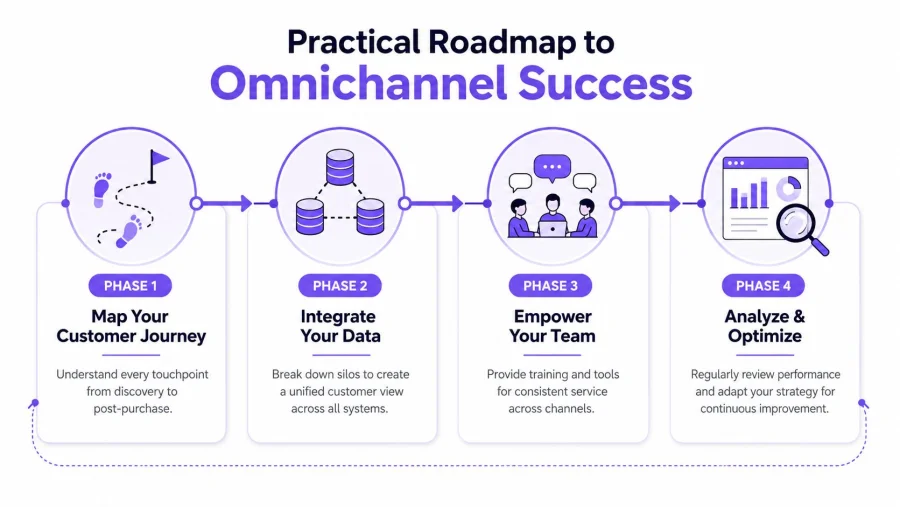
A practical roadmap for a local business often looks like this:
| Phase | What to do | What to avoid |
|---|---|---|
| Capture identity | Use QR sign-up at the point of visit | Waiting for a full POS overhaul |
| Connect rewards | Track visits, points, or spend in one profile | Running paper and digital systems side by side forever |
| Automate follow-up | Trigger relevant reminders and offers | Sending generic promotions to everyone |
| Review results | Check repeat visits, redemptions, and inactive customers | Measuring only follower count or email opens |
A small business doesn't need to build everything at once. It needs a clean first layer that connects the store visit to a customer record, then a few useful follow-ups that turn single visits into repeat behaviour.
Choosing the Right Tools Without Breaking the Bank
Many business owners hear “omnichannel” and assume it means months of setup, custom development, and expensive integrations. That assumption comes from enterprise examples, where large organisations stitch together CRM systems, POS platforms, ecommerce databases, and support tools.
Small businesses usually need something else. They need a system that captures customer identity in person, tracks repeat behaviour, and lets the business follow up without adding friction at the till.
The expensive route versus the practical route
Here's the difference.
| Approach | Typical setup | Trade-off |
|---|---|---|
| Enterprise-style stack | Complex integrations across multiple systems | More control, higher cost, slower rollout |
| Lightweight local-business setup | QR-based sign-up, digital loyalty, built-in messaging, simple analytics | Faster launch, fewer moving parts |
The practical route matters because customer expectations are already high. 97% of consumers say it is essential to transition smoothly between channels without repeating information, and 77% expect internal teams to communicate so customers don't have to re-explain their issues, according to Shopify's customer service statistics for the UK market.
What to look for in a tool
A local business doesn't need every feature under the sun. It needs the right few.
- One customer profile: Visits, rewards, and redemptions should sit together.
- Simple in-store use: Staff should be able to scan and redeem quickly.
- Built-in follow-up: Email or push campaigns should work from actual customer activity.
- Visible analytics: The owner should be able to spot repeat customers, redemptions, and drop-off patterns.
- No forced hardware change: If the system depends on a full POS replacement, adoption slows down.
One useful checkpoint is cost transparency. A business comparing options should look closely at setup effort, ongoing fees, and how much value is available before any custom work begins. Pricing for businesses gives one example of how a QR-based loyalty platform structures access without requiring an enterprise stack from day one.
The right tool doesn't add another channel to manage. It ties existing channels together around the customer.
What usually doesn't work
Three tool choices often disappoint local businesses:
- Standalone paper loyalty cards: Easy to start, impossible to connect.
- Generic email tools with no in-store identity layer: Good for broadcasting, weak for loyalty.
- Heavy systems bought too early: Capable, but often underused and expensive.
The best-fit tool is usually the one staff can use on a busy day and customers can join in seconds. If it captures identity at the point of visit and supports follow-up afterwards, it's already doing the hardest part of omnichannel well.
Measuring Success and Avoiding Common Pitfalls
If you run a café, salon, or shop, success shows up in ordinary moments. More familiar faces. More second visits. Fewer lost regulars who signed up once and then disappeared because nobody followed up.
That is the standard to judge an omnichannel setup by. It should make it easier to recognise customers across in-store and digital touchpoints, then give you clear proof that the connection is leading to repeat business.
What to measure
A small business does not need a long KPI sheet. It needs a short list it can check regularly and act on.
Start with the numbers that reflect real customer behaviour:
- Sign-up rate: How many first-time visitors join when they are in the venue?
- Repeat visit rate: How many joined customers come back within a set period, such as 30 or 60 days?
- Reward redemption: Which offers are claimed, and which are ignored?
- Lapsed customer recovery: How many inactive customers return after a reminder or offer?
- Average spend over time: Are known customers becoming more valuable across several visits?
Earlier research cited in this article shows that connected customer journeys can improve retention and revenue. For a local business, that is useful as a direction of travel, not a guarantee. A café with poor service or a weak offer will not fix that with better messaging. A salon with a strong experience and a simple follow-up process usually sees the benefit faster.
For day-to-day tracking, a dashboard with customer loyalty statistics helps owners spot repeat visits, reward use, and drop-off points without stitching together notes from a till, paper card, and inbox.
Common mistakes that slow progress
The biggest mistakes usually happen on the shop floor, not in the software.
Measuring too much and using none of it
Owners sometimes collect every available metric, then never review any of them properly. Pick a few numbers that matter to your margin and repeat trade. Check them every month. Change one thing at a time.
Letting old systems run alongside the new one
A QR loyalty programme, a stack of paper cards behind the till, and a separate list for promotions create confusion for staff and customers. Keep one main path. If a customer joins digitally, staff should know exactly how points are earned and rewards are redeemed.
Making sign-up easy online but awkward in store
This is a common offline-first problem. The customer can tap a link at home, but in the venue the code is hard to find, staff forget to mention it, or the process takes too long during a rush. If joining does not work in ten seconds at the counter or reception desk, adoption drops.
Rewarding the wrong behaviour
Some offers get attention but hurt profit. A free item claimed too early or too often can train customers to wait for discounts instead of returning out of habit. The better test is whether a reward increases visit frequency and supports margin, not whether it gets a quick burst of redemptions.
Assuming automation can cover poor execution
Messages help when the in-store experience is already good. They do not fix slow service, unclear reward rules, or staff who are unsure how the system works.
Good omnichannel for a local business feels simple to the customer and manageable for the team.
The strongest results usually come from steady review. Check where sign-ups happen. Look at whether first rewards are being claimed. See which follow-up messages bring people back. Then adjust the parts that break under real trading conditions, especially during busy in-store periods.
Start Building a Connected Business Today
Omnichannel customer experience isn't about acting like a national chain. For a local business, it means recognising the same customer across digital and in-store moments, then making it easier for that person to return.
That's the whole model. Connect the journey. Keep the context. Reward the relationship.
For cafés, salons, gyms, and shops, the practical starting point is usually the same. Replace disconnected paper systems with one digital customer path that begins in the physical location and continues after the visit. Once that foundation exists, loyalty and follow-up become much easier to manage.
A business doesn't need to build a complicated stack to begin. It needs a simple system that staff will use and customers will join. BonusQR offers a free starting point for businesses that want to launch QR-based loyalty, track repeat behaviour, and turn scattered transactions into a more connected customer experience.


