Digital cashback reward programmes are now among the most effective tools grocery retailers in Central Europe have for driving genuine shopper loyalty. Unlike blanket discounts, the best cashback programmes deliver personalised incentives based on actual purchase behaviour, which means every promotional euro works harder. The results speak for themselves: one food retailer with around 1,000 stores recorded a 24% increase in marketing engagement, a 4% boost in transactions, and 5% incremental margin growth after switching to targeted cashback. For grocery retail managers across Poland, Romania, Hungary, and neighbouring markets, the case for adopting these tools has never been stronger.
Here is what the top cashback rewards tools for grocery retailers actually deliver:
- Personalised offers tied to individual purchase history, not generic promotions
- Supplement to existing supermarket promotions without replacing them
- Protection for slower-moving SKUs by generating measurable shopper interaction
- Real-time shopper insight that feeds back into ranging and marketing decisions
- Compliance-ready data collection aligned with GDPR requirements across the EU
How cashback rewards tools benefit grocery retailers: 10 key ways
1. Getting new products directly into shoppers’ baskets
Cashback offers are one of the most reliable mechanisms for trial generation. When a shopper receives a personalised cashback incentive for a product they have not yet bought, the financial nudge removes the risk of trying something unfamiliar. This is particularly valuable for new product launches, where early basket penetration determines whether a line survives its first ranging review.
2. Supplementing supermarket promotions with targeted offers
Cashback tools do not replace in-store promotions; they sit alongside them. A shopper who sees a product on shelf and then receives a cashback notification through an app is exposed to two reinforcing incentives. This layered approach tends to lift conversion more than either mechanic alone.
3. Running virtual on-pack promotions
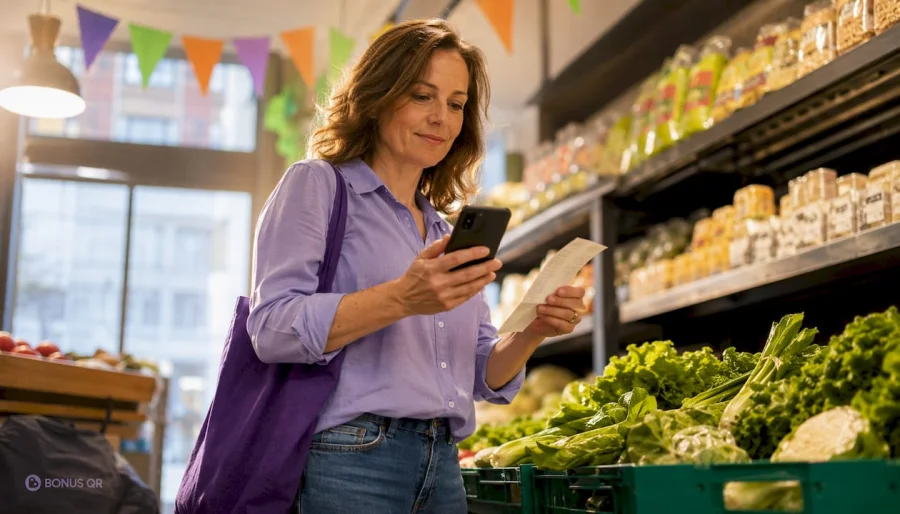
Physical on-pack promotions are expensive to produce and slow to update. Digital cashback platforms let you run the equivalent promotion virtually, triggered by a product scan or receipt upload. You can change the offer, the eligible SKUs, or the cashback value within hours rather than weeks.
Pro Tip: Virtual on-pack promotions work especially well for limited-edition lines or seasonal ranges where print lead times make physical packaging impractical.
4. Protecting SKUs from delisting
A product that generates consistent shopper interaction, even through modest cashback redemptions, gives buyers measurable evidence of demand. Retailers and brands that can show engagement data alongside sales figures have a stronger case when a SKU faces a ranging review.
5. Building loyalty through purchase incentives
Targeted purchase incentives create habitual behaviour. When shoppers know they earn cashback on a specific category or brand every week, they are more likely to return to the same retailer to redeem it. Auchan’s MyCLUB programme in Romania illustrates this well: the scheme reached 2 million active members with a 60% card penetration rate across in-store purchases, driven largely by tangible cashback and voucher mechanics.
6. Collecting ratings and reviews for online grocery
Online grocery sales depend heavily on product ratings. Cashback platforms can prompt shoppers to leave a verified review immediately after purchase, tying the incentive to the review action. This generates authentic, purchase-verified content that lifts conversion on digital shelves.
7. Using shopper surveys for marketing insight
Post-purchase surveys embedded within a cashback redemption flow have unusually high completion rates because the shopper is already engaged. The data you collect, from flavour preferences to pack-size habits, feeds directly into ranging, NPD, and promotional planning.
8. Immediate activation across any retail environment
The best grocery cashback apps activate without requiring POS integration. A shopper uploads a receipt, the platform validates the purchase, and the cashback is credited. This means you can run a promotion across independent retailers, forecourt shops, and major chains simultaneously, without waiting for technical agreements with each retailer’s IT team.
9. Digital branded competitions and incentives
Cashback platforms increasingly support gamification mechanics alongside straightforward monetary rewards. Scratch cards, prize draws, and challenge-based incentives, such as Auchan Hungary’s digital scratch card tied to every purchase above a spend threshold, drive app adoption and repeat visits beyond what a flat cashback offer achieves alone.
10. Reaching shoppers beyond major supermarket chains
Brands that rely solely on promotions inside the top three or four supermarket chains miss a significant portion of their shoppers. Receipt-based cashback tools work wherever a product is sold, giving you activation and insight across convenience stores, petrol forecourts, and independent grocers. Programmes that span multiple store formats also build a more complete shopper profile, enabling cross-format targeting that single-format programmes simply cannot replicate.
Central Europe market insights: why cashback rewards are growing fast
The grocery retail landscape in Central Europe is under real pressure. Structurally low volume growth and sustained cost inflation mean retailers cannot rely on market expansion to restore margins. Differentiated loyalty propositions, centred on convenience and perceived value rather than price alone, are now a primary competitive lever.

Retail media, which cashback platforms feed directly, is projected to grow at around 20% CAGR from 2025 to 2028, with EBIT margins near 70%. That growth is driven by retailers monetising first-party data collected through loyalty and cashback programmes. Eurocash in Poland has already moved in this direction, partnering with Footprints AI to build an AI-powered retail media platform that reaches over 10 million Polish households across physical and digital channels.
Privacy compliance is not optional in this environment. A German Federal Court case is currently examining whether app users effectively “pay” with personal data when they receive rewards, a question with direct implications for GDPR-compliant loyalty design across the EU. Retailers operating in Central Europe need cashback platforms that collect explicit consent, provide clear data-use disclosures, and support the right to erasure.
Which cashback tools are available specifically in Central Europe?
Central European grocery retailers have access to several categories of cashback and loyalty platform, each suited to different scales and use cases.
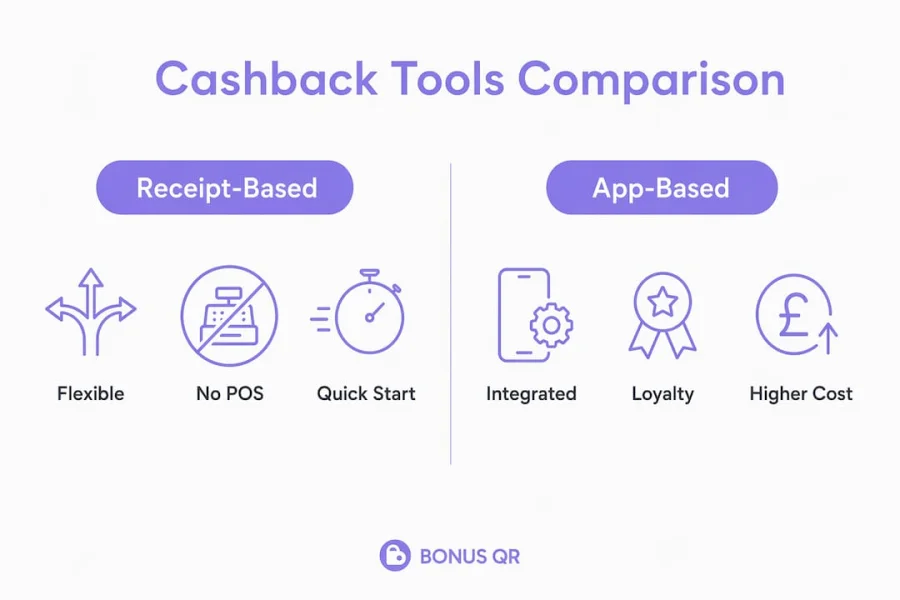
Receipt-based cashback platforms are the most flexible. Shoppers photograph a receipt, the platform validates the purchase against eligible SKUs, and cashback is credited to a digital wallet or bank account. These tools require no retailer integration and work across any store where the product is sold. They are particularly popular with FMCG brands running national promotions.
App-based retailer loyalty programmes are built and operated by the retailer itself. Biedronka’s Moja Biedronka app became Poland’s most used loyalty app for a traditional retail chain, with over 10.75 million users, overtaking both Lidl and Żabka. Lidl’s own points programme, which launched in several European markets through 2024 and 2026, now combines personalised coupons with a points shop offering more than 200 redemption options.
SaaS loyalty platforms sit between these two extremes. They give retailers and brands a configurable system for cashback, points, coupons, and digital rewards without the cost of building a proprietary app. Bonusqr operates in this category, offering modular loyalty tools that can be deployed quickly and adapted to specific retail contexts.
For AI-powered retail media integration, the most advanced Central European retailers are now connecting their loyalty data to targeted advertising systems, turning cashback programme membership into a media audience.
How do the features, pricing, and integration options compare?
| Feature | Receipt-based platforms | Retailer app programmes | SaaS loyalty platforms |
|---|---|---|---|
| POS integration required | No | Usually yes | Optional |
| Deployment speed | Fast (days) | Slow (months) | Fast to medium |
| Retailer coverage | Any retailer | Own stores only | Configurable |
| Pricing model | Per-campaign or per-redemption | Custom enterprise | Subscription tiers |
| Data ownership | Brand or platform | Retailer | Brand or retailer |
| GDPR tools | Varies | Built-in | Built-in (good platforms) |
| White-label option | Rarely | Yes | Yes (e.g. Bonusqr) |
Pricing varies considerably. Enterprise retailer programmes involve multi-year contracts and significant IT investment. Receipt-based platforms typically charge per validated redemption or per campaign. SaaS platforms like Bonusqr offer tiered subscriptions, including free entry-level options, making them accessible to regional chains and independent grocers as well as larger operators.
What does integration with existing POS and loyalty systems actually involve?
The answer depends heavily on which type of platform you choose. Receipt-based cashback tools require no POS connection at all. Shoppers validate purchases themselves by uploading receipts, and the platform handles fraud prevention through image analysis and purchase pattern checks.
For app-based programmes that need to credit cashback at the point of sale, integration typically involves an API connection between the loyalty platform and the retailer’s EPOS system. This allows real-time points crediting and personalised offer display at checkout. The process usually takes several weeks and requires involvement from the retailer’s IT team and the platform provider.
SaaS platforms that operate without POS integration, including Bonusqr, sidestep this entirely. Shoppers interact through a mobile or web app, and the loyalty engine runs independently of the till system. This is a practical advantage for retailers who want to launch quickly or test a programme before committing to deeper technical integration.
Pro Tip: If you are running a brand-funded promotion rather than a retailer programme, always choose a receipt-based or POS-free platform. It removes the dependency on retailer IT timelines entirely.
What do real results look like in grocery retail settings?
The Auchan MyCLUB programme in Romania is one of the most thoroughly documented cashback loyalty deployments in Central Europe. Launched in 2021, it reached 2 million active members by early 2026, with 80% of online orders placed using the loyalty card and around 40 card uses per member per year. Cumulative member benefits across five years reached 500 million lei in discounts, cashback, and vouchers.
The Loyalty Point case study cited earlier shows what targeted cashback achieves at scale. By promoting higher-margin private-label alternatives to shoppers already buying comparable branded products, the retailer avoided discounting purchases that would have happened anyway. The incremental margin growth came from changing what shoppers bought, not simply rewarding them for existing behaviour. That distinction is what separates a well-designed cashback programme from a generic discount scheme.
Biedronka’s rapid rise to the top of Poland’s loyalty app rankings, despite launching later than rivals, shows that design and engagement features matter as much as the underlying cashback mechanic. Gamification, shopping list tools, and payment integration all contributed to over 10.75 million active users.
How do you measure the ROI of a cashback programme?
The metrics that matter most are incremental, not total. Total redemptions tell you how many people used the offer; incremental sales tell you how many of those purchases would not have happened without it. The Loyalty Point framework focuses specifically on this distinction, using loyalty data to identify which shoppers needed an incentive to change behaviour and which would have bought regardless.
Key metrics to track include:
- Redemption rate: the percentage of issued offers that are actually used
- Incremental basket size: average spend among cashback users versus a matched control group
- Category switching rate: how often cashback incentives move shoppers from a competitor brand to yours
- Retention rate: whether cashback users return more frequently than non-participants
- Cost per incremental transaction: total cashback paid divided by the number of purchases that would not have occurred without the offer
Closed-loop measurement, where you can match the cashback redemption back to a specific purchase, is the gold standard. Platforms that connect to retailer sales data or validate receipts directly provide this. Without it, you are estimating rather than measuring.
Bonusqr gives grocery retailers a faster route to cashback loyalty
If you want the benefits of a data-driven cashback programme without a six-month IT project, Bonusqr is worth a close look. The platform lets you configure cashback, points collection, digital coupons, and purchase-based rewards through a modular system, with no POS integration required to get started. You can explore the full feature set and choose only the modules your programme actually needs.
Bonusqr supports mobile and web app delivery, push notification campaigns, real-time analytics, and full branding customisation. Pricing runs from a free tier up to premium subscriptions and white-label app builds for larger operators. For grocery retail managers who want to test a cashback mechanic before committing to a full programme, the free entry point removes the usual financial barrier. The Bonusqr blog also covers practical guidance on loyalty programme design specifically for grocery businesses.
Key takeaways
Targeted cashback programmes consistently outperform generic discounting because they change shopper behaviour rather than simply reward existing habits.
| Point | Details |
|---|---|
| Incremental margin matters most | A food retailer with 1,000 stores achieved 5% incremental margin growth through targeted cashback, not blanket discounting. |
| No POS integration needed | Receipt-based and SaaS platforms activate across any retailer without IT dependency, cutting deployment time significantly. |
| GDPR compliance is non-negotiable | EU regulatory scrutiny of loyalty data is intensifying; choose platforms with built-in consent management and data-erasure tools. |
| Retail media amplifies cashback ROI | Loyalty data from cashback programmes feeds retail media targeting, a channel growing at around 20% CAGR with near-70% EBIT margins. |
| Bonusqr for flexible deployment | Bonusqr offers modular cashback and loyalty tools with no mandatory POS integration, free entry-level pricing, and white-label options for larger retailers. |


