A lot of small businesses still hand out two bits of print that don't do enough work. One is a business card that gets buried in a drawer. The other is a paper loyalty card that gets lost, smudged, or forgotten until the reward no longer matters.
That approach wastes money twice. It pays for separate print runs, and it misses loyalty's fundamental purpose. A card shouldn't just remind someone where your café, salon, or shop is. It should give them a reason to come back.
A well-planned business card loyalty card fixes that. It combines contact details, brand recall, and repeat-visit mechanics into one simple item. Better still, when that printed card connects to a digital system through a QR code, it stops being a passive handout and starts acting like a working customer-retention tool.
From Contact Card to Customer Magnet
Most owners already know the problem. Paper stamp cards seem cheap and easy, until staff forget to offer them, customers lose them, and nobody can tell whether the scheme is changing behaviour.
A dual-purpose card solves a more practical problem than most design articles admit. It reduces clutter for the customer and for the business. Instead of giving out one card for contact details and another for rewards, a business can hand over one card that earns its place in a wallet.
That matters because loyalty is already normal customer behaviour in the UK, not a gimmick. In the UK, card-based loyalty schemes attract over 30 million active members, and enrolled customers are estimated to increase their spending by 15–25% with the issuing brand, while repeat visit frequency rises by roughly 1.2–1.8 visits per month, according to Wave Connect's UK loyalty data summary.
For a local café or salon, that changes the conversation. A loyalty card isn't just a “nice extra” for regulars. It's part of what customers already expect from the businesses they visit often.
Why old-style cards stop working
Traditional stamp cards usually fail for ordinary reasons, not dramatic ones:
- They create no useful record. Staff can stamp them, but the owner still can't see who returned, how often rewards were claimed, or which offers got ignored.
- They depend on memory. Customers must remember the card, and staff must remember to ask.
- They age badly. Bent corners, faded print, and missing terms make even a decent offer look amateur.
- They don't help after the first visit. A static card can't nudge someone back at the right time.
A business card loyalty card works when the printed card starts the relationship and the digital layer keeps it going.
What a smarter card actually does
The useful version of a business card loyalty card does three jobs at once:
- It carries the essentials someone may need later, such as where you are and how to contact you.
- It gives a clear reason to keep the card instead of binning it.
- It connects to a digital profile or wallet pass so the programme can be tracked, measured, and improved.
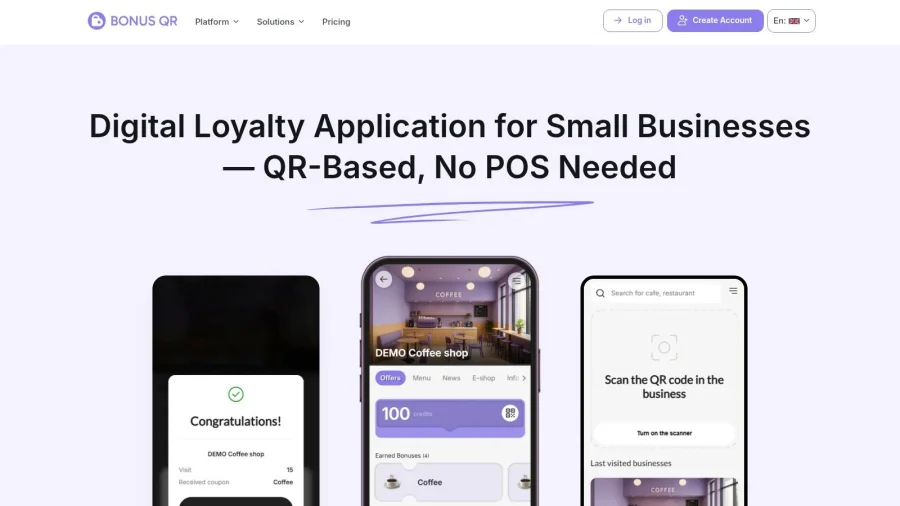
That last part is where many small businesses still hesitate. They assume “digital loyalty” means a costly app build, POS integration, or complicated setup. It doesn't have to. For many bricks-and-mortar businesses, the printed card remains the easiest way to trigger sign-up. The QR code turns that card into a bridge, not a dead end.
Designing a Card Customers Will Actually Keep
A business card loyalty card fails when it tries to do too much on too little space. The front becomes a branding exercise. The back becomes a mess of tiny text, stamp boxes, social icons, and a QR code nobody scans.
The card has one job. It must be easy to understand in a few seconds.
What belongs on the card
UK small-business guidance recommends combining phone number, address, email, and operating hours on the same card that also tracks loyalty activity, so the card works as both a contact tool and a rewards tool customers are more likely to keep, as outlined by Small Biz Survival's guidance on using a loyalty card as a business card.
That doesn't mean everything belongs on the front.
A clean layout usually works better when the information is split by priority:
Front side
- Brand first. Logo, business name, and one short loyalty message.
- Primary prompt. A line such as “Scan to join rewards” or “Collect stamps on your phone”.
- QR code. Big enough to scan quickly at the till.
Back side
- Useful contact details. Address, opening hours, phone, website.
- Simple loyalty cue. A short reward explanation, not a wall of rules.
- Optional social handle. Only if customers use it.
What to leave off
Many owners overfill the card because they're trying to justify the print cost. That usually makes the card weaker.
Leave out:
- Long menus or service lists
- Multiple offers fighting each other
- Tiny legal text crammed into corners
- Every social platform your business has ever opened
- Complicated reward explanations with lots of conditions
If a customer needs a magnifying glass, the design has already failed.
Practical rule: If a first-time visitor can't understand the reward in one glance, redemption will suffer later.
The QR code is the working part
The QR code shouldn't be treated like decoration. It's the operational centre of the card. It should take the customer straight into a mobile-friendly loyalty flow, not to a generic homepage where they have to hunt for the sign-up button.
That's where a digital platform matters. A QR-led setup can connect the printed card to stamps, points, discounts, wallet passes, and customer history without turning the card into a tech project. For businesses that want the design to stay visually consistent with their existing look and feel, the BonusQR brand customization feature shows how colours and branding can stay aligned across the digital loyalty experience.
Print quality still matters
Even with a digital backend, the physical card still shapes first impressions. Thin stock, muddy printing, and poor contrast make the business feel careless. Customers may still scan once, but they're less likely to keep the card.
For food businesses in particular, packaging and print should feel connected. A takeaway coffee cup, pastry box, loyalty card, and counter sign should look like they come from the same place. Owners working on that broader visual consistency can get useful ideas from Afida's food packaging resources, especially when trying to make small print materials feel more intentional.
Choosing Rewards That Drive Repeat Business
A nice-looking card won't save a weak offer. The reward model has to fit the way people buy from your business.
A coffee shop can usually get away with a simple stamp mechanic because customers visit often and understand it instantly. A salon may need a spend-based or visit-based reward because appointments are less frequent and values vary. A retail shop may need points or fixed discounts if basket sizes change a lot.
Keep the rules simple
Complex loyalty schemes sound elaborate in planning and frustrating in practice. UK-based loyalty studies show that programmes with more than four active earning tiers or conditional rules see 25–35% lower redemption rates and higher perceived complexity, especially for low-frequency café and retail customers, according to Yotpo's loyalty system analysis.
That's the mistake to avoid. Customers don't need a game. They need a clear path to a reward they value.
Choosing Your Loyalty Reward Model
| Reward Model | Best For | Pros | Cons |
|---|---|---|---|
| Digital stamps | Cafés, juice bars, quick-service food | Easy to explain, easy to remember, feels familiar | Can be too basic for higher-ticket businesses |
| Points | Retail, mixed basket shops, salons | Flexible across different spend levels, can support multiple rewards | Harder to communicate if the conversion isn't obvious |
| Cashback or money-off | Convenience retail, beauty, repeat-service businesses | Feels tangible because customers understand the value immediately | Can eat margin if discounts are too generous |
| Tiered rewards | Businesses with regulars who spend often | Can make loyal customers feel recognised | Becomes confusing fast if there are too many levels |
| Visit-based rewards | Gyms, wellness studios, appointment-led businesses | Matches repeat attendance behaviour | Less motivating if the gap between visits is long |
How to choose without overthinking it
A few simple filters usually settle the decision.
When stamps make the most sense
If customers buy the same thing often, stamps are usually the cleanest option. A coffee shop doesn't need a complicated points engine to reward regular morning traffic. A simple progress mechanic feels immediate and easy to trust.
That's why stamp-style loyalty still works so well in small formats. The difference now is that the tracking can live digitally instead of depending on paper.
When points are the better fit
Points work better when order values vary. A shop selling gifts, groceries, or beauty products may have customers spending different amounts on each visit, so a flexible loyalty points system is often easier to shape around real purchasing behaviour.
Points can also support more than one reward path. That helps when one customer wants money off and another would rather access a premium item or service perk.
When to avoid tiers
Tiered programmes look attractive because they feel more “premium”, but small businesses often overbuild them. If the customer needs staff to explain the difference between silver, gold, bonus thresholds, weekday multipliers, and category rules, the scheme has become work.
The strongest reward model is usually the one staff can explain in one sentence at the counter.
Reward ideas that suit local businesses
A business card loyalty card doesn't need a flashy offer. It needs one that matches margins and buying patterns.
- For cafés
- Simple progress reward. Collect visits or stamps towards a free drink or bakery item.
- For salons
- Service milestone reward. Receive a treatment add-on or a fixed discount after several bookings.
- For retailers
- Spend-linked reward. Earn value over time and redeem it on a future purchase.
- For studios and gyms
- Attendance reward. Encourage routine by rewarding consistent visits.
The safest approach is usually the least clever one. Make the reward visible, make the conditions short, and make the next step obvious.
How to Launch Your Loyalty Programme Smoothly
Most loyalty launches go wrong at the counter, not in the software. The design is printed, the QR code works, and the reward looks fine. Then staff mention it inconsistently, rush the explanation, or skip it altogether during busy periods.
That's expensive. Internal UK retail case studies show that inconsistent verbal prompts at the till reduce potential enrolments by 40% compared with standardised prompts, even when QR materials are visible. The same research found that reducing capture time from over 60 seconds to under 30 seconds improves first-transaction conversion by around 20–25%, as summarised in Zendesk's loyalty rewards guidance.
Launch it like an operations task
Owners often treat loyalty like a marketing add-on. It works better as a short operational rollout with clear scripts, materials, and timing.
A simple launch plan usually includes:
Prepare the print pack
Cards should be at the till, in takeaway bags if relevant, and near any collection point where staff naturally speak to customers.Set one sign-up path
Don't give staff multiple ways to explain it. One QR. One landing flow. One clear reward message.Test the customer journey Scan the card on different phones. Check loading speed, readability, and what happens after sign-up.
Train every shift, not just the manager
If one person understands the system and everyone else wings it, enrolment will stall.
The till script matters more than owners expect
Staff don't need a sales pitch. They need a short, repeatable line that fits the pace of service.
A useful script has three parts:
Prompt
- “Would you like to join our rewards card? You can scan this and start today.”
Reason
- “It helps you collect rewards on future visits.”
Action
- “It only takes a moment on your phone.”
That's enough. If a customer looks interested, staff can add one sentence about the reward. If the queue is long, the basic prompt still gets the card into the customer's hand.
Don't train staff to explain every detail. Train them to start the sign-up cleanly and confidently.
Remove friction from the first scan
The first scan must feel faster than keeping a paper card. If customers need to fill long forms, create passwords, download an app, and verify multiple steps, many will stop before they join.
The strongest launch setups usually share the same features:
- Short sign-up flow so the customer can complete it during payment or while waiting
- Immediate confirmation so they know the sign-up worked
- Visible reward progress so the system feels real straight away
- Easy return access through mobile browser or wallet pass, not a forgotten link
A printed business card loyalty card works best when the paper starts the enrolment and the digital experience removes all the usual friction that killed old stamp cards.
Measuring Success and Staying Compliant
A loyalty card becomes far more useful once the business stops asking, “Are customers using it?” and starts asking, “Which behaviour is changing?”
Paper cards can't answer that properly. They don't show which customers returned faster, which offers got ignored, or whether the reward was too weak to matter. A digital system can.
The numbers worth watching
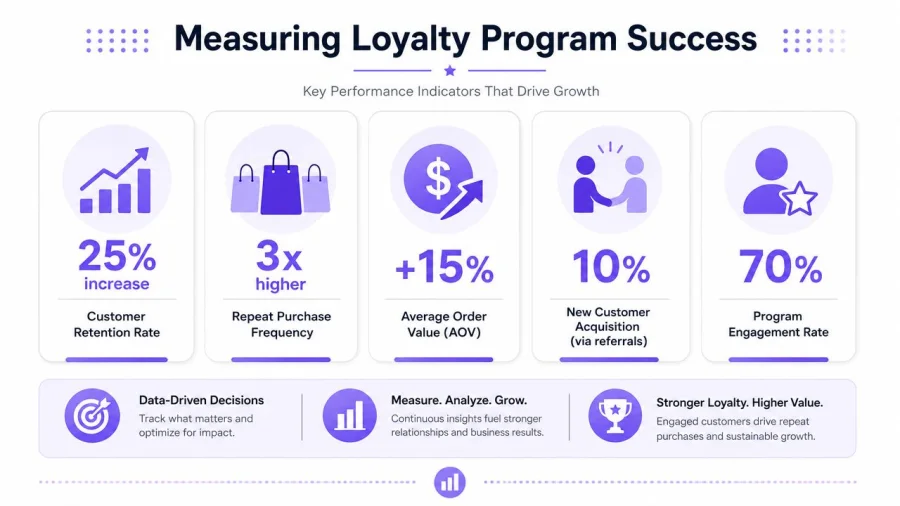
Most small businesses don't need a complicated analytics stack. They need a few practical measures that connect directly to repeat business.
Watch for:
Enrolment trend
Are customers joining steadily, or did sign-ups drop after launch week?Repeat visits
Are enrolled customers returning more regularly than non-members?Reward redemption
If people earn rewards but rarely use them, the offer may be unclear or not valuable enough.Average spend pattern
Compare member behaviour against normal customer behaviour over time.Staff-level consistency
If one shift signs up customers well and another barely does, the issue is probably operational.
A digital dashboard changes loyalty from guesswork into something a business can tune. If a reward isn't landing, it can be changed. If one location or shift is underperforming, the problem can be isolated.
Why compliance can't stay as an afterthought
Many hybrid card ideas pose a risk when owners ask customers to write names, phone numbers, or email addresses on a card or clipboard without any clear privacy explanation. That feels informal, but it still involves personal data.
That's a problem because many small businesses in the UK struggle to reconcile traditional physical punch cards with GDPR obligations, and UK ICO guidance makes clear that contact details must be collected “fairly” and with transparent purposes, as discussed in MOO's loyalty card guide.
A safer way to handle customer data
A business card loyalty card can still be physical at the point of handout. The safer move is to let the card trigger a digital sign-up flow where privacy information, consent language, and customer details are handled properly.
That gives the business several advantages:
- Clearer disclosure because the customer sees what the data is for
- Less messy collection because staff aren't storing handwritten details
- Better records if the business needs to review what was collected
- More confidence for owners who don't want a “quick fix” that creates compliance headaches later
Loyalty data is useful only when it's collected cleanly enough that the business can actually trust and use it.
A compliant setup also improves operations. Staff don't have to decipher handwriting, manage paper slips, or answer awkward questions about what happens to someone's phone number after they join.
Your Next Step to Building Real Customer Loyalty
A business card loyalty card works when it's treated as a system, not a print job. The printed card gets attention. The reward gives the customer a reason to keep it. The digital layer makes the whole thing measurable, easier to use, and far less dependent on staff memory.
That's why the strongest setups tend to be simpler, not fancier. One card. One clear reward. One easy scan. One sign-up flow that doesn't interrupt service.
For owners thinking beyond loyalty alone, it also helps to understand how customer data and repeat-visit tools fit into the wider operation. Restaurant and hospitality teams that want that broader context can read 10Seat's CRM system overview, which gives useful background on how retention, guest history, and communication start to connect.
The practical decision isn't whether customers like rewards. Many already expect them. The decision is whether the business wants to keep handing out static cards that can't be tracked, or build a process that supports repeat visits with less friction.
For a café, salon, shop, or studio, that shift doesn't need to be complicated. The smartest first move is choosing a setup that matches daily operations, keeps enrolment fast, and turns each card into something more than a disposable piece of print.
If the current loyalty setup still depends on paper punches, memory, and guesswork, it's worth looking at investment in customer loyalty. The useful version isn't about giving away freebies. It's about building a repeatable reason for customers to come back, and knowing whether it's working.


