Rewards in hotel marketing are defined as structured incentives, including points, upgrades, complimentary services, and experiential perks, that drive guest loyalty and direct booking behaviour. The role of rewards in hotel marketing has expanded well beyond simple discounts. Today, loyalty programmes shape where travellers stay, how they book, and how much they spend across an entire stay. For hotel marketing professionals, understanding how to design, manage, and optimise these programmes is no longer optional. It is a core commercial competency that directly affects revenue, distribution costs, and long-term guest retention.
How do reward strategies influence guest perception and booking decisions?
Rewards work because they shift the perceived value of a stay before a guest even arrives. 75% of hotel guests value thoughtful gestures such as outstanding service or small complimentary items more than standard amenities. That finding matters because it tells you that the type of reward often outweighs its monetary cost. A handwritten welcome note and a complimentary drink can outperform a generic room discount in terms of guest satisfaction.
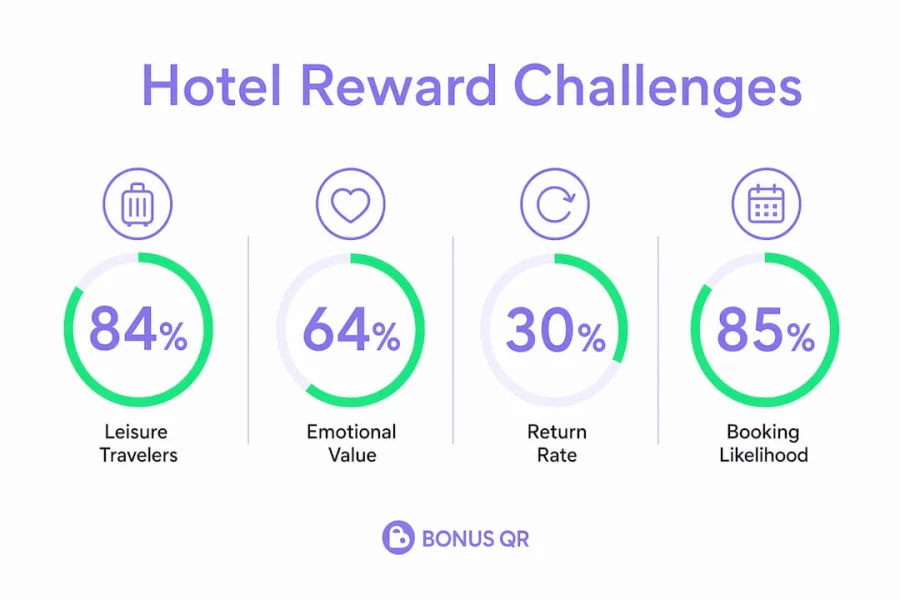
The impact of rewards on bookings is equally direct. The same research shows that 85% of guests are more likely to book directly when a complimentary breakfast is included. That single incentive shifts booking channel behaviour at scale. For hotels trying to reduce their reliance on online travel agencies (OTAs), complimentary breakfast is not a cost centre. It is a distribution strategy.

Rewards also operate on two distinct levels: tangible and intangible. Tangible rewards include points, free nights, dining credits, and spa discounts. Intangible rewards include room upgrades, early check-in, exclusive lounge access, and personalised recognition. Both matter, but intangible rewards tend to create stronger emotional connections. A guest who receives an unexpected upgrade remembers that experience. A guest who redeems points for a discounted rate may not.
Here is what guest reward strategies should prioritise at each stage of the booking journey:
- Pre-booking: Offer direct booking incentives such as complimentary breakfast, free parking, or room upgrades exclusive to the hotel website.
- During the stay: Deliver personalised gestures based on guest history, such as a preferred room type or a welcome amenity tied to a previous stay.
- Post-stay: Use points or cashback rewards to incentivise rebooking, and send targeted offers based on the guest’s spending patterns during the visit.
- Ancillary spend: Reward guests for dining, spa bookings, or activity purchases to increase total revenue per stay.
Pro Tip: Gate your best perks behind direct bookings. If a guest can access the same upgrade or breakfast offer through an OTA, you lose both the commission saving and the loyalty signal. Make the direct channel the most rewarding channel.
The emotional dimension of guest reward strategies is frequently underestimated. 64% of guests report that rewards enhance the perceived value of their stay. That perception directly influences review scores, word-of-mouth referrals, and the likelihood of a return visit. Rewards are not just a retention tool. They are a reputation management tool.
What challenges affect the effectiveness of hotel rewards programmes?
Hotel loyalty programmes face a structural problem that many marketing teams overlook. 84% of leisure travellers admit to gaming loyalty programmes, and 25% stay at a property solely to maintain status rather than out of genuine brand preference. This means a significant portion of your loyalty programme participants are not actually loyal. They are optimising for points, and they will leave the moment a competitor offers a better deal.
This distinction between programme participation and real brand loyalty is critical. A guest who books repeatedly to maintain elite status is not the same as a guest who chooses your hotel because they trust the experience. The former is a liability if your programme economics are not carefully managed. The latter is the guest your programme should be designed to attract and retain.
Complexity is another major barrier. Programmes with opaque earning structures, confusing tier requirements, or difficult redemption processes see lower engagement and higher drop-off rates. Guests do not want to calculate whether a reward is worth pursuing. If the value is not immediately obvious, they disengage.
The financial risks of poorly managed programmes are equally real. Consider the following common pitfalls:
- Discount stacking on OTA programmes: Participation in platforms like Booking.com Genius requires discounts up to 20%, which, when combined with OTA commissions, can significantly reduce net revenue per booking. This makes strategic timing of participation critical.
- Blanket discounting: Applying loyalty discounts uniformly across all rate periods erodes margin during high-demand periods when discounts are unnecessary to drive bookings.
- Ignoring redemption liability: Points issued but not redeemed represent a financial liability on your balance sheet. Hotels that issue points generously without modelling redemption rates can face unexpected cost spikes.
- Misalignment with pricing strategy: A loyalty programme that offers discounts during peak periods contradicts your revenue management objectives and trains guests to expect lower rates.
“Rewards must align with product and pricing strategies to convert programme participation into actual brand loyalty.” — PhocusWire research
The OTA Genius programme illustrates the visibility versus cost tension clearly. Participation boosts search visibility by 70%, which is genuinely valuable during low-occupancy periods. However, applying Genius discounts during high-demand dates when you would fill rooms at full rate anyway is a straightforward margin loss. The programme works when used as a tactical tool, not as a permanent pricing position.
How to design and optimise effective reward programmes in hotels
Effective hotel loyalty programme design starts with three non-negotiable principles: generosity, simplicity, and transparency. Research confirms that generosity ranks highest among traveller expectations at 48%, followed by simplicity and transparency at 16% each. Guests want to feel that the programme genuinely rewards them, understand exactly how it works, and trust that the benefits they are promised will be delivered.
Structure tiers around direct booking behaviour
The most effective loyalty structures gate the best benefits behind direct bookings. This means your top-tier perks, such as guaranteed upgrades, late check-out, or complimentary breakfast, should be available exclusively through your own website or app. OTA bookings can qualify for basic points accrual, but the premium experience should belong to the direct channel. This approach reduces OTA commission reliance while simultaneously training guests to book direct.
Use data to personalise at scale
Generic rewards do not build loyalty. A business traveller who visits monthly has different expectations from a leisure guest who stays once a year. Automated loyalty management tools enable personalisation at scale by segmenting guests based on booking frequency, spend patterns, and stated preferences. Automation also supports timely communication, sending a targeted offer to a lapsed guest at the right moment rather than relying on manual campaign management.
You can explore how reward system examples from other sectors translate into hotel contexts. Retail loyalty structures, for instance, offer useful models for tiered point accrual and milestone rewards that hotels can adapt.
Extend rewards beyond room nights
Rewards that encourage ancillary spend, such as discounts on dining, spa treatments, or local experiences, increase total guest value and create a richer stay experience. A guest who earns points for a restaurant booking within the hotel is more likely to dine on-site than one who receives no incentive. This increases revenue per available room (RevPAR) beyond the accommodation rate itself.
| Reward type | Guest benefit | Hotel benefit |
|---|---|---|
| Complimentary breakfast | Reduces out-of-pocket spend | Drives direct bookings, increases perceived value |
| Room upgrade on arrival | Creates memorable experience | Builds emotional loyalty, improves review scores |
| Dining and spa credits | Encourages on-property spend | Increases ancillary revenue per stay |
| Points for repeat stays | Provides tangible return on loyalty | Reduces acquisition cost for repeat bookings |
| Exclusive member rates | Rewards direct booking behaviour | Lowers OTA commission dependency |
Pro Tip: Track rebooking rates by reward type. If guests who receive a dining credit are 30% more likely to return than those who receive a room discount, that data should directly inform your next campaign. Measure what drives behaviour, not just what feels generous.
Treat rewards as a marketing expense with a measurable return. Effective hotels calculate the breakeven point for each reward type based on net revenue after commissions, not just occupancy. A complimentary breakfast that costs £18 per couple but converts a £200 direct booking that would otherwise have gone through an OTA at 18% commission is a straightforward financial win.
How do hotel rewards integrate with wider marketing and distribution channels?
Loyalty programmes now influence not only guest retention but also booking channel preference and brand choice, making them core commercial functions rather than standalone marketing initiatives. This shift changes how you should position your rewards programme within your overall distribution strategy.
The table below shows how rewards interact with different booking channels and what each channel relationship means for your programme design:
| Booking channel | Role of rewards | Key consideration |
|---|---|---|
| Direct (website/app) | Primary rewards accrual and redemption | Gate best perks here to incentivise direct behaviour |
| OTA (Booking.com, Expedia) | Limited or no programme participation | Use OTA loyalty programmes tactically during low demand |
| Voice/email bookings | Opportunity to enrol guests at point of booking | Train reservations team to promote programme benefits |
| Corporate accounts | Tailored rewards for frequent business travellers | Align with corporate travel policy and volume thresholds |
| Subscription models | Emerging monetisation of loyalty member base | Explore data partnerships and exclusive member offers |
OTA loyalty programme participation, such as Booking.com Genius, is best used as a visibility tool during low-demand periods. Strategic use during low-demand periods avoids the margin erosion that comes from applying discounts when rooms would sell at full rate regardless. Block out high-demand dates from Genius eligibility and apply the programme selectively to fill gaps in your occupancy calendar.
Beyond rooms, the most forward-thinking hotels are expanding their rewards into local experiences and community partnerships. A guest who earns points for a guided city tour booked through the hotel, or who receives a discount at a partner restaurant, develops a relationship with the hotel as a local authority rather than simply a place to sleep. This positions the property as a destination in itself, which supports both direct bookings and higher average spend.
Subscription-based loyalty models represent an emerging opportunity. Subscription models are monetising member bases beyond room bookings through data partnerships and exclusive marketing access. A hotel group with a large loyalty database holds genuine commercial value beyond the accommodation product. Understanding this shifts loyalty from a cost of doing business to a revenue-generating asset in its own right.
For hotel marketing professionals looking at loyalty trends in 2026, the direction is clear. Rewards programmes that operate in isolation from pricing, distribution, and guest experience strategy will underperform. Those that are integrated across all commercial functions will deliver measurable returns on every pound invested.
The customer service automation layer also matters here. Automating reward communications, such as post-stay point balance updates, personalised redemption prompts, and milestone notifications, keeps guests engaged between stays without requiring manual effort from your marketing team.
Key takeaways
Rewards in hotel marketing drive measurable commercial returns only when they are designed around direct booking behaviour, personalised through data, and integrated across distribution, pricing, and guest experience strategy.
| Point | Details |
|---|---|
| Rewards drive direct bookings | Complimentary breakfast alone makes 85% of guests more likely to book direct. |
| Generosity, simplicity, and transparency matter most | Travellers rank generosity at 48% as the top loyalty programme expectation. |
| Gaming is a real risk | 84% of leisure travellers admit to gaming programmes; design rewards to attract genuine loyalty. |
| OTA programmes need strategic management | Apply Genius-level discounts during low-demand periods only to protect net revenue. |
| Automation enables personalisation at scale | Data-driven tools allow timely, relevant rewards that increase rebooking rates. |
Why loyalty programmes deserve a seat at the commercial table
I have seen too many hotel marketing teams treat their loyalty programme as a set-and-forget initiative. They launch a points structure, build a sign-up page, and then move on to the next campaign. Six months later, the programme is running on autopilot, nobody has reviewed the redemption data, and the rebooking rate has not moved.
Ongoing data-driven review is not optional. It is the difference between a programme that pays for itself and one that quietly erodes margin. The hotels I respect most treat their loyalty data the way a revenue manager treats rate data: reviewed weekly, acted on monthly, and refined continuously.
The other mistake I see regularly is designing rewards around what feels generous rather than what drives behaviour. A free night after ten stays sounds impressive. But if your average guest visits twice a year, that reward is five years away. It will not influence their next booking decision. A complimentary breakfast on the second stay will.
My honest view is that loyalty programmes are underutilised as commercial profit centres. Most hotels use them defensively, to retain guests they already have. The smarter approach is to use them offensively: to shift booking channel behaviour, to increase ancillary spend, and to build a guest database that has genuine marketing value. That requires treating rewards marketing in hospitality with the same rigour you apply to pricing and distribution. When you do, the returns are real and measurable.
— Michal
How Bonusqr can support your hotel reward programme
Bonusqr gives hotel marketing teams a practical platform to build, launch, and manage digital loyalty programmes without complex technical setup. Through Bonusqr’s electronic reward platform, you can deploy points collection, stamp cards, cashback offers, and personalised promotions tailored to your guests’ booking and spending behaviour. The platform’s built-in analytics and reporting tools let you track rebooking rates, reward redemption, and campaign performance in real time, so you always know what is working. Automation handles guest communications, from welcome offers to milestone rewards, freeing your team to focus on strategy rather than manual outreach. If you are ready to turn your loyalty programme into a measurable revenue driver, Bonusqr is built to help you do exactly that.
FAQ
What is the role of rewards in hotel marketing?
Rewards in hotel marketing incentivise direct bookings, increase guest retention, and shape booking channel behaviour. They function as both a marketing tool and a commercial strategy when designed around measurable guest behaviour.
How do rewards influence hotel choice?
Research shows that 85% of guests are more likely to book directly when complimentary breakfast is offered, demonstrating that the right reward can directly shift booking decisions in favour of a specific property and channel.
What makes a hotel loyalty programme effective?
Effective programmes are generous, simple, and transparent. Generosity ranks as the top expectation at 48% among travellers, followed by simplicity and transparency, meaning guests must clearly understand the value they are receiving and trust that it will be delivered.
How should hotels manage OTA loyalty programme participation?
OTA programmes like Booking.com Genius should be used tactically during low-occupancy periods. Applying discounts during high-demand dates reduces net revenue unnecessarily, since those rooms would sell at full rate regardless of programme participation.
Can small and independent hotels benefit from reward programmes?
Independent hotels benefit significantly from well-designed reward programmes because direct booking incentives reduce their dependence on OTA commissions. Simple structures such as a complimentary breakfast offer or a stamp card for repeat stays can deliver measurable loyalty results without complex infrastructure.


