
 Deutsch
 Español
 Français
 Italiano
 Magyar
 Polski
 Slovenčina
 Čeština
You can have a customer smile, pay, and leave happy, then lose them anyway because nothing nudges them back. That's the daily gap for cafés, salons, gyms, and local shops, the visit goes well, but the follow-up is manual, inconsistent, or forgotten. Mail on rewards closes that gap by turning loyalty into a simple message that reaches people at the right time, whether that message arrives by email or by post.
For UK businesses, this matters because reward habits are already part of everyday shopping behaviour. Tesco Clubcard was named the UK's favourite loyalty programme in 2023, with over 35% of respondents choosing it, ahead of Sainsbury's Nectar at 17% Propello Cloud's UK loyalty statistics summary. That tells local operators something important, customers already understand value-based rewards, so the job is not to explain loyalty from scratch, it's to make the next reward obvious, quick, and worth acting on.
The best programmes don't rely on staff remembering to hand out a card or send a one-off reminder. They run in the background, using automated reward messages to prompt a return visit, a top-up purchase, or a birthday redemption. For a small business, that means less admin and more repeat business, without needing a large team or complex software.
Bring Your Customers Back with Automated Rewards
A good customer leaves with good intentions. They liked the coffee, the haircut, or the workout, then the week gets busy and the visit fades from memory. Automated reward messaging closes that gap by sending the reminder an owner often does not have time to send manually.
The follow-up gap is the real problem
Most small businesses already have something worth rewarding, regular visits, basket spend, referrals, or seasonal habits. The issue is that these moments often sit in separate systems, or worse, in someone's head. If nobody follows up, the business keeps spending effort on first-time visits while missing the easiest sales it already has.
A simple loyalty flow fixes that. A welcome reward can greet a new member, a points update can show progress, and a reminder can bring back someone who has gone quiet. The channel matters too, because “mail on rewards” can mean email, physical mail, or a hybrid approach that uses both.
Practical rule: if the reward only exists in theory, customers forget it fast. If it arrives clearly and on time, it feels real.
That is why automation fits brick-and-mortar businesses so well. It turns loyalty from a passive card into an active communication system that keeps working while the owner is serving customers, chopping hair, making orders, or coaching classes. If you want a practical setup approach, see how to automate loyalty campaigns.
Why Automated Reward Messaging Drives Repeat Visits
Loyalty works better when it feels like an ongoing conversation, not a receipt tucked away in a drawer. When a business sends a timely reward after a visit, it keeps the relationship visible and gives the customer a clear reason to come back. That is the shift from passive retention to active re-engagement.
Why repeat visits become easier to win
UK customers respond well when the reward is easy to understand and easy to use. A loyalty programme that keeps the promise simple, such as a free coffee after a set number of visits or a discount after a service threshold, is easier to remember and easier to act on. Smaller businesses do not need a complicated scheme to get the same effect.
Automation keeps that promise consistent. A birthday bonus, a “we miss you” offer, or a reward message can go out without staff chasing each customer by hand. That saves time, but the bigger advantage is consistency, every customer gets the same prompt at the right moment instead of depending on who happened to be on shift.
The practical benefits for owners
The main gain is commercial discipline. Automated rewards make it easier to shape visit frequency, bring back lapsed customers, and keep regulars engaged between visits. They also cut down the awkwardness of manual follow-up, where staff feel too pushy or forget to ask.
A few practical benefits stand out:
- More predictable returns: Customers receive the same nudge after the same trigger.
- Clearer reward paths: People can see what they need to do next.
- Less staff effort: Front-of-house teams do not need to remember every follow-up.
- Better offer control: Promotions can be matched to slow periods, birthdays, or expiry dates.
The right system does not need to be fancy. It needs to be visible, quick to use, and easy for customers to understand. That is why a loyalty platform with built-in automation can feel like a quiet sales assistant, not another piece of software to babysit.
Email vs Direct Mail What's Right for Your UK Business
A small business loyalty offer works best when the channel matches the job. Email suits a quick reminder, a points update, or a reward that needs to reach customers fast. Direct mail suits offers that need more attention, more trust, or a stronger physical presence. A gym member may respond to an instant email, while a salon client may notice a postcard on the kitchen counter long after the inbox has closed.
Email wins on speed, direct mail wins on presence
Email is the faster route. It can go out straight after sign-up, after a purchase, or when points are about to expire, which makes it a good fit for short-trigger loyalty flows. Guidance on loyalty emails points to quick welcome timing, prompt post-purchase updates, and subject lines that stay short, with personalization used where it helps LoyaltyLion's loyalty email guidance.
Direct mail works differently. It takes longer, but it has physical weight and does not compete with a crowded inbox. UK direct-marketing evidence in the brief says 71% of consumers prefer receiving loyalty rewards via mail, and that people are three times more likely to delete emails than direct mail direct marketing statistics compilation. For offers that need attention, trust, or a clearer sense of value, that matters.
A simple decision framework
Use email when the reward is:
- Immediate: a points update, signup bonus, or quick redemption reminder.
- Frequent: repeated offers would cost too much to print and post.
- Trackable: the team needs fast open, click, and conversion reporting.
Use direct mail when the reward is:
- High perceived value: a premium service, a comeback offer, or a time-sensitive incentive.
- Highly local: the business serves nearby customers who visit in person.
- Trust sensitive: the offer feels more credible when it arrives physically.
A hybrid model often gives the best balance. Email handles speed and automation, while direct mail adds weight for special moments or reactivation. The question is not which channel wins in general, but which one fits this customer and this offer.
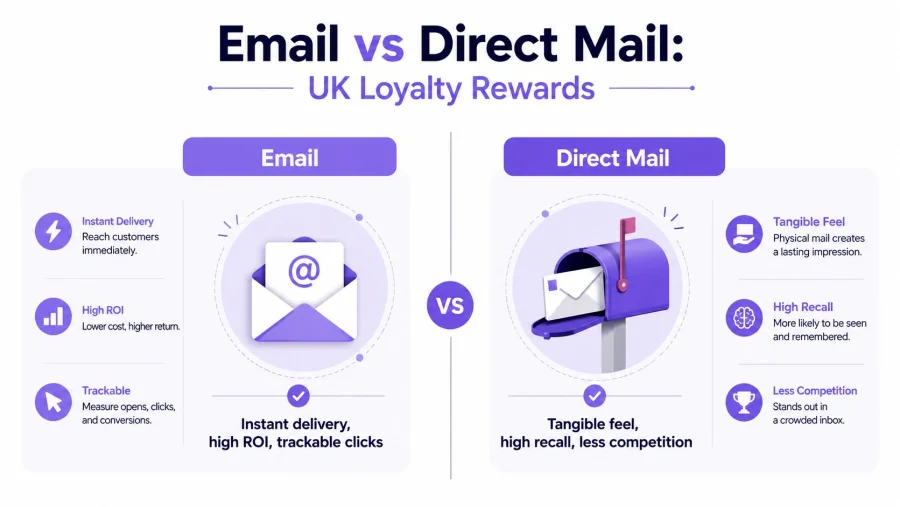
A strong channel choice usually comes down to the offer, not the owner's preference. The closer the reward is to an immediate visit, the more email tends to help. The more the reward depends on attention and trust, the more direct mail earns its place.
A café might send an email for a free croissant after a signup, then use a printed postcard for lapsed regulars who have not been in for a while. A salon might use email for reminders and birthday bonuses, then reserve post for VIP reactivation where the offer needs more impact. A product like a personalized Jeep windshield decal shows that physical items can carry brand attention well, and loyalty mail works in a similar way when the message needs to feel tangible rather than disposable.
Email is easier to automate, direct mail is harder to ignore, and the smartest UK businesses use the channel that matches the customer moment.
How to Set Up Automated Reward Emails That Work
A strong reward email does one job at a time. If a message tries to explain the whole loyalty programme, announce a sale, and ask for a review in the same send, it loses impact fast. The better approach is a short sequence, with each trigger tied to one clear outcome.
Start with the triggers that matter most
A welcome email should go out immediately or within a few minutes of sign-up, because that is when the customer is most aware of the new relationship. A points balance update works best when the customer can see progress without digging through old messages. A reward-earned message should stay direct, because it is about action, not storytelling.
LoyaltyLion's loyalty email guidance shows the value of keeping these sends tied to a clear moment, and that principle holds up in small business loyalty programmes. The most useful trigger set for a local business includes these five moments:
- Welcome sign-up: confirm the benefit and show the first next step.
- Points or stamps update: remind the customer how close they are.
- Reward claimed: tell them what they can claim now.
- Birthday bonus: make the customer feel recognised, not marketed to.
- We miss you offer: bring back customers who have gone quiet.
For a simple setup, use the message that fits the customer's current stage. A café using boost repeat business with digital stamps needs different timing from a salon that is following up a quiet client, but the logic is the same. Send the right prompt at the point where the customer is most likely to act.
Write for clarity, not creativity
Subject lines should be short enough to scan on a phone. The source guidance points to 6 to 10 words and recommends personalisation with a name, purchase history, or tier status. That usually means “Your next reward is ready” works better than a clever line that takes too long to understand.
Short rule: if the subject line sounds clever but unclear, open rates usually suffer.
The body copy should fit the business. A café can use “Free Croissant Ready Today”, while a salon can use “10% Off Your Next Cut” or a birthday note tied to a service upgrade. A gym might offer a class pass or a referral bonus, while a retailer might focus on a threshold reward tied to spend. The key is to make the offer feel specific enough that the customer understands why it exists.
A local business can also choose when email is enough and when another channel makes more sense. A personalized Jeep windshield decal is a good reminder that physical items carry attention differently, and that same principle applies to loyalty messaging when the reward needs more presence than an inbox can give.
Keep the workflow easy to manage
A simple setup beats a complicated one. Start with one welcome email, one reactivation email, and one reward notification, then test timing and wording before adding more. The same guidance also points to tracking open rate, click-through rate, and conversion rate by send-time cohort, which helps separate a weak message from poor timing.
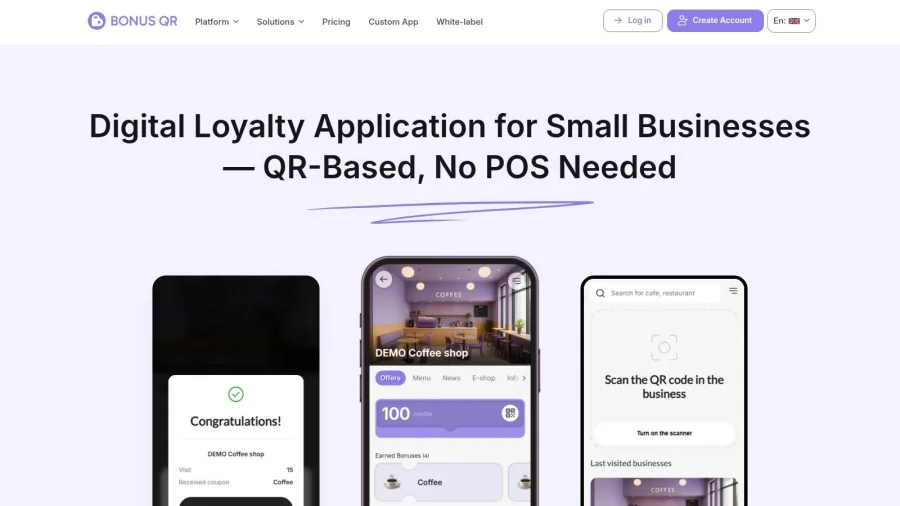
For teams that want a practical communication model, a customisable loyalty platform can handle reward triggers, automatic messages, and redemption tracking in one place. BonusQR does that for brick-and-mortar businesses without needing extra hardware, which is useful when staff need something simple rather than another system to manage.
Mastering Direct Mail for High-Impact Rewards
Direct mail works best when it is targeted. A generic flyer feels easy to ignore, but a clear reward letter or postcard tied to a known visit pattern can feel far more relevant. The trick is to treat it as a precise follow-up tool, not a mass blast.
Use a simple mail process
The most defensible operational model is the mail survey method, because it gives a clear structure. Addresses are verified first, then the piece is prepared with a cover message, a clear incentive, and a postage-paid reply option if needed. The source guidance notes that response improves when the package is structured, deadline-driven, and followed by reminder mailings to non-responders SurveyLegend's mail survey method overview.
That logic fits loyalty mail well. A salon can post a comeback offer to lapsed clients. A café can mail a bounce-back voucher to nearby regulars. A gym can send a renewal reminder with a simple claim process.
Keep the offer easy to understand
The Consumer Protection from Unfair Trading Regulations 2008 prohibit misleading prize promotions, and UK guidance says promotions must clearly include material information such as eligibility limits, closing dates, claim conditions, and any costs the consumer must pay ACC summary of UK consumer-law loyalty and promotions guidance. That means the reward should be obvious at a glance, not hidden in small print or vague wording.
A strong mail piece usually needs four things:
- A clear recipient group: existing customers, lapsed customers, or birthday contacts.
- A visible offer: the reward should be easy to see without decoding jargon.
- A deadline: urgency helps, especially for comeback campaigns.
- A simple redemption route: code, QR scan, or in-store presentation.
Make it measurable and manageable
Printed rewards can be tracked if the business uses unique codes, specific redemptions, or linked landing pages. A physical coupon doesn't have to be a black box. It just needs a cleaner system than “show this email”.
The most common mistake is sending a beautiful postcard with no plan for redemption tracking. If staff can't recognise the offer at the till, the campaign loses value.
That's where a loyalty tool can help the back end, especially one that supports digital stamps or reward thresholds. A business can boost repeat business with digital stamps while still using print for the customer-facing piece. The channel can be physical, but the tracking still needs to be tidy.
Measure Your Results and Stay GDPR-Safe
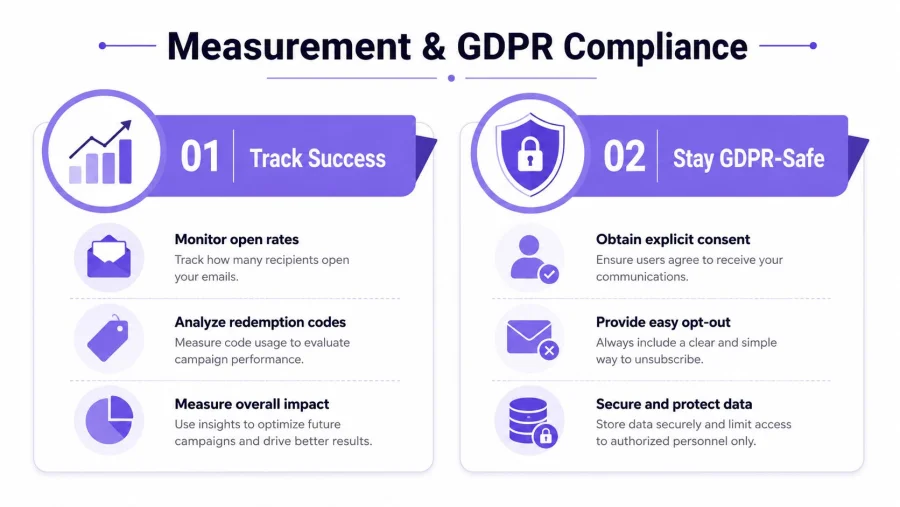
A rewards programme only pays off when the business can see what it's doing. Opened emails, redeemed offers, and repeat visits all tell part of the story, but none of them matter if the data handling is sloppy. UK businesses also need to treat customer information with care from the start, not as an afterthought.
Keep the data use simple and lawful
UK loyalty programmes sit under the UK GDPR and Data Protection Act 2018 whenever they collect personal data for marketing or rewards. The ICO's position, as summarised in the legal guidance provided, is straightforward, controllers need a lawful basis, they must give a privacy notice, and they should only collect what is necessary for the stated purpose. Direct marketing is treated as a specific compliance area, so signup forms, birthday rewards, and targeted emails need proper legal and notice controls rather than vague “join our club” wording.
A practical privacy setup usually includes:
- A clear privacy notice: explain what data is collected and why.
- Lawful basis awareness: don't treat marketing data like casual contact data.
- Opt-out access: make it easy to leave the list.
- Data minimisation: only ask for details that support the reward.
- Age and location rules in the terms: keep membership criteria clear for UK residents.
Track the metrics that actually matter
The useful numbers are the ones linked to behaviour, not vanity. Open rate helps email performance, click-through rate shows message interest, and conversion rate shows who redeemed. For direct mail, the cleaner measures are redemption code use, in-store claims, and repeat visit patterns after the mail drop.
The question to answer is simple, did the reward bring the customer back. If the answer is yes, the business can compare that return against the cost of sending the message. If the answer is no, the offer, timing, or channel probably needs adjustment.
A good review cycle looks like this:
- Check delivery and reach: ensure the message was received.
- Review redemption behaviour: look at which offer was claimed.
- Compare by audience segment: new customer, regular, or lapsed customer.
- Adjust timing and wording: test one change at a time.
- Keep only the winners: remove the campaigns that don't move visits.
For teams that want a straightforward way to manage this, strategies for customer loyalty are easier to apply when the platform handles the reward flow and reporting together.
The simplest path is usually the most effective. Choose email for speed, direct mail for impact, or a hybrid approach when the offer needs both reach and trust. Then set up the rewards clearly, keep the legal notices tight, and use BonusQR or a similar loyalty system to track what brings customers back, so the next campaign gets smarter instead of louder.