Beyond the free coffee, retention usually gets framed the wrong way. Restaurants do not lose repeat business because they forgot to print enough loyalty cards. They lose it because the follow-up system is weak, the reward structure is forgettable, and no one can see which guests are drifting away until they have already stopped coming.
The operating reality is harsher than many owners expect. In the UK restaurant sector, average customer retention sits at about 55%, well below the cross-industry average of 75.5%, according to Evokad's UK retention analysis. For an independent operator, that means plenty of busy weeks still mask a repeat-visit problem.
Demand pressure raises the stakes. AlixPartners' UK consumer research found that many UK consumers planned to cut back on restaurant and bar spending. Fewer dining occasions mean each first visit has more value, and each missed return costs more than it did a few years ago.
That is why generic discounts underperform. Paper punch cards get lost. “10% off next time” trains people to wait for a deal. Staff also struggle to track what worked, which guests redeemed, and who has not been back in 30 or 60 days. A retention strategy should do three jobs well: capture customer data without slowing service, make progress visible to the guest, and trigger the next visit with timing that makes commercial sense.
The 10 strategies in this guide are built for independent restaurants, cafés, and quick-service teams that need practical execution, not theory. Each one includes a clear setup approach for smaller operators and shows how a QR-based system can run the programme without new hardware or messy integrations. If you want a simple starting point before building out the full plan, explore BonusQR's software.
1. Personalised Loyalty Programmes with Tiered Rewards
Tiered rewards work because they give customers a reason to keep climbing. A flat reward says, “collect enough and get a freebie.” A tiered programme says, “you're getting closer to better treatment.” That shift matters more than most owners think.
In the UK market, points-per-visit and spend-based digital loyalty programmes are the dominant mechanism for driving return behaviour, and expert analysis says points-based systems outperform simple stamp or discount models for long-term engagement, according to Nory's retention guidance. That doesn't mean every restaurant needs a complicated enterprise app. It means the structure should reward progression, not just occasional discounts.
A practical version is simple. Bronze provides a small welcome benefit. Silver adds a birthday perk or bonus points window. Gold gets early access to specials, a better birthday reward, or a member-only tasting invite. The benefits don't have to be expensive. They just have to feel earned.
What to set up first
For small operators, the first tier should feel reachable. If the threshold is too high, customers disengage before the habit starts. Progress also needs to be visible on the phone, not buried in a receipt or hidden in a staff-only dashboard.
- Keep entry easy: Set the first reward close enough to create momentum after the first few visits.
- Use low-cost perks: Priority booking, birthday treats, or member-only menu previews often protect margin better than blanket discounts.
- Show progress clearly: Guests should always see what they've earned and what becomes available next.
- Review the ladder: If customers stall in the middle, the gap between tiers is probably too steep.
Practical rule: Top-tier rewards should feel more exclusive than expensive.
Starbucks Rewards remains the obvious reference point because customers can see progression and understand what each level of activity provides. Independent operators can borrow that logic without copying the complexity. A QR-based programme makes that much easier because staff can enrol guests quickly, and customers can track status from one profile instead of carrying another card. Restaurants wanting a low-friction setup can explore BonusQR's software to run tiered rewards without extra hardware.
2. QR-Based Point Systems with Instant Redemption
QR loyalty beats paper for one reason. It removes excuses.
If customers can scan, earn, and redeem in seconds, they use the programme. If they need to remember a card, download a clunky app, or argue at the counter about lost stamps, they stop caring. The best QR systems feel invisible during service.
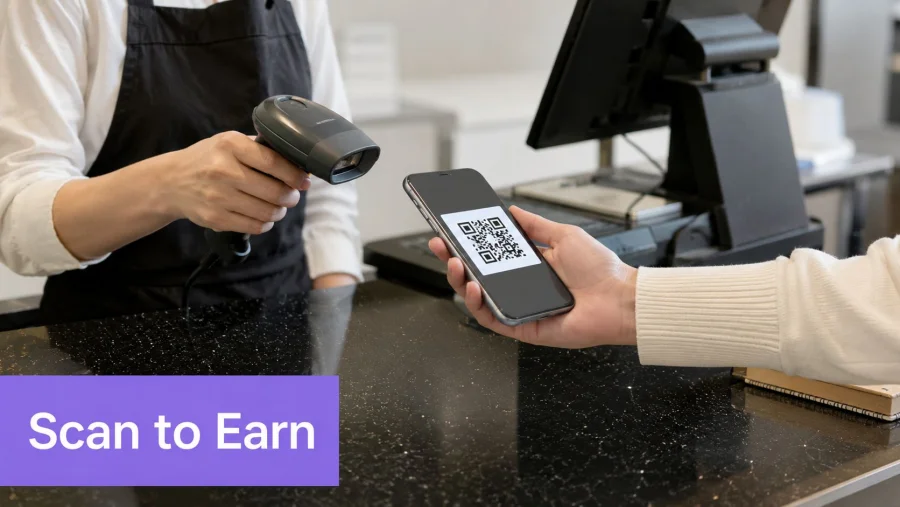
That friction matters because loyalty is no longer niche. According to Ressto's summary of National Restaurant Association 2025 data, 61% of restaurant operators now offer a loyalty programme, and 76% of limited-service restaurants have implemented one. If a restaurant still relies on a paper stamp card alone, it isn't competing with the best independent down the road. It's competing with customer expectations formed by larger chains.
Where QR points work best
QR points are especially useful for cafés, bakeries, lunch spots, and quick-service restaurants where queues need to move fast. Staff scan the customer code, the reward balance updates immediately, and the customer sees progress straight away. That instant feedback matters. It reinforces the visit before the customer has even left the till.
A local coffee shop can reward every purchase toward a free drink. A fast-casual lunch spot can let points accumulate toward add-ons, combo upgrades, or limited-time items. Chipotle and Sweetgreen trained customers to expect mobile-first loyalty experiences. Independent operators can use the same logic on a smaller scale.
- Make the first reward easy to understand: “Scan, earn, redeem” is better than a long list of conditions.
- Promote at the till: A small sign with one clear action beats a poster full of terms.
- Use reminders: If a customer is close to redemption, send a nudge before the next likely visit.
- Keep rewards simple: A free side, drink upgrade, or dessert usually creates less friction than an awkward discount calculation.
QR also supports adjacent tools that reduce friction in the guest journey. Restaurants already using digital menus can pair them with loyalty so ordering and retention live in the same mobile habit. For operators looking at that route, it's useful to learn about QR menus with TopFoodApp. A restaurant that wants a straightforward points setup can run it through the BonusQR loyalty platform.
3. Visit-Based Frequency Rewards
Not every restaurant should reward spend first. For cafés, casual lunch shops, and neighbourhood takeaways, visit frequency often matters more than basket size. A customer who comes in three extra times a month is usually worth more than one who spends a little more once.
That's why stamp-card logic still works. It rewards habit. The mistake is keeping it analogue.
Stamp cards still work when they evolve
A digital version of “buy 9, get 1 free” remains easy to understand. It's also better suited to customers who buy lower-ticket items often. Traditional paper cards fail because they get lost, torn, or forgotten. A digital visit tracker solves that without changing the offer customers already understand.
There's another reason this matters. WiFi login capture alone drives 54.4% of guest profiles, and Bloom Intelligence says a successful strategy includes a personal thank-you and a 15% discount sent within 48 hours of the first visit to win the second visit, according to Bloom's retention guide. For operators using visit-based rewards, that creates a clean sequence. Capture the profile on visit one, trigger a quick thank-you, then make visit two part of a visible frequency journey.
A second visit doesn't need a dramatic offer. It needs low friction and a clear next step.
A coffee shop can say: join today, get a thank-you message, then track every visit toward a free drink. A bakery can separate product tracks so coffee visits count toward coffee rewards and pastry visits count toward pastry rewards. That makes the programme feel fairer and more relevant.
Practical setup for small venues
- Reward the habit: Use visit milestones when average spend is modest and frequency is the main growth lever.
- Celebrate key visits: The reward after a milestone should feel different, not automatic and forgettable.
- Match rewards to the category: Coffee buyers want coffee rewards. Lunch regulars want lunch benefits.
- Keep staff scripting short: “Would you like this visit added to your rewards?” is enough.
This model is often the easiest first step for independent venues because guests understand it immediately. Restaurants and cafés that want to digitise that familiar mechanic can start with implementing a loyalty stamp program.
4. Birthday and Seasonal Surprise Rewards
Generic bounce-back offers get ignored because they ask for another visit without giving the guest a reason that feels personal. Birthday and seasonal rewards work better because the timing already makes sense. The message arrives with context.
That matters more now because many guests are less habit-driven than they used to be. Research from the National Restaurant Association's State of the Restaurant Industry reporting points to continued pressure on restaurant traffic and guest loyalty, especially as diners spread spend across more options. In practice, that means a decent restaurant can still lose share by becoming forgettable.
The win here is not a big discount. It is a small, well-timed gesture that feels relevant and is easy to redeem. A free dessert with a booking. A drink upgrade during birthday week. A seasonal treat tied to the first cold weekend, school holidays, or a local festival. These rewards protect margin better than blanket offers and give staff something natural to mention at the till or on the floor.
What actually makes these work
Timing does more of the heavy lifting than the reward value. Send a birthday offer three to seven days early so the guest can plan around it. Keep the redemption window short enough to create urgency, but long enough to fit real behaviour. For many venues, a week works better than a single day.
Seasonal rewards need the same discipline. Tie them to a menu change, weather shift, event weekend, or trading lull you want to lift. Random calendar blasts feel like marketing. Occasion-led offers feel considered.
For small operators, the setup should stay simple:
- Collect the minimum useful data: Birth month is usually enough. You do not need a full date of birth unless the reward depends on exact timing.
- Choose rewards with controlled cost: Add-ons, upgrades, and low-food-cost treats usually outperform percentage discounts on profit.
- Write the message like a host, not a campaign manager: “Your birthday treat is ready this week” beats a generic promotion.
- Give staff one clear line: “You've got a birthday reward on your account if you want to use it today.”
- Review redemption by daypart: If birthday offers only get used on busy Saturday nights, adjust the terms to spread demand.
This is also where QR-based loyalty tools make the tactic practical for independents. A simple platform such as BonusQR can collect birth month at sign-up, trigger the reward automatically, and let guests redeem from a phone without cards, extra hardware, or a POS project. That keeps the idea operationally light, which is a critical measure. If the campaign adds friction for staff, it will not last.
Chain brands trained customers to expect birthday perks. Independent venues can run the same playbook with better tone and tighter margins. Keep it personal, keep it easy to redeem, and attach it to a moment that already matters to the guest.
5. Welcome Bonuses and Onboarding Incentives
The first sign-up offer is where many loyalty programmes either gain momentum or fade away. If joining gives the customer nothing useful, staff stop mentioning it and customers stop noticing it.
A welcome bonus should make enrolment feel worthwhile immediately. That doesn't mean the offer must be expensive. It means the customer should understand, on the spot, why joining helps them now rather than at some vague point later.
The second visit starts at sign-up
Many restaurant customer retention strategies become too generic. They recommend a welcome discount, but they don't explain what kind of incentive drives a second visit in UK cafés and low-margin venues. That gap matters. One source highlights that the mechanics of the second visit for UK cafés remain under-quantified, especially when comparing personalised follow-ups with generic discounts, according to Restaurant365's discussion of the follow-up gap.
That means operators shouldn't assume one incentive type is always best. A free extra shot, pastry add-on, or birthday enrolment bonus may fit a café better than a flat percentage-off coupon. The right welcome offer depends on what's easy to redeem, easy for staff to explain, and still profitable when redeemed at volume.
A good onboarding flow does three things. It gives an instant reason to join. It explains what the customer should do next. It starts communication early enough to secure another visit while the first experience is still fresh.
Better than a generic coupon
- Offer something easy to redeem: Customers trust rewards they can picture using.
- Set a visible expiry: A reward without a deadline often gets ignored.
- Use one action message: “Join today and receive your first reward” is stronger than a long terms sheet.
- Train staff on the script: If team members can't explain the value in one sentence, sign-ups drop.
Chipotle-style “join and get money off” mechanics are familiar, but local operators often do better with a reward tied to their best repeat product. For a coffee shop, that might be a welcome pastry. For a burger restaurant, it might be a free side on the next visit. The onboarding incentive should lead naturally into the next purchase pattern the business wants to create.
6. Feedback Loops and Review Incentives
A lot of restaurants ask for feedback too late, in the wrong place, and from the wrong guests. By then, the useful detail is gone and the unhappy customer has already decided not to come back.
Good feedback collection is part of retention operations, not a side task for marketing. The goal is simple: catch friction early, fix what can be fixed, and identify which guests need a follow-up before they drift out of the database.
The timing matters. Send a short prompt soon after the visit, while the wait time, service interaction, and food quality are still clear in the guest's mind. Keep it to a few taps. If the form feels like work, response rates fall and the only people who answer are the very happy and the very annoyed.
Toast's guidance on restaurant CRM strategy explains why segmentation matters here. Operators get more value when they group guests by visit history, spending patterns, and behaviour instead of treating every customer the same. That same logic applies to feedback. A first-time diner who reports a slow first visit needs a different response from a regular who suddenly stops coming in.
Operator note: If the same complaint shows up across multiple shifts, the issue is operational. Stop treating it like isolated feedback.
Public reviews also need better handling than many independent operators give them. Offering a reward in exchange for a five-star review is risky and can damage trust. A better approach is to reward the act of responding, usually with a small loyalty bonus or points credit, then route unhappy guests into a private recovery path before pushing them toward Google or Tripadvisor.
That process can be simple.
- Ask three things: How was the visit, what stood out, and are they likely to return?
- Separate sentiment fast: Positive responses can get a review request. Negative responses should trigger a service recovery message.
- Tag the issue: Sort comments by store, shift, staff, or menu item so patterns show up quickly.
- Report back to the team: Staff need to know what guests are saying and what changed because of it.
For smaller operators, this does not need a full CRM rebuild or expensive hardware. A QR-based loyalty flow can trigger feedback after check-in or redemption, capture a quick rating, and assign follow-up tasks without adding another app for staff to manage. BonusQR fits that model well because the same scan flow used for rewards can also collect post-visit sentiment, identify at-risk guests, and send the right next message based on what the customer said.
The trade-off is discipline. If a restaurant collects feedback and never acts on it, customers notice. If it asks only for public praise, customers notice that too. The payoff comes from closing the loop fast, fixing recurring problems, and turning positive visits into visible reviews while the experience is still fresh.
7. Push Notifications and Timely Offer Campaigns
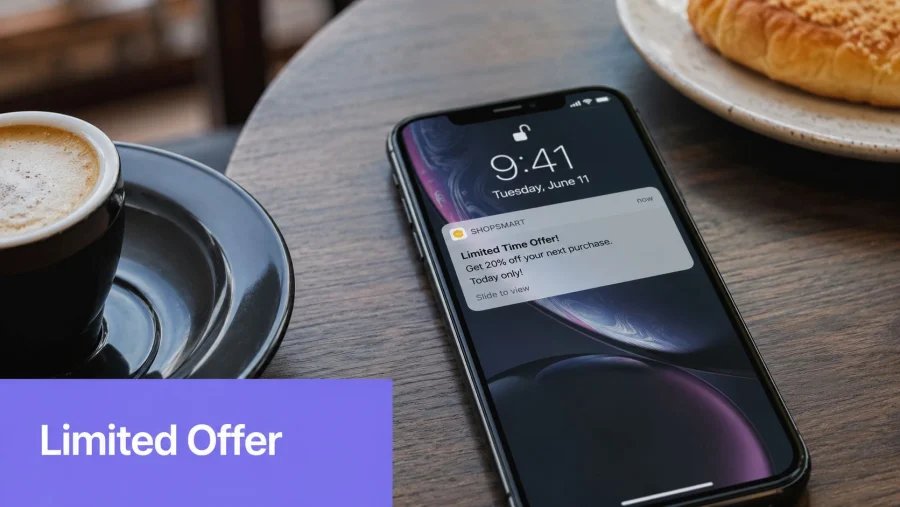
More restaurant push notifications fail because they are scheduled for the operator's convenience, not the guest's buying habit. A blast sent to everyone at 3 p.m. is easy to set up and easy to ignore.
Useful push campaigns start with one question: what is this customer likely to buy next, and when? A coffee shop can send a breakfast add-on prompt before the morning rush. A lunch concept can remind a weekday regular about reward progress at 11 a.m. A casual restaurant can send a bounce-back offer on the guest's usual daypart after two or three missed visits. Relevance does the heavy lifting.
Send fewer campaigns with a clearer job
Cheap distribution creates bad habits. Operators send too many messages because the cost per send looks close to zero. The consequence of this strategy is muted notifications, opt-outs, and staff losing confidence in the programme because redemptions stay weak.
The offer also matters. Guests respond better when the message points to visible progress or an easy next reward, especially if the reward is a low-cost item with strong margin. That is one reason loyalty systems work well with add-ons such as a free topping, drink upgrade, side, or dessert rather than blanket discounting. Square's guide to restaurant loyalty programs makes the same practical case for simple rewards customers understand quickly and operators can afford to repeat.
A strong campaign usually does one of four jobs:
- Progress reminder: Tell a guest they are one visit or one purchase away from a reward.
- Routine-based offer: Match the timing to a known habit, such as weekday lunch or Friday dinner.
- Lapse recovery: Reach guests who have gone quiet with an offer tied to what they usually order.
- Inventory or margin support: Push high-margin add-ons or time-sensitive items without training customers to wait for discounts.
The trade-off is straightforward. Tight targeting takes more setup than a generic blast. It also performs better and protects margin.
For smaller operators, this does not require a full app build or expensive POS work. A QR-based loyalty platform can collect visit history, reward status, and basic preferences from the same scan flow customers already use at the table, counter, or receipt. BonusQR fits that model well because it lets restaurants trigger messages based on real behaviour, show progress clearly, and run short-window offers without adding new hardware or another staff process.
Keep the message plain. One offer. One deadline. One reason to act. If opt-outs climb, reduce frequency first, then check whether the offer matches guest behaviour. In practice, that is where many campaigns break. The message is not wrong. It is irrelevant.
8. Referral Programmes and Word-of-Mouth Amplification
Happy customers already recommend places. A referral programme makes that behaviour easier to track and reward.
This works best when the restaurant has already built a decent core experience. Referrals don't fix weak service or inconsistent food. They accelerate whatever is already true. If the restaurant delivers reliably, a referral mechanic can turn loyal regulars into a low-friction acquisition channel.
Reward both sides
One-sided referral offers usually underperform because they ask the existing customer to do work for someone else's benefit. A better setup rewards the person sharing and the friend redeeming. That keeps the invitation generous rather than salesy.
A local café can give both people points or a welcome drink. A quick-service restaurant can reward the referred guest with a join incentive and reward the referrer once the first purchase is completed. The structure should be simple enough to explain in one sentence and visible enough that loyal customers remember it exists.
There's also a strategic reason to prioritise referrals now. With loyalty under pressure and dining occasions tightening, referred customers often arrive with more trust than cold traffic from an ad. They've already heard what to order and why the place is worth trying. That shortens the path to a second visit.
Common referral mistakes
- Too many rules: If staff need to explain the programme for two minutes, it's too complicated.
- Weak reward timing: Don't delay the referrer's reward so long that the connection feels broken.
- No fraud checks: Basic checks around duplicated accounts or self-referrals matter.
- No promotion: If customers never see the referral prompt in the loyalty profile, usage stays low.
Chipotle, Sweetgreen, and delivery apps all use some version of the “share and both benefit” model. Independent restaurants can run the same logic through a QR-based loyalty profile, especially when the referral reward ties neatly into the same welcome and repeat-visit incentives already in place.
9. Exclusive Member-Only Events and Experiences
Discounts are easy to copy. Access isn't.
That's why member-only events can strengthen retention without turning the brand into a discount machine. A loyalty event gives regulars something they can't get from a competitor's generic offer. It also creates a reason for staff to talk about the programme in a more human way.
Use experiences to deepen the relationship
This doesn't need to mean a large or expensive event. A café can host a seasonal tasting. A restaurant can invite top members to preview a new dish before launch. A wine bar can run a quiet early-evening pairing for regulars. The point isn't scale. The point is selective relevance.
These experiences work particularly well for high-frequency or high-value customers who already know the product. They reward attention and make the guest feel recognised beyond a transaction. That kind of loyalty tends to hold up better than discount-led behaviour, especially in competitive local markets.
Member-only events are often most effective when they feel small enough to be personal.
Operators should also use events as listening posts. Guests who show up are often the exact people whose opinions matter most on new menu items, service flow, or pricing tolerance. A well-run tasting can support both retention and product feedback at the same time.
Keep the format practical
- Start small: A compact, well-run event is better than an over-ambitious launch night.
- Match access to loyalty level: Not every event needs to be open to every member.
- Use the menu smartly: Samples and pairings usually control cost better than full portions.
- Capture the moment: Photos, post-event messages, and future invites extend the effect beyond one evening.
Michelin-starred venues, premium coffee shops, and fast-casual brands all use early-access or insider experiences to reward regulars. Independent operators can adapt that idea on a much smaller budget and often with more authenticity.
10. Behavioural Analytics and Predictive Churn Prevention
Restaurants usually lose regulars in slow motion. The warning signs show up in the gaps between visits, lower response rates, and reward progress that stalls. By the time staff notice someone has not been in for a while, the routine is often gone.
Behavioural analytics gives operators a working early-warning system. Instead of treating every inactive guest the same, it looks at changes in individual patterns. A weekday lunch regular who disappears for 10 days needs a different response from a date-night customer who normally visits once a month.
The hard part is not collecting more data. It is setting rules that match the business. A café might flag risk when a guest misses two expected visits. A neighbourhood pizzeria may care more about drop-offs in family meal orders on Fridays. A higher-ticket venue may only need to watch whether a known repeat customer stops opening messages or stops booking at their normal interval.
Nory explains the practical side well in its guidance on restaurant CRM and retention. Operators can set inactivity windows and trigger follow-up before a guest fully drops away, as outlined in Nory's restaurant CRM and loyalty guide. That is the primary use case here. Catch the change early, then respond with something specific enough to matter.
Build the trigger before you write the message
A lot of win-back campaigns fail because the offer comes first and the logic comes second. Start the other way around.
- Define normal behaviour by segment: Weekly regulars, occasional diners, and high-value guests should not share the same churn window.
- Choose one risk signal that matters: Missed visit cadence, no reward activity, lower basket size, or ignored campaigns.
- Set one action per trigger: A reminder, a reward-progress nudge, or a favourite-item offer is usually enough.
- Review margin before sending discounts: Some guests need recognition, not money off.
That last point matters. Sending blanket discounts to every inactive customer can train price sensitivity and eat margin fast. In many restaurants, a well-timed message tied to the guest's usual habit performs better because it feels relevant instead of desperate.
BonusQR is useful here because it gives smaller operators a practical way to run this without new hardware or a heavy POS project. If the platform can see visit frequency, reward progress, and basic purchase behaviour through QR check-ins, it can trigger simple churn rules automatically. That is enough for most independents. They do not need enterprise AI to get value from predictive retention. They need clear thresholds, clean follow-up, and a system the team will use on a busy shift.
What to send when a guest starts to drift
- Frequent guest slowing down: Send a short reminder with their current points or reward progress.
- Customer who usually buys one category: Offer something tied to that category, not a generic site-wide discount.
- Higher-value regular gone quiet: Use a more personal message or invite-based offer.
- Guest ignoring repeated campaigns: Reduce frequency or stop messaging rather than pushing harder.
Good churn prevention is less about prediction in the abstract and more about timing, segmentation, and discipline. The operators who keep more regulars are usually the ones who decide in advance what counts as a warning sign, what action follows, and who owns that process each week.
10-Point Comparison of Restaurant Customer Retention Strategies
| Strategy | 🔄 Implementation complexity | ⚡ Resource requirements | 📊 Expected outcomes | Ideal use cases | ⭐ Key advantages |
|---|---|---|---|---|---|
| Personalised Loyalty Programmes with Tiered Rewards | Medium–High, requires rules, tiers and messaging | Medium, CRM, analytics, design & ongoing calibration | ↑ LTV 25–40%; higher AOV and retention | Multi-location cafés, mid-to-high spend brands | Encourages spend progression; clear ROI by tier |
| QR-Based Point Systems with Instant Redemption | Low–Medium, QR flows + wallet integration | Low, smartphone + QR platform; minimal POS work | Faster adoption; instant gratification; higher sign-ups | Quick-service, mobile-first cafés and pilots | Low friction rollout; high user adoption |
| Visit-Based Frequency Rewards (Stamp Cards 2.0) | Low, simple visit counting and rewards | Low, basic tracking and notification automation | Increases visit frequency; builds habit loops | Coffee shops, bakeries, high-frequency low-AOV venues | Easy to understand; drives repeat visits |
| Birthday and Seasonal Surprise Rewards | Low, date triggers and scheduled campaigns | Low, customer birthdate capture + automation | 2–3x higher redemption vs generic promos; uplift in basket | Broad applicability; holiday-driven periods | High ROI; emotional, timely engagement |
| Welcome Bonuses and Onboarding Incentives | Low, signup triggers and short-term offers | Low–Medium, signup flow, expiry rules, tracking | Boosts sign-ups and first-redemption rates | POS signups, digital acquisition channels | Rapid adoption; captures customer data early |
| Feedback Loops and Review Incentives | Medium, survey flows, NPS, sentiment tools | Medium, survey tools, response handling process | Actionable insights; feedback-givers +15–25% LTV | Service quality improvement, reputation management | Low-cost intelligence; early issue detection |
| Push Notifications and Timely Offer Campaigns | Medium, segmentation, timing, compliance | Medium, messaging platform, customer data | 30–50% higher redemptions vs passive; drives traffic | Time-sensitive promos, slow periods, multi-site | High immediacy; easy to A/B test and optimise |
| Referral Programmes and Word-of-Mouth Amplification | Medium, referral tracking & fraud controls | Low–Medium, sharing tools, attribution, caps | Lower CAC; referred customers +16–25% LTV | Growth-focused brands seeking organic acquisition | Cost-effective acquisition; viral growth potential |
| Exclusive Member-Only Events and Experiences | High, event planning, RSVP and coordination | High, staff, space, logistics and curation | Deepens loyalty; social sharing; justifies premium | High-tier customers, fine dining, experiential brands | Strong emotional bonds; differentiation |
| Behavioural Analytics and Predictive Churn Prevention | High, ML models, cohort & LTV analysis | High, historical data, analytics tooling, expertise | Proactive churn reduction; optimised retention spend | Data-driven chains and larger operators | Targets high-LTV churn prevention; measurable ROI |
Turn Your Next Customer Into a Lifelong Regular
Retention gets talked about as if it's a single tactic. It isn't. It's a stack of decisions that shape what happens after the first purchase. The reward structure matters. The timing of the follow-up matters. The ease of enrolment matters. The quality of the data capture matters. When those pieces work together, the restaurant stops relying so heavily on constant new footfall just to stand still.
That's the fundamental shift behind strong restaurant customer retention strategies. A restaurant stops thinking in one-off offers and starts building a repeatable operating system for loyalty. One customer joins with a welcome incentive. That customer sees visible progress. A second-visit nudge arrives at the right time. A birthday reward or seasonal message creates another touchpoint. Feedback reveals what needs fixing. At-risk guests get a timely prompt before the relationship goes cold. Those actions compound because each one supports the next.
For independent operators, the challenge isn't usually understanding the idea. It's execution. Service is busy, staffing is stretched, and nobody wants another tool that creates more admin than value. That's why the best retention systems are simple enough to run on a normal Tuesday lunch rush. Staff need to explain them quickly. Customers need to use them without confusion. Owners need to see what's working without digging through messy reports.
A QR-based setup makes that practical. It removes paper cards, reduces friction at the till, and keeps the customer profile in one place. That matters because loyalty programmes only help if customers use them and staff support them. The more steps involved, the faster the system breaks under real operating pressure.
BonusQR is one option that fits that kind of rollout. Based on its published product information, restaurants can launch QR-based stamps, points, cashback, visit and spend thresholds, welcome bonuses, birthday and seasonal coupons, plus push or email campaigns without POS integration or extra hardware. Customers sign up through mobile or web, receive a personal QR code, and track rewards and visit history in a single profile. For a busy café or restaurant, that setup keeps the programme close to day-to-day service instead of turning it into a separate technical project.
The more important point is this. Retention doesn't improve because a restaurant says it values loyalty. It improves because the business makes returning easier, more rewarding, and more memorable than drifting to the next option. That can start small. A clear welcome offer. A digital stamp journey. A birthday reward. A post-visit survey. One reactivation message for guests who've gone quiet. Small systems, run consistently, beat grand marketing plans that never survive real operations.
Restaurants that want to keep more of the customers they already worked hard to win should build from the second visit outward. Capture the guest. Give them visible progress. Follow up quickly. Reward the right behaviour. Fix the friction points that feedback keeps exposing. Then keep refining.
There's no need for expensive hardware or a large marketing team to do that well. There just needs to be a system. For operators looking into practical loyalty execution, Monopack ltd's customer experience advice is also a useful reminder that retention starts with the experience customers have, not only the offer they receive after it.
Start with one offer, one capture point, and one follow-up flow. Then build from there. That's how a first-time diner becomes a regular, and how a regular becomes part of the business's long-term stability.


