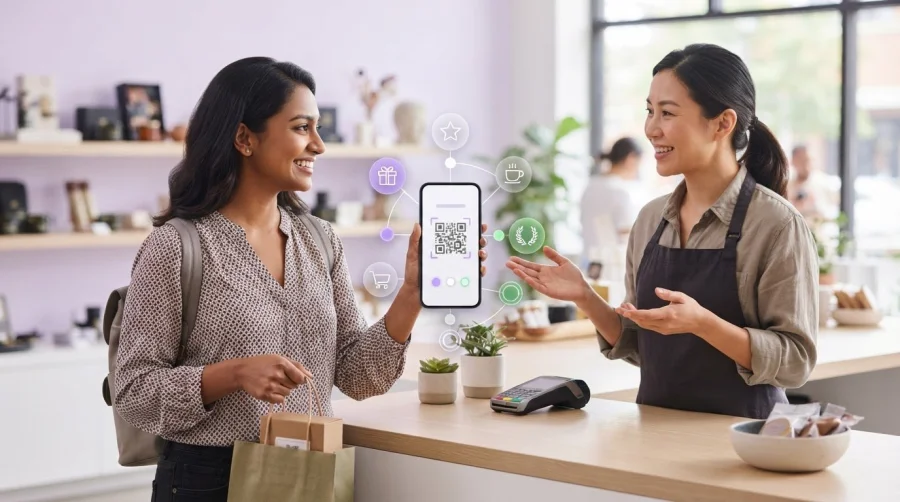
What if the best time to earn a customer’s next visit is right after the first one? Too often, contact stops at checkout or the end of an appointment. The right post-purchase engagement strategies turn that quiet moment into a useful next step, without making every message feel like a sales pitch.
It’s understandable to want customers to return, but generic offers and poorly timed follow-ups can do more harm than good. A thoughtful sequence keeps the customer’s experience at the center. It thanks them, offers relevant help, and gives them a clear reason to stay connected.
This guide shows you how to build that journey, from choosing the right follow-up and timing to using customer signals to make each interaction more relevant. You’ll also learn how digital loyalty can support the process: QR codes can invite customers to join after a visit, while automated rewards and customer segments help tailor what comes next. The goal is a practical system that encourages return visits, measures what’s working, and strengthens relationships without relying on constant blanket discounts.
Key Takeaways
- Use post-purchase engagement strategies to plan a connected customer journey, not a set of unrelated campaigns.
- Choose follow-ups based on what customers need next, from useful guidance to a timely feedback request.
- Compare helpful follow-ups, feedback requests, loyalty rewards, and referral prompts to find the right fit for each moment.
- Start with one customer moment, message, and channel, then review engagement and repeat-visit signals before expanding.
- Add digital loyalty as one part of the experience, using BonusQR’s QR-based program to make joining straightforward.
What post-purchase engagement strategies do for the customer relationship
A transaction can end in seconds, but the customer’s experience of your business continues afterward. Post-purchase engagement means the relevant communication and experiences that follow a purchase, visit, or completed service. It goes beyond sending a receipt or a quick thank-you. A useful follow-up might answer a common question, invite feedback, or explain what the customer can do next.
A completed transaction records a sale; an ongoing customer relationship gives the customer a reason to interact with your business again. That distinction matters for small, in-person businesses, where one good visit can be followed by silence. If a customer has a question about an appointment or doesn’t know when to return, a thoughtful message can close the gap. The goal isn’t to guarantee another purchase. It’s to make the next interaction feel clear and welcome.
This idea is also described as Post-transaction marketing, which focuses on what businesses do after a sale to support the relationship. In practice, the details depend on what the customer bought and what would be useful to them now.
Where the post-purchase journey begins and ends
The journey starts when checkout is complete, an appointment ends, or a customer leaves your shop. First, confirm what happened and reassure them about any next steps. Then decide whether they need practical follow-up, an invitation to share feedback, or a timely reason to visit again. A referral prompt may make sense after a positive experience, but not before the customer has had a chance to raise a concern.
Think of the journey as a sequence that can end in a return visit, a referral, or simply a helpful resolution. Its length and timing vary: a café visit and a salon appointment call for different follow-ups. Let the customer’s context guide the order and pace.
Why small businesses need a useful follow-up, not more noise
Every message should earn its place by helping the customer. For a café, that might mean an easy way to collect a visit reward or a relevant update about an offering. For a salon, it could be appointment-related guidance or a reminder that helps the customer plan a future visit. These examples address different needs. Sending the same discount to everyone may add noise instead.
Keep the experience connected. If a customer shares a concern, respond to it before sending a promotional offer. If they’re satisfied, a simple feedback invitation or relevant loyalty reward may be a more natural next step. A digital program can support this journey, but it shouldn’t replace attentive service. For guidance on organizing rewards and customer touchpoints, see this customer loyalty program management guide.
Strong post-purchase engagement strategies help customers feel remembered without overwhelming them. Start with one practical question: after this visit, what would genuinely make the customer’s next interaction easier or more useful? That answer gives your follow-up a purpose.
How post-purchase engagement strategies create a relevant next step
A useful follow-up doesn’t ask the customer to do everything at once. It moves from reassurance to a next step that fits their experience. A simple sequence helps you decide what to say and when, without turning every interaction into another promotion.
Each post-purchase message should have one clear customer-centered purpose: answer a question, learn from an experience, or make a relevant next action easier. That purpose keeps your communication focused and gives customers a reason to pay attention.
- Confirm and reassure. Acknowledge the completed purchase or appointment, and share practical details the customer may need, such as what happens next.
- Provide useful follow-up. Offer care instructions, usage guidance, or another relevant detail that helps the customer get more from what they bought.
- Invite feedback. Ask about the experience once the customer has had a reasonable chance to form an opinion.
- Offer a relevant next step. Depending on the customer’s needs, this could be a return visit, a suitable reward, or a referral invitation.
This order is a guide, not a rigid script. If something went wrong, address it before asking for a review or sharing a reward. Service recovery means acknowledging the problem, listening, and explaining how you’ll respond. A marketing or loyalty message has a different purpose. Sending one while a customer is waiting for help can make the business feel inattentive.
Choose the message and timing around the completed interaction
Start with what the customer may need immediately. After a purchase, confirmation can reassure them that the details are clear; after a service, practical care information may be more useful. Ask for feedback after they’ve had time to experience the product or service. That interval varies, so consider what the customer can reasonably assess and whether you’re using email, a notification, or another channel.
Connect feedback, loyalty rewards, and referrals without overloading customers
Feedback should inform what happens next. If a customer mentions confusion, improve the instructions or follow up with a clear answer. If their experience was positive, consider whether a reward supports a specific goal, such as encouraging another visit. A customer loyalty program can give returning customers a simple way to engage with rewards, but it shouldn’t be attached to every message by default.
Keep requests separate when they compete for attention. A feedback question and a referral request in the same message can feel like a checklist for the customer. Instead, choose the action that best fits their current experience. For example, ask for feedback first, then use what you learn to decide whether a later reward or referral invitation is appropriate.
To put this sequence into practice, sketch one customer journey and write a single purpose for each touchpoint. If digital loyalty fits your next step, you can set up a loyalty program to support it.
Compare Post-Purchase Strategies Without Discounts
Engagement doesn’t require a steady stream of messages or a discount for every customer. A useful message can save someone time, make it easier to share feedback, or recognize a returning customer. Choose the tactic that fits the customer’s situation, then leave space for the experience to speak for itself.
Use this comparison to weigh customer value against the effort of running each approach. The best fit depends on what happened and what the customer might need next.
Approach
Customer purpose
Best-fit moment
Effort and potential drawback
Helpful follow-up
Get useful information or reassurance after a purchase or service.
Soon after the interaction, if the customer may have questions or need practical guidance.
Usually straightforward to prepare. Generic advice can feel irrelevant, so tailor it to the purchase.
Feedback request
Share an opinion and help the business understand the experience.
After the customer has had a reasonable chance to use the product or service.
A simple question is easy to send, but asking before resolving a complaint can undermine trust.
Loyalty reward
Receive recognition or a reason to engage again.
When a reward supports a clear return or participation goal.
A program takes planning to keep relevant. Frequent discounts can train customers to wait for offers.
Referral prompt
Recommend a business they genuinely value.
After a positive experience, when there’s a natural reason to share it.
The request can be simple, but asking too soon or too often may feel self-serving.
When to use a follow-up, feedback request, reward, or referral prompt
Match the ask to the customer’s position. Practical follow-up helps someone get more value from a purchase or understand what happens next. Feedback helps you spot friction, but it isn’t a substitute for responding to a complaint. A referral prompt fits best when the customer has a clear reason to recommend your business. If that reason isn’t there, don’t force the ask.
How to avoid discount dependence and message fatigue
Rewards can include recognition, convenience, or a relevant experience, not just a lower price. A customer loyalty program can support ongoing engagement with rewards that fit your business and audience. Customer groups can help you shape more relevant offers, but they don’t guarantee a response. Keep each message focused on one purpose, and set a cadence that gives customers room between touchpoints.
Make incentives clear. Explain what a customer receives and any conditions that apply. Always disclose any charge to the user; don’t let a promotion obscure what they’ll pay. A simple test helps: if the message has no clear customer benefit, revise it or leave it unsent. That restraint makes your post-purchase engagement strategies feel more considered and less like noise.
How to implement and measure post-purchase engagement strategies
Turn a broad plan into a small, trackable journey. Start with one common customer interaction, such as a café visit or completed service appointment, and build from there. These post-purchase engagement strategies are easier to improve when you know what each message is meant to do and what signs you’ll review.
- Identify a customer moment. Choose a frequent interaction where a follow-up could be useful.
- Select a message. Decide what the customer needs and what action, if any, the message should support.
- Choose a channel. Use a channel that suits the interaction and the way your business already communicates.
- Review the results. Check customer responses and business outcomes before changing or expanding the journey.
Keep the first rollout manageable. Focus on one journey and audience before adding more customer groups or messages. Engagement indicators show how customers respond; business outcomes show what happens to the business, and one doesn’t prove the other caused it.
Build a first post-purchase sequence for one customer journey
Choose one regular interaction, then map the shortest useful sequence. For a café visit, you might invite customers to join a digital loyalty program and later review whether they use it. For a completed appointment, a practical follow-up may be more useful than a reward. Give each message one intended customer action, and remove steps that don’t support it.
Test one change at a time, such as adjusting the wording or timing, while keeping other conditions consistent where practical. This makes it easier to interpret what changed, though a small audience may not provide enough evidence for a firm conclusion.
Use results and customer feedback to refine the sequence
Review response measures alongside what customers say and any service issues they raise. A message can receive attention but still miss the mark if customers find it confusing or mistimed. Compare relevant customer groups when the audience is large enough to make the comparison useful. Treat small samples as clues, not proof that one version will work for everyone.
Track a few signals tied to your goal:
- Return visits: whether customers come back during the period you’re reviewing.
- Reward redemption: whether customers use an offered loyalty reward.
- Feedback response: whether customers reply and what themes appear in their comments.
- Referral activity: whether customers share a recommendation or referral.
Use each review to make a specific adjustment, then observe what follows. Ongoing loyalty program management can help keep rewards and customer touchpoints aligned as your approach develops. Ready to put a digital loyalty journey in place? Set up your loyalty program.
How BonusQR can support post-purchase loyalty for small businesses
A loyalty program can give customers a simple reason to stay connected after a visit. It’s one practical layer in your post-purchase engagement strategies, not a substitute for helpful service. If a customer has a question or an unresolved issue, address that first. Rewards work best when the experience itself gives people a reason to return.
BonusQR uses QR codes for customers to join a loyalty club, without requiring POS integration or dedicated POS hardware. A business can create a profile, set up a program, share its QR code, and promote it through its website, social media, or other business channels. Customers can scan the code after a visit and join without a lengthy checkout explanation.
Turn a completed visit into an easy loyalty invitation
Keep the invitation simple: staff can point out the QR code and explain what joining offers. For a pizzeria, a Stamp Card might offer “every 8th pizza free”. A clear reward makes the purpose easy to understand, while a digital stamp card suits businesses that want to encourage repeat visits.
Choose the program around the customer action you want to support. A Stamp Card can recognize repeat visits; a Points program can let customers accumulate rewards, such as “coffee for 100 points, sandwich for 500”. A Referral System can support recommendations from customers who have a reason to share your business. Keep the reward terms clear and disclose any charge to the customer.
Start with a suitable program and improve it over time
Begin with one program and a clear goal. For example, a café might focus on repeat visits, while another small business may want to recognize a broader range of customer activity. BonusQR supports Google Wallet and Apple Wallet integration, giving customers a convenient way to store a digital loyalty card.
Review engagement patterns with the platform’s real-time analytics and customer segmentation. Look at which groups are joining or using rewards, then consider whether the program and follow-up suit their behavior. These patterns can guide adjustments, but they don’t guarantee a particular result. Keep the experience useful, and refine it as you learn.
Automated welcome, birthday, and special-occasion coupons can support follow-up. Use them when they fit the customer and your program, rather than treating every occasion as a reason to send another promotion. Push and email notifications can also support communication, while segmentation helps make messages more relevant.
A simple rollout keeps the setup manageable:
- Create a business profile and choose a loyalty program that fits your goal.
- Share the QR code where customers can easily find it after a visit.
- Promote the program through your business channels and explain the reward clearly.
- Review participation and customer feedback, then adjust the program when useful.
Start building your loyalty program with BonusQR, and make digital loyalty a helpful next step in the customer journey.
Make your next customer interaction more intentional
Your next step doesn’t need to be a full marketing overhaul. Pick one customer moment you want to improve, decide what would make the next interaction useful, and build a simple journey around that need. Then give it time to learn from real customer responses. Consistent, thoughtful post-purchase engagement strategies grow through small improvements, not a rush to add more messages.
A loyalty program can help make that journey easier to put into practice. BonusQR offers a free-forever tier with no credit card or commitment, and every plan includes unlimited customers, scans, and loyalty club members. That gives you room to start with a focused idea and develop it as you learn what fits your business and customers.
Start building your loyalty program and take one practical step toward stronger customer relationships. Keep it useful, keep it manageable, and build from there.
Frequently Asked Questions
What are post-purchase engagement strategies?
Post-purchase engagement strategies are planned ways to stay helpful after a customer buys, visits, or completes a service. They can include practical instructions, a check-in, a request for feedback, or a relevant loyalty touchpoint. For example, after a repair, a business might share care guidance that helps the customer look after the item. The aim is to make future interactions useful, not to contact customers simply because a campaign is available.
How soon should a business follow up after a purchase?
Follow up when the customer is most likely to find the message useful. A receipt or appointment detail may be helpful immediately, while a question about how an item is working should allow time for the customer to use it. Consider the type of purchase and whether the customer expects email, a text, or another channel. Test a timing choice with a manageable audience, then review replies and opt-outs before expanding.
Can post-purchase engagement work without discounts?
Yes. Clear instructions, convenient reminders, thoughtful recognition, and a genuine request for feedback can all keep an interaction valuable without lowering the price. A business could also reward a specific behavior, such as collecting stamps across visits, instead of offering a blanket discount. Choose benefits customers can understand and your business can consistently provide. If an incentive has conditions or a customer charge, explain them clearly before the customer participates.
What happens if customers do not respond to follow-up messages?
Low response is a reason to review the message, not automatically send more. Check whether the content was useful, whether the channel suits the customer, and whether the request was simple to answer. For example, a long survey may be harder to complete than one focused question. Change one element at a time and observe what happens. If customers repeatedly ignore a message, pause it or replace it with a more useful touchpoint.
How can a small business measure post-purchase engagement?
Choose a measure that matches the message’s purpose. For a feedback request, track replies and recurring themes. For a loyalty offer, review participation and redemptions; for a referral prompt, record resulting recommendations. You can also monitor repeat interactions over time, but don’t assume a message alone caused them. Pair the numbers with customer comments and relevant service notes. This helps distinguish a message that gets attention from one that improves the customer experience.
Is it better to ask for feedback or offer a loyalty reward first?
Choose the next step based on the customer’s situation. If you need to understand an experience, ask for feedback plainly and don’t make it a condition of service or support. If the customer is satisfied and a return visit is a natural next action, a loyalty invitation may be more appropriate. Keep incentives transparent. If the customer has raised a problem, focus on addressing it before introducing a reward or promotion.
Can BonusQR run a loyalty program without POS integration?
Yes. BonusQR’s loyalty platform uses the app and QR codes, without requiring POS integration or dedicated POS hardware. After creating a profile and configuring a program, a business can share its QR code on flyers or stickers, or promote its program through its website and social media using a special link. Supported programs include Stamp Card and Points, and customers can store digital cards in Google Wallet or Apple Wallet.
How can a business make post-purchase messages feel personal without overcomplicating them?
Start with a few practical customer groups, such as first-time visitors and returning customers, and give each message a clear reason. A first-time visitor might need a simple explanation of how to use a reward, while a regular customer may value a relevant update. Use customer history or segmentation only when it changes what you say. Keep messages brief, make the next step obvious, and adjust based on actual responses.


