A lot of small business owners are in the same spot right now. The café is busy enough. The salon diary is reasonably full. The lunch rush comes and goes. But revenue still feels flat.
That usually means the problem isn't only footfall. It's basket size.
Most advice on how to increase average order value is written for online shops. It talks about shipping thresholds, checkout apps, and cart flows that don't exist in a coffee shop, salon, restaurant, gym, or convenience store. Physical businesses need something else. They need in-person tactics that feel natural, are easy for staff to use, and don't require expensive systems or a full POS overhaul.
That's where average order value becomes practical. A small increase in what each customer spends can change the day's takings without needing more traffic, more ads, or more opening hours.
Why Your Average Order Value Matters More Than Ever
AOV matters most when customer numbers are hard to grow.
The UK's Office for National Statistics reported that retail sales volumes in Great Britain fell by 0.3% in the month to May 2024, while the three-month measure to May 2024 also fell by 0.7%, which makes tactics that lift spend per transaction especially useful when transaction counts are under pressure, as noted in this summary of AOV trends).
For a brick-and-mortar business, that changes the question. It's no longer just, “How do more people come in?” It's also, “How do existing customers spend a little more each time they visit?”
The problem most local businesses face
A busy shop can still underperform if too many transactions stay small.
That happens when customers buy the one thing they came for and leave. One coffee. One treatment. One sandwich. One item from the shelf. If there's no prompt, no pairing, no upgrade, and no reward for spending slightly more, the business leaves money on the counter.
The easiest revenue to miss is the extra item a customer would have bought if someone had asked at the right moment.
Most owners already know this instinctively. What they often don't have is a simple system for acting on it consistently.
Why e-commerce advice often misses the mark
Online guides usually lean on shipping mechanics. That's fine for a webshop. It's not useful at a salon reception desk or a café till.
Physical businesses win AOV differently:
- They build better pairings so the second item feels obvious
- They train staff on short prompts that don't sound pushy
- They use spend-based rewards that make the next small add-on feel worthwhile
- They track what actually lifts profitable spend, not just headline revenue
That last point matters. Not every larger basket is a good basket. AOV should help a business make better decisions, not just bigger-looking numbers.
The Foundations of Growing Your AOV
Before changing offers, scripts, or rewards, the business needs one simple definition.
Average order value is total revenue divided by total orders, and a merchant can raise AOV not only by selling more transactions, but by increasing the value of each transaction through bundles, complementary add-ons, and reward mechanics, which Replo explains in its overview of AOV.
What AOV actually tells a business
AOV shows how much each transaction is worth on average. That makes it one of the clearest ways to judge whether a business is selling for enough value, not just often enough.
For a café, it reveals whether customers are only buying drinks or adding food. For a salon, it shows whether appointments include retail products or upgrades. For a restaurant, it highlights whether tables are ordering starters, sides, desserts, or drinks alongside mains.
When owners track AOV properly, they stop treating every transaction as equal. They start asking better questions.
The three levers that move AOV in physical businesses
There are plenty of tactics, but most of them sit under three practical levers.
| Lever | What it looks like in-store | Why it works |
|---|---|---|
| Bundles and pairings | Meal deals, service packages, curated sets | Makes a bigger purchase feel simpler and better value |
| Upsells and cross-sells | Size upgrades, add-ons, complementary products | Increases spend at the decision point |
| Threshold rewards | Spend-to-unlock perks, reward triggers, loyalty milestones | Gives customers a clear reason to add one more item |
These aren't random tricks. They work because they reduce friction. The customer doesn't need to think hard about what to add. The business has already made the next step obvious.
What usually doesn't work
Many businesses try to raise basket size with blanket discounting. That can create activity, but it often trains customers to wait for offers instead of buying at full value.
AOV growth is stronger when the offer is structured. Good structure means:
- The add-on is relevant to the main purchase
- The step-up feels small enough to say yes to
- The reward is clear before payment happens
- The offer protects margin instead of giving money away
Practical rule: Don't start with “How can this be cheaper?” Start with “How can this purchase feel more complete?”
That shift matters. Businesses that improve AOV well don't just discount more. They merchandise better.
Create Irresistible Bundles and Pairings
The easiest bundle to sell is the one that feels like a decision shortcut.
Customers rarely want more choice at the till. They want confidence that they're buying the right combination. That's why the best bundles don't feel like a sales tactic. They feel like a sensible pick.
Build bundles around a use case
A bundle works when it solves a real situation.
A coffee shop can package a Morning Power-Up around the commuter need for speed and convenience. A large coffee plus a premium pastry feels coherent because the customer was already likely to consider both. The offer makes the pairing easier.
A salon can package a Total Glow-Up around a self-care visit. A facial paired with a deluxe manicure feels like a complete appointment rather than two separate services awkwardly sold together.
A restaurant can package a Date Night Special around an occasion. Two mains and a bottle of house wine create a clear buying frame that feels more generous than asking guests to build the same order item by item.
Focus on fit, not just price
Weak bundles are built by finance. Strong bundles are built by observing how people buy.
A good bundle usually has one of these traits:
- Natural companions such as coffee and cake, colour service and treatment mask, burger and side
- Routine behaviour such as breakfast, lunch, after-work wind-down, post-gym recovery
- A complete result such as haircut plus styling product, manicure plus aftercare, meal plus dessert
Customers respond when the bundle reduces effort. They resist when it looks like the business is forcing unrelated stock together.
Sector examples that work on the ground
Here's how that plays out in local businesses.
Cafés
Put pairings on the menu board, not only at the till. “Flat white + almond croissant” or “Soup + toastie lunch set” works because it helps customers decide before they order.Salons and wellness businesses
Rename packages around outcomes. “Hydration Recovery” or “Weekend Ready” is easier to buy than a list of separate treatments.Restaurants and quick-service venues
Use bundles to make side items feel built in. If a guest has to decide from scratch whether to add chips, dessert, or a drink, attachment is lower than when the combinations are already presented.Gyms and studios
Pair sessions with recovery products, drinks, or trial add-ons. The bundle should match the moment the member is already motivated.
Make the bundle feel discovered
Presentation matters. The language should suggest a better choice, not a cheaper compromise.
Try these approaches:
- Name the combination so it feels intentional
- Place it where decisions happen, such as menu boards, front desk signage, or service menus
- Train staff to recommend it as the standard fit
- Keep the choice count tight so customers aren't overwhelmed
Businesses looking for more ideas on increase customer spend per purchase can use that broader resource for inspiration, then adapt the tactics to a physical setting where the offer needs to work in seconds, face to face.
A bundle should answer the customer's silent question, “What goes best with this?”
Common bundle mistakes
The usual problems are easy to spot.
| Mistake | What happens instead |
|---|---|
| Too many bundle options | Customers revert to buying one item |
| Unclear savings or value | The offer looks confusing, not compelling |
| Poor operational fit | Staff forget it, or service slows down |
| Random product pairing | Customers sense a stock-clearance tactic |
The strongest bundles are simple enough to explain in one line and relevant enough that staff can recommend them naturally.
Master the Art of the Upsell and Cross-Sell
Bundling works before the customer chooses. Upselling and cross-selling work once the choice is already in motion.
That timing matters. The customer has committed to buying. The goal is no longer persuasion from scratch. It's improving the purchase they're already comfortable making.
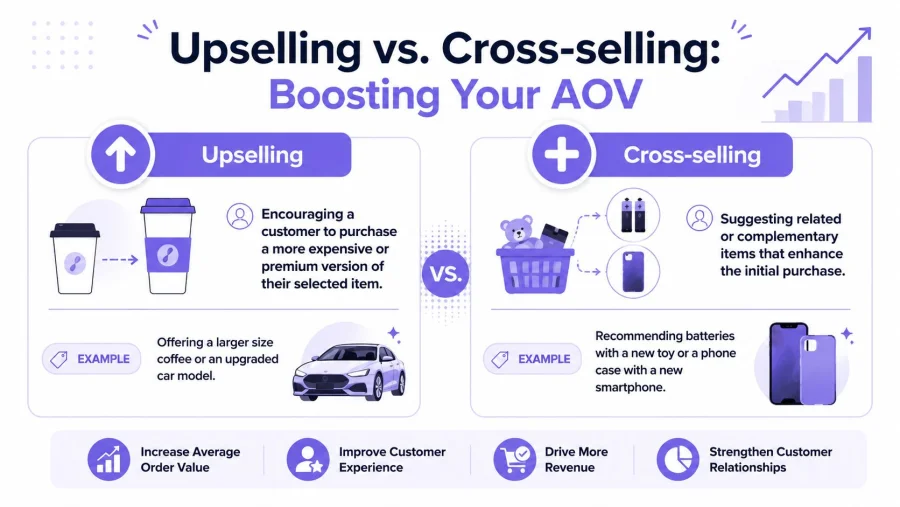
The distinction is simple.
- Upselling means guiding the customer to a better version of the thing they chose
- Cross-selling means suggesting a complementary item that improves the original purchase
What good upselling sounds like
Upselling should feel like a quality decision, not a pressure move.
In a café:
- “For a little more, that can be the guest roast.”
- “Would a large suit you today?”
In a salon:
- “That service can include the conditioning upgrade if you want the finish to last longer.”
- “Most clients booking this treatment add the scalp massage.”
In a restaurant:
- “That can come with the premium side if you'd prefer.”
- “Would you like to make that a full meal?”
The key is relevance. A customer ordering the basic option is often open to a better one if the improvement is easy to understand.
What good cross-selling sounds like
Cross-selling works best when it completes the experience.
Useful examples:
Café
“Would you like a pastry with that?”
“Do you want to add a bottle of water for later?”Salon
“Would you like the home-care serum that supports this treatment?”
“Do you need a travel-size version as well?”Restaurant
“Would you like fries or salad with that?”
“Can the table start with olives or bread while you choose?”
The mistake is making the offer too broad. A short, obvious suggestion beats a long menu recitation every time.
Train staff with prompts, not scripts
Staff don't need a speech. They need a simple prompt linked to a specific purchase.
A good internal checklist looks like this:
Match one add-on to each hero item
If someone orders a latte, suggest one pastry. If they book a colour treatment, suggest one aftercare product.Keep the language conversational
Questions should sound helpful, not rehearsed.Offer no more than one or two relevant extras
Too many choices create hesitation.Attach the suggestion to the moment of payment or confirmation
That's when the customer is already deciding value.
Why timing at redemption works so well
AOV often jumps at the exact point where the customer is redeeming a reward or completing a scan. The buying intent is already high. The customer is engaged. The extra offer lands in a narrow window where convenience matters more than debate.
The cross-sell and upsell integration at the QR redemption point yields a 41% success rate in increasing AOV for UK cafés and salons, with an average per-transaction value increase of £3.80 when a one-click add-on for a complementary high-margin item is presented during the scan, according to BonusQR's guide to digital loyalty cards.
That's why digital prompts are useful. They reduce reliance on staff memory and place the offer exactly where it can be acted on.
For businesses that want to manage time-sensitive offers and add-on incentives in one place, Coupon Management can support that process without turning the till interaction into a sales pitch.
What to avoid at the till
Some businesses lose the sale by overdoing it.
| Bad habit | Better approach |
|---|---|
| Listing every possible extra | Suggest one clear add-on |
| Using generic prompts | Match the offer to the item bought |
| Asking too early | Wait until the customer has chosen |
| Sounding apologetic | State the option simply and confidently |
A strong upsell feels like guidance. A weak one feels like interruption.
The easiest wins by sector
Different businesses have different low-friction add-ons.
Cafés and bakeries
Size upgrades, extra shots, flavoured syrups, pastries, bottled drinks, lunch add-onsSalons and wellness centres
Treatment upgrades, express extras, home-care products, post-service kitsRestaurants and quick-service spots
Sides, desserts, premium drinks, larger portions, starter add-onsGyms and studios
Guest passes, recovery drinks, branded merchandise, session upgrades
The pattern is the same. Keep the offer close to the original purchase. If the add-on helps the customer enjoy, maintain, or complete what they've already chosen, acceptance gets easier.
Use Loyalty Thresholds to Encourage Higher Spending
If one tactic consistently changes basket behaviour in physical businesses, it's the spend threshold.
The idea is simple. Give the customer a reason to cross a clear spending line in the current transaction. Not next week. Not after ten visits. Right now.
Why thresholds work better than vague rewards
Customers respond well to concrete targets. “Spend a little more and receive this” is easier to act on than a general promise of future loyalty benefits.
Salesforce advises setting free-shipping thresholds at roughly 30% above the current average order value, and in a brick-and-mortar setting that principle translates into spend thresholds where a UK consumer is nudged to add another item to reach a reward milestone, as explained in Salesforce's AOV guidance.
That's the key lesson for local operators. The target has to feel close enough to reach. If it feels unrealistic, customers ignore it. If it feels achievable, they start scanning the menu or shelf for the extra item that gets them there.
What this looks like in-store
A threshold offer should be visible, immediate, and easy to understand.
Examples:
Café
Spend enough on this visit to earn a free drink reward, which nudges a customer to add cake, an extra shot, or a bottled drink.Salon
Reach the reward threshold with a treatment add-on or home-care product and earn a perk tied to a future visit.Restaurant Hit the table spend target and earn a dessert incentive or loyalty credit.
Gym or studio
Add a product or extra session element to reach the reward line and trigger a member benefit.
What matters isn't the wording alone. It's whether the customer can see progress and act before paying.
The best threshold offer has three ingredients
A clear trigger
The customer should know exactly what earns the reward. Ambiguity kills uptake.
A logical add-on path
The business should make it obvious what the customer can add. If the only way to hit the threshold is awkward or excessive, the offer stalls.
A reward worth caring about
The incentive doesn't need to be lavish. It needs to feel tangible and relevant to the visit pattern.
Why this suits physical businesses so well
Threshold rewards work especially well in-store because they create a live decision. The customer is already at the counter, front desk, or table. The business has a narrow window to influence the basket.
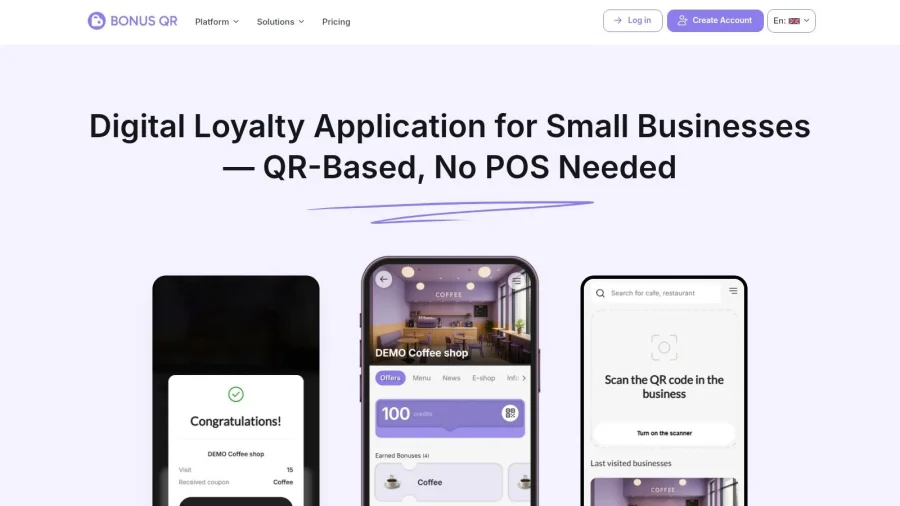
That's where a digital loyalty points program becomes useful. A merchant can tie rewards to spend milestones, show customers what they're working towards, and encourage one more item without relying on paper cards or staff memory. BonusQR is one option that supports QR-based rewards, spend thresholds, and in-person redemption for brick-and-mortar businesses.
Mistakes that weaken threshold offers
The logic is simple, but execution still matters.
Thresholds set too high
If the target feels far away, the customer stops trying.Rewards that don't match the business
A perk only works if customers value it.No visible reminder at decision points
If the customer only hears about the offer after payment, the chance is gone.Staff confusion
If the team can't explain the reward quickly, customers won't engage with it.
The most effective threshold offers don't push customers into a big leap. They invite one small, sensible addition.
A practical way to choose the right reward
Use items or perks that are easy to fulfil and naturally tied to the next visit.
A café might offer a drink reward. A salon might offer a service add-on. A restaurant might offer a loyalty credit or dessert trigger. The reward should feel generous to the customer while staying operationally simple for the business.
Many old-fashioned loyalty schemes fall short because they reward frequency eventually, but do very little to change the value of the current transaction. Spend thresholds do both.
How to Measure and Test Your AOV Strategies
AOV work only counts if it improves the business, not just the till receipt.
That's why measurement matters. Some offers raise spend but erode margin. Others barely move revenue yet improve profit because the add-ons are high-value and operationally easy to deliver.
Track more than one number
AOV is important, but it shouldn't live alone.
The most useful metrics are:
Average order value
This shows whether each transaction is getting larger.Items per transaction
This reveals whether people are adding extra products or services.Contribution margin per order
This shows whether the bigger basket is still financially worthwhile.
That last one is often ignored. AOV should be evaluated alongside contribution margin per order, not just gross order value. Higher AOV can reduce profitability if discounts and incentive costs rise faster than spend. This is critical for UK businesses with thin margins where more per order isn't automatically better, as discussed in Saras Analytics' analysis of AOV strategy.
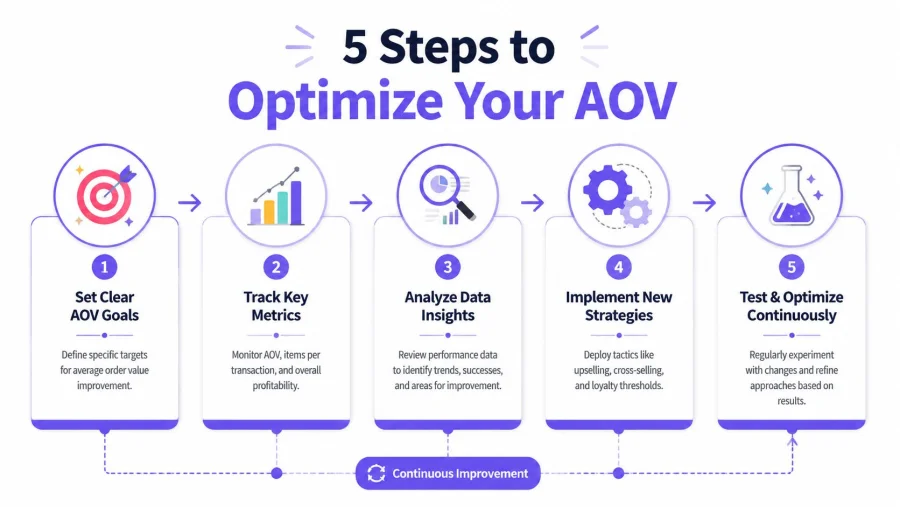
A simple testing cycle for small businesses
Most local businesses don't need complicated analytics. They need a clean routine.
Step 1
Record the current baseline. Pull a recent period and note average transaction value, common add-ons, and which products or services already pair naturally.
Step 2
Run one change at a time. Introduce a single bundle, one new till prompt, or one spend threshold. If everything changes at once, the business won't know what worked.
Step 3
Observe the shift in buying behaviour. Did customers add more items? Did staff use the offer consistently? Did the add-on come from a high-margin category or a low-margin one?
Step 4
Keep, tweak, or remove. If the tactic lifts profitable spend and runs smoothly, keep it. If uptake is weak, simplify the message or change the pairing.
What to test first
Some experiments are low-risk and fast to judge.
| Test idea | What to look for |
|---|---|
| One named bundle | Does it replace smaller single-item orders? |
| One till cross-sell prompt | Do staff remember it, and do customers accept it? |
| One spend-threshold reward | Does it trigger one extra item before payment? |
| One premium upgrade | Do customers trade up without resistance? |
This measured approach matters even more in hospitality. Restaurant operators, for example, often need AOV tactics to support margins, menu engineering, and service flow at the same time. Anyone focused on boosting restaurant profits can use that broader commercial lens alongside AOV testing to avoid chasing revenue that doesn't hold up financially.
AOV is a useful metric. Profit per order is the decision-maker.
What successful testing looks like
The strongest AOV systems are usually boring in the best way. Staff remember them. Customers understand them. Redemption is simple. Reporting is clear.
If a business needs spreadsheets, repeated retraining, and constant explanation just to support one offer, the tactic probably isn't strong enough for daily operations.
A good test produces an offer the team can repeat without friction. That's when it stops being a campaign and starts becoming part of how the business sells.
Start Boosting Your Average Order Value Today
Most businesses don't need a dramatic reinvention to improve AOV. They need a few better decisions at the point of purchase.
That usually starts with three moves. Build bundles that make sense. Use upsells and cross-sells that feel helpful. Add spend thresholds that encourage one more item in the current transaction.
Those changes are practical because they fit how physical businesses already operate. A café can adjust menu boards and till prompts. A salon can package services and recommend aftercare more clearly. A restaurant can structure table offers so the better-value choice also lifts the ticket.
The key is consistency. One good bundle won't change much if staff forget it. One reward won't matter if customers can't see it. One test won't help if nobody checks whether it improved profitable spend.
For readers comparing more general proven tactics for higher AOV, the useful filter is simple. Ask whether the idea works in a real physical transaction, with real staff, real queues, and real margin pressure.
If the goal is to turn more everyday transactions into larger, better-structured purchases, it helps to use tools built for in-person loyalty and redemption. Review the QR-based loyalty platform pricing and choose a setup that matches the business model, customer flow, and reward strategy.


