
 Deutsch
 Español
 Français
 Italiano
 Magyar
 Polski
 Slovenčina
 Čeština
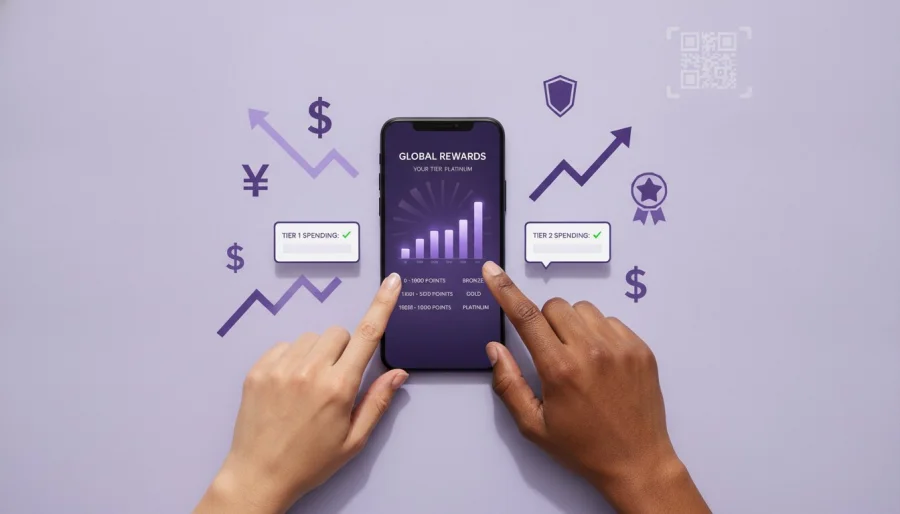
What if you could nudge every customer to spend just a little bit more every single visit without ever saying a word? Most business owners worry that their loyalty efforts are actually eating into their profits. You've probably felt the sting of giving away too much value on low-margin items or the headache of calculating rewards by hand. It's frustrating when customers feel unmotivated because their points grow at a snail's pace. When you're figuring out how to design a customer rewards program, you need a system that works for your bottom line as much as it works for your fans.
This guide gives you the exact methodology to map customer spending to reward points using strategic revenue ranges. You'll learn how to set brackets that maximize your profit margins and naturally increase your average order value. We'll show you how to move away from outdated paper cards and build an automated system that lives right in your customers' mobile wallets. Let's turn your rewards into a powerful, hands-off growth engine that rewards your most loyal shoppers while protecting your hard-earned revenue.
Key Takeaways
- Move beyond simple point-per-dollar systems by mapping rewards to specific revenue brackets that drive meaningful growth.
- Understand how to design a customer rewards program using your own transaction data to find the perfect minimum spend for every reward tier.
- Choose between tiered, weighted, or exponential models to ensure your most profitable products earn the most points.
- Protect your bottom line by calculating the true cost of points and avoiding the common "cliff effect" that kills customer motivation.
- Streamline your operations with an automated digital platform that delivers updates directly to Apple and Google Wallet passes.
What Does It Mean to Assign Points to Revenue Ranges?
Assigning points to revenue ranges is a strategic shift away from the traditional "one dollar equals one point" model. Instead of a linear calculation, you map specific transaction value bands to fixed point rewards. For example, any purchase between $20 and $40 might earn 30 points. This approach gives you total control over your margins. It ensures you aren't giving away too much value on small, low-profit transactions while still incentivizing bigger baskets. When you're learning how to design a customer rewards program, understanding these value bands is the first step toward a more profitable strategy.
Static models often fail because they don't actually change how people shop. If a customer gets one point per dollar regardless of what they buy, there's no reason for them to add that extra item to their cart. This leads to point fatigue, where rewards feel too far out of reach to be exciting. By using threshold rewards, you create a "nudge" effect. If a customer knows they'll jump from 20 points to 50 points by spending just five more dollars, they're much more likely to increase their spend on the spot. While a traditional customer loyalty program might focus on simple accumulation, range-based systems focus on immediate behavior modification.
Implementing this doesn't have to be a manual nightmare. A modern digital reward points system automates these calculations instantly. You set the rules in the background, and the software handles the math at the point of sale. This keeps the experience seamless for your staff and your customers.
The Shift from Linear to Range-Based Rewards
Linear systems often result in slow point accumulation that bores your audience. Range-based rewards allow you to reward high-value behaviors disproportionately. You can set steeper rewards for your premium tiers to keep your best customers engaged. This structure makes your program feel more dynamic. Automation plays a huge role here. It makes complex revenue ranges feel simple and intuitive for the user, as they see their progress updated in real-time on their mobile devices.
Key Metrics: AOV and Revenue Brackets
Your Average Order Value (AOV) is the most important metric when deciding how to design a customer rewards program. Use your current AOV as the anchor for your first profitable range. If your average customer spends $30, set a reward bracket that starts at $35. This targets the "dead zones" where customers typically stop spending. In 2026, the trend is moving toward instant bracket updates. Customers want to see their new point balance the second they finish their transaction, not at the end of the month.
5 Steps to Assigning Points to Revenue Ranges Correctly
Moving from a simple point-per-dollar system to a range-based model requires a clear plan. If you are thinking about how to design a customer rewards program that actually pays for itself, you must align your rewards with your business goals. Follow these five steps to build a system that increases your revenue without draining your margins.
Finding Your Spend Baseline
Success starts with data. Use a customer reward tracking app to export your transaction history and look for natural spending clusters. You'll likely see groups of customers who spend roughly the same amount every visit. Your first range should start at your lowest profitable transaction to protect your overhead. By setting a "zero-point" threshold, you prevent rewarding unprofitable, low-value transactions that don't contribute to your growth. This ensures every point earned is backed by a valuable sale.
Creating the 'Nudge' Effect with Brackets
Once you know your baseline, it's time to push for more. A Nudge Bracket is a psychological tool designed to increase transaction size by 10-15% by placing the next reward tier just beyond a customer's typical spending habit. For example, if your current Average Order Value (AOV) is $45, your most attractive point jump should start at $50. This small gap encourages customers to add one more item to their cart. Aim to provide a perceived value of 3-5% back to the customer. This feels rewarding to them but keeps your costs manageable. You can get started with your own digital loyalty platform to set these brackets in minutes.
The core of how to design a customer rewards program is finding the sweet spot between customer delight and business profit. Assign point values that reflect your specific product margins. High-margin services can afford more generous points than low-margin retail items. This ensures your rewards program remains a profit center rather than a cost center. Finally, always test and iterate. Monitor your redemption rates and listen to customer feedback to refine your brackets over time. If a specific range isn't moving the needle on your AOV, don't be afraid to adjust the threshold or the reward value to find what works best for your unique audience.
Allocation Models: Tiered vs. Weighted vs. Exponential
Choosing the right math for your rewards is where your strategy gets real. You don't want a one-size-fits-all approach that ignores your profit margins. When you're deciding how to design a customer rewards program, you must choose an allocation model that fits your specific business type. Whether you run a high-volume cafe or a high-ticket service business, the way you distribute points dictates your long-term success. Most businesses land on one of three core models: tiered, weighted, or exponential.
The Tiered Model is the most common for retail. It assigns fixed points for spending within a specific band. For example, spending between $50 and $100 might always net the customer 50 points. This makes the value proposition very clear. The Exponential Model takes a different path by rewarding your "Whale" customers. In this system, point values jump significantly at higher revenue levels. It's designed to make your top 5% of spenders feel like royalty, encouraging them to stay loyal to your brand rather than chasing a competitor's discount.
The Tiered Approach for Local Services
Local businesses thrive on simplicity. This is why digital rewards for barbershops often rely on tiered ranges for service upsells. You can set a "hard" boundary where a standard cut earns base points, but adding a premium shave moves the customer into a much higher point bracket. It balances ease of use for the client with strategic depth for the owner. You get to decide exactly which spending behaviors deserve the biggest rewards without overcomplicating the checkout process.
Weighted Points for Margin Protection
If you sell both services and physical goods, a Weighted Model is your best friend. Services usually have much higher margins than retail hardware. You can assign higher point values to those high-margin services to protect your bottom line. The challenge is communicating this without confusing people at the register. A scan to earn loyalty app solves this by automating the math instantly. The customer just scans their phone, and the points system calculates the correct reward based on the specific items in their cart.
Selecting the right model is a critical part of how to design a customer rewards program that actually scales. If you have high customer frequency but low transaction values, stick to tiered models. If you have a wide range of product margins, go weighted. The goal is always to make the customer feel the value while ensuring your business stays profitable with every point issued.
Common Pitfalls When Mapping Points to Revenue
Setting up your ranges is an exciting step toward growth, but a few common mistakes can stall your progress. When you're figuring out how to design a customer rewards program, you must avoid the "Cliff Effect." This occurs when your spending tiers are positioned too far apart. If a customer spends $25 and the next reward tier doesn't start until $75, they won't even try to reach it. They feel like the reward is impossible to earn. Instead, keep your ranges tight and achievable to maintain momentum.
Another major pitfall is ignoring the real cost of your points. You must calculate how every point issued impacts your net bottom line. If you give away too much value on low-margin items, your loyalty program becomes a liability. Don't let your math get too complex either. If a customer can't estimate their points while standing at your counter, they'll lose interest. Keep the logic simple and transparent. Finally, don't let your ranges stay static. In 2026, prices shift quickly due to inflation or seasonal changes. Your reward brackets should move with your prices to stay relevant and effective.
Avoiding the Cliff Effect
For small-ticket retail items, a large jump between tiers often leads to abandonment. It creates frustration rather than motivation. Use "micro-ranges" to keep customers engaged throughout their entire journey. Small, frequent wins are far more effective than one massive reward that feels unreachable. You can also use push notifications to alert customers when they are just a few dollars away from the next tier. This real-time encouragement turns a casual shopper into a motivated buyer who is ready to add one more item to their cart.
The Math of Profitability
Profitability isn't a guessing game. Use this simple formula: (Point Value / Revenue Range Midpoint) should be less than your Net Profit Margin. As a general rule, you should never offer a reward rate higher than 10% for your standard loyalty tiers. Going higher can eat your profits faster than you can scale your business. You can check out the BonusQR pricing to see how low-cost software keeps your program profitable without heavy overhead. Understanding these numbers is essential when learning how to design a customer rewards program that lasts.
Ready to build a program that actually makes sense for your bottom line? Register your account today and start mapping your profitable revenue ranges.
Automating Your Points System with BonusQR
You have done the math. You know your AOV and your nudge brackets. Now, you need a way to run your system without spending all day behind a calculator. This is where automation changes the game. When you're looking at how to design a customer rewards program, the technology you choose is just as important as the points you assign. BonusQR removes the friction by handling the revenue logic for you. You can set your brackets once and let the software manage the distribution.
Manual point entry is slow. It leads to errors, frustrates your staff, and bores your customers. Our loyalty platform eliminates these headaches. It integrates directly with the devices your customers already carry. Because there is no specialized POS hardware required, you can launch your program today. You aren't locked into an expensive ecosystem. Instead, you get a flexible, digital system that works for your specific business needs. This allows you to focus on your customers while the software handles the numbers.
White-label solutions mean you don't have to sacrifice your brand identity to go digital. You can brand your points system to maintain your unique look and feel. Setting up your first revenue-range point system takes under 10 minutes. You define your spending bands in the dashboard, and your digital passes are ready to go. It is a modern solution for businesses that value speed and efficiency.
Mobile Wallet Integration Benefits
Customers in 2026 expect speed. They don't want to carry plastic or wait for an email update. They want to see their points change instantly on their phone. By using Apple and Google Wallet integration, your rewards program lives in their digital pocket. This "Scan to Earn" approach is zero-friction for busy staff at the point of sale. It is the primary reason why modern shoppers prefer digital stamp card software over physical cards. It is faster, cleaner, and much more likely to be used every visit.
Getting Started with BonusQR
Ready to move from planning to profit? Follow these steps to launch your automated system:
- Create your account: Sign up and access your central dashboard.
- Configure ranges: Enter your revenue brackets and assign point values to each.
- Design your pass: Use our white-label tools to add your logo and brand colors.
- Go live: Start scanning customer phones to award points instantly.
Use the analytics dashboard to track which ranges are driving the most revenue. You can see which tiers motivate your "Whale" customers and which ones need a slight adjustment. This data-driven approach is the best way to master how to design a customer rewards program that actually scales. Start building your digital loyalty program with BonusQR today!
Scaling Your Business with Strategic Revenue Ranges
Designing a rewards program that actually grows your revenue doesn't have to be a mathematical burden. By shifting from simple linear points to strategic revenue ranges, you turn every transaction into an opportunity to nudge spending higher. You've learned how to identify your baseline, avoid the "cliff effect," and choose the right allocation model for your specific industry. Mastering how to design a customer rewards program is about balancing customer delight with your own profit margins. It's about making every point issued count toward your long-term success.
The future of loyalty is digital, frictionless, and mobile-first. You don't need expensive POS hardware or complex manual logs to make this work. With custom white-label options and seamless integration into Apple and Google Wallet, your brand stays front and center on your customers' phones. It's time to replace those outdated paper cards with a system that works as hard as you do. You have the framework and the tools to build something better.
Ready to automate your points system? Register for BonusQR now!
Take the first step toward a more profitable, automated future today. Your customers are waiting for a rewards experience that feels modern, rewarding, and easy to use. We're excited to help you grow.
Frequently Asked Questions
What is the best revenue range for a small coffee shop?
The best revenue range for a coffee shop starts slightly above your current Average Order Value (AOV). If your average customer spends $8, set your first reward tier at $10 to encourage that extra pastry purchase. This small nudge increases your daily revenue without feeling like a burden to the customer. It's a simple way to boost your bottom line while rewarding your regulars for their loyalty.
How do I calculate the monetary value of a single loyalty point?
Calculate the monetary value of a point by dividing the retail cost of a reward by the number of points needed to earn it. For example, if a $5 latte costs 50 points, each point is worth $0.10. Knowing this value helps you understand how to design a customer rewards program that remains profitable. Always ensure the total value of points issued stays well below your net profit margin for that transaction.
Can I have different points for different products in the same revenue range?
Yes, you can assign different point values to products within the same spending bracket by using a weighted model. High-margin items like specialty drinks or services can earn more points than low-margin retail goods. This protects your profitability while still giving customers a reason to spend. Digital loyalty software handles these calculations automatically so your staff doesn't have to worry about the math at checkout.
Should I use a linear or tiered points system for my retail store?
Tiered systems are generally more effective for retail stores than linear models. Linear systems often feel slow and unrewarding for the customer because points accumulate at the same rate regardless of spend. Tiers allow you to create "nudge brackets" that encourage larger basket sizes. This structure makes it easier to reward high-value behaviors and manage your margins effectively while keeping the experience exciting for shoppers.
How do I prevent my points system from hurting my profit margins?
Prevent margin erosion by keeping your total reward value below 10% of the transaction amount. Always factor in the cost of the goods or services you are giving away rather than just their retail price. When you analyze how to design a customer rewards program, you must treat points as a marketing expense. Monitor your redemption rates regularly to ensure your program is driving new revenue rather than just discounting existing sales.
What happens if a customer returns an item from a specific revenue range?
Most digital systems automatically deduct points when a return is processed. If a customer returns an item that put them into a higher revenue range, their point balance should reflect that change immediately. This prevents "point gaming" where customers buy and return items just to earn rewards. Digital wallet passes update these balances in real time so the customer always sees an accurate total on their phone after the transaction.
Is it better to give points based on revenue or the number of visits?
Revenue-based points are superior if your primary goal is increasing your Average Order Value (AOV). While visit-based systems are simple, they don't encourage customers to spend more once they are in your store. Rewarding based on revenue ensures that your most profitable customers receive the best rewards. This approach aligns your loyalty efforts directly with your business growth and total sales volume rather than just foot traffic.
How do I communicate my tiered points system to my customers?
Communicate your system through clear, simple language on your digital wallet passes and in-store signage. Avoid complex formulas that require a calculator. Use direct phrases like "Spend $50, Get 50 Points" to make the value obvious. When customers see their points update instantly on their mobile devices, they feel a sense of progress. This immediate feedback loop is the most powerful communication tool you have to drive repeat business.