For most small businesses, a simple digital stamp or points-per-spend programme is the best starting sample rewards programme because nine in ten Britons are already signed up for at least one loyalty programme, and food-service membership already sits at 34%. A clear, free reward that arrives quickly gives customers a visible reason to return without the cost or complexity of a large chain scheme.
A busy café can serve a steady queue all morning and still struggle to turn first-time buyers into regulars. A salon faces the opposite problem. Clients return, but appointments drift, gaps appear midweek, and there's no gentle reason to book sooner. Both businesses need repeat behaviour, but they don't need the same reward structure.
A sample rewards programme works only when it matches the natural purchase cycle, protects margin, and rewards one clear action. Stamps suit frequent, low-value visits. Points suit varied basket sizes. Milestones suit regular appointments and classes. Targeted coupons suit birthdays, slow periods, and lapsed customers.
The eight models below give owners a practical shortlist, not abstract theory. Each one explains who it serves, what behaviour it encourages, where cost can creep in, and how it can run with a phone and a QR code instead of new hardware. The logic applies beyond hospitality and beauty, whether customers book classes, buy grooming services, or earn rewards on golf gear through a specialist retailer.
The decision rule stays simple. Choose the behaviour that matters most first, then pick the simplest structure that rewards it.
1. Digital Stamp Card (Buy 9, Get 1 Free)
A digital stamp card is the classic coffee punch card without the crumpled paper. Customers earn one stamp per qualifying purchase, and the tenth drink, pastry, or treatment is free. Progress stays visible on a phone, so customers can see exactly how close the reward is.
That visibility matters. Recent UK research shows 59% of consumers prefer smaller, immediate rewards over larger delayed benefits, while 35% stopped using a programme because rewards took too long to earn, according to UK findings on demand for instant loyalty rewards. A long card therefore loses momentum before it changes behaviour.
Where Stamps Work Best
A neighbourhood café might give one stamp per drink and make the tenth free. A juice bar could offer double stamps on Tuesdays to lift slow weekday traffic. Both examples keep staff training brief because redemption is a scan, not a calculation.
- Reachable threshold: Set the free item so a typical regular earns it within four to eight weeks.
- Linked identity: Tie each stamp to a QR scan so visits connect to a real customer profile.
- Slow-period lever: Add a bonus stamp for a first visit or a quiet weekday slot.
Faster, transparent gratification usually beats a sophisticated points system that customers can't explain to a friend.
With BonusQR loyalty stamps, a stamp card launches in minutes, with no POS integration or extra hardware. Staff scan and redeem in the app, keeping start-up cost low and queue times short.
2. Points-per-Dollar Program (Starbucks Rewards)
Award one point per pound spent and the maths stays honest: customers always know where they stand. Starbucks Rewards runs this mechanic at scale, releasing Stars at set thresholds, and it suits cafés, grocers, and retailers where ticket sizes vary because it rewards basket size rather than frequency alone.
Points carry a hidden cost, though. Every point issued is a liability against margin, so set the earn rate and redemption value against gross margin, not optimism. Offering double points on fresh produce can steer baskets toward higher-margin lines, but only while customers can still calculate their balance mentally.
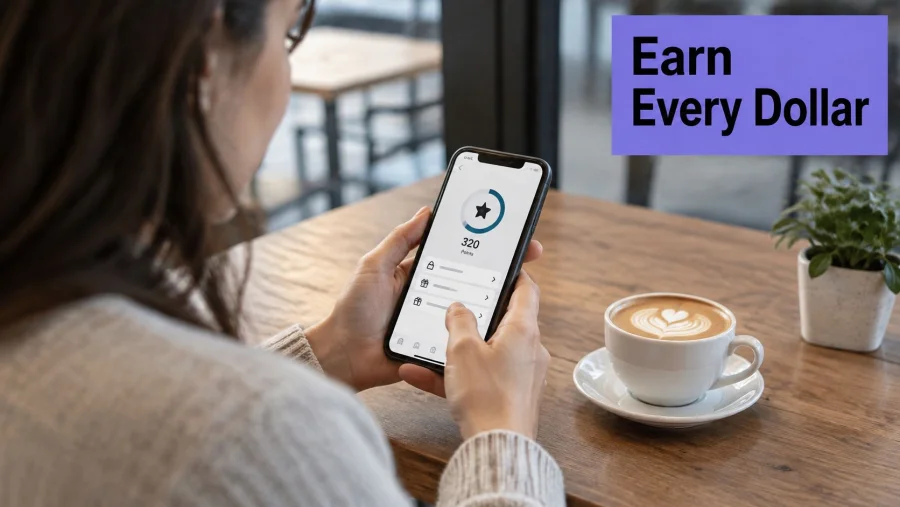
The Big Table Group reported a 32% increase in annual visit frequency and a 10% increase in annual customer spend within one year of deploying a branded loyalty app, as detailed in The Big Table Group loyalty case study. That programme used preference and visit data to send segmented offers instead of blanket discounts. That data advantage is where points systems outperform simpler mechanics.
Before launch, fix three numbers:
- Earn rate. One point per pound builds more trust than a multiplier table.
- First reward. Reachable within a few normal visits, or momentum dies.
- Redemption value. Priced so reward cost stays a small share of gross margin, judged on incremental visits rather than redemptions alone.
The BonusQR loyalty points guide supports points and spend thresholds without POS hardware, so a Starbucks-style structure can run on a single QR profile.
3. Tiered VIP Status Program (Sephora Beauty Insider)
A salon owner launches a VIP tier expecting loyalty to deepen. Six months later, the top tier holds twelve people, nobody remembers the perks, and the free blow-dry credit has steadily eaten into Saturday bookings. That is the failure mode of tiered programmes: they create aspiration on paper and admin in practice.
Sephora Beauty Insider runs the structure at scale, with members earning points and higher spend levels granting additional benefits and exclusive access. The mechanic is simple. Customers spend to reach the next level, then spend to keep it. The same pull works for a small business, but the perks decide whether a tier motivates or irritates.
The UK evidence is blunt: 79% of shoppers say they want personalised loyalty offers, 55% name irrelevant offers as their biggest frustration, and 61% say joining a scheme did not make them feel different from ordinary customers, according to research on UK shoppers demanding personalised rewards. Generic Gold status impresses nobody. A perk tied to how that customer shops does.

So keep the ladder short and the perks cheap to deliver. A salon could offer VIP members first booking on new services and a free add-on after ten visits; a boutique gym could give Gold members guest passes and previews of new classes. Early access and priority booking cost almost nothing yet feel exclusive, much like wine club perks for Australian enthusiasts built around insider access rather than heavy discounting.
Two tiers, Member and VIP, is enough until membership grows. Show customers exactly how many visits or how much spend remains before the next level, because visible progress drives the behaviour you want. BonusQR can set tiers as visit or spend thresholds inside one profile, so staff track status without enterprise software or a separate spreadsheet.
4. Visit-Threshold Milestone Rewards
A Tuesday-morning Pilates client who has checked in nine times is one visit away from a free pair of grip socks. That target is easy to understand, easy for staff to explain, and hard for the customer to ignore.
This model rewards showing up, not spending more. Use it where retention depends on cadence: gyms, salons, clinics, cafés with regulars. Skip it if revenue comes from occasional high-ticket purchases, because a visit count will feel beside the point.
The payoff can be measured. Popeyes UK reported loyalty participants were three times more likely to return within 30 days than non-participants, with 20% of kiosk and till orders matched to loyalty profiles and more than 300,000 rewards delivered through a gamified promotion, as shown in the Popeyes UK loyalty case study. Treat that as evidence for tracked visits, not proof that every café needs a game.
Set three rungs only: a small early marker around visit three to limit first-month drop-off, a meaningful reward at ten, and a status moment at twenty. Keep prizes cheap to deliver: an add-on, priority slot, class upgrade. The cost should sit in the missed visit you prevent, not in the gift.
BonusQR can count QR-scan check-ins and trigger a prompt when a customer is one visit away, so staff are not stamping cards or guessing counts. Judge it on profile capture, 30-day repeat rate, and reward-attributed revenue by cohort.
5. Cashback Credit Program (Costco Executive Membership)
Cashback is the easiest loyalty model to explain and the easiest to misprice. Costco's Executive Membership returns an annual reward on qualifying purchases, and the same logic scales down: spend with us, get store credit back.
It suits merchants with frequent repeat purchases and margin headroom, such as grocers, specialty retail, and cafés with high weekly spend. It fits poorly where margins are thin or purchases are rare, because the credit you owe arrives whether or not that customer needed the nudge to return.
The case for it is active participation. Analysts at Collinson found UK loyalty members generated 52% of total sales revenue on average, with 61% of registered members purchasing in the previous 12 months and 52% actively using programme features, per the Collinson Loyalty Landscape 2025 report. A visible credit balance gives members a concrete reason to come back rather than a vague promise of future perks.
Do the margin maths before launch, not after:
- Set the earn rate below your margin ceiling. If gross margin is 30%, a 5% credit is sustainable; a 15% one is a discount in disguise.
- Cap and expire the credit. A per-customer cap plus a 60 or 90 day redemption window limits liability and creates urgency to revisit.
- Pilot before rollout. Offer the programme to your top spenders for one quarter and compare their repeat rate against everyone else.
BonusQR tiered cashback rewards runs cashback alongside fixed-value rewards in one profile, so a small pilot costs little to set up.
Start conservative. Raising the earn rate for your best customers later is easy; clawing back a generous one is not.
6. Birthday and Welcome Rewards
A regular at a coffee shop gets a free pastry on her birthday and brings two colleagues along. The pastry costs under a pound; the visit rings up three lunches. That is the maths behind this programme type.
Welcome and birthday rewards work differently and deserve separate treatment:
| Reward type | Behaviour it drives | Typical cost driver |
|---|---|---|
| Welcome reward | A fast second visit while the first is still fresh | Underuse, since sign-ups who never return redeem nothing |
| Birthday reward | An annual touchpoint that often brings extra guests | Staffing, since a redemption window can crowd a busy week |
Who this suits: restaurants, salons, cafés, and any business where a freebie can attach to a larger transaction. Who it suits poorly: shops where purchases are rare and a birthday gift arrives unaccompanied by spending.
Ask for less data than you want. Collecting the birth month alone still enables the offer, and a redemption window of at least fourteen days gives customers time to plan a visit. Keep programme enrolment and marketing consent as two separate checkboxes.
The UK Information Commissioner's Office distinguishes core reward administration, such as calculating and issuing vouchers, from profiling members for targeted discounts, and customers retain the right to object to direct marketing, per ICO guidance on legitimate interests and loyalty schemes. Explain both purposes separately at sign-up.
Practical rule: A generic but genuinely useful reward can outperform a highly targeted offer that feels irrelevant or intrusive.
Pair a welcome reward with a next-visit coupon to build the habit early. BonusQR automates welcome and birthday coupons by push or email, and its GDPR-safe data handling helps owners collect only what's needed with a clear opt-out route.
7. Referral Rewards Program (Dropbox Model)
Dropbox built its early growth on a two-sided offer: the existing user earned extra storage, and the new sign-up earned extra storage too. That structure, rewarding both people in the exchange, is what separates a referral programme from a simple tell-a-friend nudge.
For a local business, the same logic applies with a free class, pastry, drink, or treatment upgrade on each side. The economics work because a friend's recommendation carries context that paid advertising cannot buy, so the new customer typically needs less convincing to book a first visit.
Setting the Reward and the Trigger
Pay out after the referred customer completes a paid transaction, not at sign-up. A gym could give both people a free week once the new member attends a first paid class. A café could hand the referrer a free pastry and the friend a free drink on that first visit. The delayed trigger costs nothing against fake referrals, which is the main way these programmes get exploited.
A 2025 survey of more than 2,000 UK consumers found 55% were more likely to join a loyalty scheme than a year earlier, rising to 71% among Generation Z and 72% among Millennials, according to reporting on loyalty schemes as a safety net for UK consumers. The audience for a referral prompt is already receptive.
Three details decide whether referrals happen. Sharing must take one tap, so a QR code or link inside the customer profile does the work. Printed counter materials catch happy customers at the moment of payment, when goodwill is highest. Referral tags in the back office reveal which regulars bring in the most valuable new guests, so rewards can concentrate there.
Keep the reward modest and margin-aware. BonusQR generates ready-to-print referral materials and tracks activity in analytics, so owners can reward genuine advocates without manual spreadsheets.
8. Feedback and Review Rewards
A customer leaves a salon with a great cut but no prompt to share feedback. Send a short survey while the visit is fresh, and you can learn what worked before that customer decides whether to return. A small completion reward can improve response rates, but it needs clear limits to protect your margins.
Reward customers for completing the survey, regardless of what they say. Never make a perk conditional on a positive public review. That can breach review-platform rules and leaves you with less trustworthy feedback. Use private surveys to uncover service problems, and invite customers to leave an honest public review without tying it to a reward.
Use Feedback to Improve the Next Visit
A café might offer a low-cost cookie for completing a brief post-visit survey. A salon could include a modest add-on with a future appointment. Set a cap on redemptions, and track whether respondents return. If the reward brings in responses but not repeat visits, change the offer or stop it.
The Retail Economics and Vypr loyalty report reports that 97% of UK consumers belong to at least one loyalty scheme, while 62% of non-members doubt schemes are worthwhile. The practical lesson: make the reward easy to understand, and keep the feedback request brief.
Ask soon after the visit, while details are fresh. Thank customers for their input, and follow up on recurring complaints. BonusQR can send automated feedback and review prompts by push notification or email, with analytics to help owners compare responses against visit trends.
Rewards Program Comparison: 8 Examples
| Loyalty Program | 🔄 Implementation Complexity & Resources | 📊 Expected Outcome | ⭐ Ideal Use Cases | 💡 Key Advantage |
|---|---|---|---|---|
| Digital Stamp Card | Low; digital card and QR scanning; minimal setup and operating cost. ⚡ | Encourages repeat visits through visible progress toward a fixed reward. | Cafés, coffee shops, bakeries, juice bars, and quick-service eateries. | Simple to explain, quick to redeem, and customers cannot lose the card. |
| Points-per-Dollar Program | Medium to high; requires transaction-level spend tracking, reward rules, and often POS or app integration. | Encourages higher and more frequent spending; purchase data can support targeted offers. | Cafés, restaurants, retail, and grocery businesses with varied transaction sizes. | Rewards customers in proportion to spend, with flexible reward levels. |
| Tiered VIP Status Program | High; requires tier thresholds, benefit rules, status tracking, and clear communication. | Motivates customers to increase spending or visits to reach or retain status. | Beauty salons, wellness centres, boutique retail, and premium gyms. | Recognises valuable customers and creates exclusivity through status and perks. |
| Visit-Threshold Milestone Rewards | Low to medium; needs accurate visit tracking and milestone reward rules. | Encourages consistent attendance and celebrates customer progress. | Gyms, fitness studios, salons, and appointment-based wellness businesses. | Easy to understand and well suited to rewarding regular visits. |
| Cashback Credit Program | Medium; requires spend tracking, balance management, and carefully set caps and expiry rules. | Encourages larger purchases and return visits to redeem earned credit. | Grocery and specialty food stores, retail shops, and businesses with healthy margins. | A tangible reward based on spending that customers can use on future purchases. |
| Birthday and Welcome Rewards | Low to medium; requires customer contact data, offer scheduling, and privacy-aware data handling. | Supports new-member engagement and creates a personal reason to visit. | Restaurants, quick-service eateries, salons, and businesses collecting signup details. | Personalised offers can be automated and are often straightforward to run. |
| Referral Rewards Program | Medium; needs unique codes or links, conversion tracking, and safeguards against self-referrals. | Drives customer acquisition through recommendations; rewards can go to both parties. | Gyms, fitness studios, salons, wellness centres, and restaurants serving groups. | Turns satisfied customers into promoters and can bring in trusted new customers. |
| Feedback and Review Rewards | Medium; requires timely requests, survey or review processes, and a plan to respond to feedback. | Can increase feedback and reviews while surfacing service issues. | Restaurants, cafés, salons, wellness businesses, and retailers. | Helps gather useful customer feedback; reward survey completion, not positive ratings. |
Turn One Reward Into a Repeat-Customer Engine
Owners shouldn't copy every feature from Starbucks, Sephora, or Costco. Large chains can fund complex tiers, apps, and promotional calendars that would slow a small team down. A small business needs one behaviour, one reward, and one simple way for staff to redeem it.
Start with the commercial problem. A café with weak weekday traffic needs visit frequency. A retailer with small baskets needs higher spend per transaction. A gym with early drop-off needs first-month milestones, while a salon with happy but quiet clients needs referrals and reviews.
The UK baseline supports a simple, free offer. A 2024 YouGov survey of 1,019 adults in the UK, weighted to represent Great Britain's adult population, found 65% were neither enrolled in nor interested in a paid loyalty scheme, as reported in YouGov research on what Britons want from loyalty programmes. Paid membership creates resistance that most independents don't need.
Customers also manage several schemes already. The UK Government's 2024 groceries review found the average shopper held three supermarket loyalty memberships, 21% belonged to five or more schemes, and 27% had joined a scheme during the previous 12 months, according to the Government review of loyalty pricing in the groceries sector. A new programme therefore doesn't need to educate customers from scratch. It needs to be worth adding.
A Practical 30-Day Launch Sequence
- Week one, define economics: Pick the target behaviour, reward value, threshold, expiry rule, and maximum reward cost as a share of margin.
- Week two, build sign-up: Set up a mobile or web QR flow, wallet pass, and a short explanation staff can say in one sentence.
- Week three, train and promote: Practise scanning and redemption, place materials at checkout, and add a welcome incentive for early members.
- Week four, measure: Review enrolment rate, repeat visits, reward cost, redemption rate, and spend among members versus a pre-launch baseline.
Personalisation can come later, and it should stay proportionate. Visit frequency, recency, and reward preference usually provide enough relevance without intrusive data collection. Customers who decline marketing should still be able to earn and redeem core rewards.
BonusQR gives brick-and-mortar businesses stamps, points, cashback, visit and spend thresholds, fixed discounts, welcome bonuses, birthday offers, and seasonal coupons in one customisable QR profile. Customers track progress in one place, staff scan and redeem without POS integration, and built-in analytics show top customers, coupon performance, and visit trends. That combination suits owners who need a working sample rewards programme quickly, not a software project.
Start with one reward that fits the next visit customers already plan to make, launch it free for customers to join, and measure repeat behaviour after thirty days. Visit BonusQR to set up a QR stamp card, points scheme, or welcome coupon, print the sign-up materials, and put the first reward in front of customers at the counter this week.


