The biggest discount doesn't create the best loyalty programme. It may produce a quick sign-up, but a welcome offer that cuts margin without creating a reason to return can attract bargain hunters rather than loyal customers. The stronger approach reduces friction on the first purchase and starts a simple path toward the next one.
The best welcome bonuses balance customer motivation, margin impact, operational complexity and repeat-visit potential. The options below cover discounts, points, free items, birthdays, referrals, spending thresholds, urgency, surprise rewards, bundles and content-led engagement.
UK customers already understand loyalty schemes. Mintel reported in 2024 that 80% of UK consumers belonged to a customer loyalty or reward scheme, while 45% of members viewed schemes as offering roughly the same benefits. Mintel's UK customer loyalty research makes the commercial point clear: a generic welcome discount may win attention, but clear value and a useful reason to return create differentiation.
QR signup, simple redemption and measurable follow-up matter as much as the reward itself. QRCode.co.uk reports that 86.66% of smartphone users in a UK-and-Europe survey had scanned a QR code at least once, although that familiarity doesn't guarantee every customer will scan. UK QR-code usage research supports a visible, explained scan journey rather than an assumption that customers will discover it unaided.
For cafés, restaurants, salons, gyms and shops, BonusQR provides a practical way to test these mechanics without POS integration or extra hardware. A merchant can place a QR code at the counter, let customers create a mobile profile, issue a reward and measure what happens next.
1. First Purchase Percentage Discount
A percentage discount is the easiest welcome bonus for customers to understand. A café can offer 15% off the first order, a restaurant can give 10% off the first visit, and a retailer can promote a 20% new-customer offer through a QR signup.
The appeal is immediate. Customers don't need to understand points, wait for a reward threshold or decide whether a future benefit is worth joining for. The business receives a customer profile at the same moment it reduces purchase hesitation.
The trade-off is margin. A blanket discount can subsidise people who would have bought anyway, especially during busy periods. It also risks teaching customers to wait for promotions if every future communication uses the same price-led message.
Make the discount earn its place
The offer should have a clear use window and one simple condition. A minimum spend can protect contribution margin, while an expiry can encourage a second visit without creating a complicated customer-service conversation.
Practical rule: The welcome discount should open the relationship, not become the entire loyalty programme.
A QR sign at the entrance, counter or receipt should state the benefit plainly:
“Scan to join and save 15% on today's order.”
Staff should know whether the offer applies before or after other promotions. BonusQR analytics can separate sign-ups, redemptions, average transaction value and later visits, allowing the merchant to compare first-purchase cost with repeat behaviour. For businesses that want a fixed-value alternative, BonusQR's fixed-discount loyalty option can support a more predictable reward structure.
2. Double Points or Stamps on the First Visit
Double points or stamps reward the first transaction without reducing its price. A coffee shop can give two stamps for the first QR visit, a salon can award double points for an initial booking, and a gym can add bonus points to a new membership purchase.
This mechanic suits businesses that want to build repeat frequency. The customer sees progress immediately, and the first transaction contributes more strongly toward a future reward. That progress can feel more valuable than a small discount when the loyalty journey is visible and easy to follow.
The weakness is delayed gratification. A customer who receives points but can't tell when those points become useful may ignore the programme. The reward path needs to be obvious from the first message.
Show the next reward immediately
The signup message should explain the multiplier in plain language:
“Buy one coffee today and get 10 points instead of 5.”
A profile should show the points earned, the next reward and the remaining progress. BonusQR's stamp-based loyalty programme guidance is relevant for businesses that prefer a familiar visit-based mechanic.
This option has low operational complexity when staff scan the customer's personal QR code. It also protects headline price, which can matter for salons, gyms and specialist retailers with limited room for discounting. The business should still track whether accelerated progress leads to another visit, rather than assuming that extra points automatically create retention.
A useful follow-up message can arrive after redemption:
“The welcome points have been added. The next reward is waiting after the next qualifying visit.”
That message connects the first reward to a specific future action instead of leaving the customer with an isolated balance.
3. Free Item or Service Credit
A free item or service credit gives customers something concrete. A café might offer a free coffee, a restaurant could provide a complimentary appetiser, a fitness studio can issue a free class pass, and a grocery shop can attach a credit to the first purchase.
This format works well for customers who need to experience the business before committing to regular visits. A specific product also gives the merchant control over cost. A free coffee or add-on may carry a very different margin impact from a free main course or full treatment.
Choose the reward that encourages a larger basket
The best free item isn't always the most expensive item. A business should choose something that has a clear perceived value, a manageable cost and a natural connection to a paid purchase.
Sample messages can stay direct:
- Café: “Join by QR and claim a free coffee with the next food purchase.”
- Restaurant: “New members receive a complimentary appetiser on their next visit.”
- Gym: “Register today and claim a free introductory class.”
- Salon: “Join the rewards programme and receive a complimentary treatment upgrade.”
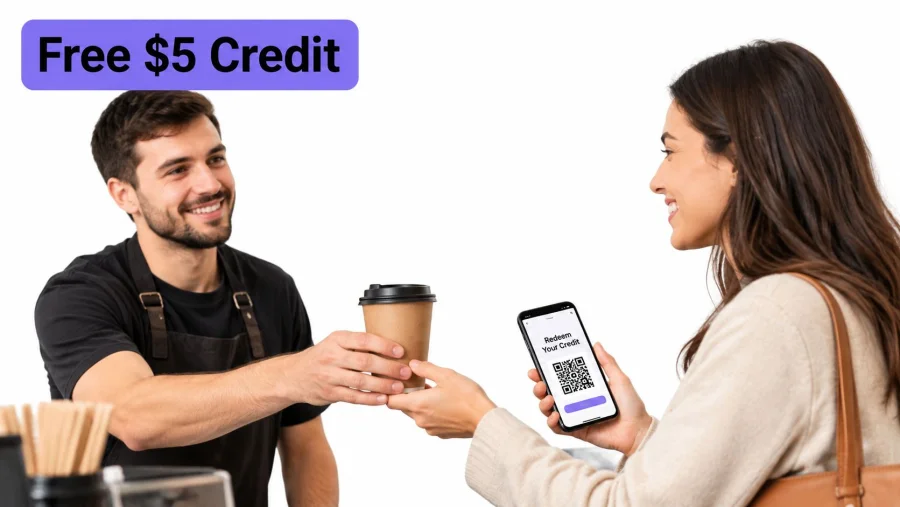
A credit can work better than a free item where customers have different preferences. The conditions should state whether the credit requires a minimum purchase, whether it applies to selected services and when it expires. A countdown in the customer's mobile profile can make the deadline visible without relying on staff to explain it.
The key measurement is not free-item uptake alone. The merchant should compare redemption with the value of the accompanying purchase and the likelihood of a subsequent visit.
4. Birthday Month Bonus Welcome Offer
A birthday-month bonus adds personal relevance to the welcome journey. A restaurant can offer a birthday dining benefit, a salon can provide a service upgrade, a gym can add a training session, and a retailer can award extra points during the member's birthday month.
This mechanic has a different job from a first-purchase discount. It creates a future reason to return and gives the customer a reason to complete a profile. The emotional context can make the interaction feel more personal, but birthday data should never be collected without explaining why the business wants it.
Keep personalisation useful
The signup form should ask for the birthday in one clear field, not bury it among unnecessary questions. The message can then arrive at the start of the relevant month:
“Happy birthday, Sarah. A complimentary service upgrade is ready to use this month.”
A thirty-day birthday window is easy to understand when the offer runs for the full month. A shorter window can create urgency, but it may frustrate customers who don't visit regularly. The reward should also match the purchase pattern. A free add-on may suit a café, while double points or a treatment upgrade may protect margin better for a salon.
BonusQR can automate birthday campaigns and combine them with seasonal communication. The merchant should avoid sending the same birthday message to every customer if different services, locations or customer preferences are available in the profile.
Birthday rewards work best as a retention layer rather than the only welcome incentive. A customer might receive a small first-visit benefit now and a personalised birthday reward later, giving the programme two distinct reasons to remain active.
5. Social-Sharing Referral Welcome Bonus
A referral welcome bonus turns a new customer's first interaction into a potential acquisition channel. The existing customer receives a benefit for a successful referral, while the new customer receives a welcome reward. Both sides need a clear reason to participate.
A café might give both people bonus stamps. A gym can offer account credit to the referrer and a first-month incentive to the new member. A salon can reward a successful introduction with a service credit rather than a broad discount.
Reward completed referrals, not empty clicks
The referral condition should be tied to a measurable action, such as a new customer registering and completing a qualifying visit. Otherwise, the business may pay for shared links that never produce revenue.
A simple message works better than a long explanation:
“Share this QR invite. When a friend joins and visits, both customers receive a welcome reward.”
The referral screen should display who has joined, what remains to qualify and what reward is waiting. One-tap sharing with a pre-written message reduces effort, while a branded QR code can support offline recommendations at the till, reception desk or appointment counter.
Referral rewards can become expensive if every share triggers a benefit. A merchant should test whether the reward is paid once per successful person, whether the new customer must meet a purchase condition and whether higher-value customers receive a different invitation.
For implementation ideas, these customer referral programme ideas for small businesses can help merchants build a structured referral journey. The useful measure is profitable new-customer activity, not the number of messages sent.
6. Tiered Welcome Bonuses Based on Spending Level
A tiered welcome bonus gives customers a stronger reward when their first purchase reaches a higher value. A restaurant could award different point levels at different spend thresholds. A retailer might attach a larger credit to a larger basket, while a gym could reward a longer membership commitment.
This structure is useful when the business wants to increase first-transaction value without giving the highest reward to every customer. It also lets customers choose the level that fits their budget.
The main risk is confusion. Too many tiers turn a welcome offer into a calculation exercise, particularly when customers are already deciding what to buy. The display should use simple thresholds and show the next benefit before checkout.
Match the reward to incremental value
A merchant should ask whether each tier encourages additional spend. If the next reward requires a large jump that customers won't reach naturally, it may produce no useful behaviour while making the offer look restrictive.
Suitable messages include:
“Spend £25 and earn 25 bonus points. Spend £50 and earn 75.”
A coffee shop can use product bundles instead of monetary thresholds:
- Three drinks: Receive a small bonus.
- Five drinks: Receive a larger bonus.
- A qualifying food order: Receive an add-on reward.
The precise reward should reflect contribution margin, not just the headline value. BonusQR threshold rules can automate qualification and issue the reward after the transaction. Seasonal tiers can also support quieter trading periods, but the conditions should state the dates and eligible products clearly.
The merchant should compare average transaction value with reward cost and second-visit behaviour. A tier that increases the first basket but reduces future visits may be less valuable than a simpler offer.
7. Limited-Time Welcome Flash Bonus
A flash welcome bonus gives customers a reason to act now rather than leaving the decision for later. A café can run a seasonal signup promotion, a restaurant can connect the offer to a menu launch, a salon can use an anniversary week, and a gym can support a new-year campaign.
Urgency works when the deadline is real. If a business repeatedly extends the same promotion, customers learn that there is no need to act immediately. The offer then becomes ordinary rather than motivating.
Connect the deadline to the trading calendar
A merchant should choose a period with a clear commercial purpose. A quiet weekday, seasonal change or local event can provide a more credible reason than an arbitrary deadline.
Examples:
“Join by Sunday and receive a welcome reward for the next visit.”
“New members who register during the summer menu launch receive bonus credit.”
The signage should show the deadline at the point of decision. Social posts, email messages and printed QR materials should use the same wording so customers don't encounter conflicting conditions. A reminder before expiry can recover customers who registered but haven't redeemed.
This mechanic has low complexity if the reward is automatic, but the business must define eligibility before launch. It should decide whether the deadline applies to signup, first purchase, redemption or all three. Those are different customer journeys.
BonusQR push campaigns can support deadline reminders. Analytics should compare signup activity before, during and after the campaign, then assess redemption and second visits. A flash promotion should create a controlled test, not become a permanent discount disguised as urgency.
8. Surprise and Delight Random Welcome Bonus
A surprise reward adds playfulness to signup. Customers might reveal a digital scratch card, receive a randomly selected benefit or choose from a branded prize wheel. A café could award bonus points, a restaurant could provide a small credit or appetiser, and a salon could offer an upgrade or extra points.
The experience can create a stronger memory than a standard coupon, but randomness must feel fair. A customer who receives no meaningful value may regard the programme as a trick, especially when the business has presented the reward as a welcome gesture.
Keep every outcome useful
The prize range should contain benefits that customers understand and can redeem. The business should publish the basic conditions, avoid difficult exclusions and ensure that the lowest-value result still feels appropriate.
A message can set expectations without revealing every outcome:
“Join the rewards programme, reveal today's welcome surprise and save it to the customer profile.”
The result should appear instantly after registration. A branded share card can encourage customers to tell friends, but sharing shouldn't be required to claim the reward. The merchant can review which outcomes receive the most engagement and adjust the mix while preserving transparency.
This option has more operational complexity than a fixed discount. Staff need to recognise the reward, customers need clear redemption instructions and the digital experience must work reliably on mobile. It can still suit cafés, retailers and entertainment-led venues where novelty supports the brand.
A surprise offer should not replace a clear value proposition. The signup screen should explain why joining is worthwhile before asking customers to reveal the prize.
9. Welcome Package Bundle
A welcome package combines immediate and future benefits. A merchant might pair a first-purchase discount with bonus points, a free add-on, a birthday reward and a referral benefit. The package can look generous because it covers several customer motivations at once.
The danger is information overload. Customers may join for the first discount and forget the rest, while staff struggle to explain conditions. A bundle should therefore be presented as a sequence, not as a dense list of unrelated perks.
Put the customer journey in order
The strongest order is usually:
- Immediate benefit: A reward available at the first purchase.
- Next-visit benefit: An incentive that encourages a return.
- Personal benefit: A birthday or preference-based reward.
- Growth benefit: A referral reward after a successful introduction.
A café could say:
“Join today for a welcome drink, unlock a reward on the next visit and receive a birthday treat.”
A salon might lead with a service upgrade, then explain points and referrals after the appointment. A gym can separate an initial membership benefit from longer-term attendance rewards.
The bundle should have a short name, clear expiry rules and one mobile profile where customers can see every available reward. BonusQR can combine stamps, points, cashback, visit or spend thresholds, fixed discounts, birthday coupons and seasonal offers in one loyalty experience.
A package is worthwhile only when each benefit has a job. If customers can't tell which reward expires first or what action opens the next one, a smaller single offer may perform better. The merchant should launch the bundle only after testing the individual mechanics or when the customer journey is simple enough to explain in one short message.
10. Content-Gated Welcome Bonus
A content-gated welcome bonus rewards engagement before or alongside the first transaction. A café could ask customers to view a short barista video and menu, a restaurant might provide a seasonal menu guide, a salon can invite customers to review team profiles, and a gym can offer a short tour before revealing the reward.
This approach can build useful preference data, but it should never make customers work through a long marketing funnel for a modest benefit. The content needs to answer a real question or remove uncertainty.
Make the engagement genuinely useful
A customer should complete only a small number of actions in a short session. Suitable steps include viewing a menu, selecting a product preference, checking a service profile or watching a quick venue tour.
A gym message could read:
“Take the virtual tour, choose a class preference and unlock the welcome reward.”
A restaurant could write:
“View the seasonal menu and join the rewards programme to receive a welcome credit.”
The reward should appear immediately after completion. A progress indicator can show what remains, while profile data can support more relevant future offers. A customer who selects vegetarian menu preferences shouldn't receive the same food promotion as every other member.
Content gating has higher complexity than a QR discount because the content, tracking and reward rules must work together. It also creates a higher risk of abandonment if the content isn't valuable. Businesses should compare completed journeys, reward claims, first purchases and repeat visits with the simpler welcome mechanics.
The best use case is a business where education affects conversion, such as a specialist retailer, salon or gym. For a fast coffee purchase, a direct reward is usually easier.
Top 10 Welcome Bonuses Comparison
| Offer | 🔄 Implementation Complexity | ⚡ Resource Requirements | 📊 Expected Outcomes | 💡 Ideal Use Cases | ⭐ Key Advantages |
|---|---|---|---|---|---|
| First Purchase Percentage Discount | Low, auto-apply via QR, minimal logic | Low, basic POS/config + tracking | ⭐⭐⭐⭐ High conversion; immediate volume lift; margin hit on first sale | Coffee shops, Restaurants, Retail stores, Quick-service eateries | High conversion, low friction, easy to measure |
| Double Points/Stamps on First Visit | Medium, needs points/stamp system support | Low–Medium, points UI & accounting | ⭐⭐⭐ Moderate conversion; better retention and faster time-to-reward | Gyms, Coffee shops, Beauty salons, Frequent-visit restaurants | Preserves margin, gamifies loyalty, accelerates engagement |
| Free Item or Service Credit | Low–Medium, redemption and voucher handling | Medium, inventory/POS integration and tracking | ⭐⭐⭐⭐ Strong trial conversion; higher AOV; margin impact similar to discounts | Coffee shops, Restaurants, Gyms, Beauty salons | Clear tangible value; powerful trial mechanism |
| Birthday Month Bonus Welcome Offer | Medium, capture date + automation workflows | Medium, data capture, automated messaging | ⭐⭐⭐⭐ High relevance and redemption for eligible users; stronger brand connection | Beauty salons, Restaurants, Gyms, Retail stores | Personalized, emotionally resonant, high engagement |
| Social Sharing Referral Welcome Bonus | High, referral tracking, anti-fraud measures | High, links/QRs, tracking, reward fulfillment | ⭐⭐⭐⭐ → long-term High CAC efficiency if scaled; viral growth potential | Gyms, Coffee shops, Beauty salons, Restaurants | Low CAC growth engine; leverages existing customers |
| Tiered Welcome Bonuses by Spend | Medium, threshold logic and display | Medium, tier visibility + tracking | ⭐⭐⭐ Increases average first purchase; self-selecting customers | Restaurants, Retail stores, Gyms, Quick-service eateries | Raises AOV, protects margin, appeals to varied budgets |
| Limited-Time Welcome Flash Bonus | Low–Medium, time windows and countdowns | Low, campaign setup and promo assets | ⭐⭐⭐ High short-term signup spike; risk of post-campaign drop | Coffee shops, Restaurants, Gyms, Retail stores | Urgency drives fast acquisition; easy to measure |
| Surprise & Delight Random Welcome Bonus | High, gamification + randomized outcomes | High, UX/animation, probability management, fraud controls | ⭐⭐⭐⭐ Boosts signups and shares; perceived value varies | Coffee shops, Retail stores, Restaurants, Gyms | Memorable, highly shareable, differentiates brand |
| Welcome Package Bundle (Multi-Benefit) | Medium–High, coordinate multiple reward types | High, multiple redemptions, tracking complexity | ⭐⭐⭐⭐ Highest perceived value; broad appeal; complex fulfillment | All business types (premium positioning) | Multiple engagement hooks; sustained lifecycle interest |
| Content-Gated Welcome Bonus | Medium, gating logic + engagement tracking | Medium–High, content creation and analytics | ⭐⭐ Deeper engagement and data capture; lower immediate conversion | Gyms, Salons, Restaurants, Premium retail | Earned value, builds trust, collects behavioral insights |
Turn the First Reward Into the Next Visit
The best welcome bonus depends on the business problem. A café that needs more trial may start with a percentage discount or free add-on. A business that relies on frequent visits may choose points or stamps. A retailer with varied basket sizes can test spending thresholds, while a salon or gym may gain more from a service upgrade or progress-based reward than from a broad price cut.
Birthday bonuses suit businesses with a natural personal relationship. Referral rewards support acquisition when satisfied customers already recommend the business. Flash bonuses can fill slow periods, but only when the deadline is credible. Bundles should be reserved for journeys that remain easy to explain.
The decision should also reflect margin and operational capacity. A free item can be affordable when it uses a high-margin product, but expensive when it gives away the service customers would have paid for. A points multiplier protects the visible price but delays value. A tiered offer can increase basket size, but complicated thresholds can reduce redemption. A surprise reward can improve engagement, but fixed offers are easier for staff and customers to understand.
UK loyalty behaviour supports a focus on convenience. YouGov reported that 85% of British consumers find discounts appealing in loyalty programmes, 82% value monetary rewards such as vouchers, and 67% value freebies. The same survey found that 87% consider ease of redemption important. YouGov's 2024 loyalty programme research supports a simple first reward with a short path from signup to use.
A practical launch sequence looks like this:
- Choose one mechanic: Start with the business's main objective, such as trial, frequency, basket value or referrals.
- Define eligibility: State whether the reward applies to signup, a first purchase, a minimum spend or a particular service.
- Set a sensible expiry: Create urgency without making redemption frustrating.
- Promote one QR action: Place the code at the point of sale, on tables, at reception, on receipts and in relevant social channels.
- Track the full journey: Measure signup, activation, redemption, second visit, time between visits and incremental spend.
- Refine the reward: Keep the mechanic if it creates profitable repeat behaviour, then test a different reward type or customer segment.
Consent must remain separate from reward access. The ICO says organisations generally need consent before sending unsolicited marketing emails or texts to individual subscribers under PECR, unless every condition of the soft opt-in applies. The ICO's direct-marketing guidance says consent should be freely given, specific, informed and unambiguous, with an opt-out route in every marketing email or text.
A loyalty signup shouldn't silently enrol customers into every marketing channel or unrelated partner promotion. The ICO's guidance on marketing lists and the soft opt-in explains that later promotional messages need to relate to similar products or services, with a clear chance to opt out when details are collected and in every subsequent message.
BonusQR gives brick-and-mortar businesses a way to put this process into practice. Merchants can start free, configure welcome bonuses and other loyalty rules without POS integration or extra hardware, and let staff scan and redeem through the app. Customers can receive personal profiles, wallet passes for Google Wallet or Apple Wallet, visit history and available rewards, while merchants can use ready-to-print materials, automated campaigns and analytics to review performance.
Start with one clear welcome offer in BonusQR, place the QR code where customers already make decisions and review the first redemption and second-visit data before adding more mechanics. That approach keeps the programme affordable, protects the customer experience and turns the first reward into a measurable path toward repeat business.


