A lot of local businesses are still handling referrals on hope alone. A regular mentions the café to a friend. A salon client tags a stylist in a group chat. A gym member brings a colleague in once. Then nothing is tracked, nothing is rewarded, and nobody knows which customer advocacy is driving sales.
That approach leaves money on the table.
A proper referral reward system gives happy customers a reason to act now, not someday. It also gives the business a simple way to make word-of-mouth repeatable. For coffee shops, salons, restaurants, gyms, and neighbourhood retailers, that matters because most owners don't need another complicated marketing channel. They need a low-effort system that turns existing goodwill into measurable new visits.
Why Your Business Needs a Referral Reward System
Most independent shops already have customers who would recommend them. The problem isn't customer satisfaction. The problem is lack of structure.
In the UK, 65% of new business is generated through referrals, and 92% of British consumers trust personal recommendations from people they know over corporate marketing according to Saasquatch referral statistics. That's the gap. Customers trust people far more than ads, yet many businesses still put most of their energy into social posts, printed leaflets, or paid campaigns that don't have the same built-in trust.
A referral system fixes that by doing three simple things:
- It prompts the ask: customers are far more likely to refer when there's a clear next step.
- It sets a reward expectation: people know what they get and when they get it.
- It makes results visible: staff can see whether the programme is being used or ignored.
For cafés, this often works best when referral rewards sit alongside a strong core offer. If a business is tightening pricing, margins, or product mix first, this Allied Drinks Systems menu guide is worth reading because a profitable menu gives more room to fund sensible referral incentives.
Practical rule: word-of-mouth is powerful, but unmanaged word-of-mouth is inconsistent.
A business doesn't need enterprise software to get this right. It needs a simple journey. Customer joins. Customer shares. Friend redeems. Both get rewarded. That's why many owners looking at implementing rewards programs for growth get better results when they stop treating referrals as a side idea and start treating them as a standard part of customer retention.
Designing Referral Rewards People Actually Want
The reward is where many referral programmes fail. Not because the business had bad intentions, but because the offer felt too small, too vague, or too awkward to share.
In the UK, consumers expect a minimum reward value of £21 to feel motivated to participate in a referral programme, yet many businesses still offer only £10 in store credit. Aligning reward values with this expectation can increase repeat visits by 37% in sectors like hospitality according to Impact's UK referral statistics roundup.
That doesn't mean every business should hand out cash. It means the customer has to feel the reward is worth the effort.
Match the reward to the buying pattern
A coffee shop has different economics from a salon. A gym has different customer behaviour from a convenience retailer. The reward should fit the way customers already buy.
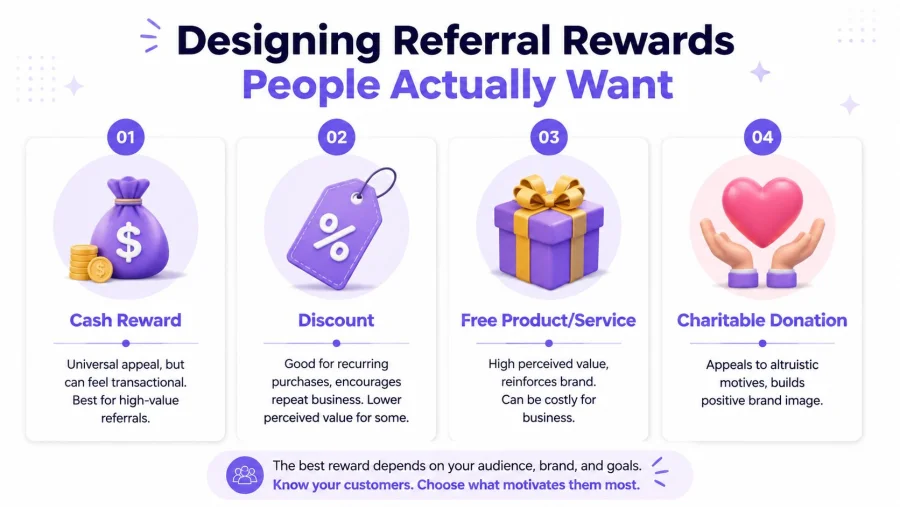
| Reward type | Best fit | Main upside | Main risk |
|---|---|---|---|
| Store credit | Cafés, retail, quick-service | Encourages another visit | Too little credit feels forgettable |
| Fixed discount | Salons, beauty, wellness | Easy to explain at checkout | Can feel weak on higher-ticket services |
| Free product or upgrade | Coffee shops, eateries, beauty | Strong perceived value | Can create margin pressure if overused |
| Early access or exclusives | Gyms, speciality retail | Adds brand feel without heavy discounting | Needs very clear terms |
For a coffee shop, “free pastry after a successful referral” can feel more appealing than abstract points, but only if the terms are obvious and redemption is easy. For a salon, a fixed amount off a future service often lands better because the transaction value is higher and clients plan appointments ahead.
Use value people can understand fast
Complicated reward math kills participation. If staff have to explain the scheme three different ways, customers won't use it.
A practical reward should pass this test:
- Clear: customers understand it in one sentence.
- Visible: the reward appears where they already engage, such as a receipt, QR landing page, loyalty profile, or table card.
- Believable: it feels generous enough to matter, but not so extreme that customers doubt the offer.
- Affordable: the business can fund it repeatedly without eroding margin.
Customers don't compare the reward to the owner's margin spreadsheet. They compare it to whether sharing feels worth the social effort.
Choose a reward by business type
Some reward formats are easier to sustain than others. For smaller operators, these are usually the most practical choices:
- Coffee shops and cafés: store credit, free drink upgrades, or a free item after a verified referral.
- Beauty salons and wellness centres: fixed discounts on the next appointment or add-on services.
- Gyms and fitness studios: joining incentives for the new member plus a member perk for the referrer.
- Retail and grocery stores: discount vouchers or credit tied to a future spend.
Avoid the common reward mistakes
The most frequent errors are usually simple.
Offering too little value
If the reward feels token, customers ignore it.Offering something hard to redeem
If the customer has to remember a code, a date, and a separate claim process, momentum disappears.Choosing a reward the friend doesn't care about
Referral sharing works best when the offer feels useful to the person receiving it.Using rewards that don't fit the brand
A premium salon can cheapen its positioning with badly framed discounts. A local café can make things overly complicated with tier names and loyalty jargon.
The best rewards for referrals feel simple, fair, and immediate. If the owner can explain the offer in under ten seconds at the till, that's usually a good sign.
Structuring Your Programme for Maximum Impact
A good reward still needs good rules. Structure is what turns a nice idea into something customers use.
The strongest setup for most local businesses is the dual-sided referral model. That means both people benefit. The existing customer gets a reward, and the new customer gets one too. According to Mention Me's refer-a-friend examples, successful UK referral programmes often use a split such as £10 store credit for the referrer and 10% off the first order for the new customer, because this mutual incentive structure creates a clear win-win.
Why single-sided rewards often underperform
If only the referrer gains something, sharing can feel self-serving. Customers hesitate because the message sounds like “help me get a perk” rather than “here's something useful for you too”.
A dual-sided structure changes the tone. It makes the referral feel generous, not transactional.
Keep the rules tight
The best programme rules are usually short enough to fit on a small sign or phone screen.
A practical structure often includes:
- Who qualifies: existing customer refers a new customer.
- What triggers the reward: first purchase, first booking, first paid visit, or first membership.
- When the reward arrives: ideally soon after the qualifying action is confirmed.
- How it's redeemed: automatic credit, QR scan, or app-based coupon.
Working principle: if a member of staff can't explain the referral offer quickly during a busy shift, the structure is too complex.
When tiered rewards make sense
Flat rewards are easier to launch. Tiered rewards can be stronger when a business has obvious regulars who already advocate heavily.
For example, a gym, café, or salon might reward the first successful referral with one perk, then offer a better one after several successful referrals. That approach can help keep top advocates engaged instead of making every referral feel like a one-off transaction.
Owners who want broader planning ideas can compare structures with this step-by-step referral program guide, then simplify the model for a physical location. Brick-and-mortar businesses usually need fewer moving parts than online brands.
Build around easy delivery
The reward should arrive in a way the customer can use. For many smaller businesses, that means avoiding paper vouchers, punch cards, or manual spreadsheets. Digital delivery through QR-based loyalty solutions keeps the process cleaner because staff can verify eligibility, issue rewards, and redeem them from one customer profile instead of chasing screenshots and memory.
A strong structure doesn't try to be clever. It removes friction, rewards both sides, and makes redemption obvious.
Launching Your Referral Programme in Minutes
Most referral programmes don't stall because the idea is bad. They stall because setup feels bigger than it needs to be.
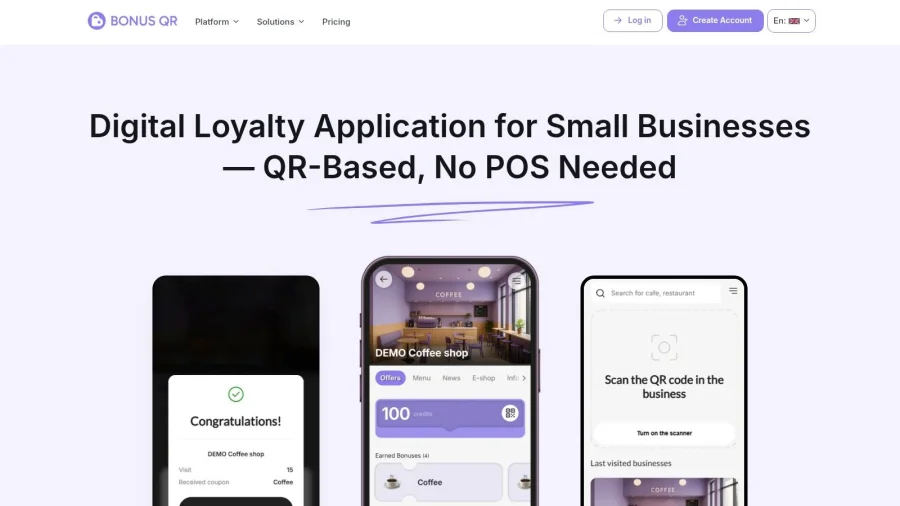
For a local business, the fastest route is a digital system that works from a phone and doesn't depend on POS integration, custom development, or new hardware. That's why QR-based loyalty tools are often the most practical option. Staff already know how to scan. Customers already know how to open a link or code. The business doesn't need to wait on a technical project.
A simple launch checklist
A clean launch usually follows this order.
Choose one referral trigger
Keep the qualifying action simple. First paid visit, first treatment, first membership payment, or first order over your normal threshold all work better than layered conditions.Set one core reward for each side
Don't start with multiple variants. One reward for the referrer, one for the friend.Write the terms in plain English
Avoid legal-sounding wording on customer-facing materials. The internal policy can be more detailed, but the public version should be short.Generate the customer join point
This is usually a QR code at the till, on tables, on mirrors, on the counter, or inside takeaway packaging.Prepare staff prompts
If staff forget to mention the programme, adoption drops fast.Create printed materials
A small poster, table talker, bag insert, and till sign are enough for most shops.
What staff should say
The script should sound natural, not rehearsed. The business doesn't need a speech. It needs one line that fits real interactions.
Examples that work well:
- At the till: “If you've enjoyed today, scan this and both you and a friend can get a referral reward.”
- After a treatment: “If a friend books through your referral, you'll both get a perk on the next visit.”
- At membership sign-up: “Members can invite friends through the programme and both sides get a joining benefit.”
What to put on the sign
Good referral signage answers three questions immediately:
- What do I get
- What does my friend get
- What do I need to do
That's it.
Keep the first version small
The first version should be tight enough to launch this week, not broad enough to satisfy every hypothetical customer journey. A lot of owners delay launch because they want every edge case solved in advance. That's usually unnecessary.
A lean first rollout might look like this:
| Element | Simple first version |
|---|---|
| Reward | One reward per side |
| Trigger | First completed purchase or booking |
| Promotion points | Till, front door, receipt, social bio |
| Staff training | One sentence prompt |
| Tracking | Digital customer profile and referral status |
A programme that's live and simple beats a perfect programme that never launches.
Why digital beats paper for small teams
Paper referral cards seem cheap, but they create admin. Cards get lost. Staff forget to stamp them. Customers can't prove who referred them. Managers end up making judgement calls at the counter.
A digital flow is cleaner because the business can tie the reward to a customer profile, a QR action, and a completed visit without adding manual reconciliation. That's especially useful for cafés, beauty businesses, and gyms where the front-of-house team is already juggling enough.
For owners comparing options, reviewing loyalty platform pricing early helps frame what “affordable” really means. The right tool shouldn't require custom tech or a long onboarding period just to launch a basic referral offer.
Promoting Your Referral Programme to Customers
A referral programme can be well designed and still flop if customers barely notice it. Promotion doesn't need a big budget, but it does need repetition.
Start inside the premises
The best place to promote referral rewards is where customers are already happy with the experience.
Useful in-store placements include:
- At the till: ideal for quick verbal prompts and impulse sign-ups.
- On tables or mirrors: strong for cafés, salons, and treatment rooms.
- On packaging: takeaway bags, product boxes, and aftercare cards travel beyond the shop.
- Near the exit: catches customers when the visit is fresh.
Give staff one job, not five
Staff don't need to become marketers. They just need a consistent cue.
A practical manager brief usually covers:
- When to mention it: after a positive interaction, not during a complaint or rushed queue.
- Who to mention it to: regulars, visibly satisfied customers, and people already talking about friends or family.
- What not to do: don't oversell, and don't force the script into every transaction.
Use the channels already in place
Most small businesses already have enough channels to support a referral launch.
That usually means:
Email footer or post-visit email
Add one line about the referral reward.Instagram bio or story highlight
Keep the message short and visual.Google Business Profile updates or pinned social posts
Useful for reminding regulars who don't open email.Printed inserts
Cheap, local, and effective for shops with takeaway or bagged purchases.
Customers rarely act on a referral offer the first time they see it. Repetition matters more than clever wording.
Keep the message focused
The strongest promotional copy is direct. Avoid loyalty jargon, programme names that need explanation, or long reward descriptions.
Good examples:
- Bring a friend, both get rewarded.
- Refer a friend after your visit and get your next perk.
- Share your QR invite. Your friend gets a welcome offer, and you get a reward too.
If a business has to choose between beautiful branding and obvious clarity, clarity should win every time.
Measuring Success and Avoiding Common Pitfalls
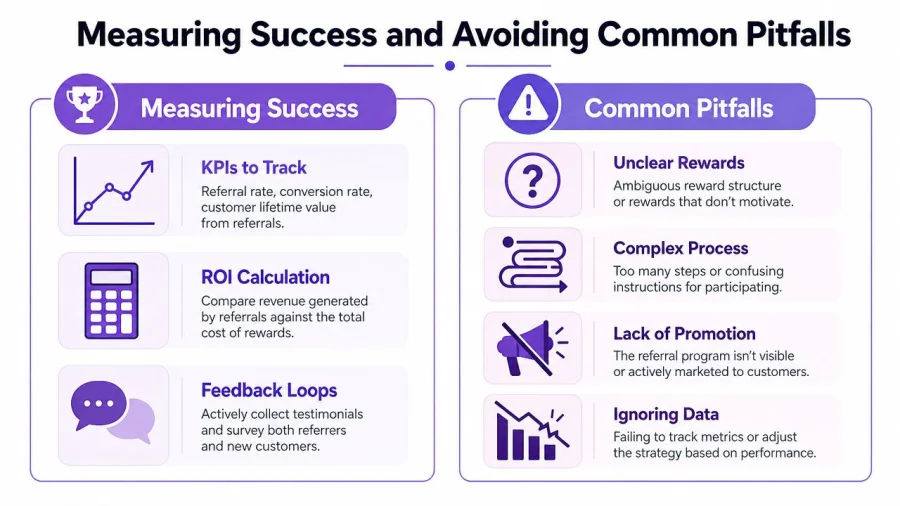
Referral programmes work best when the business tracks a few essentials and ignores vanity metrics. The goal isn't to build a full analytics department. The goal is to know whether the programme is visible, used, and profitable.
In UK loyalty platforms, average benchmarks include a share rate of 2.35% of total transactions, a conversion rate where 15% of referred users make purchases, and 12% of referral programmes facing abuse without real-time fraud detection, based on the verified UK implementation data provided for referral rewards. Those benchmarks are useful because they give smaller businesses a starting point for sanity-checking performance.
The numbers worth tracking
A local business usually needs only a handful of metrics:
| Metric | What it tells you | Why it matters |
|---|---|---|
| Share rate | How often customers actually refer | Shows whether the offer is visible and motivating |
| Referred purchase conversion | How many invited people buy | Shows whether the friend offer works |
| Reward redemption | Whether earned rewards get used | Reveals if rewards are clear and desirable |
| Repeat visits from referred customers | Whether referrals stick | Helps judge long-term value |
| Fraud flags | Suspicious self-referrals or repeat misuse | Protects margin |
If share rate is low, the issue is usually visibility or reward appeal. If shares happen but referred friends don't convert, the friend-facing offer or the joining flow is often the problem.
The compliance risk many businesses miss
There's another issue that gets less attention. Non-monetary rewards.
A lot of hospitality businesses prefer free upgrades, priority access, exclusive tastings, or members-only offers because these can protect margin better than cash-heavy rewards. That can work, but the messaging has to be clear. A verified UK compliance note highlights a 34% rise in 2025 complaints regarding “hidden terms” in loyalty schemes, based on Competition and Markets Authority complaint data referenced in the verified dataset.
That matters for any business using referral rewards with conditions.
Hidden exclusions cause more damage than a modest reward ever will.
A quick audit before launch
Run through this checklist before putting the programme in front of customers:
- State the reward clearly: what each person gets.
- State the trigger clearly: what counts as a successful referral.
- State any exclusions: new customers only, selected products, or minimum booking conditions.
- Keep timing clear: when the reward arrives and how long it lasts.
- Check data handling language: especially if the programme captures names, phone numbers, or emails.
The biggest pitfall isn't usually fraud or technology. It's confusion. Customers who feel misled won't just ignore the programme. They can lose trust in the business itself.
Frequently Asked Questions About Referral Rewards
Do tiered rewards actually improve retention
They can, especially in hospitality. Verified UK data shows that tiered structures increase repeat visit frequency by 28% in the UK hospitality sector compared to flat rewards, directly correlating with a 15% higher LTV.
For a café or casual food business, that means the referral design shouldn't be judged only on the first redeemed visit. A customer who comes back more often after joining through a stronger referral path may be worth more over time, even if the initial reward cost a little more.
How can a small business estimate that without expensive software
Use basic QR or loyalty data. Track three groups separately:
- Standard customers
- Flat-reward referrals
- Tiered-reward referrals
Then compare repeat visits and total spend over a consistent period. The method doesn't need advanced integrations if the business can identify the referral source and monitor return behaviour inside the loyalty profile.
How often should a referral reward be changed
Only when the current offer has clearly lost momentum, creates confusion, or no longer fits margins. Constant changes weaken trust. Small, deliberate updates usually work better than frequent resets.
What about fraud
Keep the rules simple, require a genuine first transaction from the referred customer, and review suspicious patterns regularly. Most abuse becomes obvious when the same contact details, households, or behaviour appear repeatedly.
Referral rewards work when they're easy to understand, easy to redeem, and worth sharing. Most local businesses don't need a large budget or a custom build to get there. They need a simple digital flow, clear terms, and a system staff can run during a normal shift.
For UK brick-and-mortar businesses that want the simplest route, BonusQR gives cafés, salons, gyms, restaurants, and local retailers a cost-effective way to launch QR-based loyalty and referral campaigns without POS integration or extra hardware. It's a practical option for turning customer goodwill into repeatable growth.


