
 Deutsch
 Español
 Français
 Italiano
 Magyar
 Polski
 Slovenčina
 Čeština

Referral incentive ideas tend to fall into a handful of categories: cash or store credit, discounts, free gifts or experiential perks, tiered milestones, contests, and charity-linked rewards. Double-sided incentives, where both the referrer and their friend get something, can make an offer more appealing than a one-sided reward. Below, we break down each category, when to use it, and how to launch and measure it properly.
TL;DR:
- Size rewards against average order value or monthly subscription fees; retail credit, billing discounts, and service upgrades fit different buying patterns.
- Give referred customers an immediate discount, then release the referrer’s reward after a first payment or booking; keep both benefits proportionate.
- Research involving more than 160,000 bank customers and roughly 270,000 telecom customers found that larger rewards brought more referrals but reduced referred customer profitability.
- Ask after a completed purchase, positive review, or resolved support issue, and automate unique links, reward tracking, and redemption to limit friction and manual disputes.
- Track referral conversion, acquisition cost, and referred customer lifetime value, not sign ups alone; compare profitability as well as volume when testing reward sizes.
Quick shortlist: incentive categories and when to choose each
Not every reward type suits every business. A gym with a monthly membership has different economics to a boutique selling one-off gifts, so matching the incentive to your model matters more than picking the “best” idea on paper.
- Retail and ecommerce: store credit or free samples work well because they drive a repeat purchase rather than a cash outflow.
- Subscription businesses: double-sided discounts (a free month or a percentage off the next bill) fit the recurring billing cycle naturally.
- Service businesses: upgrades, added appointments or gift vouchers suit irregular purchase cycles better than instant cash.
- Gyms and wellness studios: free classes, guest passes or membership credit keep the reward relevant to what members already value.
- High-ticket or B2B products: tiered milestones or exclusive access reward sustained advocacy rather than a single referral.
A rough rule of thumb is to size the reward against your average order value or monthly subscription fee rather than picking a round number out of habit. Operationally, digital credit and coupon codes are the easiest rewards to fulfil because they need no inventory, no shipping and no manual approval step, which matters once referral volume starts to grow.
Monetary rewards: cash, direct payouts and store credit
Cash is a widely understood reward, but it can be difficult to automate and easier to abuse if you do not set clear rules. A straight cash bonus, paid by bank transfer or a payment platform, works best for high-value referrals such as B2B software, insurance or financial services, where the sales cycle is long enough to justify manual processing.
Store credit and gift-card-style balances can reduce some of that friction. Instead of cash leaving the business, the reward stays inside it and drives a future visit or purchase, which is why retailers, cafés and salons favour credit over cash almost universally.
- Set a minimum purchase or a waiting period before a referral qualifies, to deter obviously fraudulent sign-ups.
- Cap how many referral rewards one customer can claim per month unless your margins comfortably support unlimited payouts.
- Record every payout against the referring customer’s account so your accounting and tax reporting stay clean.
Pro Tip: Route all referral credit through a loyalty platform rather than manual spreadsheets, so every payout is logged automatically and reconcilable at tax time.
Product and experiential incentives: free samples, surprise gifts, upgrades and exclusive access
Non-cash rewards often create a stronger emotional pull than their cash value would suggest, because they feel like a gift rather than a transaction. A sample of a new product line, a surprise branded gift, or early access to a launch can give the referrer something to talk about and help continue the referral conversation.
Service businesses can offer a free add-on, a complimentary upgrade, or priority booking instead of a discount, which protects margin while still feeling generous. Exclusive early access to a new product or service line works particularly well for brands with an engaged, enthusiast-style customer base.
- Keep fulfilment simple: a digital voucher for a free item is far easier to administer than shipping physical merchandise.
- Match the perceived value of the gift to its actual cost, since an item that looks cheap undercuts the goodwill it is meant to build.
- Track inventory commitments carefully if the reward is a physical product, so a popular referral push does not create a stockout.
Discounts and coupons: percentage-off, fixed-value and limited-time offers
Discounts remain the most common referral reward because customers understand them instantly and businesses can calculate the cost per redemption easily. The choice between a percentage-off and a fixed-value discount depends on your average order value: percentage discounts scale naturally with bigger baskets, while a fixed-value coupon is easier to budget for and communicate when order sizes vary widely.
A single-use referral coupon, redeemable by each new customer, can help keep costs predictable. Stackable discounts, where a referral code can be combined with other promotions, tend to drive higher short-term conversion but need tighter monitoring to avoid margin erosion.
- Use percentage-off discounts for higher-value purchases where the saving still feels meaningful in cash terms.
- Use fixed-value coupons for lower-priced or highly uniform products, where a flat amount is simpler to promote.
- Add a limited-time multiplier to the referral discount to create urgency around a seasonal push.
Tiered and milestone rewards that scale with repeat referrals
A single flat reward treats customers who refer different numbers of friends the same, which can leave little reason to keep advocating after the first payout. Tiered structures fix that by increasing the reward as referral counts climb, often paired with a simple leaderboard that shows top referrers their standing.
A typical structure might offer a small credit for an initial referral, a larger reward or free product as referrals accumulate, and an aspirational perk, such as a lifetime discount or VIP status, at a higher milestone. The entry-level reward should be easy to reach within days, while the top tier stays meaningfully harder, so the programme rewards both casual and dedicated advocates.
- Start with a low-friction first reward so new referrers get a quick win and stay engaged.
- Reserve the highest tier for a genuinely aspirational perk, not just a bigger version of the same discount.
- Publish progress toward the next tier inside the customer’s account or app, so the incentive stays visible between purchases.
Keeping referrers engaged across multiple tiers tends to increase their own lifetime value too, since the act of repeatedly recommending your business reinforces their own loyalty to it.
Double-sided incentives: structures that reward both referrer and referee
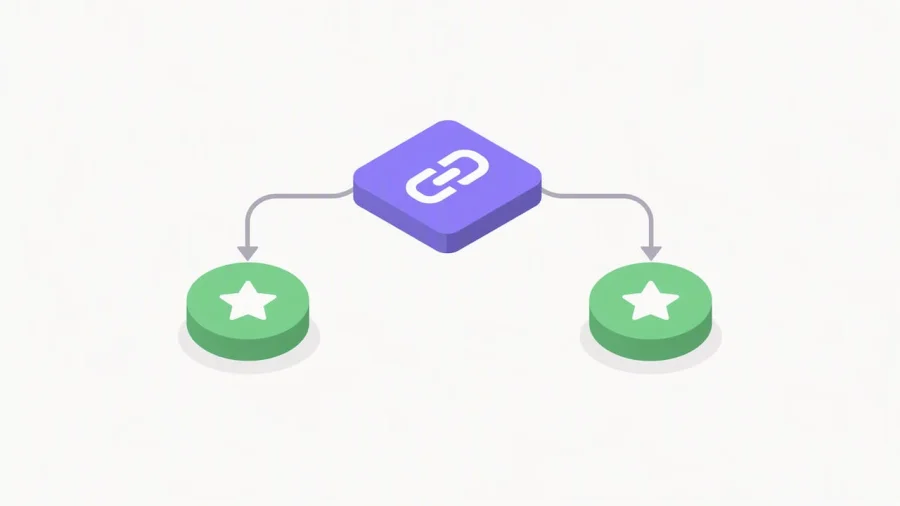
Rewarding only the person who refers a friend leaves the new customer with no reason to act quickly, which is why double-sided structures, where both sides get something, tend to outperform one-sided offers. Common patterns include a matched discount for both parties, store credit for both, or a mixed structure where the referrer gets credit and the new customer gets a discount on their first order.
Transparent, clearly disclosed double-sided offers also remove the awkwardness some customers feel about asking friends for a favour, since the friend visibly benefits too.
- Give the referred customer their discount immediately on sign-up or first purchase, to remove friction at the point of decision.
- Release the referrer’s reward only once the referred customer completes a qualifying action, such as a first payment or booking.
- Keep the two reward values roughly proportionate so neither side feels like an afterthought.
Research summary: Service businesses commonly combine double-sided incentives with tiered and seasonal structures, pairing an immediate referee discount with a larger, delayed reward for the referrer to balance uptake against cost control.
Contests, sweepstakes and referral leaderboards
Contests convert referrals into a game, which can generate a short, sharp spike in sharing activity around a product launch or a seasonal campaign. A straightforward format gives an entry for each successful referral, with a draw at a set date and a meaningful prize rather than many small ones.
A short sprint creates urgency and can work well for a specific push, such as filling a new location’s first month. An ongoing leaderboard suits businesses that want sustained competition over months rather than a single spike, often paired with a smaller recurring prize.
- Define exactly what counts as a qualifying referral before launch, to avoid disputes afterwards.
- Choose a prize relevant to your audience rather than a generic high-value giveaway that attracts non-customers.
- Check the sweepstakes and promotional rules that apply in your market before running anything resembling a prize draw, since requirements vary by jurisdiction.
Charitable donations and cause-aligned incentives
Donating a fixed amount to charity for every successful referral appeals to customers who are motivated more by values than personal gain, and it can work alongside, rather than instead of, a standard reward. A common structure donates a set sum per referral to a chosen cause and reports the cumulative total back to participants periodically, which reinforces the sense of collective impact.
Charity-linked incentives tend to outperform pure monetary rewards among audiences who already engage with a brand’s social or environmental positioning, such as wellness, outdoor or ethical retail brands.
- Choose an established, transparent charity partner so customers trust where the money goes.
- Publish the running total donated through the programme to keep the impact visible and credible.
- Offer charity donations as an alternative option alongside a standard reward, rather than the only choice, since not every customer is motivated the same way.
Seasonal campaigns and limited-time referral pushes
A time-boxed referral push, tied to a holiday, a slow season or a product launch, raises urgency in a way an always-on programme rarely does. Increasing the usual reward for a limited time, or running a referral push with a clear deadline, gives customers a reason to act now rather than file the idea away.
Promoting the push across email, in-app notifications, SMS and social media at the same time, rather than relying on one channel, tends to lift participation more than any single channel alone.
- Time seasonal pushes around natural high-intent moments, such as post-holiday gift returns or the start of a new fitness season.
- Combine a limited-time multiplier with a clear countdown, so the urgency is visible rather than implied.
- Compare referral volume during the campaign window against your normal baseline rate to judge whether the uplift justified the extra cost.
Practical implementation: where to ask, automation, integrations and fraud controls
Launching a referral incentive well matters as much as choosing the right reward. The moments right after a purchase, a positive support interaction, or a good review can be opportune times to ask, when the request may feel natural rather than opportunistic.
- Generate a unique referral link or code for every customer automatically, rather than asking them to share a generic message.
- Trigger referral invitations by email or app notification after a qualifying event, such as a completed order or a positive review.
- Connect the referral flow to your CRM or loyalty platform so new sign-ups are tagged, tracked and matched back to the original referrer without manual spreadsheet work.
- Set clear redemption rules, including minimum purchase thresholds and a cap on rewards per customer, to limit fraud risk.
- Disclose the referrer’s reward to the new customer where appropriate, since transparency reduces the awkwardness some people feel about being referred.
- Hand off edge cases, such as disputed referrals or delayed credit, to a documented customer-service process rather than ad hoc decisions.
Fulfilment should stay as automated as possible: digital credit and coupon codes can be issued instantly through a loyalty platform, while anything requiring manual approval slows the loop between referral and reward, which dampens enthusiasm.
Pro Tip: Set your referral code to apply automatically at checkout rather than requiring the customer to remember and type it in, since every extra step loses a share of referred customers.
Measurement and optimisation: KPIs, A/B testing reward sizes and tracking LTV
A referral programme without measurement is a guess dressed up as a strategy. Track referral rate (the share of customers who refer at least one person), referrals per active customer, the conversion rate of referred leads into paying customers, cost per acquisition through the referral channel, and the lifetime value of referred customers compared with other acquisition channels.
- Run A/B tests on reward size before committing to one structure across your whole customer base.
- Watch profitability alongside volume, since a bigger reward usually brings in more referrals but at a lower margin per customer.
- Use your CRM or loyalty platform to follow referred customers as a cohort over time, rather than judging the programme on sign-ups alone.
Research insight: Analysis of referral reward sizes across more than 160,000 bank customers and roughly 270,000 telecom customers found that larger rewards increased the number of referrals acquired but significantly reduced the profitability of those referred customers, which makes reward size a genuine trade-off rather than a simple “bigger is better” decision.
Why referral incentives work: concise evidence and practitioner takeaways
Referral programmes earn their reputation because referred customers and the referrers themselves both tend to behave differently to the average customer. A study tracking around 10,000 bank customers found that referred customers carry an average value at least 16% higher than non-referred customers with similar demographics, alongside stronger long-term retention. A separate study of telecommunications customers found that referrers’ own defection rate fell from 19% to 7% within a year of joining a referral programme, with their average monthly revenue rising by 11.4% against a control group.
Referred customers tend to be more valuable and more loyal, and the act of referring appears to deepen the referrer’s own relationship with the business, not just generate a new lead.
The practical lesson is to track referred-customer lifetime value rather than referral count alone, and to resist the instinct to offer the largest possible reward to everyone, since a smaller, well-targeted incentive often protects profitability better than a blanket, oversized one.
Customer communication templates and best practices for referral requests
How you ask for a referral shapes whether customers bother to act on it. A request sent before a customer has had a chance to form a view may be less effective than one sent after a positive signal, such as a completed order or a review.
A short, direct message can work well. A simple structure might read: “Thanks for your recent order. If you know someone who’d like [product/service], share your link below and you’ll both get [reward] when they make their first purchase.” The message states the action, the reward and the timeframe concisely.
- Personalise the message with the customer’s name and a specific detail, such as the product they bought, rather than a generic blast.
- Keep the call to action to one link or button, since multiple options reduce completion rates.
- Follow up once, a week or two later, for customers who received the request but have not shared it yet, rather than repeating it indefinitely.
Email is one option for referral requests, but an in-app prompt or a message timed to a loyalty milestone may also work well, particularly for businesses whose customers already use a mobile app regularly.
Strategies for sustaining long-term referral engagement beyond initial incentives
A referral programme that only ever offers the same flat reward tends to fade after the first wave of enthusiastic customers has already referred everyone they know. Keeping the programme alive long-term means treating it as an ongoing relationship rather than a one-off promotion.
Refreshing the reward periodically, rotating between discounts, free products and charity options, keeps the offer feeling current rather than stale. Recognising top referrers publicly, through a leaderboard, a badge inside your app, or a small unexpected bonus, reinforces that their advocacy is noticed beyond the transactional reward.
- Review reward performance every few months and retire or adjust offers that have stopped generating new referrals.
- Reintroduce seasonal multipliers periodically rather than running the same flat rate indefinitely.
- Keep referral options visible inside the customer’s account or app, not just in a one-time email, so the opportunity stays front of mind.
Legal and ethical considerations in referral incentives
Referral incentives sit inside ordinary consumer protection and advertising rules in most markets, which means the terms need to be clear, honest and easy to find. Customers should know exactly what they will receive, when they will receive it, and any conditions attached, before they share their referral link.
Disclosure matters particularly where the referrer has an incentive to promote a product to friends or on social media, since many markets require a referrer to disclose that they stand to benefit. Any contest or prize draw element should be checked against the sweepstakes or lottery rules that apply where your customers live, since requirements for prize draws vary and some structures require a no-purchase-necessary entry route.
Keeping terms simple, visible and consistently applied protects both the customer relationship and the business from disputes over unpaid or miscalculated rewards.
Guidance on setting appropriate reward values to balance cost and motivation
Pricing a referral reward is a balancing act between generosity and profitability, and there is no single figure that works across every business. A reasonable starting point is to size the reward as a percentage of your average order value or monthly subscription fee, so it scales naturally with what the business actually earns from a new customer.
A reward that is too small fails to motivate anyone to bother sharing a link, while one that is too generous can attract referrals that never convert into profitable long-term customers. Testing matters more than guessing: trial a modest reward first, watch both referral volume and the resulting customers’ profitability, then adjust gradually rather than committing to a large reward across the entire customer base from day one.
- Anchor the reward to a real cost you already understand, such as your product margin or average customer value, rather than an arbitrary round number.
- Start conservative and increase the reward only if data shows it is needed to lift participation.
- Reassess reward values whenever your pricing, margins or average order value change materially.
Author perspective: three starter experiments and pragmatic advice
If you are starting from nothing, run three small experiments rather than one big programme. Try a double-sided welcome discount first, since it can be straightforward to explain and test. Add a small milestone tier once you have a baseline referral rate, to see whether repeat referrers respond to recognition. Then test a time-limited charity-per-referral sprint to gauge whether your customers respond to cause-based framing.
Retailers usually see faster results from store credit; subscription businesses tend to do better with a free month or percentage-off structure tied to the billing cycle. Setting up and automating each of these experiments is where a dedicated loyalty platform like BonusQR tends to save the most time, since its analytics can help with tracking.
— Michal
Putting referral incentives into action with BonusQR
Choosing the right reward is only half the job. We built our loyalty platform so you can set up referral rewards, automate the invitations, and see the results without hiring a developer or stitching together spreadsheets. Our modules cover custom rewards, email and push notifications, and real-time analytics.
- Launch a double-sided referral offer alongside your existing points or stamp card programme, without separate systems to manage.
- Use marketing automation to help manage referral invitations.
- Track referral performance alongside your other loyalty metrics in one dashboard, rather than exporting data from several tools.
- Add a branded white-label app once your referral volume justifies a dedicated experience for your customers.
Our pricing page lists Free, Basic and Premium plans, and current plan details are available there. If you are ready to run the double-sided welcome discount or milestone tier described above, start on BonusQR.
FAQ
What is the best incentive for referrals?
Double-sided incentives, where both the referrer and the new customer get a reward, tend to perform best because they remove the awkwardness of asking a favour and give the new customer an immediate reason to act. The right specific reward (cash, credit, discount or gift) depends on your business model and average order value.
How do I incentivise referrals effectively?
Ask at the right moment, typically right after a purchase, a positive review or a resolved support query, and make sharing a one-click action through a unique referral link. Automating the invitation and reward through a CRM or loyalty platform, rather than handling it manually, keeps the process consistent and removes friction for the customer.
What is a common referral bonus?
A common structure pairs a percentage-off or fixed-value discount for the new customer with a matching discount, store credit, or small cash reward for the referrer once the referral converts. Shopify’s referral guidance highlights double-sided discounts and tiered rewards as two of the most widely used formats among merchants.
How can I encourage more referrals from existing customers?
Make the ask simple, visible and well-timed, and keep the reward proportionate to what a new customer is actually worth to your business. Salesforce’s referral recommendations include increasing rewards over time for repeat referrers and tying rewards to early access or cause-based incentives to appeal to different customer motivations.
Do referral programmes affect customer loyalty beyond the reward itself?
Yes. Referrers in a telecommunications study saw their own defection rate fall from 19% to 7% within a year of joining a referral programme, alongside a rise in average monthly revenue, suggesting the act of referring strengthens the referrer’s own relationship with the business.