
 Deutsch
 Español
 Français
 Italiano
 Magyar
 Polski
 Slovenčina
 Čeština
Yes, a well-designed mobile app loyalty programme can meaningfully increase retention and customer lifetime value in Central Europe — provided it prioritises immediate, tangible value over complexity. If you run a retail shop, café, restaurant, gym, or service business with repeat customers, the case for launching or improving a programme is strong. If your customers visit infrequently or your average transaction is a one-off, the ROI calculation is harder.
Three things to get right from the start.
- Who benefits most. SMBs in high-frequency categories (food and beverage, convenience retail, personal care) see the fastest return. Large retailers benefit too, but the design challenge is greater.
- The single highest-priority design choice. Immediate, tangible value — a discount the customer can use today, a stamp they can see filling up — outperforms sophisticated personalisation at launch. Build trust first, then layer in complexity.
- Your most urgent task. Design a 6–8 week pilot that tests one mechanic (exclusive pricing or a stamp card) against a clear activation target before committing to a full build.
Your next step, executable in 48–72 hours: define the pilot scope. Choose one customer segment, one reward mechanic, and one success metric. That single decision removes the biggest source of delay in most loyalty programme launches.
Key takeaways
Mobile app loyalty programmes deliver measurable retention and CLV gains in Central Europe when they prioritise immediate value, low friction, and CRM-backed activation over enrolment volume alone.
| Point | Details |
|---|---|
| Prioritise activation, not enrolment | Only ~41.9% of loyalty members say membership increases their loyalty; focus on first redemption within 14 days. |
| Match mechanics to purchase frequency | High-frequency businesses (cafés, retail) should start with stamp cards; low-frequency businesses benefit more from points or tiers. |
| Design for the pre-shopping moment | 47% of consumers open a loyalty app before shopping; surface balance and live offers on the home screen, not push notifications. |
| CRM integration is non-negotiable | Only ~11% of brands have full CRM sync; without it, personalisation and accurate ROI measurement are both impossible. |
| Bonusqr for fast SMB pilots | Bonusqr supports QR-based stamp cards, cashback, and wallet integration with no POS requirement, enabling a live pilot within days. |
Why mobile app loyalty programmes can move the needle on retention
The business case for loyalty rewards apps rests on three compounding effects: higher retention rates, increased customer lifetime value (CLV), and stronger word-of-mouth advocacy. Retained customers spend more per visit over time, cost less to re-engage than new customers, and are more likely to recommend your business to others.
Across 24 European markets, programme membership is high — Great Britain sits at approximately 86.1% — yet only a minority of members say membership actually makes them more loyal to a brand. That gap between enrolment and genuine loyalty is where most programmes fail, and where the opportunity lies.
The implication is clear: acquisition is not the problem. Activation is. A customer who downloads your app and never redeems a reward is not a loyal customer; they are a dormant contact. The programmes that generate real ROI are those that convert enrolled members into active, repeat buyers within the first 30 days.
Two business models see the strongest returns from mobile loyalty schemes:
- Retail and food and beverage. High purchase frequency means customers accumulate rewards quickly, which keeps the programme visible and motivating. A café where a customer visits three times a week can complete a stamp card in under two weeks.
- Services with recurring appointments. Gyms, hair salons, and wellness centres benefit from loyalty apps that tie rewards to booking behaviour, reducing cancellations and no-shows alongside increasing spend.
Where loyalty apps consistently underperform is in passive enrolment scenarios: customers who sign up for a welcome discount and never return, or programmes where the reward is so distant (spend £500 to earn a £5 voucher) that the incentive never feels real. Poor activation, not poor reward design, is the most common cause of a programme that looks good on paper but delivers nothing measurable.
What core mechanics should your loyalty programme include?
The mechanics you choose shape how customers experience your programme every day. Each option carries different implications for operational complexity, perceived value, and the type of customer behaviour it reinforces.
- Points systems. Customers earn points per pound (or per transaction) and redeem them for rewards. Works well for mid-to-high-ticket businesses where accumulation over time feels worthwhile. The risk is that points feel abstract — customers often forget their balance.
- Digital stamp cards. A direct digital replacement for the paper punch card. Simple, visual, and immediately understood. Best suited to high-frequency, low-ticket businesses such as cafés, bakeries, and fast-casual restaurants.
- Tiered rewards. Customers progress through levels (Bronze, Silver, Gold) as they spend more. Effective for businesses where status and exclusivity motivate the customer base. Adds complexity to both the build and the communication.
- Cashback. A percentage of spend returned as credit. Highly transparent and easy to communicate. Popular in grocery and fuel retail. Can erode margin if not modelled carefully.
- Coupons and time-limited offers. Instant redeemable vouchers distributed via the app. Excellent for driving footfall on slow days or clearing stock. Low perceived cost to the customer, high perceived value.
- Experiential rewards. Early access, exclusive events, or personalised experiences. Powerful for premium brands but hard to scale for SMBs.
- Referral incentives. Reward existing customers for bringing in new ones. One of the most cost-efficient acquisition channels when the referral mechanic is simple enough to use.
For high-frequency, small-ticket businesses (coffee, lunch, convenience), stamp cards and instant coupons deliver the fastest activation. For low-frequency, high-ticket businesses (furniture, travel, specialist services), points and tiered rewards sustain engagement between purchases.
The trade-off between simplicity and perceived value is real. A stamp card is instantly understood but may feel unsophisticated to a premium customer. A tiered points system signals investment and exclusivity but requires more explanation and a longer runway before customers feel rewarded.
Pro Tip: Start with the single mechanic that matches your purchase frequency. A café should launch with a stamp card, not a tiered points system. Complexity can always be added later; a confusing programme at launch loses customers permanently.
The minimum viable reward to test is whatever a customer can earn and redeem within their first two or three visits. If the first redemption takes six months, the programme will not generate the behavioural data you need to improve it.
How do Central European customers differ, and what does that mean for your programme?
One of the most consistent findings in recent loyalty research is that European markets diverge sharply. A single programme design deployed identically across Poland, Germany, the Netherlands, and the UK will underperform in at least three of those four markets. Regional differences in what drives loyalty are not marginal — they are structural.
| Market | Membership rate (approx.) | Primary loyalty driver | Key design implication |
|---|---|---|---|
| Poland | High and growing | Exclusive pricing (40.31% top driver) | Lead with price-first mechanics; cashback and exclusive discounts outperform points |
| Germany | High | Coalition programme expectations | Single-brand apps must offer markedly better personalisation or exclusive experiences |
| Netherlands | High | Ease of use | Prioritise frictionless onboarding and instant redemption over reward complexity |
| United Kingdom | ~86.1% | High baseline, high expectations | Activation and personalisation matter more than enrolment; members are already saturated |
Polish consumers are the most price-driven in Europe, with exclusive pricing ranked as the top loyalty driver at 40.31%. If you are launching in Poland, a programme built around exclusive member pricing or cashback will outperform a points system that delays gratification.
In the Netherlands, Dutch consumers consistently prioritise ease of use over exclusive pricing. A fast, low-friction redemption experience — where the customer taps, scans, and saves in under ten seconds — often beats a slightly more generous but harder-to-access offer. Onboarding flow and home screen clarity are your competitive advantage here.
Germany presents a different challenge. Coalition programmes (multi-brand loyalty schemes) have deep roots in the German market, and single-brand apps compete against that established habit. To win, your app needs to offer something the coalition cannot: hyper-relevant personalisation, exclusive product access, or a community element tied to your specific brand.
The UK market is mature and saturated. With membership rates near the high end observed in European markets, the question is not whether customers will join — it is whether they will stay active. Personalisation, timely offers, and a clear value exchange at every interaction are what separate active members from dormant ones.
On GDPR and data expectations: across all four markets, customers are increasingly aware of how their data is used. Your programme design must include explicit consent flows, clear data retention policies, and easy opt-out mechanisms. This is not just a legal requirement under GDPR — it is a trust signal that affects enrolment rates, particularly in Germany and the Netherlands where data sensitivity is high.
What technical features should you require from a loyalty platform?
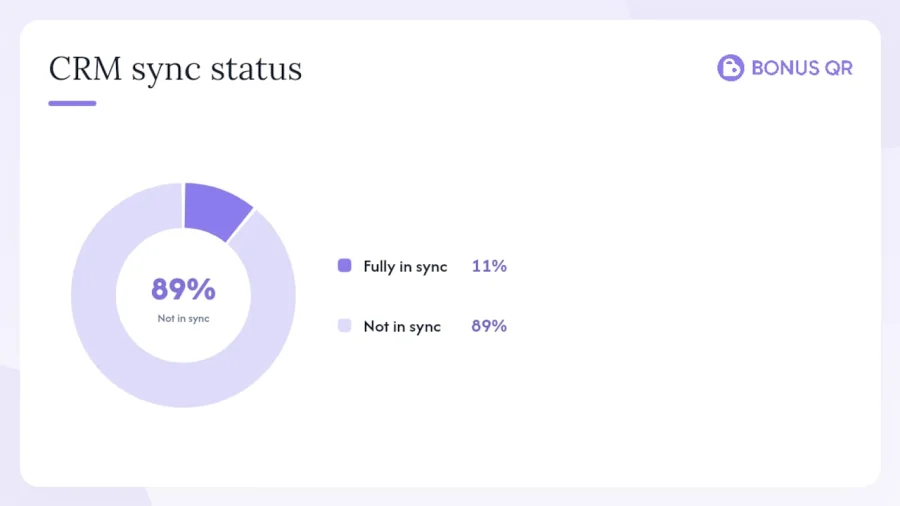
Getting the technology right is often a bigger barrier than reward design. Only around 11% of brands report their CRM is fully in sync with their loyalty programme — which means the majority are running programmes where personalisation is impossible and activation data is incomplete.
The integrations that matter most, in order of priority:
- CRM sync. Real-time or near-real-time connection between your loyalty platform and your customer database. Without this, you cannot personalise offers, identify at-risk members, or measure true retention lift.
- POS integration. Allows automatic points or stamp accrual at the point of sale without staff intervention. Reduces friction and error. Not always mandatory — QR-based systems can work without POS integration, which is useful for SMB pilots.
- E-commerce integration. If you sell online as well as in-store, unified loyalty across both channels is a strong retention lever. Customers who earn rewards both in-store and online visit more frequently across both.
- CDP (Customer Data Platform) support. For larger businesses, a CDP aggregates behavioural data from multiple sources and feeds it into the loyalty engine for segmentation and automation.
- Apple Wallet and Google Wallet support. Allows customers to store loyalty cards natively on their phone without opening a separate app. Reduces friction at the point of redemption and keeps your brand visible on the lock screen.
- Payment integration. Connecting loyalty to payment (card-linked offers, in-app payment) removes the need for a separate scan step and increases programme visibility at the moment of purchase.
On real-time versus batched data sync: real-time sync is worth the additional cost for any programme where offers are time-sensitive or where fraud risk is meaningful (cashback, high-value coupons). Batched sync (hourly or daily) is acceptable for stamp cards and points programmes where the redemption cycle is measured in weeks rather than minutes.
Pro Tip: Before evaluating any vendor, map your current tech stack and identify the two or three integration points that are non-negotiable for your business. A platform that requires POS integration as a prerequisite will add weeks to your timeline and cost if your POS is legacy or proprietary.
Operational features to check in any platform evaluation:
- Coupon automation with expiry rules and usage limits
- A rules engine that handles edge cases (refunds, partial redemptions, fraud flags)
- Rollback and refund handling that keeps loyalty balances accurate
- Fraud controls (velocity checks, duplicate account detection, suspicious redemption alerts)
- GDPR-compliant data export and deletion tools
Which KPIs and ROI calculations should you track?
Measuring a loyalty programme well requires separating the signal from the noise. The most common mistake is tracking enrolment as a success metric. Enrolment is a vanity metric; behaviour change is what you are paying for.
Primary KPIs to track from day one:
- Retention rate lift. Compare 90-day retention for enrolled members versus a matched control group of non-members. This is your headline ROI metric.
- Repeat-purchase rate. The percentage of members who make a second purchase within 30 days of their first. A healthy programme moves this number meaningfully within the first pilot period.
- Average order value (AOV). Members who feel rewarded tend to spend more per visit. Track AOV for members versus non-members monthly.
- Redemption rate. The percentage of earned rewards that are actually redeemed. A redemption rate below 20% usually signals that the reward is not compelling or the redemption process is too difficult.
- Cost to activate a member. Total programme cost (platform fees, reward cost, marketing) divided by the number of members who complete at least one redemption. This is your true cost per active member.
A simple pilot ROI formula:
Incremental revenue = (Average spend per active member per month × number of active members) minus (average spend per non-member per month × equivalent control group size)
Programme cost = platform subscription + reward cost + onboarding marketing
Pilot ROI = (Incremental revenue minus programme cost) / programme cost × 100
Cohort analysis is the most reliable way to isolate true programme impact. Group members by enrolment date, track their behaviour over 30, 60, and 90 days, and compare each cohort to a matched non-member group. This removes the selection bias problem — the customers most likely to join a loyalty programme are often already your best customers, so a simple before/after comparison will overstate impact.
A step-by-step implementation checklist and pilot timeline
A 6–12 week pilot is the right scope for most SMBs and mid-market businesses launching or relaunching a mobile loyalty scheme. It is long enough to generate meaningful behavioural data and short enough to course-correct before significant budget is committed.
| Phase | Weeks | Key tasks |
|---|---|---|
| Planning | 1–2 | Define pilot scope, choose mechanic, set KPI targets, confirm data readiness, legal review |
| Build and integration | 3–4 | Platform setup, CRM sync, creative assets, staff training, GDPR consent flows |
| Onboarding | 5 | Soft launch to existing customers, test enrolment flow, fix friction points |
| Live pilot | 6–8 | Full launch, monitor activation daily, run one mid-pilot offer adjustment if needed |
| Measurement | 11–12 | Cohort analysis, ROI calculation, stop/scale decision |
Key tasks by phase:
- Planning. Confirm your customer data is clean and segmentable. Identify the legal basis for processing loyalty data under GDPR. Choose one mechanic and one customer segment for the pilot.
- Build and integration. Set up the platform, connect your CRM, and create the minimum creative assets (app icon, reward imagery, onboarding copy). Train front-of-house staff on how the programme works and how to answer customer questions.
- Onboarding. Send a soft-launch email or SMS to your existing customer list. Make the enrolment process three steps or fewer. Test the full journey on at least three devices before going live.
- Live pilot. Monitor daily activation numbers. If activation is below target at week three, run a time-limited bonus offer (double stamps for 48 hours, for example) to test whether the mechanic is the issue or the communication is.
- Measurement. Run the cohort analysis. Calculate pilot ROI. Apply the stop/scale criteria: if activation rate is below 15% and repeat-purchase lift is below 5%, the mechanic or the offer needs to change before scaling. If both metrics are above target, scale the programme to your full customer base.
Pro Tip: The lowest-cost pilot uses QR-based stamp cards with no POS integration. Customers scan a QR code at the counter, the stamp is recorded in the app, and no hardware or POS modification is needed. This removes the single biggest technical blocker for small businesses and gets you to live data in days rather than weeks.
European loyalty programme examples worth learning from
Three programmes from the Central European and broader European market illustrate different approaches and the results they produce.
-
Rossmann (Central/Eastern Europe). Rossmann’s unified mobile e-shop and loyalty app scaled to over 1.2 million users. When an AI adviser was introduced in 2024–2026, queries increased by 80%, and roughly half of those queries converted to same-day purchases during early rollout. The lesson: integrating e-commerce, personalised recommendations, and loyalty in a single native app creates a compounding engagement effect that no standalone loyalty card can match. For SMBs, the takeaway is not to build an AI adviser — it is to unify the shopping and loyalty experience in one place rather than treating them as separate tools.
-
Deichmann (Germany and Central Europe). Deichmann’s app-based programme centres on exclusive member pricing integrated directly into the product browsing experience. Members see their price before they reach the checkout, which reinforces the value of membership at the highest-intent moment. The lesson: make the reward visible at the point of decision, not only at the point of payment.
-
Price-first programmes in Poland. Polish retailers who have structured their loyalty programmes around exclusive member pricing rather than points accumulation report stronger activation rates, consistent with the finding that 40.31% of Polish consumers rank exclusive pricing as their top loyalty driver. The lesson: in price-sensitive markets, the reward must feel like real money saved, not points that might eventually become real money.
Pro Tip: Small businesses should copy the mechanic, not the scale. Rossmann’s core insight — surface the reward at the moment the customer is planning to shop — is achievable with a simple app home screen that shows the customer’s current balance and the next reward threshold. You do not need 1.2 million users for that to work.
For enterprise businesses, the Rossmann model shows the ceiling of what a well-integrated loyalty ecosystem can achieve. For SMBs, the Deichmann approach (exclusive pricing, visible at the point of decision) is the more practical template.
How do you avoid notification fatigue and design for the pre-shopping moment?
The most important insight from recent loyalty research is also the most counterintuitive: 47% of consumers open a loyalty app before shopping, while only 9% open it because of a push notification. Your customers are already coming to you — they open the app when they are planning a purchase, not because you interrupted them. Design for that moment.
What that means in practice:
- Home screen clarity. The first screen a customer sees should show their current balance, their next reward threshold, and any active offers. No onboarding tutorial, no promotional banner for a product they have never bought. Just the information they came for.
- Instant redeemable offers. Surface at least one offer the customer can use today. A voucher that expires in 48 hours, a double-stamp day, a member-only price on a popular product. This is what makes the app worth opening before every visit.
- Location-aware pre-shopping prompts. If your platform supports geofencing, a gentle notification when a customer is near your store (not a daily broadcast) is one of the few notification types that consistently improves open rates without increasing uninstalls.
Notification governance matters more than most businesses realise. Notifications are the single biggest source of user frustration for loyalty app users, and over-notification is a direct route to app uninstalls. A short checklist for notification frequency:
- Maximum two broadcast notifications per week per customer
- Transactional notifications (reward earned, reward redeemed) are always acceptable — they confirm value
- Personalised notifications (based on purchase history or location) outperform broadcast messages; prioritise them
- Review opt-out rates monthly; a rising opt-out rate is an early warning sign of notification fatigue
- Never send a notification that does not contain a specific, immediately actionable offer or piece of information
Onboarding flow is where most loyalty apps lose customers before they ever become active. Keep enrolment to three steps or fewer. Ask only for the information you genuinely need at sign-up (name, email or phone number, consent). Everything else — preferences, birthday, favourite products — can be collected progressively after the first redemption, when the customer has already experienced the value of the programme.
Pro Tip: Test your onboarding flow with someone who has never seen your app. If they cannot complete enrolment and earn their first stamp or point within 90 seconds, the flow is too long. Every additional step reduces completion rates.
What mistakes do we see most often in loyalty programme rollouts?
The programmes that fail are rarely the ones with the wrong reward mechanic. They fail because of operational and strategic errors that are entirely avoidable.
The most common mistake is over-engineering the reward structure before validating that customers want to engage at all. Start with the simplest mechanic that delivers immediate value, measure activation, and add complexity only when the data justifies it.
Ignoring market differences is the second most costly error. A programme designed for a UK audience — where high membership rates mean customers are already comparing your programme to several others — will not perform the same way in Poland, where price-first mechanics and exclusive discounts are the primary motivator. If you are operating across multiple Central European markets, build regional offer prioritisation into your platform from the start rather than retrofitting it later.
Poor CRM integration is the operational failure that quietly undermines more programmes than any other single factor. Before you launch, confirm that your loyalty platform and your CRM are exchanging data in real time or near-real time.
A short corrective checklist:
- Over-engineered rewards → Launch with one mechanic, measure activation at 30 days, add complexity at 90 days if warranted
- Ignoring market differences → Build regional offer logic into the platform; do not use a single reward rate across all markets
- Poor CRM integration → Make CRM sync a launch prerequisite, not a post-launch improvement
- Passive enrolment → Set an activation target (first redemption within 14 days) and build an automated re-engagement flow for members who have not activated
- Notification overload → Set frequency caps before launch; review opt-out rates weekly in the first month
Governance recommendation: assign a named data owner for the loyalty programme, schedule a monthly cross-functional review (marketing, operations, finance), and include a CFO readout on reward cost versus incremental revenue at the 60-day mark. Programmes without financial accountability tend to drift toward generous reward structures that feel good but erode margin.
Bonusqr gives you a faster path to a working loyalty pilot
If you have read this far and you are ready to move from planning to action, Bonusqr is built for exactly the kind of pilot this article describes. The platform covers every mechanic discussed here: QR-based stamp cards, points systems, cashback, tiered rewards, coupon automation, and referral incentives. Apple Wallet and Google Wallet support means customers can store their loyalty card natively without a separate app download, which removes one of the most common onboarding drop-off points.
Critically, Bonusqr does not require POS integration to go live. For SMBs in retail, food and beverage, or services, that means you can run a fully functional pilot within days rather than weeks. Push notifications, real-time analytics, and automated re-engagement flows are included, so you have the measurement infrastructure to calculate pilot ROI from day one.
Bonusqr’s own data suggests that mobile loyalty programmes can boost SMB retention by an estimated 40% — a proprietary figure to validate against your own customer data, but a directionally strong signal for businesses in high-frequency categories. The platform is available across Central Europe and supports the regional offer customisation that the market differences in this article make clear you will need.
Start your pilot on the Bonusqr loyalty platform and have your first stamp card or points programme live within a week.
Sources
The following reports and case pages were used in preparing this article. Each is worth reading in full if you want to go deeper on a specific market or mechanic.