The most popular advice about a loyalty scheme in retail is also the least useful for many independent businesses: add points, promote the programme, and wait for repeat purchases. That approach copies supermarket economics without copying supermarket scale, data infrastructure, or operating budget. A small shop rarely needs a complicated points catalogue. It needs a reward customers understand immediately, a sign-up process staff can explain quickly, and a redemption process that doesn't interrupt the sale.
UK shoppers already understand loyalty pricing. The UK government's 2024 review found that 97% of shoppers belong to at least one supermarket loyalty scheme, with an average of 3.1 memberships and 21% holding five or more. The review estimated that this represents about 45.6 million UK adult grocery shoppers using at least one supermarket scheme, while loyalty-price promotions produced average member savings of 17% to 25% across the five supermarkets studied. These findings come from the UK loyalty pricing market analysis, and they show why customers now treat membership value as part of the price itself.
The challenge for independent retailers isn't convincing customers that loyalty matters. It's creating a scheme that feels fair, works at the counter, protects margin, and doesn't require an IT project. QR-based micro-loyalty gives smaller brick-and-mortar businesses a practical alternative to enterprise point accumulation.
Why Most Retail Loyalty Schemes Fail
A loyalty card doesn't create loyalty just because it records purchases. Customers return when the reward is relevant, attainable, and easy to claim. If the programme asks them to remember rules, carry a card, download an awkward app, or wait months before receiving value, the scheme becomes another task rather than a reason to visit.
Independent retailers often copy the visible part of supermarket loyalty programmes, such as points, member prices, and promotional calendars. They don't always see the hidden machinery behind them, including customer identity systems, integrated tills, dedicated marketing teams, and continuous offer testing. The result is a programme that looks advanced but behaves poorly at the till.
The friction customers notice first
Paper punch cards solve one problem, but create another. A retailer can see that a customer has collected stamps, yet the card reveals little about buying patterns, inactive members, popular rewards, or campaign performance. Lost cards and forgotten cards also break the customer's progress, which weakens the habit the scheme was supposed to build.
Integrated POS loyalty systems solve some of those issues, but can introduce a different barrier. Installation, staff training, data migration, maintenance, and supplier dependency can make a modest retail scheme feel disproportionately expensive. A business shouldn't need to replace its entire till process just to award a small reward after a visit.
Practical rule: If staff can't explain the reward in one sentence and complete the transaction without extra friction, the scheme is too complicated.
The UK retail loyalty market also shows why clarity matters. A CMA review of loyalty pricing in groceries found that members saved 17% to 25% on promoted products across the supermarkets examined, but 40% of shoppers didn't trust those prices as genuine savings and 55% believed non-member prices were raised during promotions. The lesson for a small retailer is direct: a discount can create value and suspicion at the same time.
What a workable scheme looks like
A practical loyalty scheme in retail should have a visible benefit, a short path to redemption, and rules that fit the business's actual purchase rhythm. A café may need visits recorded. A boutique may need spend thresholds. A salon may need a reward that supports the next appointment rather than a generic discount.
The strongest small-business programmes usually begin with one mechanic, one primary behaviour, and one reward customers can recognise instantly. Data collection should support service and marketing, not turn sign-up into an interrogation. The retailer needs enough information to identify the customer and communicate lawfully, while the customer needs a clear reason to share it.
Choosing the Right Reward Mechanic
The right reward mechanic depends on purchase frequency, basket value, margin structure, and customer motivation. A customer visiting several times a week responds to a different incentive from someone buying furniture or clothing a few times a year. Treating both customers as points collectors usually produces a scheme that fits neither.
Digital stamps for frequent visits
Digital stamps suit businesses where the customer makes a familiar, repeatable purchase. Cafés, bakeries, juice bars, and quick-service restaurants can reward a completed visit or a defined product category. The customer understands the exchange immediately: collect stamps, receive a specific item or discount.
The rule should avoid loopholes. A retailer might award one stamp per qualifying visit rather than one stamp for every item, then add a sensible exclusion for heavily discounted purchases. The reward should arrive soon enough to reinforce the next visit, without giving away more margin than the repeat purchase is worth.
Spend-based points for variable baskets
Points work better when customers buy different products or spend different amounts. An independent fashion shop, gift shop, or specialist retailer can award points against spend, then use rewards to encourage another purchase. The scheme can also steer attention towards selected categories, seasonal stock, or products with healthier margins.
The danger is abstraction. Customers shouldn't need a calculator to understand the balance or the redemption threshold. A simple point rewards for retail structure can work when the earning rule, balance, and reward value remain visible at every stage.
Cashback for higher-value transactions
Cashback gives customers a recognisable monetary benefit and can encourage a larger basket or a return visit. It suits retailers where transaction values vary and where customers appreciate flexible redemption. A homeware shop might apply cashback to a later purchase, while a speciality store could release it after a spend threshold.
Cashback needs firm boundaries. The business should decide whether it applies to all products, selected categories, or future purchases only. It should also make the redemption conditions obvious, because vague cashback rules feel less valuable than a smaller benefit that customers can use confidently.
Tiers for status and access
Tiered VIP access can suit salons, boutiques, premium food shops, and businesses with a strong relationship component. Benefits might include early access, priority booking, product previews, or service extras rather than constant discounts. Tiers work when customers can see what they gain and believe the next level is realistic.
A mixed structure can be more effective than a complex one. For example, a retailer could offer an immediate welcome reward, a visit-based benefit for regular customers, and a birthday coupon with clear consent. A specialist resource on top restaurant loyalty programs offers useful examples of how reward mechanics can reflect a business's service rhythm.
Before launch, the owner should calculate the reward's real cost. That means including product margin, staff time, discount leakage, fulfilment, and the sales opportunity created by the return visit. The most attractive mechanic is the one customers use and the business can afford repeatedly.
The Economics of Customer Retention
A loyalty scheme only makes financial sense when the value of additional behaviour exceeds the cost of the reward. That calculation doesn't require an advanced finance team. It requires a clear comparison between the normal customer journey and the behaviour the scheme is designed to change.
Start with one question: what would the customer probably have done without the reward? If the customer would have bought the same product anyway, the discount may reduce margin. If the reward brings forward a visit, increases the basket, reactivates an inactive customer, or moves a customer from a competitor, it has a stronger commercial case.
Measure contribution, not membership
A large member list can hide weak engagement. The useful measures are active members, repeat purchase behaviour, reward redemption, average basket movement, and the sales associated with targeted campaigns. A retailer should compare members with a sensible non-member group where possible, while recognising that people who join may already be more likely to return.
The UK Retail Loyalty Index benchmarked 51 loyalty schemes using a survey of 2,200 UK consumers. It found that a 1-point increase in Index score was associated with a 7% to 8% increase in the likelihood to shop again, as reported by Retail Times. The finding supports a practical conclusion: small improvements in clarity, perceived value, and redemption can matter more than adding another layer of programme complexity.
Make the reward legible
Customers judge value quickly. A reward described as “member benefit subject to qualifying conditions” creates work. A reward described as “collect a stamp on each qualifying visit and receive a complimentary drink after the required stamps” is easier to understand, provided the actual conditions are displayed clearly.
Price communication carries a trust risk. The CMA review found that many shoppers question whether membership pricing represents a genuine saving, so independent retailers should show the standard price, the member price, and the relevant conditions without theatrical claims. Customers are more likely to trust a straightforward offer than a permanent promotion that makes the regular price look artificial.
Use automation with restraint
Automated messages can help a retailer respond to inactivity, remind a customer about an available reward, or invite feedback after a purchase. They should be tied to a useful event rather than sent because the marketing calendar is empty. A small number of relevant messages is easier to maintain and less likely to train customers to ignore every notification.
The reward budget should also have a ceiling. The owner can set a monthly allowance, review the margin generated by redeemed offers, and remove mechanics that create cost without changing behaviour. Retention is valuable, but it isn't free, and a loyalty scheme should earn its place in the operating plan.
Designing a Frictionless Customer Journey
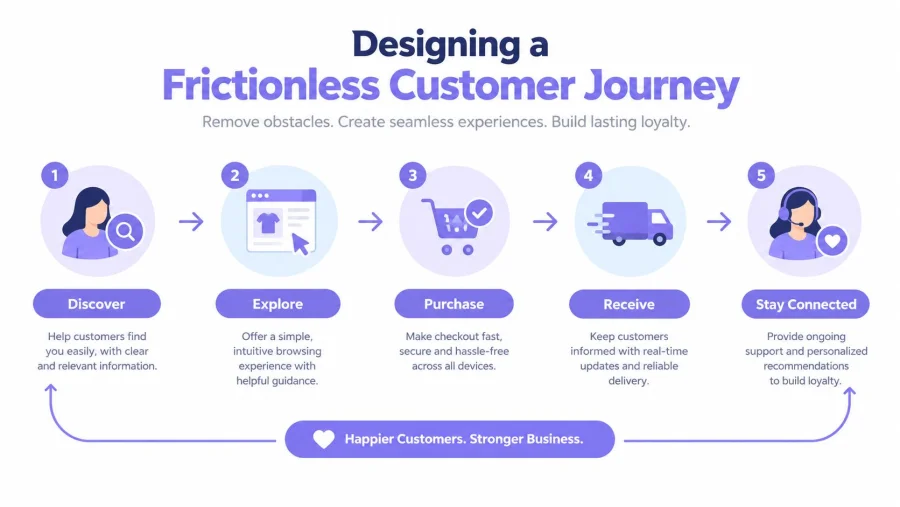
A customer should be able to understand, join, use, and redeem a loyalty scheme without needing staff to deliver a long explanation. The best journey reduces decisions at each stage. Customers scan one code, see the value, accept the relevant consent choices, and receive a personal way to track progress.
Step one, explain the exchange
The sign at the counter should answer three questions: what does the customer receive, how does the customer earn it, and how does the customer redeem it? “Scan to collect rewards on every visit” is a starting point, but the actual reward and qualifying conditions must sit close by.
Avoid forcing customers to download a native app before they can see the benefit. A mobile web journey can reduce hesitation, especially for first-time members. A mobile app for salon rewards can still provide a branded experience, but the first interaction should feel immediate rather than like a software installation project.
Step two, collect only necessary data
A retailer should request the information needed to identify the member, operate the reward, and communicate according to the customer's consent. Separate service messages from marketing permission. A reward balance notification may be operational, while a seasonal offer requires a distinct marketing choice.
The privacy notice should be accessible at sign-up and written in plain language. Customers should be able to understand who uses their details, why the information is collected, and how they can change communication preferences. Collecting extra fields “just in case” increases friction and creates data the business may not use responsibly.
Step three, make progress visible
Progress indicators help customers understand how close they are to a reward. A visible balance, stamp count, or threshold can make the next action feel concrete. It shouldn't be buried in an email that the customer may never find.
The display also needs to show expiry rules, exclusions, and redemption instructions. Hidden conditions create service disputes, especially when a customer believes a reward is available but the till rejects it.
Step four, simplify the staff action
Staff should scan the customer's QR code, confirm the transaction or reward, and continue serving. Manual searches, handwritten codes, and repeated data entry slow the queue and make staff less willing to promote the scheme.
Training should focus on two short scripts. One script explains joining. The other explains redemption. A manager can test both during a busy period, because a process that works only when the shop is quiet isn't operationally frictionless.
Step five, close the loop
After the customer earns or redeems a reward, the system should show what happened. A confirmation screen or message reassures the customer that the balance is correct. It also gives the retailer a natural moment to request feedback or communicate the next relevant benefit, subject to consent.
Tailoring Schemes for Specific Industries
A loyalty scheme should mirror the customer's reason for returning. The same reward logic can feel natural in one sector and awkward in another, so the owner needs to begin with the normal customer rhythm rather than a favourite software feature.
Cafés and quick-service eateries
A café usually benefits from a visit-based mechanic. The customer makes frequent, relatively predictable purchases, and the business wants to strengthen a routine such as a morning coffee or lunch stop. A digital stamp can reward a qualifying visit without forcing the café to manage a separate points value for every menu item.
The café should define what counts as a visit, whether the reward applies to a selected drink or a wider menu, and how staff handle offers during peak periods. A welcome reward can prompt sign-up, while a birthday or seasonal offer can create a reason to return outside the usual routine. The scheme shouldn't make the barista calculate a complicated balance while a queue waits.
Beauty salons and wellness centres
Salons have a longer booking cycle and a stronger service relationship. A tiered structure may therefore work better than a simple visit stamp, particularly when the benefits recognise commitment rather than repeatedly discounting the core service.
A salon might offer priority booking, a product reward, an add-on treatment, or early access to seasonal packages. The business should avoid rewarding discounts that teach customers to wait for a cheaper appointment. Rewards can support rebooking and retail product attachment without reducing the perceived value of the practitioner's time.
Gyms and fitness studios
A gym can reward attendance milestones, class participation, referrals, or progress-related actions. The purpose isn't merely to discount membership. It's to reinforce the behaviour that keeps a member engaged with the facility.
A reward might become available after a defined attendance achievement or support a member's next goal with a guest pass or product benefit. Staff need a quick way to verify progress, particularly when several instructors or reception workers interact with the same member.
Independent retail stores
A boutique or specialist retailer often sees fewer visits but more variable baskets. Spend-based points or cashback can encourage a customer to add a complementary item, return for a new collection, or choose the shop for a planned purchase.
The retailer can use seasonal bonuses carefully, perhaps supporting a slow category or introducing a new product line. A fixed reward after a clear threshold is often easier to explain than a set of multipliers that changes from week to week. The offer should support the shop's identity, whether that means early access, personal recommendations, repairs, or member-only events.
The principle is consistent across all four sectors: reward the behaviour that creates future value, not every transaction regardless of context.
Implementing Without POS Integration Headaches
A retailer doesn't automatically need a hard-wired POS loyalty module. For many independent businesses, the best system is the one that staff can use without changing the till, installing extra hardware, or waiting for a long technical rollout.
A standalone QR approach separates loyalty from the transaction system. The customer presents a personal QR code, staff scan it through the loyalty platform, and the programme records the relevant visit, spend, or reward. The till can continue processing sales as normal, while the loyalty layer handles membership and engagement.

Compare the real implementation burden
POS integration can be useful for a retailer with multiple locations, complex transaction data, and a technical team that can maintain the connection. It can also create dependency on a vendor's roadmap and make small programme changes harder to deliver. An independent shop should assess the full cost of integration, not just the headline subscription.
A QR system can be configured around the retailer's actual process. Staff need a scanner-enabled device, a clear redemption rule, and a short training session. Customers need a mobile sign-up route and a profile where they can see progress. The business can then add stamps, points, cashback, visit thresholds, fixed discounts, welcome bonuses, birthday offers, or seasonal coupons as the operating model matures.
BonusQR is one example of a QR-based platform that lets brick-and-mortar businesses create digital rewards, customer profiles, wallet passes, analytics, and automated push or email campaigns without requiring POS integration. It also supports ready-to-print promotional materials and GDPR-safe data handling, which can reduce the practical workload for a small team.
Put control with the operator
The retailer should be able to change a reward without submitting a development ticket. If a seasonal offer underperforms, the owner needs to pause it. If a popular product becomes too costly to reward, the business needs to adjust the rule and communicate the change clearly.
A white-label or branded mobile experience can help the programme feel connected to the shop, but branding shouldn't obscure usability. The customer still needs a quick route to the QR code, reward balance, visit history, and redemption screen. A guide to small business POS loyalty can help owners compare integrated and standalone approaches before selecting a setup.
The strongest implementation is usually the least ambitious one that can be used consistently. Launch one reward, train every staff member, test it during busy trading, and add complexity only when customer behaviour justifies it.
Measuring Success and Driving Adoption
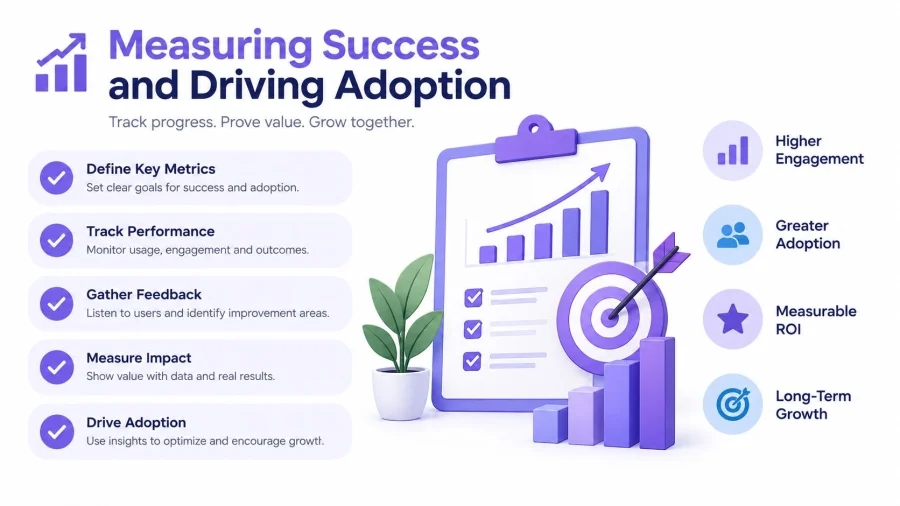
A loyalty scheme needs a measurement routine from the first live transaction. Membership numbers alone won't show whether customers return, redeem, or only sign up for an opening offer and disappear.
Track the following measures in a simple weekly or monthly dashboard:
- Active member ratio: Identify how many enrolled customers have used the scheme recently, rather than counting every historical sign-up.
- Redemption rate: Check whether customers claim rewards. Very low redemption can mean the reward is unattractive, hidden, difficult to use, or too distant.
- Repeat behaviour: Compare purchase or visit patterns before and after enrolment where the available data supports a fair comparison.
- Incremental contribution: Review whether members spend more, visit more often, or respond to targeted offers in ways that justify the reward cost.
- Operational friction: Record failed scans, disputed conditions, staff workarounds, and customer questions. These issues often explain weak adoption better than the reward itself.
Promotion works best at the moment of purchase. Place a counter sign, window message, receipt prompt, and QR code where customers can act immediately. Staff should use a short explanation such as, “Scan here to collect rewards on your qualifying visits.” The wording should match the actual programme, with no promise the system can't deliver.
The owner should review one variable at a time. Adjust the reward, threshold, message, or timing, then observe how customers respond. Avoid changing every rule at once, because that makes it impossible to identify what improved or weakened performance.
A loyalty scheme becomes a useful business asset when customers understand it, staff can operate it, and the owner can connect rewards to repeat behaviour. Independent retailers don't need supermarket-scale complexity. They need a clear offer, a QR-led journey, disciplined economics, and the willingness to remove anything customers don't use.
Choose one customer behaviour to improve this month, such as a second visit, a larger basket, or a completed rebooking. Then create a simple QR-based reward around that behaviour, display it at the point of sale, train staff on a one-sentence explanation, and review redemptions and repeat activity after launch. Businesses ready to test this approach can start with BonusQR's practical loyalty tools and build from evidence rather than complexity.


