
 Deutsch
 Español
 Français
 Italiano
 Magyar
 Polski
 Slovenčina
 Čeština
A mobile loyalty programme rewards customers through their phone rather than a plastic card, using wallet passes, QR scans and push notifications to keep your business front of mind. Done well, it lifts repeat visit frequency and lifetime value because rewards stay visible on the lock screen instead of buried in a drawer, as explained in the ultimate guide to digital gift cards. Platforms like BonusQR make the wallet passes, stamp cards and push tools available without custom app development.
TL;DR:
- Wallet passes with real-time updates and notifications significantly boost customer engagement and store visits compared to static loyalty cards.
- Starting with simple mechanics like stamp cards or points yields clearer insights and higher initial redemption rates than complex tiered or multipliers systems.
- Enrolment speed is critical, with one-tap wallet pass registration drastically increasing immediate participation versus QR code scanning alone.
- Launching a basic programme within a week using SaaS tools can generate 5 to 15% adoption in the first month, with early optimization based on redemption and push data.
- Most failures stem from scope creep and staff neglect rather than technology, emphasizing the importance of testing a simple model before adding complex features.
Which loyalty programme model fits your business?
Before choosing features, decide what behaviour you’re actually trying to change. Points, tiers, stamp cards and paid memberships each push customers towards a different goal, and picking the wrong one wastes the effort you put into setup.
- Points-based: Customers earn points per pound spent, redeemable for discounts or products. Best when your goal is higher average spend, since points scale with the bill. A café might award 1 point per £1, with 100 points converting to a free drink.
- Tiered: Customers unlock better perks (free shipping, priority booking, birthday gifts) as they cross spend thresholds. Best when your goal is retaining high-value customers rather than driving casual traffic. A wellness studio might use Bronze, Silver and Gold tiers tied to monthly visit counts.
- Digital stamp/punch card: Customers collect stamps for visits and redeem after a fixed number. Best for frequency-driven businesses like cafés, car washes or takeaways. Ten coffees, one free, is instantly understood without explanation.
- Paid membership: Customers pay a recurring fee for guaranteed perks (discounts, exclusive access, free delivery). Best when your goal is predictable recurring revenue and advocacy, not just repeat purchase. Case studies from major retail brands show that simple, repeatable mechanics like stamp cards and visible progress consistently outperform complicated structures on actual usage.
Most small businesses start with points or stamp cards because customers grasp the mechanics in seconds. Tiered and paid models work better once you already have a loyal base worth segmenting.
What mobile features actually move the needle?
Enrolment, engagement and redemption each depend on a different piece of technology, and skipping any one of them creates a bottleneck that undoes the rest of your setup.
- Wallet passes. Apple Wallet and Google Wallet passes sit on the customer’s home screen without needing an app download. Dynamic passes update automatically and can trigger a lock-screen notification when a customer nears a store, which increases visits and engagement far more reliably than a static loyalty card ever could.
- QR or NFC scanning. A quick scan at checkout logs a visit or points a purchase, with no POS integration and no staff training beyond “point the phone”. This matters most in fast-turnover settings like cafés or petrol stations, where every extra second at the till costs you.
- Push notifications. A well-timed reminder before points expire, or a nudge when a reward is close, keeps the programme visible between visits instead of forgotten after the first sign-up.
- In-app rewards catalogue. A short, clear list of what’s redeemable removes friction at the moment of truth. If customers can’t see what they’re working towards, they stop caring.
App usage itself skews younger: EY reports that 69% of people aged 25 to 44 use loyalty apps, against much lower rates in older groups, which should shape how much you lean on push versus in-store prompts depending on your customer base.
Pro Tip: Set your first push notification to fire automatically three days before points expire, not on the expiry date itself. Customers need time to plan a visit, not just be told they’ve already lost the reward.
How do you stop rewards feeling pointless?
Value fatigue sets in when customers can’t tell what they’re earning or how close they are to a reward, and it’s the single fastest way to kill engagement in an otherwise well-built programme. EY’s research found a clear gap between how well organisations think their programme performs and how customers actually experience it, largely because value isn’t visible or immediate enough.
Deloitte’s research on programme frustration backs this up directly: 31% of members cite expiring points and 29% cite needing too many purchases to redeem as their top complaints. Both are design failures, not customer failures.
Four rules keep a programme usable rather than merely present:
- Give small, frequent payoffs early rather than one large reward that takes months to reach.
- Show progress constantly, through wallet pass badges or an in-app bar, so customers never have to guess.
- Skip complex point multipliers or opaque tiers at launch. Add sophistication only once the basics are working.
- Make the programme visible everywhere the customer already looks, not just inside a separate app.
How do you launch a mobile loyalty programme fast?
Speed matters because momentum fades the longer a launch drags on. A small business can realistically have a working programme live within a week using SaaS tooling and QR or wallet enrolment, and early adoption rates typically run 5 to 15% of your customer base within the first 30 days.
- Day 0 to 1: Define goals and pick a model. Decide whether you’re chasing frequency, spend, or advocacy, then choose points, tiers, stamp cards, or membership accordingly.
- Day 1 to 3: Configure the platform. Set reward thresholds, build your wallet pass design, and connect push notifications. This is the mobile loyalty programme setup restaurants process that follows in practice, and it translates directly to retail, gyms and salons.
- Day 3 to 5: Build the enrolment flow. Print QR codes for counters and receipts, brief staff on the one-line pitch to customers, and prepare a small in-store sign explaining the reward.
- Day 5 to 7: Launch and monitor. Watch enrolment numbers daily for the first week, since a slow start usually means staff aren’t mentioning it consistently at the till.
- Day 30: Check redemption rates. If very few members have redeemed anything, your reward threshold is probably set too high.
- Day 60: Review push performance. Look at open rates on expiry reminders and adjust timing if they’re being ignored.
- Day 90: Decide whether to add complexity. Only introduce tiers or multipliers once the base programme is running smoothly.
What results should you actually expect?
Set targets before launch, or you’ll have no way to judge whether the programme is working. Track enrolment rate, active member rate (members who’ve engaged in the last 30 days), redemption rate, repeat visit frequency, incremental customer lifetime value, and overall ROI.
- Enrolment rate: the share of transactions where a customer joins or scans in. Early programmes typically see 5 to 15% adoption in the first month.
- Active member rate: members still engaging after 30 days, a better signal than total sign-ups.
- Redemption rate: how many earned rewards actually get claimed. A low rate points to a threshold that’s set too high.
- ROI: Bond’s research found that a large majority of consumers are more likely to keep choosing a brand with a loyalty programme., and programme owners broadly report strong returns and rising confidence in the channel.
Run a simple A/B test by launching to half your customer base first (or comparing two locations), then measuring visit frequency against the group without access. That comparison, not gut feeling, tells you whether the programme is paying for itself.
Where BonusQR fits the checklist above
Every recommendation in this article maps directly onto features you can configure without writing a line of code. BonusQR was built around the same principles: fast setup, visible value, and no dependency on POS integration.
- Wallet pass generation for Apple Wallet and Google Wallet, with dynamic updates that reflect points balance in real time.
- Digital stamp cards and points systems configurable in minutes, without custom development.
- QR and NFC scanning for checkout, removing the need for hardware integration.
- Push and email notifications for expiry reminders and reward proximity alerts.
- Real-time analytics covering enrolment, redemption and repeat visit metrics.
- Branding customisation so the programme looks like your business, not a generic template.
Businesses using BonusQR’s platform have reported retention uplifts of around 40% internally, consistent with the frequency and visibility principles covered above. A SaaS platform like this makes sense for most small and mid-sized businesses because the mobile and web application tooling is already built and tested. A bespoke build only makes sense once you have very specific integration requirements a SaaS platform genuinely can’t meet, which is rare before a business has scaled well past its first loyalty programme.
How fast can a customer actually join?
Enrolment friction kills more loyalty programmes than bad rewards do. If joining takes more than thirty seconds, a meaningful share of customers will simply not bother, no matter how good the offer is.
QR codes solve this better than almost any other method because customers already know how to scan one. A code on the counter, receipt, or till screen takes a customer straight to a sign-up form that asks for a name and phone number or email, nothing more. Anything beyond that, and drop-off climbs fast.
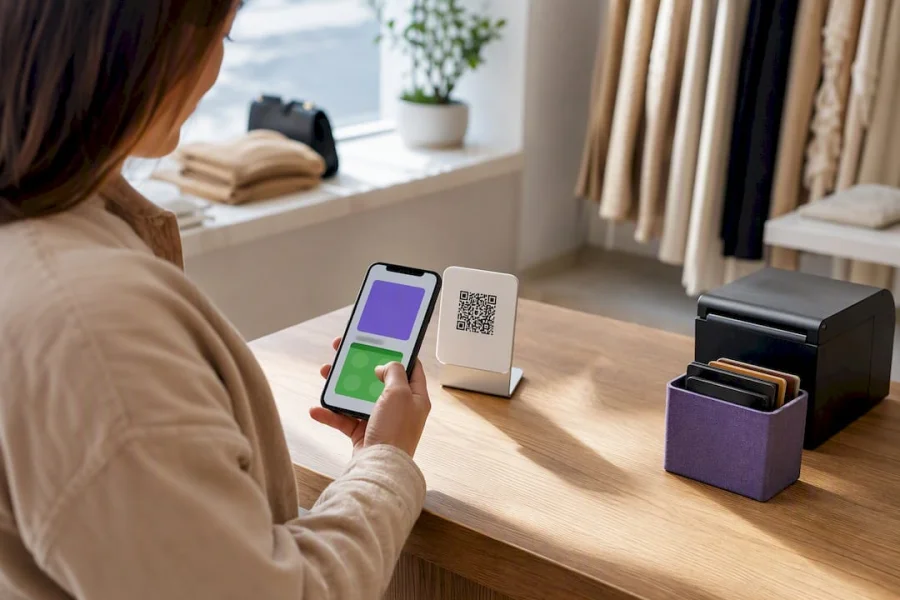
Wallet pass enrolment removes an extra step entirely. Once a customer scans the QR code, the pass installs directly into Apple Wallet or Google Wallet with one tap, no app store visit, no download wait, no account password to remember. That single tap is the difference between a customer who joins on the spot and one who says they’ll do it later and never does.
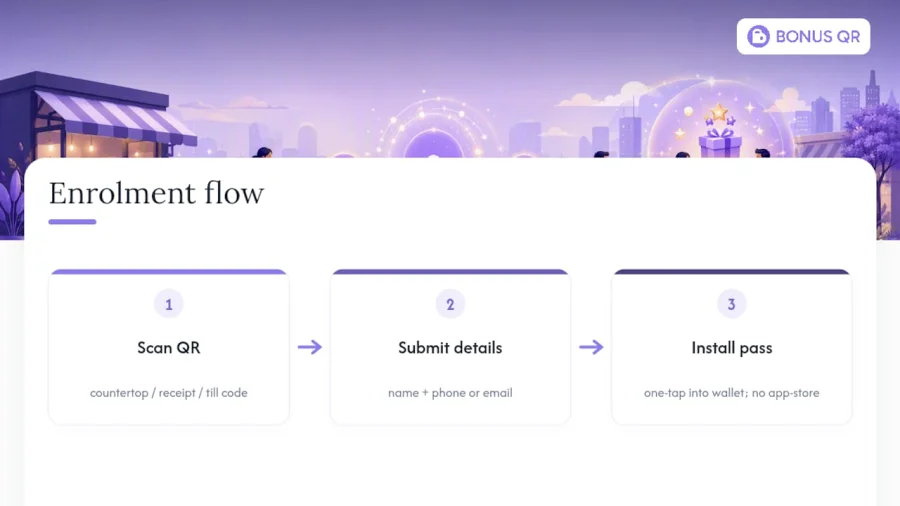
One-tap enrolment also matters because it captures intent at the exact moment a customer is standing at your till, engaged and willing. Delay that moment by even a day and most of that willingness evaporates. This is why the best mobile-first loyalty programmes treat enrolment speed as a design priority equal to the reward itself, not an afterthought bolted on after the mechanics are decided.
Staff behaviour matters just as much as the technology here. A till assistant who mentions the programme naturally, every time, will out-perform a beautifully designed QR poster that nobody points to. Train the pitch, not just the setup.
What most loyalty launches get wrong
Most failed loyalty programmes weren’t killed by bad technology. They were killed by scope creep before launch: a tiered structure with four levels, multipliers for certain days, referral bonuses, and a redemption catalogue with forty items, none of it tested with a single real customer first.
Start with the smallest version that could possibly work. A stamp card with one reward tier tells you more in its first month than a complex points system tells you in six, because you’ll see real redemption data instead of assumptions.
The technology rarely fails first. What fails first is the till staff who forget to mention the programme after week two, or the reward threshold that quietly discourages half your customers from ever redeeming anything. Fix the process before you add features.
— Michal
How BonusQR gets you from plan to launch
You’ve read the checklist. BonusQR is where you actually build it, without hiring a developer or waiting weeks for a bespoke app. The platform’s feature set covers wallet passes, stamp cards, points, push notifications and analytics in one place, configurable to match whichever model you chose earlier in this article.
If you run a service business, gym or salon, the loyalty tools built for services come with modules tailored to appointment-based visit patterns rather than generic retail mechanics. Café and retail owners after the simplest possible starting point can go straight to the digital stamp card programme, which mirrors the punch-card model most customers already understand instinctively.
Setup doesn’t require POS integration and pricing includes a free tier, so you can test the mechanics with real customers before committing to anything paid. Register for BonusQR and have your first wallet pass live before the week is out.
Where these figures and guidance come from
The launch timeline, benchmarks and design principles in this article draw on a small set of primary sources worth reading directly if you want the full detail.
- The EY Loyalty Market Study covers the visibility gap behind value fatigue and consumer expectations around mobile loyalty.
- Deloitte’s reshaping customer loyalty programmes report breaks down the most common sources of member frustration.