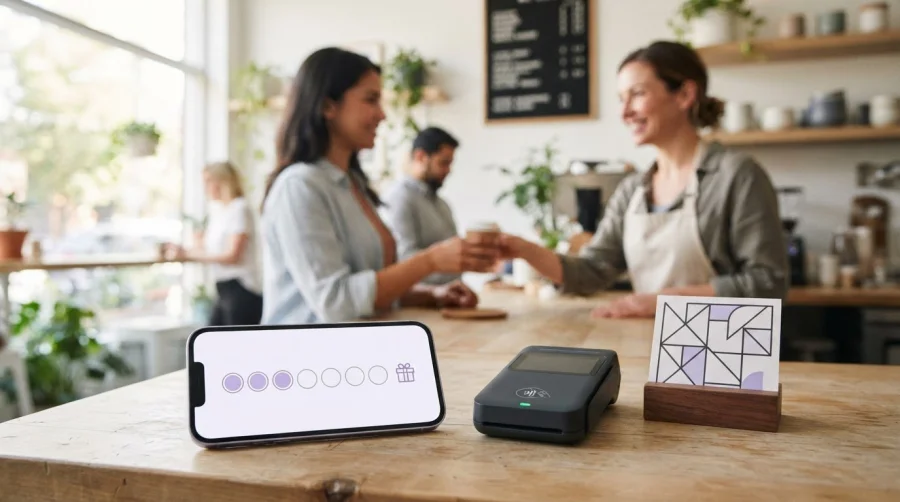
Paper cards aren’t the only simple way to reward repeat customers. A digital stamp card for a small business can work well for cafés, bakeries, salons, and other businesses with regular customers. Choose a reward that’s easy to understand and claim, without slowing down a visit.
Choosing between paper, a digital card, and a dedicated app can feel like a trade-off between convenience and complexity. You want a program that’s easy for customers to use and practical for your team to manage.
This guide explains which businesses use digital loyalty cards, what affects their cost, and how digital stamp cards compare with paper cards and app-based programs. You’ll also learn what to consider when choosing a setup, from how customers access their card to how the reward structure encourages repeat visits.
Key Takeaways
- See which customer-facing businesses are a natural fit for digital rewards, and how wallet integration can make cards easier to access.
- Understand the factors that shape program costs, including features, reward design, and the way customers use the card.
- Compare digital cards with paper and app-based options to choose an experience that suits your customers and daily workflow.
- Learn what to look for in a stamp card app, from simple reward tracking to personalized reminders and milestone rewards.
- Explore how BonusQR’s digital stamp card and loyalty software can support a small business reward program.
What Businesses Use Digital Loyalty Cards?
Cafés, bakeries, juice bars, salons, and neighborhood restaurants often rely on repeat visits. A digital stamp card suits businesses with a clear, recurring purchase. A café, for example, can reward regular coffee orders, while a salon can recognize returning clients after appointments. The offer works best when customers understand the reward before they join.
Consider how often customers visit. Regular customers can build progress through smaller purchases, while occasional shoppers may need a longer reward cycle. Choose a reward tied to an item or service customers already value. Explain which purchases earn a stamp and when the reward becomes available.
Apple Wallet and Google Wallet integration gives customers another way to access a digital stamp card. A wallet pass keeps the loyalty card alongside other digital passes on a customer’s phone. Customers can open Apple Wallet or Google Wallet to show it at checkout. Make clear how to add the pass and present it to earn a stamp.
Wallet access differs from a standalone loyalty app. With a wallet pass, customers keep the card in Apple Wallet or Google Wallet. With an app-based program, they access it through the app. Either way, provide clear instructions at the counter. Staff can show customers where to find their pass and how to display it during a visit.
To set up a digital stamp card, choose the qualifying purchase, reward, and stamp rule. Create the card, write simple joining instructions, and train staff to award stamps consistently. Promote the offer with a counter sign or receipt. During the first 30 days, watch where customers hesitate and refine the explanation or reward terms.
US loyalty programs should explain what customer information they collect, protect stored data, and obtain consent before sending marketing messages. Provide a clear way to unsubscribe from promotional emails or texts, and limit data access to people who need it.
POS integration depends on the loyalty platform and checkout system. A program may connect through an available software integration, or staff may award stamps separately by scanning or entering a customer’s card. A payment provider processes transactions, but it doesn’t automatically manage loyalty stamps unless the systems support that connection.
Measure results by comparing repeat visits, card participation, reward redemptions, and customer spending before and after launch. Track the same measures during the first 30 days, then review whether returning customers visit more often or redeem rewards. For a practical overview of digital stamp card setup, focus on the card rules, customer access, and how staff record each visit.
How Much Does a Digital Loyalty Card Cost?
A digital loyalty program’s cost depends on its setup and features. A provider’s quote depends on the reward rules, customer access, reporting needs, and support included. The price depends on the case and is given after a quote request. These factors matter more than the card’s digital format alone. A simple stamp tracker has different needs from a program with personalized notifications and customer insights.
Reward design also affects your budget. Start with an item customers already buy, then decide what they must do to earn it. A café might offer one free item after eight purchases. A buy-five-get-one-free offer uses a shorter path. The reward’s cost to your business and its appeal to customers both shape the program’s value.
Card length influences whether customers reach a milestone. In a study of 1,013 businesses, 27.9% of customers completed 5-stamp cards, compared with 5.6% for 10-stamp cards. Use that finding as a reason to examine your own buying cycle. A short punch card may suit frequent visits; a longer card may fit less frequent purchases.
Digital reminders can keep progress visible between visits. A personalized notification, for example, can tell a customer they’re one stamp away from a reward. Milestone messages can recognize a completed card or explain how to redeem it. Keep messages relevant and send push notifications only to customers who have opted in. Too many reminders can make a loyalty program feel like noise.
Choose how customers earn and redeem rewards before launch. A stamp card records qualifying purchases, while a points system assigns value across different transactions. For either option, define which purchases count, how staff issue credit, and how customers claim rewards. Clear rules help prevent missed stamps, confusing exclusions, and checkout disputes.
Digital rewards can reduce reliance on printed punch cards. A digital card can give customers a way to check their loyalty progress on a phone instead of relying on a paper card. Using fewer printed cards can also reduce paper used for enrollment and replacements. Review how your business prints, stores, and replaces cards to see where digital delivery could reduce waste.
Compare costs by listing the features your business will use, not every feature a platform offers. Consider reminders, milestone tracking, reward redemption, and reporting. Then match those needs to your expected workflow and reward structure. A digital stamp card program can help you map the rules and customer experience before deciding what functionality fits.
Digital cards compared with paper and app-based programs
Paper punch cards are familiar, but customers can lose or forget them. Businesses switching from paper to digital loyalty cards may see enrollment rates increase by 2-3 times. Digital access can also make progress easier to retrieve during a visit. The right format depends on how customers prefer to join and how staff award stamps.
A digital card can be accessed through a mobile wallet or loyalty app. Apple Wallet and Google Wallet passes keep a card on a customer’s phone without requiring a separate loyalty app. An app can provide a fuller program experience, but customers must download it first. When a download is required, enrollment drops by 70-80%.
That difference matters at a busy checkout. A café customer may be happy to show a wallet pass but reluctant to install an app while ordering. A salon may have more time to explain an app during an appointment. Match sign-up to the setting, and make clear how customers earn each stamp.
Paper cards follow a straightforward routine: give one to the customer, mark each qualifying purchase, and honor the completed card. They need no phone or digital access, but staff must apply stamps consistently. Digital cards replace the paper handoff with a screen-based process. Test that process with staff before launch, including how to correct a missed stamp.
Compare how each format handles the full reward journey. Can customers join quickly, see their progress, and understand when they can redeem? A wallet pass may suit a simple stamp-based program. An app may fit a business that wants several reward types or a broader customer experience.
Review subscription terms before choosing software. A free trial can help you test enrollment and redemption with staff before committing. Check whether you need a payment card to start the trial and note when billing begins. Also review what “unlimited” covers, such as customers, cards, or reward activity. Any limits can affect how the program works as participation grows.
Consider whether customers earn stamps, points, or account credit. A local bakery might issue a stamp for each qualifying purchase, while a service business could prefer points across different appointment types. Keep the earning rule easy to explain. Complicated conversions between purchases and credit can slow checkout and confuse customers.
Before deciding, map a typical customer visit from enrollment to redemption. Test the flow with paper, a wallet pass, and an app-based card where available. Note the steps required of customers and staff, then choose the format that fits your checkout routine and customers’ habits.
Digital stamp card app pricing
Digital loyalty app pricing depends on what the business needs the program to do. The price depends on the case and is given after a quote request. Cost factors include the number of reward types, customer access options, reporting tools, and integrations. A coffee shop that needs one stamp card has different requirements from a business managing several locations and campaigns.
Start by listing the features that support your customer journey. A digital loyalty card might need a simple stamp tracker, reward redemption, and a QR code for enrollment. Other businesses may want Apple Wallet access, customer notifications, or multiple campaigns. Each added function can change setup and ongoing management needs. Prioritize tools your staff and customers will use.
Check what each subscription includes before comparing plans. Look for limits on customer records, active campaigns, staff accounts, and reward rules. Review the onboarding, updates, and customer support included. A low starting price may come with limited features, while a broader package may include tools your business doesn’t need. Compare plans on the same basis.
Trial terms affect the real cost of testing an app. Read the trial period, billing start date, and cancellation terms before entering payment details. Check whether a credit card is required. Test enrollment with a QR code, then award and redeem a sample reward. This shows whether the app fits your checkout routine before you commit.
Consider the staff time required for each digital loyalty task. A coffee shop, for example, may need staff to scan a customer’s card, issue a stamp, and confirm a free drink redemption. If the app connects with existing checkout software, the process may differ from manual stamp entry. Include setup, training, and routine campaign management in your cost comparison.
Estimate value using your own sales records, not a generic promise. Track customer enrollment, return visits, and reward redemptions after launch. Compare those results with a similar period before the program began. If repeat visits increase, calculate whether the additional sales cover the subscription and staff effort. Review the figures regularly and adjust the reward or campaign features.
Finally, decide how customers will access the card. A QR code can lead to a digital loyalty card, while Apple Wallet integration offers another way to keep it handy. Test both paths with a few customers and observe where they pause. A clear sign-up flow can help you engage customers without adding avoidable checkout steps.
What are the best digital stamp card apps for small businesses in the US?
The best app is one that fits your customers’ habits and checkout routine. A neighborhood café may prioritize quick stamp entry and Apple Wallet access. A salon may value flexible rewards across different services. Start by naming the customer action you want to encourage, then compare apps against that goal.
For a simple program, look for clear stamp tracking, easy reward redemption, and a quick sign-up flow. Check how customers join, where they find their card, and how staff add a stamp. A QR code can make enrollment easy to find at the counter. If customers need to download an app, consider whether that extra step suits a typical visit.
Wallet-based cards and dedicated loyalty apps meet different needs. Apple Wallet and Google Wallet keep a pass alongside customers’ other phone passes, while a dedicated app may offer a broader loyalty experience. Choose wallet access for a straightforward stamp card, or consider an app when customers need more program features.
- Customer access: Test enrollment using a QR code, wallet pass, and app login.
- Checkout flow: Simulate a purchase and reward redemption during a busy service period.
- Reward rules: Confirm staff can explain qualifying purchases and exclusions in plain language.
- Program management: Review how you edit offers, track stamps, and manage customer records.
- Growth needs: Consider whether the system can support additional campaigns or locations.
Run a practical test before choosing. Have a staff member enroll as a customer, earn stamps, and redeem a reward. Repeat the process on Apple and Android phones. Note confusing screens, slow steps, or staff workarounds. A smooth test shows whether the app fits your checkout process.
Then compare plans by the features your business will use. Review customer or campaign limits, wallet integration, reporting, and support terms. A coffee shop with one stamp offer may not need advanced campaign tools. A business with varied services may benefit from more flexible reward rules. Avoid paying for features that don’t support your plan.
Use customer feedback and program activity to guide your choice. Track enrollments, returning customers, stamps issued, and rewards redeemed. If customers struggle to join or staff miss stamps, simplify the process before adding features. The best fit is a program your team can run consistently and customers can use easily.
BonusQR: Loyalty application
BonusQR offers a loyalty application and platform for businesses planning a digital rewards program. Its digital stamp card helps small businesses reward qualifying purchases. Consider it when paper tracking feels cumbersome or you want customers to access loyalty digitally. BonusQR’s loyalty software supports stamp-based rewards, while your rules should reflect what customers buy and how often they return.
Before choosing a program, define the purchase that earns a stamp, the reward customers receive, and how staff record progress. This gives you a clear starting point for deciding whether a digital loyalty setup fits your workflow. Explore BonusQR’s options at bonusqr.com.
Build a Loyalty Program Around Your Next Step
Turn your reward idea into a clear operating plan. Decide what customer behavior you want to encourage, how the offer fits your day-to-day service, and what you’ll review after launch. A digital stamp card for a small business can be a practical starting point when repeat purchases matter. Keep the first version focused, then use customer response and staff experience to guide improvements.
BonusQR offers a loyalty application, loyalty platform, and loyalty software for businesses planning digital rewards. Choose a setup that matches the customer experience you want to create, whether you start with a straightforward stamp-based program or a broader loyalty approach. A clear goal helps you shape a program that feels useful to customers and manageable for your team.
Contact BonusQR about your loyalty card and take the next step toward a rewards program that fits your business.
Frequently Asked Questions
Do customers need to download an app?
Access options vary, and some programs may offer a wallet-based way to keep rewards handy. Some loyalty programs let them access a digital pass through Apple Wallet or Google Wallet. Others use a dedicated app or web-based sign-up. A customer who prefers not to install another app, for example, may find a wallet pass easier to keep handy. The access method determines the steps customers follow.
Free vs Paid: When Should You Upgrade?
Start with a free option if it supports the customer journey you need. Upgrade when a specific limitation gets in the way, such as the need for more campaign controls, reporting, or staff access. Before switching, identify the feature you’ll use and how it improves your workflow. BonusQR offers a free tier, so businesses can begin with a simple program before deciding whether paid features fit.
What is a digital stamp card for a small business?
A digital stamp card for a small business records customers’ qualifying purchases on a card they access by phone. Customers earn a stamp after an eligible purchase and redeem a reward once they meet the business’s rules. A sandwich shop, for example, could reward repeat lunch visits. Unlike a paper card, digital progress is stored electronically through a loyalty app or compatible phone wallet.
How much do digital stamp card and loyalty apps cost?
Costs vary with the software’s features and the program’s needs. A basic stamp tracker has different requirements from a setup with campaign tools, analytics, wallet access, or several staff users. Check what each plan includes, including customer limits, support, and billing terms. Then compare those features with your workflow. Choose an option whose capabilities justify its ongoing cost.
Which digital stamp card apps offer free plans or free trials?
BonusQR offers a free forever tier with no payment card or commitment required. Other platforms may offer a free plan or a time-limited trial, so compare what each option lets you test. For a useful trial, run the complete customer journey: enroll, earn a stamp, and redeem a reward. Review the end date and billing terms before starting a trial that requires payment details.
How do customers earn and redeem digital stamps using a phone?
Customers typically open their loyalty pass or app at checkout and show it to staff. Staff record the qualifying purchase by scanning a code or using the program’s stamp process. Once the card reaches its reward threshold, the customer presents it to redeem the reward. A bakery, for example, could verify a completed card before applying the eligible reward to an order.
Do digital stamp cards require an app, or can they work with Apple Wallet or Google Wallet?
A digital card can work through a dedicated app or, when supported, Apple Wallet or Google Wallet. BonusQR supports wallet integration, so customers can keep a digital loyalty card in a phone wallet. Staff still need a way to recognize the pass and record stamps. Choose an access option customers can find quickly, especially during a busy checkout.
What loyalty rewards and stamp thresholds work best for small businesses?
Choose a reward customers value and a threshold they can understand. A pizza shop might use a “every 8th pizza free” stamp reward, while a service business could reward a repeat appointment. Consider purchase frequency, reward cost to the business, and how long customers may take to qualify. Explain exclusions and redemption rules clearly, so customers know which purchases earn stamps.


