
 Deutsch
 Español
 Français
 Italiano
 Magyar
 Polski
 Slovenčina
 Čeština
For most small and medium-sized businesses, the fastest path to measurable loyalty results is a wallet pass or digital stamp card that delivers a welcome reward on day one, with no app download required. Three reasons this approach wins: customers adopt it in seconds, you avoid the ongoing cost of a native app, and the ROI shows up in your analytics within weeks rather than quarters.
Your two immediate next steps are straightforward:
- Pick a platform with a free trial that supports Apple Wallet and Google Wallet passes, then configure a single welcome reward before you go live.
- Set up one welcome reward (a free item, a discount, or a bonus stamp) that activates the moment a customer enrols, so they feel the value immediately.
Pro Tip: Don’t launch with a complex points structure. A simple “collect 9 stamps, get 1 free” card is faster to explain, faster for staff to promote, and faster for customers to understand. Complexity can come later, once you have a capture rate worth optimising.
Key takeaways
Digital loyalty works when capture is fast, value is visible, and automation handles the follow-up, making wallet passes and simple stamp mechanics the most reliable starting point for SMBs.
| Point | Details |
|---|---|
| Start with a wallet pass | Wallet passes remove the app-download barrier and deliver push notifications without a separate app environment. |
| Set a welcome reward first | A reward that activates on enrolment gives customers an immediate reason to participate before they have visited again. |
| Train staff before launch | A one-sentence staff prompt at the till consistently outperforms passive signage for capture rate. |
| Measure capture rate in week one | Target 10–18% of transactions in the first 90 days; below 10% usually signals a staff prompt problem, not a platform problem. |
| Bonusqr for SMB setup | Bonusqr supports wallet passes, stamp cards, and automated flows with no mandatory POS integration and a free trial to test before committing. |
What is digital loyalty and what should it deliver for your business?
Digital loyalty is the umbrella term for customer retention programmes that run through a smartphone rather than a physical card. In practice, that means wallet passes stored in Apple Wallet or Google Wallet, digital stamp or punch cards accessed via a web link or QR code, points and tier systems tracked in a branded app or web portal, and automated messages that nudge customers back between visits.
The business outcomes that matter most for an SMB are four:
- Capture rate: the percentage of transactions where you collect a customer identity. Without this, you cannot measure anything else.
- Visit frequency lift: how much more often enrolled members return compared with non-members.
- Average order value lift: whether members spend more per visit once they are working towards a reward.
- Retention: the share of customers who are still active after 90 days.
Modern platforms differ from the app-based loyalty schemes of five years ago in one important way: they remove the installation step. Deloitte’s research confirms that loyalty programmes still change spending behaviour, with 72% of consumers reporting they are more likely to spend with a preferred brand because of membership, yet many members actively participate in only a limited number of the programmes they join. The practical implication is that friction at enrolment directly reduces the pool of members who ever redeem, so the lower the barrier to joining, the better your real-world numbers look.
POS integration is optional on most modern platforms. A QR code at the counter or an NFC sticker on the card machine is often enough to capture a customer and issue a stamp, which means you can be live before your point-of-sale provider has even replied to your support ticket.
Core features every capable digital loyalty platform must offer
Not all platforms are equal. When you are comparing vendors, use this checklist to separate the ones that will serve you well from the ones that look good in a demo and frustrate you in week three.
Capture mechanisms
| Mechanism | Best for | Watch out for |
|---|---|---|
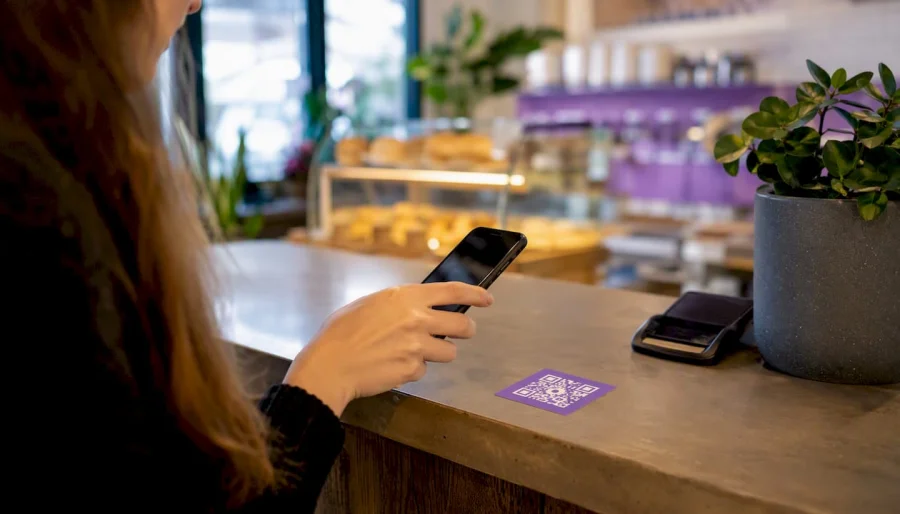
| QR code (printed or screen) | Any business, zero hardware cost | Customers must open camera; passive signage alone underperforms |
| NFC sticker | Counter-based businesses (cafés, retail) | Requires NFC-enabled phone; Android-first |
| Wallet pass add | High-volume, repeat-visit businesses | Requires customer to tap “Add to Wallet” once |
| POS trigger | Integrated checkout flows | Integration can be fragile; adds setup time |
Reward mechanics
Stamp and punch cards suit high-frequency businesses where a customer visits weekly or more. Points and tiers work better for lower-frequency businesses (salons, gyms, hotels) where a single visit carries higher spend. Cashback and fixed discounts are straightforward to explain but can train customers to wait for a deal rather than visit spontaneously. One-time welcome rewards are the single highest-converting mechanic at enrolment because they give immediate value before the customer has done anything. For a deeper look at reward structures by business type, the choice of mechanic should follow visit frequency first, spend level second.
Operational features your platform must include
- Automated welcome message sent within minutes of enrolment
- Lapsed-customer flow triggered after a configurable period of inactivity
- Segmentation by visit frequency or spend band
- Push notifications via wallet pass (no app required)
- Analytics dashboard showing capture rate, active members, and redemption rate
- Brand customisation: logo, colours, and reward naming
Integration features
Apple Wallet and Google Wallet support are non-negotiable for a wallet-pass approach. POS connectors are useful but not mandatory. E-commerce and booking widget support matters for service businesses that take appointments online. The loyalty technology trends shaping 2026 show automation moving from a nice-to-have into a structural requirement, so check that your platform can trigger messages based on behaviour, not just on a broadcast schedule.
How digital loyalty works in practice, step by step
Understanding both sides of the transaction, yours and your customer’s, makes it much easier to train staff and set realistic expectations.
The customer path
- Discover: a customer sees a QR code at the counter, a wallet pass prompt on a receipt, or a staff member mentions the programme at checkout.
- Enrol: the customer scans the QR code or taps the NFC point, enters a phone number or email (or simply taps “Add to Wallet”), and receives a welcome reward instantly.
- Earn: on each subsequent visit, the customer shows their pass or scans a QR code to collect a stamp or points. The wallet card updates in real time.
- Receive a nudge: when the customer is one stamp away from a reward, an automated push message arrives via the wallet pass, no app required.
- Redeem: the customer presents the pass at the counter, the staff member marks the reward as used, and the cycle resets.
The business path
- Configure your reward structure and welcome offer in the platform dashboard.
- Place QR codes or NFC stickers at every capture point (counter, table, door).
- Train staff on a one-sentence prompt: “Would you like to collect a free stamp today? Just scan this code.”
- The platform captures the customer, issues the stamp, and triggers the welcome message automatically.
- Review your analytics weekly: capture rate, active members, and redemption rate tell you whether the programme is working.
Wallet push messages reach customers directly on the lock screen without requiring them to open an app. That single feature is why wallet-pass deployments outperform app-based schemes for SMB capture, particularly in the first 90 days when the member base is still small and every re-engagement message counts.
How quickly can you actually launch a digital loyalty programme?
“Launch in minutes” is a marketing claim. The honest answer for most SMBs is one to two weeks for a self-serve setup, which is still fast enough to be meaningful. This is what that looks like in practice.
Week 0–1: minimum viable launch
- Choose your pass type: wallet pass for maximum reach, web pass if your customers skew older or use devices without wallet support.
- Design your welcome reward: one clear offer, stated in plain language.
- Add your capture point: print a QR code, order an NFC sticker, or both.
- Train staff on the one-sentence prompt and how to mark a redemption.
- Go live.
Weeks 2–4: first optimisation cycle
- Send your first welcome push to enrolled members (if your platform supports it and you have not already automated it).
- Set up one lapsed-customer flow: a message sent after 21–30 days of inactivity with a small incentive to return.
- Check your capture rate. According to Regulr’s SMB benchmarks, a well-run wallet-pass programme typically achieves a 10–18% capture rate in the first 90 days.
- Adjust your staff prompt if capture is below 10%: passive signage alone rarely moves the needle.
Common pitfalls that delay launch
- Complex POS integration: if your POS provider requires custom API work, launch with QR capture first and integrate later.
- Overcomplicated reward structures: a programme with five tiers, three currencies, and a referral bonus takes weeks to configure and confuses customers on day one.
- Untrained staff: the single biggest predictor of a low capture rate is a team that forgets to mention the programme. Consistent staff prompts and in-store signage together outperform either tactic alone.
Pro Tip: Set a capture rate target before you launch, not after. If week one delivers 5, the problem is almost always the staff prompt, not the platform.
What does digital loyalty pricing actually look like?
Pricing varies more than vendor websites suggest, and the headline monthly fee is rarely the full picture.
Common pricing models
- Freemium: a free tier with capped members or limited features, paid tiers from roughly $30–$100 per month for a single location.
- Per-location flat fee: a fixed monthly charge per outlet, typically $50–$200, which suits multi-site SMBs with predictable costs.
- Per-active-member: you pay based on how many customers engage each month, which keeps costs low at launch but can scale unpredictably.
- Managed service: a higher monthly fee that includes setup, design, and ongoing campaign management, often $300–$1,000 per month.
Regulr’s 2026 SMB guide puts the typical self-serve range at $30–$1,000 per month depending on features and member volume, which aligns with what most SMB platforms publicly list.
Upfront and ongoing costs to account for
- NFC stickers or printed QR stands: usually under $50 one-time.
- White-label app setup: a one-time fee, often $500–$3,000, for a branded app rather than a shared platform.
- SMS message costs: some platforms charge per message sent; wallet push notifications are typically included.
- Annual vs monthly billing: annual plans usually carry a 15–20% discount.
What to test during a free trial
Use your trial period to check three things: how reliably wallet passes update after a stamp is issued, whether push notifications arrive promptly on both iOS and Android, and whether the analytics dashboard gives you capture rate and redemption rate without requiring a data export. If any of these three fail during a trial, they will fail in production.
Which industries benefit most from digital loyalty?
Digital loyalty works across most consumer-facing businesses, but the structure that fits depends almost entirely on visit frequency.
High-frequency businesses: cafés, quick-service restaurants, bakeries
Stamp cards are the natural fit here. A customer who visits three times a week will complete a ten-stamp card in under a month, which means they experience a reward quickly and the programme feels worth participating in. Typical outcomes for a well-run café programme include visit frequency lifts of 18–32% in the first few months, based on SMB wallet-pass deployment benchmarks.
Medium-frequency businesses: salons, gyms, wellness centres
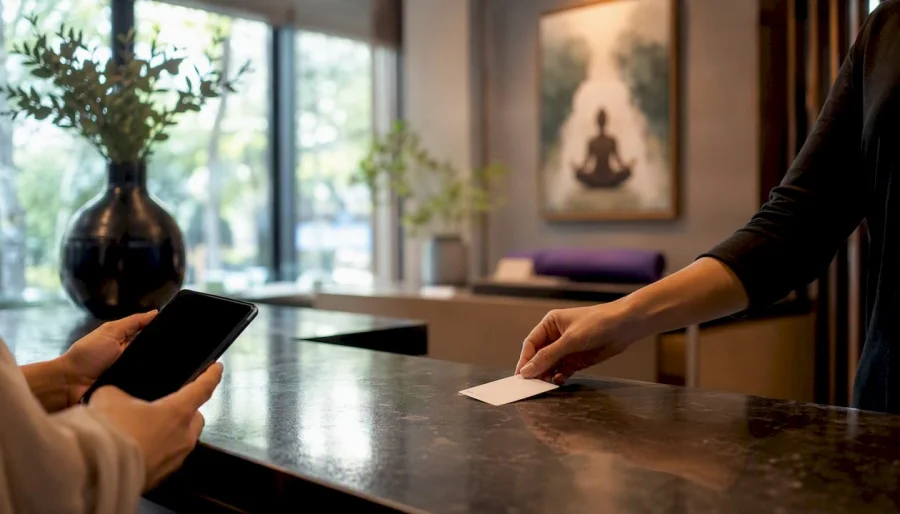
Points or appointment-based tiers work better when a customer visits once every two to four weeks. A stamp card with ten stamps takes months to complete at that frequency, which kills motivation. Instead, award points per pound spent or per appointment booked, with a tier upgrade after a set spend threshold. For service businesses running appointment-based loyalty, the key metric to watch is the rebooking rate among enrolled members versus non-members.
Lower-frequency, higher-spend businesses: hotels, specialty retailers
Member benefits and upsell mechanics matter more than stamp mechanics here. A guest who stays twice a year responds better to a guaranteed room upgrade or a late checkout benefit than to a stamp card. Points that accumulate across stays and can be redeemed against future bookings are the standard structure.
Choosing your structure: a quick rule
- Visits more than once a week: stamp card.
- Visits once every one to four weeks: points or spend-based tiers.
- Visits a few times a year: member benefits, status tiers, and experiential rewards.
What the research says actually makes loyalty programmes work
The evidence from industry studies points in a consistent direction: programmes fail not because of weak mechanics but because members cannot see the value clearly enough to bother redeeming.
Deloitte’s consumer loyalty research finds that 56% of consumers increase their spending because of a loyalty programme, yet many enrol in programmes they never actively use. The gap between enrolment and active participation is where most SMB programmes lose money. The fix is not a more complex programme; it is making the next reward visible at every interaction.
The 2026 EY Loyalty Market Study identifies the same pattern at scale: programmes can show strong operational metrics while consumers report a weaker emotional connection. EY recommends investing in redemption speed and digital experience rather than adding features. The EY downloadable report adds a specific caution about AI: use it to make value clearer and reminders more timely, not to add personalisation layers that customers find opaque or intrusive.
The Loyalty Program Trends 2026 survey of more than 170 loyalty professionals finds that customer lifetime value, automation, and gamification are the top three priorities. Automation in particular is shifting from a support function into a strategic driver, with predictive segmentation moving from enterprise-only to accessible for mid-market operators.
Three actions that translate this research into SMB practice:
- Make the next reward visible: show the customer how many stamps or points they need on every wallet pass update and every push notification.
- Automate the near-reward nudge: a message sent when a member is one step from a reward consistently outperforms a generic promotional message.
- Focus on customer lifetime value over enrolment numbers: a programme with 200 active, frequent members is worth more than one with 2,000 dormant ones.
Trust, privacy, and security: questions to ask before you commit
Before you sign up for any loyalty platform, run through this checklist. A vendor that cannot answer these questions clearly is a vendor worth avoiding.
Ask every vendor: “Who owns the customer data collected through the programme? Can I export the full member list at any time? How are wallet push notifications delivered, and what happens if a POS sync fails mid-transaction?” A vendor that hesitates on data ownership is telling you something important.
What to look for in a vendor’s data practices
- Clear statement that you, the business, own the customer data, not the platform.
- Encryption in transit and at rest for all member records.
- Explicit consent capture at enrolment (email or SMS opt-in, not assumed).
- Simple, one-tap opt-out for customers who no longer want messages.
- A published privacy policy that covers wallet pass data specifically.
Trust signals that indicate a reliable vendor
- Audited privacy policy with a named data controller.
- Published case studies with named businesses and measurable outcomes.
- A free trial or demo that lets you test wallet push reliability before paying.
- Documented POS and wallet integrations with version numbers or partner certifications.
- Responsive support with a stated response time, not just a contact form.
Peer reviews on platforms such as G2 are worth checking specifically for integration reliability and support responsiveness. Recurring complaints about fragile POS connections or slow push delivery in reviews are a stronger signal than any vendor’s own uptime claim.
The trade-offs most loyalty guides won’t tell you
Most articles about digital loyalty focus on features. The harder conversation is about what to prioritise when you cannot have everything, and that is where most SMB programmes go wrong.
Capture rate is the only metric that matters in the first 90 days. Not redemption rate, not average order value lift, not member tier distribution. If you are not capturing a meaningful share of your transactions as identifiable customer records, every other metric is built on a sample too small to trust. The fastest lever for capture is not the platform you choose; it is whether your staff mention the programme at every transaction. Passive signage captures a fraction of what a one-sentence staff prompt achieves.
The second trade-off is between simplicity and sophistication. A white-label branded app looks impressive and gives you full control over the customer experience, but it costs more to build, more to maintain, and more to promote. For most SMBs under 500 transactions a week, a wallet pass with two automated messages (welcome and lapsed) delivers comparable retention results at a fraction of the cost. The custom app route makes sense when your brand equity is strong enough that customers will actively seek out your app, or when you need features (booking, e-commerce, multi-location management) that a wallet pass cannot support.
The third trade-off is patience. Loyalty programmes compound. The businesses that abandon their programmes in month two because “it’s not working yet” are the ones that never see the compounding effect.
How Bonusqr helps SMBs run a digital loyalty programme from day one
Bonusqr is built for exactly the setup this guide recommends: wallet passes, digital stamp cards, and automated messaging without a mandatory POS integration. You can configure a welcome reward, set up Apple and Google Wallet pass support, and place your first QR capture point in a single session. The platform’s full feature set covers stamp cards, points systems, cashback, tiered rewards, push notifications, and a real-time analytics dashboard, all under your own branding.
For businesses that want a fully branded experience, Bonusqr also offers white-label app development and custom app builds with e-commerce and booking widget support. A free trial lets you test wallet pass delivery and capture mechanics before committing to a paid plan. Start your free trial at Bonusqr or register directly at Bonusqr to see the platform in your own context.
Frequently asked questions
Do I need a POS integration to run a digital loyalty programme? No. A QR code or NFC sticker at the counter captures customers and issues stamps independently of your POS. Integration adds convenience but is not required to launch.
How long does it take to set up a digital loyalty programme? A self-serve wallet-pass setup typically takes one to two weeks from account creation to first live capture, including staff training and signage.
What capture rate should I expect in the first 90 days?
Is a branded app better than a wallet pass for an SMB? For most SMBs, a wallet pass delivers comparable retention results at lower cost. A branded app makes sense when your transaction volume is high, your brand has strong recognition, or you need features like booking or e-commerce that a wallet pass cannot support.
What should I test during a free trial? Check that wallet passes update in real time after a stamp is issued, that push notifications arrive promptly on both iOS and Android, and that the analytics dashboard shows capture rate and redemption rate without requiring a manual data export.
How do I increase my capture rate if it is below 10%? The most common cause is staff not mentioning the programme. Introduce a one-sentence prompt at the till and check that your QR code is visible at eye level at the point of payment.
Sources
The five sources below form the evidence base for this guide and are worth reading in full if you want to go deeper on any section.
- Reshaping customer loyalty programs | Deloitte Insights
- 2026 EY Loyalty Market Study | EY - US
- Loyalty Program Trends 2026